
The Scaling Plan I Gave This Investment Education Business

I hope you enjoy reading this blog post. If you want my team to just do your marketing for you, click here.
Author: Jeremy Haynes | Published November 12, 2026
Earnings Disclaimer: You have a .1% probability of hitting million-dollar months according to the US Bureau of Labor Statistics. As stated by law, we cannot and do not make any guarantees about your own ability to get results or earn any money with our ideas, information, programs, or strategies. We don’t know you, and your results in life are up to you. We’re here to help by giving you our greatest strategies to move you forward, faster. However, nothing on this page or any of our websites or emails is a promise or guarantee of future earnings. Any financial numbers referenced here, or on any of our sites or emails, are simply estimates or projections or past results, and should not be considered exact, actual, or as a promise of potential earnings – all numbers are illustrative only.
If your best funnel slows down every time you move on to something new, you haven’t added a source of growth. You’ve moved your attention from one place to another. That’s where I’d start with an established business that has more offers, more people, and about the same revenue. Keep the thing that already sells working, then give the next funnel enough ownership and attention to find out what it can do.
Already making money? See what it takes to make a lot more.
What the Business Already Had Working
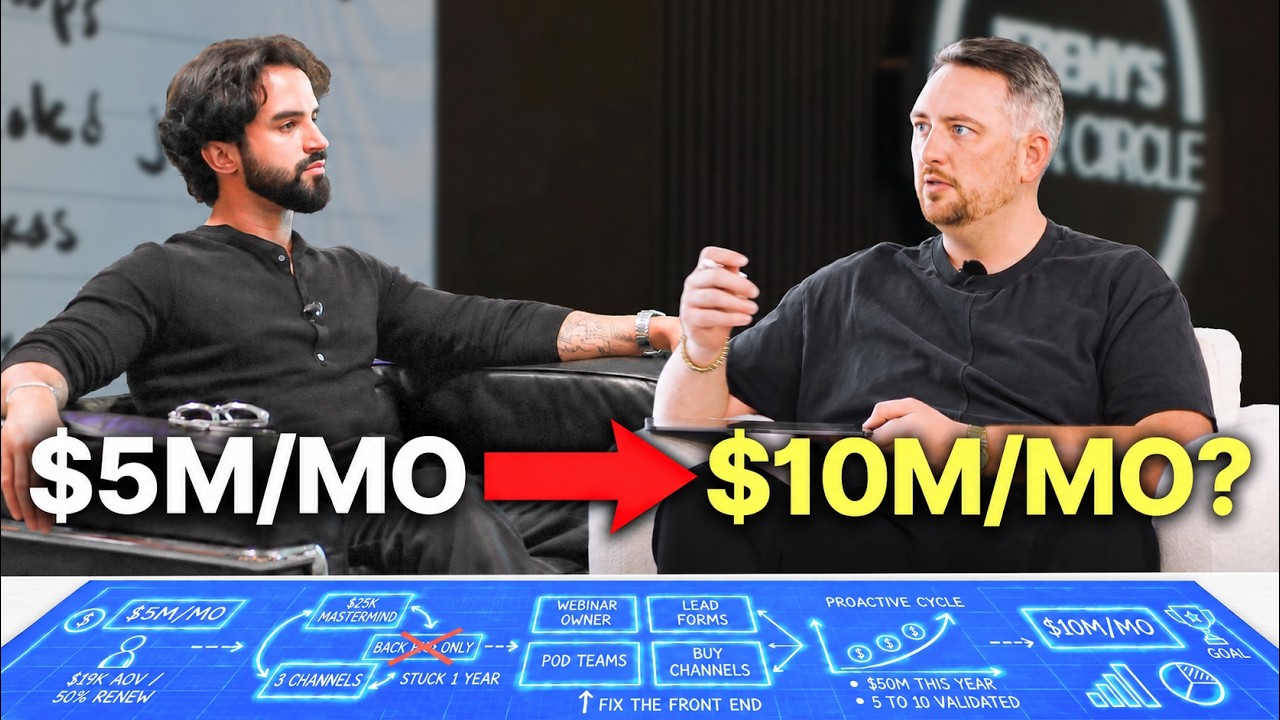
The operators I worked through this with already had a substantial investment education business. Their main offer combined training, individual support, and a community. They’d expanded into other products for customers who wanted more after buying. There was plenty to work with before anyone needed to come up with a new offer.
Start with the dollars the business actually keeps. A smaller operation can have a better margin on paper and still keep less money overall. At the same time, a bigger top line won’t tell you what you can afford to build. I want to see both the profit in dollars and what it costs the business to keep earning it.
Their offer tiers were useful because they changed the access a buyer got. Someone who wanted a lighter level of support could still buy without getting the whole package for less. If you run multiple tiers, pay attention to average order value across the sales you actually make and the cash you collect. A higher close rate can look good until you see how much of the mix moved to a lower tier.
The messaging mattered too. The team found that speaking to people who wanted to protect what they’d built brought a different buyer than talking about growth alone. The same offer can mean something different to a prospect depending on what they already have and what they’re trying to do next.
Where Growth Stalled as Attention Moved
Paid ads on Meta and YouTube and an affiliate channel were bringing people in. Similar revenue contributions didn’t make them equally expensive to run. I also wanted to know how long it took people to buy. A channel can look weak early if you’re comparing it with another channel whose buyers move faster.
They’d put real effort into renewals, add-on offers, and other parts of the business. That work made sense. It also left fewer people focused on acquiring the next customer. If the front end slows while the back end improves, check who still spends their week making the front end better.
Something can be a good business decision and still take attention away from something you need. The answer isn’t to undo the back end. It’s to make sure somebody keeps working on new acquisition while the other work goes forward. That’s also why I look at the front end and the upsells together when a business stops growing.
Look at the actual ads, pages, and handoffs before deciding what broke. Account restrictions and a weak message are different problems. If you’re making claims in an ad, check that you can back them up and that the destination represents the same offer. The FTC’s advertising guidance explains the expectation that advertisers have evidence for the claims they make.
Which Funnels Fit the People Selling the Offer
A video sales letter leading to a call was already doing much of the work for this business. The team could take a buyer who still had questions and educate them on a call. That’s a capability worth using. If your closers can only work with people who already understand the offer, you’re going to need the funnel to do more teaching before those people reach the calendar.
A webinar can do some of that education for many people at once. The sales team then gets to spend more time on whether the offer fits. The operators had experience with both live and automated webinars, but the webinar wasn’t yet getting the same dedicated attention as their main acquisition path. I wouldn’t judge its ceiling from what it did on the side.
Map the work your sales team is equipped to do before adding a new entry point. For this business, some inquiries were ready for a closer and others needed a setter to establish fit first. A prospect who asks for information, a prospect who books, and a prospect who shows up ready to talk aren’t the same sales opportunity.
If you’re comparing a webinar and a call funnel, start with how many people move through each step and what the team can handle. My webinar calculator can help you work through attendance and conversion assumptions. You still have to check those assumptions against the business you’re running.
Do the same for the call funnel. The VSL calculator helps you see how traffic, bookings, and sales relate. The better comparison uses the same definitions of a booking and a sale for both paths.
What an Opt-In Test Has to Prove
Before building another elaborate funnel, I’d check what happens to the people who are interested enough to give you their details but haven’t booked yet. If your team already works those leads and can tell what they turn into, a native form is worth comparing with the opt-in on your own page. Give both paths a real follow-up and compare what happens after submission.
Think through what you lose when you take steps out. A page or presentation can help someone understand the offer before your team calls. A shorter form gives them less to do up front and may leave your team with more explaining to do. Look at booked calls, qualified conversations, and collected cash before deciding which version deserves more volume.
Keep your source labels straight. A form submission and a qualified conversation are different events. Google Analytics’ lead acquisition report distinguishes lead stages when you send the corresponding events. Whatever reporting you use, make sure the person reading it knows exactly what each column counts.
How the Chunk Method Adds to What Works
Build the next stage out of distinct sources of sales. A working call funnel can keep running while a webinar gets its own test and an affiliate channel keeps doing its job. I call that the chunk method. You’re looking for contributions that can stand on their own, so the whole business doesn’t depend on getting more out of the same campaign.
Here’s where the plan gets real. Somebody needs to own the webinar when the founder is on another project. That person has to know what they can change, who supplies the creative, what the sales team will report back, and when they have to come to you for a decision. Atlassian’s decision-role guide makes a useful distinction between the person driving the work and the person who approves a decision.
You don’t have to reorganize the entire company to find out if a funnel deserves attention. Put a capable person on the clearest opportunity and give them enough support to run it properly. If they also own everything urgent elsewhere, the new funnel is going to get whatever time is left over.
In my Inner Circle, this is the kind of tradeoff operators can work through together. The idea might be good, but somebody still has to decide what stays protected, who does the work, and what the business is willing to put behind the test.
Results are not typical. Your results will vary and depend entirely on your individual capacity, business experience, expertise, and level of desire. There are no guarantees concerning the level of success you may experience. The testimonials and examples used are not intended to represent or guarantee that anyone will achieve the same or similar results. We don’t believe in get-rich-quick programs. We believe in hard work, adding value and serving others. As stated by law, we can not and do not make any guarantees about your own ability to get results or earn any money with our information, courses, programs, or strategies.
When the Company Story Stops Being Useful
There’s a difference between a real constraint and a story you’ve repeated long enough that the team stopped testing it. If leadership says a project has to wait for a reorganization, ask which piece genuinely needs the reorganization. A small, capable team might be able to answer the commercial question while the rest of the company stays put.
Founders can spend an entire week responding to problems and never touch the thing they said would move the business. I want some protected time for the work that won’t happen unless somebody chooses to do it. Use frustration to point you toward what needs attention. Give the team a specific problem to solve instead of expecting them to work harder across everything.
They’d also been investing in the longer-term value of the company. New offers, a media arm, and experienced hires can take resources before they contribute. That makes it even more useful to keep track of what you expect each investment to do and what still has to perform while you’re waiting. Don’t let a future valuation take the place of a decision about this week’s acquisition.
Their media arm was intended to send attention to several parts of the business. That’s a different job from an ad asking somebody to book this week. You can use paid and organic content to support each other while still deciding who owns each one and what it needs to produce.
7 weeks. Real frameworks. Covering copywriting, funnels, paid ads, and conversion systems.
Where I’d Put the Next Block of Attention
I’d protect the call funnel that’s already moving buyers through, give the webinar an owner, and see whether a simpler opt-in creates opportunities the sales team can actually work. I’d check each against the people available to run it. That gives you something more useful than a revenue target. You can point to the work that has to happen and see whether anybody is doing it.
Know why you want the next stage, too. These operators wanted a harder problem to solve and a company that created more opportunity for their team and customers. A target by itself won’t tell you what you’re willing to take on. Give the business a reason to grow and give the team a piece of growth it can actually own.
The funnel should do the job you need it to do before you ask it to carry more weight. That’s part of the work behind Master Internet Marketing, my 7-week live comprehensive training. Start with the part of the business you can see clearly, make the next decision, and leave someone in charge of seeing it through.
Results are not typical. Your results will vary and depend entirely on your individual capacity, business experience, expertise, and level of desire. There are no guarantees concerning the level of success you may experience. The testimonials and examples used are not intended to represent or guarantee that anyone will achieve the same or similar results. We don’t believe in get-rich-quick programs. We believe in hard work, adding value and serving others. As stated by law, we can not and do not make any guarantees about your own ability to get results or earn any money with our information, courses, programs, or strategies.
Get my content first on Google
Add jeremyhaynes.com as a preferred source and Google shows my articles more prominently in your search results, including AI Overviews and AI Mode.


Jeremy Haynes
Owner and CEO of Megalodon Marketing
Jeremy Haynes is the founder of Megalodon Marketing. He is considered one of the top digital marketers and has the results to back it up.