Why Your Best Organic Post Still Needs a Paid Ad Test

I hope you enjoy reading this blog post. If you want my team to just do your marketing for you, click here.
Author: Jeremy Haynes | Published October 21, 2026
Earnings Disclaimer: You have a .1% probability of hitting million-dollar months according to the US Bureau of Labor Statistics. As stated by law, we cannot and do not make any guarantees about your own ability to get results or earn any money with our ideas, information, programs, or strategies. We don’t know you, and your results in life are up to you. We’re here to help by giving you our greatest strategies to move you forward, faster. However, nothing on this page or any of our websites or emails is a promise or guarantee of future earnings. Any financial numbers referenced here, or on any of our sites or emails, are simply estimates or projections or past results, and should not be considered exact, actual, or as a promise of potential earnings – all numbers are illustrative only.
Your best organic post has earned a paid-ad test, not an unlimited budget. When you turn organic content into paid ads, you change how the person encounters it and what you need them to do afterward. A post can be useful to followers and still be a poor introduction to a high-ticket offer. I want to know what made it work before deciding that more distribution is the next move.
This is where using paid and organic together can get expensive. Somebody finds the post with the biggest response, calls it a winner, and puts money behind it. But a winning post and a winning acquisition ad answer different questions. Keep the content that helps your audience, then test whether it can also do the advertising job.
Already making money? See what it takes to make a lot more.
Start With What Made the Organic Post Work
Start with what happened after people saw the post. Did suitable buyers ask about the offer, or did the subject simply attract attention? Both responses tell you something, but they give you different reasons to spend.
A useful question from someone running the kind of business you serve is a different signal from a general compliment. A share can introduce the idea to another relevant person. It can also spread a joke to people who will never need the offer.
Read the response before picking the asset. Look at the questions, the conversations, and any recorded actions you can connect to it. You are trying to understand the commercial reason for testing this particular post.
YouTube’s analytics guidance describes impressions, views, and watch time as different observations. Those measures help explain attention. None of them records that somebody became a suitable sales opportunity.
My approach to organic content starts with what the people I want to serve actually need to understand. Bring the same question into the paid decision. If the post attracted people for a different reason, promoting it can extend that difference.
Paid Distribution Changes the Viewing Context
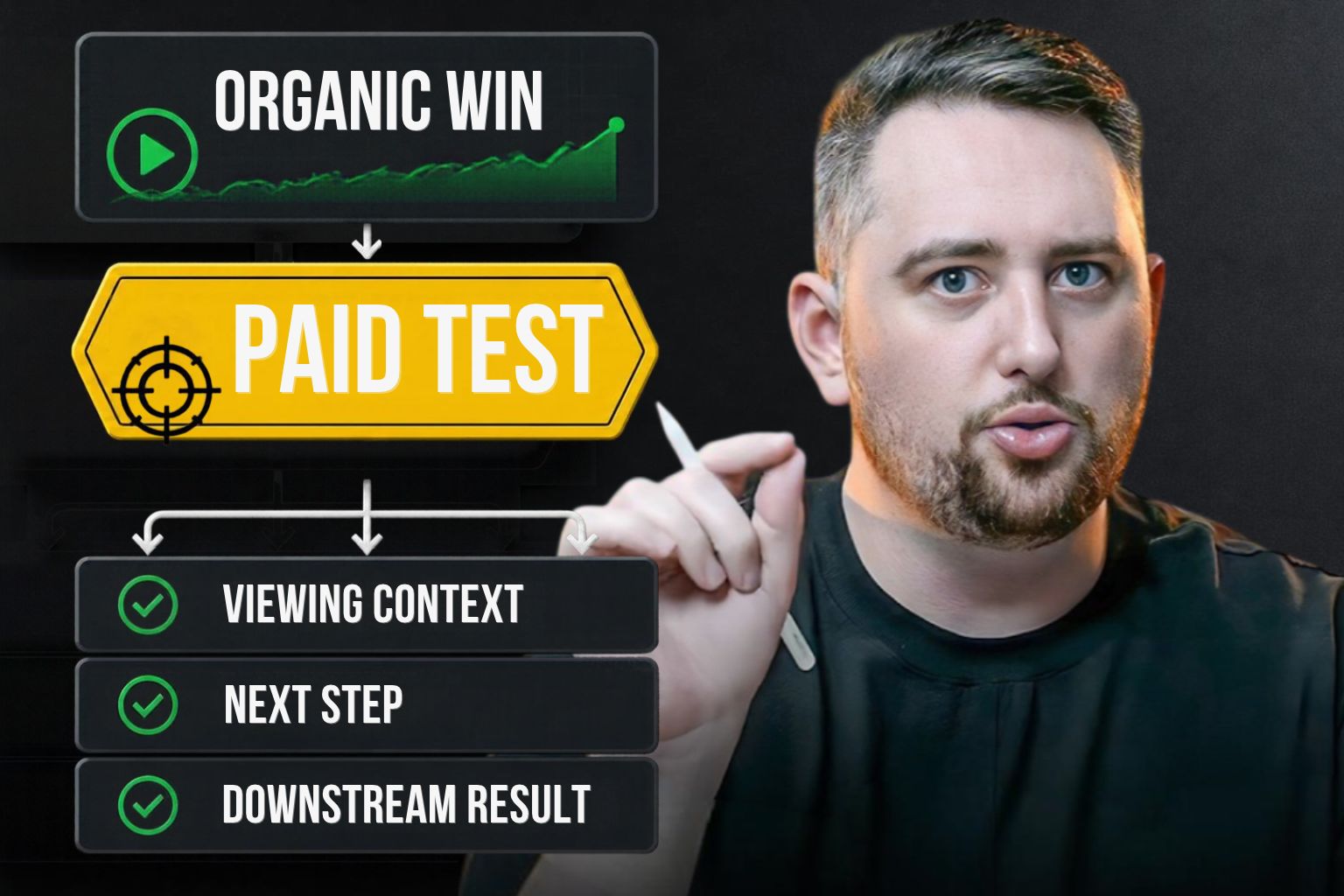
Paid distribution changes the context around the content. A follower may know your business, recognize your examples, and understand what you sell before the opening line. A person encountering the same clip as an ad may have none of that.
That missing context can change the meaning. An explanation that makes sense after watching your other material may sound incomplete on its own. A reference to an earlier conversation can leave the new viewer wondering why it matters.
I still consider organic winners worth testing as ads. I am careful about assuming that they can absorb increasing spend just because the first version performed organically. The sponsored presentation, placement, and audience are part of the new test.
Watch the video as someone who has never visited the profile. Does the opening identify a relevant problem? Can the viewer tell what the explanation applies to? Does the ending point toward something they can reasonably do next?
The creative format ranking considers the ability to produce and run ads at scale. A post can deserve continued organic distribution while being a limited paid asset. You do not need to declare the idea worthless when the advertising version falls short.
Choose the Job Before You Pay to Promote the Post
Choose the job before buying distribution. Introducing a subject, helping an existing prospect understand an objection, and asking for a booked call are different assignments. The same video may handle one of them better than another.
If the post explains a difficult part of the offer well, it may be useful to people already considering it. That does not automatically make it the best opening for somebody who has never heard of you. Decide which person needs the explanation now.
Keep the campaign’s intended result visible. If you want qualified booked calls, a video-view report cannot answer the whole question. If you are testing educational distribution, an immediate call count may leave out the work you intended the content to do.
Google Ads distinguishes primary and secondary conversion actions so advertisers can separate bidding goals from observations. Check the actual campaign goal before reading its results. A label called conversion still needs a clear definition in your business.
The relationship between content advertising and direct response starts here. Give the explanation a purpose and keep the sales invitation clear. Adding more educational material without identifying the buyer’s missing understanding can leave the same confusion in place.
The Next Step Must Fit the Promise in the Post
The next step needs to continue the conversation the post started. A clip that offers a specific explanation should not send the viewer to an unrelated promise and expect the earlier attention to carry the sale.
Look at the closing line and the destination together. What does the person think they will get by clicking? What will they actually find when the page opens? A mismatch is worth fixing before you judge the post’s ability to bring buyers.
Sometimes the idea is useful but the original ending belonged to the organic channel. It may refer to a profile, a comment, or another lesson. If you need a different action for the ad, make that change deliberately and keep the original meaning intact.
Do not change everything merely to call the asset an ad. A natural explanation can lose the reason people liked it when you replace it with a louder promise. Preserve the useful point and remove the context the new viewer cannot see.
At Master Internet Marketing, my 7-week live comprehensive training, the wider work includes copywriting, funnels, and paid advertising. Keep the message and destination connected when you put a piece of content into a campaign. Reusing a file does not remove the need to understand the selling path.
Results are not typical. Your results will vary and depend entirely on your individual capacity, business experience, expertise, and level of desire. There are no guarantees concerning the level of success you may experience. The testimonials and examples used are not intended to represent or guarantee that anyone will achieve the same or similar results. We don’t believe in get-rich-quick programs. We believe in hard work, adding value and serving others. As stated by law, we can not and do not make any guarantees about your own ability to get results or earn any money with our information, courses, programs, or strategies.
Keep Paid Results Separate From the Original Response
Keep the paid result separate from the original organic response so you can judge the new use. A larger public view count after promotion does not tell you whether the campaign acquired better buyers.
Google’s video-ad metrics documentation distinguishes paid and organic viewing and explains that public view counts can include both. More visible views after advertising are not evidence that organic discovery improved on its own.
Keep the asset’s history available. Record which version ran, what it asked the viewer to do, and where it sent them. If you recut the opening or changed the destination, the team should know that it tested an adapted version.
Then follow what happened after people clicked. Who booked, who showed up, and who actually fit the offer? Do not call those bookings sales because the original post was popular.
Organic response gives you a reason to test. Paid results decide whether the new use earns more spend. When the early evidence is incomplete, keep the conclusion limited. The original audience’s enthusiasm does not fill the gaps in the campaign report.
A lead that looks organic can also have an earlier paid introduction. Keep track of the introductions you paid for, even when the booking happens somewhere else. Otherwise, you can give the post credit for work the campaign helped it do.
Know Whether to Recut, Keep Testing, or Move On
The next choice depends on where the paid version loses the buyer. If the new viewer cannot understand the opening, a recut may address a specific problem. If the message makes a promise the offer cannot fulfill, editing the pace will leave that problem untouched.
Read sales feedback alongside the ad. What did people think they were responding to? Which question keeps coming up? A clip can be clear and engaging while creating the wrong expectation about the purchase.
Keep a useful explanation even if it does not become a scalable acquisition ad. It may still belong in the organic library or a relevant follow-up. Assigning it another job is different from repeatedly increasing spend to prove that the original choice was right.
Likewise, do not keep changing the audience, offer, opening, and destination together while claiming to test the post. You can decide to rebuild the campaign, but recognize that the new result will describe a different combination.
People arriving from cold ads can need more explanation than longtime followers. A viewer can be suitable for the offer and still need more information. That deserves a different response from discovering that the post attracted people you cannot serve.
7 weeks. Real frameworks. Covering copywriting, funnels, paid ads, and conversion systems.
Use Both Channels Without Promoting Everything
Using paid advertising and organic content together does not require turning every successful post into an ad. The channels can share ideas while the assets keep different jobs. Be selective about what you ask paid distribution to extend.
Keep publishing explanations that help the people you want to reach. When a piece earns a useful response, examine the reason and consider a paid test that fits. Keep the original content’s value separate from what that new test establishes.
There is no universal posting volume, spending split, or conversion lift that makes this work for every business. Your next investment should depend on the offer, the people arriving, and the evidence from the campaign you actually ran.
In my Inner Circle, operators can work through those decisions with peers. Bring the post, the paid version, the destination, and what happened in sales. That is a more useful conversation than arguing that a popular post must work as an ad.
Results are not typical. Your results will vary and depend entirely on your individual capacity, business experience, expertise, and level of desire. There are no guarantees concerning the level of success you may experience. The testimonials and examples used are not intended to represent or guarantee that anyone will achieve the same or similar results. We don’t believe in get-rich-quick programs. We believe in hard work, adding value and serving others. As stated by law, we can not and do not make any guarantees about your own ability to get results or earn any money with our information, courses, programs, or strategies.
Get my content first on Google
Add jeremyhaynes.com as a preferred source and Google shows my articles more prominently in your search results, including AI Overviews and AI Mode.


Jeremy Haynes
Owner and CEO of Megalodon Marketing
Jeremy Haynes is the founder of Megalodon Marketing. He is considered one of the top digital marketers and has the results to back it up.