How I Structure Paid Advertising With Content and Direct Response
I hope you enjoy reading this blog post. If you want my team to just do your marketing for you, click here.
Author: Jeremy Haynes | Published September 22, 2026
Earnings Disclaimer: You have a .1% probability of hitting million-dollar months according to the US Bureau of Labor Statistics. As stated by law, we cannot and do not make any guarantees about your own ability to get results or earn any money with our ideas, information, programs, or strategies. We don’t know you, and your results in life are up to you. We’re here to help by giving you our greatest strategies to move you forward, faster. However, nothing on this page or any of our websites or emails is a promise or guarantee of future earnings. Any financial numbers referenced here, or on any of our sites or emails, are simply estimates or projections or past results, and should not be considered exact, actual, or as a promise of potential earnings – all numbers are illustrative only.
A paid advertising structure needs to answer what the buyer should do next and what they need to understand before doing it. Direct response asks for the action. Content ads can build the understanding that makes the action worth taking. I want the messaging, conversion signal, and follow-up to support the same sale.
You can build a complicated account without answering any of those questions. Campaign names and audience settings will not explain why somebody books an unqualified call. Start with the buyer and the sales process, then decide which campaigns have a useful job.
Already making money? See what it takes to make a lot more.
Why Direct Response Still Has a Clear Job
Direct response gives an interested buyer somewhere to go. That might be an application, a webinar registration, or a purchase. The ad needs to make the offer understandable, identify who it fits, and give the person a reason to take that next step.
I would keep that path visible even when adding content campaigns. If the business cannot explain its offer directly, putting educational videos in front of it can hide the weakness. More attention can leave the same unanswered buying question.
A clear campaign structure starts with the action you can actually measure. A registration and a completed sale describe different things. Calling both conversions inside an advertising dashboard does not make them equally valuable to the business.
The distinction belongs in the tracking setup. Google Ads describes website conversions as specific actions following an ad interaction and distinguishes primary bidding actions from secondary observation. That is a platform example of why the event definition matters before you judge campaign results.
Once the action is clear, the message and landing page need to agree on what happens next. A person who expects a useful explanation should not arrive at a page that makes an unrelated promise. Keep the sale understandable from the ad through the conversation.
What a Booked Call Leaves Out of the Signal
A booked call tells you that somebody scheduled time. It does not tell you whether the person qualifies, attends, or buys. Those later events matter when you decide whether the advertising is finding the people the business can serve.
That is the useful reason to think about pixel conditioning and qualified lead signals. The tracking should describe what happened. The sales team needs a consistent meaning for qualified before that label becomes part of campaign feedback.
If different people use different qualification rules, the event becomes harder to interpret. One person might mark a lead qualified because the appointment exists. Another might wait until the conversation establishes fit. The account can receive the same event name for two different outcomes.
The better signal is the one you can define honestly and collect consistently. A later event may be closer to revenue, but it can also happen less often. I would weigh that tradeoff before changing the campaign’s optimization target.
Standard events belong in this discussion, along with the actual account setup and event availability. I would not choose an event solely because its name sounds closer to money. Confirm that it represents a real action and that the action is being recorded correctly.
Why Messaging Still Decides Who Raises a Hand
Your ad tells people whether the offer sounds relevant to them. If it attracts people who want something you do not sell, tracking alone cannot rewrite that promise. Read the message beside the application questions and the sales team’s notes.
When the wrong people keep arriving, I would inspect the claims, examples, and next step before assuming the pixel needs replacing. What kind of person would reasonably respond to this ad? What would that person think the call is about?
That is where lead quality and audience targeting meet the actual offer. The message can explain fit before somebody enters the funnel. The feedback can then show whether the people responding match that explanation.
An empty results column is a prompt to investigate. Check whether the selected action happened, whether it was recorded, and whether the reporting window includes it. A tracking problem, a delayed sale, and weak messaging call for different responses.
I cover paid traffic fundamentals in Master Internet Marketing, my 7-week live comprehensive training. The useful starting point is being able to explain the relationship between the promise, the buyer action, and the result you are measuring.
Results are not typical. Your results will vary and depend entirely on your individual capacity, business experience, expertise, and level of desire. There are no guarantees concerning the level of success you may experience. The testimonials and examples used are not intended to represent or guarantee that anyone will achieve the same or similar results. We don’t believe in get-rich-quick programs. We believe in hard work, adding value and serving others. As stated by law, we can not and do not make any guarantees about your own ability to get results or earn any money with our information, courses, programs, or strategies.
When Another Optimization Event Is Worth Testing
Cyclic campaigns test campaigns around different conversion events. The useful question is whether a different optimization goal brings an additional group of relevant prospects into the same business. The account needs to answer that question through a test.
I would treat that as an expansion hypothesis. It does not prove the audiences will be separate, and it does not guarantee incremental customers. Different event names can still lead to overlapping delivery.
Keep the downstream comparison meaningful. If one campaign counts applications and another counts sales, their headline cost-per-result figures answer different questions. Follow the people into the same sales process before deciding which campaign deserves more money.
Launching several alternatives before the original path is understood also makes diagnosis harder. You can end up changing the message, event, and audience together. When the numbers move, you have less clarity about which change mattered.
Start from a path the business can explain. Then give the alternative a defined question to answer. Expansion is useful when it creates an informed choice rather than another campaign that nobody knows how to judge.
How the Venus Fly Trap Builds Understanding
The Venus Fly Trap content sequence gives educational content a role before the direct-response ask. The prospect encounters a connected explanation instead of being expected to understand the whole offer from the first ad.
Each piece should advance the same buying conversation. A useful opening subject gets the relevant person’s attention. Later content develops the explanation so the direct-response message arrives with more context.
Venus Fly Trap 2.0 uses several content choices at a stage. That keeps the educational job while allowing different examples or explanations to do it. The creative options still need to lead toward the same offer.
Sequence delivery depends on the platform and campaign setup. For example, Google Ads documents a YouTube sequence campaign in which progression can depend on impressions, views, or skips. That feature does not establish that every platform supports the same sequence.
The tradeoff is another step before the direct ask. That extra education has to earn its place. Look for evidence that the prospects understand the offer better when they reach the sales process, rather than assuming a video view means they are ready.
Why the Forester Keeps Content in Circulation
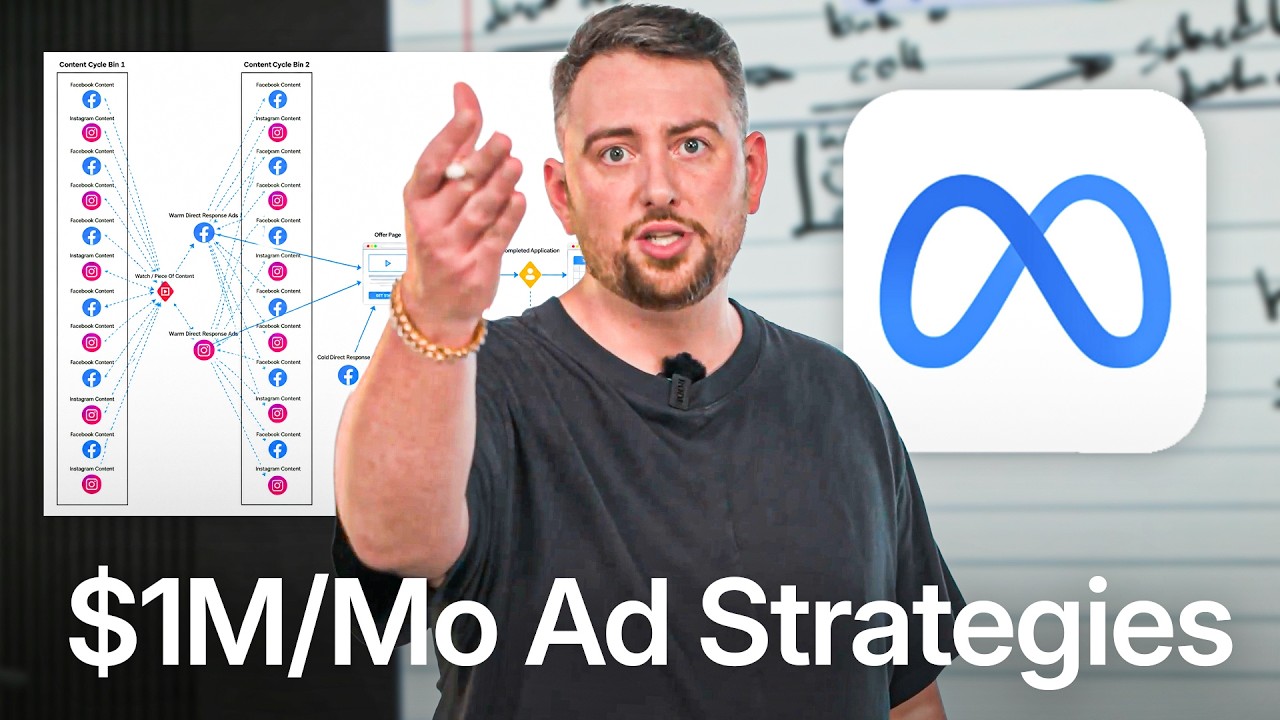
The Forester approach uses a pool of content rather than relying entirely on a fixed sequence. A content cycle bin holds that material. Its role is to introduce people to the subject, then keep useful content available alongside direct response.
A sequence asks whether somebody is ready for the next explanation. A content pool gives the campaign several pieces that can introduce or develop the idea. That difference matters when deciding what you need to create and maintain.
Content ads for cold audiences should still connect to the business’s actual offer. A widely viewed video about something unrelated can create an audience without answering the buying problem. Familiarity alone is a thin reason to assume fit.
Choose material that can carry a useful part of the conversation. Demonstrations can make a mechanism easier to understand. An explanation can address uncertainty. A properly sourced case study can show an illustrative experience without promising somebody else’s outcome.
Then ask whether that content changes what happens after the direct-response click. The purpose is to support the selling process. A larger pool of viewers is an intermediate observation, not the final business result.
How Harvester and Tornado Fit Buyer Awareness
People already looking for a solution have different questions from people who still need to understand the problem or consider the offer. Harvester and Tornado belong to that awareness discussion. They should not become default additions to every ad account.
Harvester is presented as an approach for a broader audience that does not yet recognize the offer as relevant. That asks more of the content. The explanation has to establish why the subject matters before a direct sales request can make sense.
Tornado is presented for people who could consider the offer but are not actively shopping for it. Existing organic content becomes a possible resource for that conversation. The question is whether the available material answers what those prospects need to understand.
I would keep the difference between those audiences visible in the campaign plan. Somebody already comparing solutions can need a different explanation from somebody encountering the problem for the first time. Giving both people the same sequence removes that distinction.
Content quantity is not the decision on its own. Before building another campaign, identify the missing understanding and the material that can address it. If the direct-response path already reaches interested buyers, additional complexity needs a clear reason.
What Content Should Do After Someone Books
Once someone books a call or registers for an event, the next job changes. They have already taken the action the first campaign requested. The follow-up can help them understand the offer and prepare for the conversation ahead.
The Hammer Them advertising strategy addresses that interval with varied content. The important distinction is between repeated exposure to one ad and exposure to different explanations. An impression count alone cannot tell you how many useful ideas somebody encountered.
Do not assume an exclusion creates an absolute promise that a person will never see an asset again. Audience matching, eligibility, and delivery controls need checking. Google Ads, for example, notes limits to audience exclusions for users who opt out of ads personalization.
The same stage-aware thinking applies to people already in a direct-message conversation. Keep that stage distinct. Someone asking questions privately may need an answer from a person rather than another general invitation to start talking.
After the appointment, registration, or purchase changes, the follow-up needs to change too. A campaign that keeps asking for the completed action is working from an outdated view of the prospect. The content plan and the customer record should describe the same stage.
7 weeks. Real frameworks. Covering copywriting, funnels, paid ads, and conversion systems.
How I Would Choose the Structure to Build Next
I would begin with the weakness the business can actually identify. Unqualified enquiries call for a look at the promise and signal. Prospects who misunderstand the offer point toward an education problem. People who book and arrive confused suggest the gap continues after scheduling.
Those observations lead to different campaign decisions. Direct response, a content sequence, a content pool, and pre-call education each have a possible role. They also require assets, tracking, and somebody responsible for maintaining the account.
A campaign earns its place when you can explain the buying problem it addresses. Keep the result definition intact as you test it. More views, cheaper clicks, and more booked calls are different observations, and none should quietly replace the outcome you meant to improve.
In my Inner Circle, the peer discussion is about the real constraint in an operator’s business. Bring the offer, the message, and the sales feedback together before deciding that another advertising structure is the answer.
Results are not typical. Your results will vary and depend entirely on your individual capacity, business experience, expertise, and level of desire. There are no guarantees concerning the level of success you may experience. The testimonials and examples used are not intended to represent or guarantee that anyone will achieve the same or similar results. We don’t believe in get-rich-quick programs. We believe in hard work, adding value and serving others. As stated by law, we can not and do not make any guarantees about your own ability to get results or earn any money with our information, courses, programs, or strategies.
Get my content first on Google
Add jeremyhaynes.com as a preferred source and Google shows my articles more prominently in your search results, including AI Overviews and AI Mode.


Jeremy Haynes
Owner and CEO of Megalodon Marketing
Jeremy Haynes is the founder of Megalodon Marketing. He is considered one of the top digital marketers and has the results to back it up.