How to Stop Getting Unqualified Leads and Fix Your Audience Targeting
I hope you enjoy reading this blog post. If you want my team to just do your marketing for you, click here.
Author: Jeremy Haynes | Published March 30, 2026

Earnings Disclaimer: You have a .1% probability of hitting million-dollar months according to the US Bureau of Labor Statistics. As stated by law, we cannot and do not make any guarantees about your own ability to get results or earn any money with our ideas, information, programs, or strategies. We don’t know you, and besides, your results in life are up to you. We’re here to help by giving you our greatest strategies to move you forward, faster. However, nothing on this page or any of our websites or emails is a promise or guarantee of future earnings. Any financial numbers referenced here, or on any of our sites or emails, are simply estimates or projections or past results, and should not be considered exact, actual, or as a promise of potential earnings – all numbers are illustrative only.
If you’re struggling to maintain consistent qualified leads, you’re dealing with one of the most common problems plaguing established businesses right now. There’s a specific set of reasons why this happens, and a specific set of solutions I’m going to break down for you.
Let me describe this scenario. You launch something, it gets in front of the right audience, and then as you scale or even just as time passes, it changes to a different type of person coming through. This post will help you overcome that issue.
I cover these operational frameworks inside my 7-week live comprehensive training and Inner Circle flagship program.
Results are not typical. Your results will vary and depend entirely on your individual capacity, business experience, expertise, and level of desire. There are no guarantees concerning the level of success you may experience. The testimonials and examples used are not intended to represent or guarantee that anyone will achieve the same or similar results. We don’t believe in get-rich-quick programs. We believe in hard work, adding value and serving others. As stated by law, we cannot and do not make any guarantees about your own ability to get results or earn any money with our information, courses, programs, or strategies.
I can’t stress this enough: there are no earnings claims and no guaranteed income potential. We have no idea who you are or whether you have any probability to turn money into more money. We simply take lessons from businesses I’ve worked with and share the top lessons, the problems they’re dealing with, and the solutions they’ve implemented so you can think with them.
Why Your Ads Attract the Wrong Audience and How Messaging and Pixel Conditioning Control Who Sees Them
There are two things that control who you get in front of: messaging and pixel conditioning. These are the two big factors.
A few subpoints to make clear:
The standard event you select (for example, schedule versus purchase) will determine who you get in front of. Out of the total audience available, selecting one standard event over another naturally shrinks or shifts the types of people the platform will try to convert.
The platform only goes after people who are probable to take the action you optimize for. You will not reach people who are more probable to take a different type of action.
According to Meta’s advertising documentation, their system uses machine learning to identify users most likely to take your specified conversion action. Those data points dynamically update in real time. Although historical pixel data has mattered a lot more than it does right now, when you launch something new you have the highest probability to reach the right type of person that’s actually probable to convert.
Messaging is broader than just platform copy. It includes:
The video script (what you actually say)
The image and its interpretation
The ad body copy and headlines
Every single thing on the funnel (VSLs, landing page copy, etc.)
Platforms may also crawl backend components of your funnel for compliance and auditing. Any place the pixel touches can be seen and audited in real time.
All of this combined gives the platform a high rate of accuracy. They take the messaging, the pixel optimization target, and a bit of historical event data to determine a subset of audience to go after first and attempt to convert.
What Causes Random Audience Swings and How to Keep Your Campaigns in the Right Pocket
Here’s what’s causing frequent switches into different audience pockets: a lot of randomness in who you’re getting in front of.
Historically, you would optimize around the highest-intent outcome you want. For example, in a call funnel you might have an application with conditional logic (Typeform, Perspective, GoHighLevel forms, etc.). Some teams add AI analysis to short- and long-form answers to further determine qualification, which limits the number of people reported back as qualified.
When you have limited data sending back to the pixel, you risk random audience swings. By “data getting sent back to the pixel,” I mean the conversions showing in your ad account columns, specifically the “results” column.
If you do not get enough of the right people to hit this results column within a short duration, the platform’s algorithm will change the audience again and again until it gets enough results to report back.
How many results do you need to stay in the same pocket?
Historically, the claim was 50 conversions per week to exit learning mode. We’ve seen this number shrink or grow depending on the standard event selected and the audience you target.
How Total Addressable Market Factors Into the Algorithm and Why Some Accounts Need More Data Than Others
There appears to be an additional algorithm layer that factors in total addressable market (TAM). Some businesses with small TAMs get a dozen conversions per week into a specific ad set and maintain the same audience in perpetuity. Others with larger TAMs require much more data to remain stable.
Research from WordStream’s advertising benchmarks shows significant variation in conversion rates and costs across industries and audience sizes. It appears the amount of data required varies with TAM.
We have clients who get 50+ conversions per week per ad set and still experience swings. When they increase data reporting into the results column further, they solve the problem and stay in the same pocket audience longer.
When there are seemingly many people that could be targeted and converted, the platform wants a lot more data. When there are fewer modeled potential conversions, it requires less data. If you want to stay in your target pocket longer, bias toward getting as much data as possible into the results column.
Why Too Many Campaigns and Ad Sets Spread Your Conversion Data Too Thin
Ask yourself: do you have enough data coming back to the highest-intent outcome to optimize for it?
I have a client in my Inner Circle (a private, application-gated mastermind) who has been struggling with this. He has a very long process with many friction points. Here’s his funnel visualization:
Ad → opt-in page for an on-demand webinar
Thank you page (webinar plays every 10 minutes)
Webinar room
Showed up to webinar
Stayed until pitch
Viewed the application
Qualified applicants
People allowed to book
Viewed the scheduler
Booked a qualified call
They get very few of the final actions per day. Worse, they have poor campaign consolidation: five or six campaigns with multiple ad sets. They get about four to 10 people per day taking the action they’re optimizing for. Spread across five campaigns and maybe 10 ad sets, that data is too thin.
Week-over-week performance looks erratic: one good week, two bad weeks, one good week, several bad weeks. This is because they have good messaging that brings the right people for a short time, but not enough data reports back to the pixel to keep them in the audience.
They refuse to optimize for anything that comes earlier in the funnel and refuse to consolidate the campaign structure. If they won’t consolidate, they must pick an earlier event that produces more data but still implies high intent.
According to Meta’s best practices documentation, consolidating campaigns and ad sets allows the delivery system to learn faster and optimize more efficiently. If they had one campaign and one or two ad sets, the daily conversions would report back to fewer result columns and improve the probability of staying in the high-intent pocket.
Even if they consolidate, it’s often best to optimize for an event higher up the funnel that yields more conversions, while still signaling meaningful intent.
Results are not typical. Your results will vary and depend entirely on your individual capacity, business experience, expertise, and level of desire. There are no guarantees concerning the level of success you may experience. The testimonials and examples used are not intended to represent or guarantee that anyone will achieve the same or similar results. We don’t believe in get-rich-quick programs. We believe in hard work, adding value and serving others. As stated by law, we cannot and do not make any guarantees about your own ability to get results or earn any money with our information, courses, programs, or strategies.
How to Use Full-Funnel Event Reporting to Stay in the Right Audience Longer
If you want to remain in the same pocket audience longer, you must understand the points above. Here’s a summary and actionable guidance:
Messaging controls who you get in front of first: ad creative, landing page copy, and everything in your funnel.
Standard event selection controls who the platform optimizes toward.
Data volume: after getting in front of the right people, you must get a lot of conversions reported back to the results column. Enough data keeps you in the right pocket; too little causes random swings.
When you are in the right pocket, scale it: get more people into that results column. When you are in the wrong pocket and want to intentionally switch audiences, withhold the data that reports back to the results column or relaunch the campaign to reset the machine learning model.
You must map which standard events you can optimize for across your funnel that aren’t only the final purchase or booking. Choose events that still symbolize high intent but produce more data.
Full-Funnel Event Reporting and the Best Practices
Meta recommends full-funnel event reporting. Instead of sending only the single standard event you optimize for, send multiple events back to the pixel to improve signals.
Examples:
When someone hits the opt-in page, fire a view_content event (even if you don’t optimize for it).
Fire a custom conversion when a specific button is pressed.
When people show up to the webinar room, fire view_content linked to a custom conversion.
Fire custom conversions for:
Stayed until pitch
Viewed the application
Submitted the application (submit_application)
Viewed the scheduler
Booked a qualified call (schedule standard event)
Showed up to the call
Purchase (if applicable)
Reporting all of that data as full-funnel event reporting helps keep you in the right audience longer. It can also mitigate issues where landing page views have lost weight or visibility as a signal, since full-funnel reporting adds positive signals back into the model.
All of this provides an in-depth guide to solving the unqualified lead problem. I hope you found value and implement these solutions. Staying in perpetual test mode is not where you want to be. The goal is to get out of test mode and into scale mode.
If you want to go deeper on these frameworks, check out my 7-week live comprehensive training or apply to the Inner Circle (a private, application-gated mastermind).
Results are not typical. Your results will vary and depend entirely on your individual capacity, business experience, expertise, and level of desire. There are no guarantees concerning the level of success you may experience. The testimonials and examples used are not intended to represent or guarantee that anyone will achieve the same or similar results. We don’t believe in get-rich-quick programs. We believe in hard work, adding value and serving others. As stated by law, we cannot and do not make any guarantees about your own ability to get results or earn any money with our information, courses, programs, or strategies.
Get my content first on Google
Add jeremyhaynes.com as a preferred source and Google shows my articles more prominently in your search results, including AI Overviews and AI Mode.

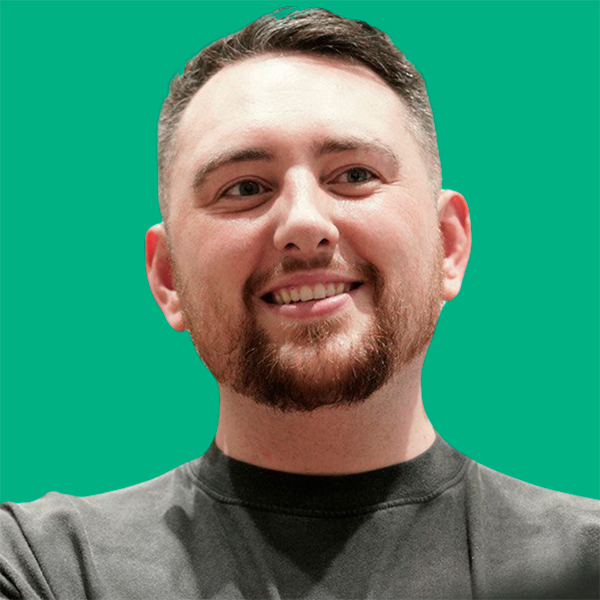
Jeremy Haynes
Owner and CEO of Megalodon Marketing
Jeremy Haynes is the founder of Megalodon Marketing. He is considered one of the top digital marketers and has the results to back it up.