Why Your Cold Traffic Won’t Convert Like Organic

I hope you enjoy reading this blog post. If you want my team to just do your marketing for you, click here.
Author: Jeremy Haynes | Published July 13, 2026
Earnings Disclaimer: You have a .1% probability of hitting million-dollar months according to the US Bureau of Labor Statistics. As stated by law, we can not and do not make any guarantees about your own ability to get results or earn any money with our ideas, information, programs, or strategies. We don’t know you, and besides, your results in life are up to you. We’re here to help by giving you our greatest strategies to move you forward, faster. However, nothing on this page or any of our websites or emails is a promise or guarantee of future earnings. Any financial numbers referenced here, or on any of our sites or emails, are simply estimates or projections or past results, and should not be considered exact, actual, or as a promise of potential earnings, all numbers are illustrative only.
Your organic content performs well, but your cold traffic converts differently. The problem isn’t your ads. You’re forcing consumption on the front end when you should be building value on the back end.
I sat down with one Inner Circle member who runs two businesses, including a home service accelerator program. He’s spending on Meta and seeing returns, but his cold traffic behaves differently than his organic leads. His organic leads show up ready to engage. His cold traffic needs more time.
Results are not typical. Your results will vary and depend entirely on your individual capacity, business experience, expertise, and level of desire. There are no guarantees concerning the level of success you may experience. The testimonials and examples used are not intended to represent or guarantee that anyone will achieve the same or similar results. We don’t believe in get-rich-quick programs. We believe in hard work, adding value and serving others. As stated by law, we can not and do not make any guarantees about your own ability to get results or earn any money with our information, courses, programs, or strategies.
7 weeks. Real frameworks. Covering copywriting, funnels, paid ads, and conversion systems.
Understanding the Interest Spectrum
Deals get done above a convicted level of interest. Period. When someone comes through your organic content, they’ve had months to consume your material. They’ve had dozens of moments that moved them from curious to convicted. By the time they book a call, they’re ready.
Cold traffic doesn’t have that luxury. Your job isn’t to force consumption on the front end with timers on your video sales letter or long-form videos they won’t watch. Your job is to nurture interest after the call is booked through what I call back end selling systems.
Most people think a timer on their video sales letter will make someone consume content. It won’t. What actually happens is they skip the video, book the call anyway, and show up without context. The blue-collar operators this member works with don’t watch confirmation page videos. They barely consume anything on the front end. But you know what they do read? Emails. Value-dense emails that hit them with insight after insight.
If you’re also running paid and organic side by side and feeling like the two channels are fighting each other for your attention, scaling paid and organic without splitting focus covers how to run both without either one suffering.
Compressing Organic’s Valuable Moments Into Cold Traffic Timelines
Think about your organic content for a second. Over several months, how many valuable moments does it take to get someone ready for a sales call? Maybe it’s when you explain financial modeling for the first time. Maybe it’s when you break down back end selling systems. Maybe it’s when you show them a specific example of a sales asset. These moments matter.
Your job with cold traffic is to extract those moments and compress them into a shorter timeframe. McKinsey’s research on the consumer decision journey found that purchase decisions move through a circular, not linear, path shaped by dozens of touchpoints, which is exactly why compressing months of organic touchpoints into a handful of high-value ones matters so much for paid traffic.
I call this compression extraction. If you’re familiar with any extraction process, you know different methods pull different percentages of the active ingredient out of the same raw material. Organic content is the low-extraction method. You can let people consume content all day because it’s free traffic. Paid traffic needs to be high extraction. Every single communication needs to be valuable or insightful. Confirmation page videos. Value-dense email sequences. Setter follow-ups. Retargeting ads. Sales assets. Every touchpoint should build conviction.
What Your Email Open Rates Are Actually Telling You
If your email open rates decline from email to email, you have a problem. This operator was sending multiple emails a day, but his open rates were flatlined or declining. That tells me the previous email wasn’t valuable. When you send a great email, the next one should have a higher open rate because people are hungry for more.
I’ve seen email sequences where we send up to multiple emails a day and people consume every single one because they’re packed with value. But you can’t just send reminders and testimonials. You need to give them insights. The blue-collar operators don’t watch videos. They read emails. So if you’re in that niche, your email game better be tight.
Start with a few emails a day. Make sure each one is better than the last. Watch your open rates. If they’re climbing, you’re doing it right. If they’re dropping, you’re boring people. For the actual frequency mechanics and sequencing structure, value-dense email sequences that improve show rates goes deep on exactly how far you can push this before open rates start to break.
Staying Connected to Client Calls Keeps Your Content Sharp
The more you pull yourself out of fulfillment, the harder it becomes to understand what resonates with your clients. This client used to do one-on-one calls with every student. He got his content ideas from those calls. He knew exactly what his people were struggling with. Then he systemized himself out of fulfillment, and now he’s guessing at what they care about.
I still do one-on-one calls three days a week for a set duration each: Monday, Wednesday, Friday. I cap it at a certain number of calls per day. And you know what? That’s one of the most valuable actions I take. I work directly with my clients. But more importantly, I learn what’s challenging them right now. I see patterns across multiple calls. I know what the next video needs to be. I know what the next standard operating procedure needs to cover. I know what’s actually valuable to them.
You can’t create great content if you’re not in the trenches. You can’t manufacture valuable moments if you don’t know what insights your market needs. Find ways to stay connected. Charge more for one-on-ones if you’re maxed out. Do fewer of them but make them count. Just don’t pull yourself out completely.
Why Education Offers Work Right Now, and Why That Won’t Last
Education offers are performing well right now because agencies have created challenges in the market. The average business owner has worked with multiple agencies. Many had poor experiences. Then they tried to hire someone in house. That presented challenges too. So now they realize they need to educate themselves. That’s where you come in.
Gartner’s research on B2B buying behavior found that a majority of buyers now prefer a largely rep-free path to a purchase decision, doing their own research and education before ever engaging a salesperson. That preference is exactly what’s fueling the current window for education-first offers.
But this window won’t last forever. Eventually, the market will shift back to done-for-you services. It’ll be more sophisticated because all these people you’re educating now will know how to evaluate agencies. So you need to move now. Build aggressively while the opportunity is still there.
This same member runs his business reactively instead of proactively. He waits until his closers are maxed out before he hires. That creates a stair-step growth pattern instead of consistent progress.
Building a Proactive Hiring and Scaling Plan
Building your business is simple in concept: fill the closer calendars. Hire more closers. Fill the closer calendars. Hire more closers. The speed at which you go from one to the other determines how fast you build. Most people fill their calendars, then slowly hire, then go sideways for weeks. You don’t want to go sideways. You want consistent progress.
Take a spreadsheet. Plug in your current spend per day. Next column: your current cost per call. Next column: how many total calls per day that produces. Next column: how many calls you can book per day based on capacity. Next column: the gap between those two.
Always operate with a buffer to your true capacity. Never hit capacity. If you hit capacity, you can’t build until you expand capacity again. Then determine your growth rate. Are you growing a certain percentage every few days? Whatever it is, plug it into the sheet. Now you know exactly when you’ll hit capacity. And if it takes you several weeks to hire a new closer, you better start hiring before you hit that ceiling. This is how you stay proactive instead of reactive. For the actual hiring and vetting mechanics once you know it’s time, hiring and vetting elite closers covers that piece in depth.
Already making money? See what it takes to make a lot more.
The Five Back End Selling Systems That Nurture Cold Traffic
There are five back end selling systems I use to nurture interest after a call is booked.
- Confirmation page best practices. This is where you put breakout videos. Some niches consume these readily. Blue-collar operators don’t. But you still need to have something valuable on that page.
- Value-dense email sequences. Send multiple emails a day depending on your niche. Each email should be packed with insights and ideally have engagement equal to or higher than the last.
- Sales assets or trust assets. These include case studies, financial models, and video breakdowns of deals you’ve done. One member I work with in Master Internet Marketing, our 7-week live comprehensive training, has numerous addresses listed with links to financial models and video breakdowns of each deal. That’s how you build trust at scale.
Results are not typical. Your results will vary and depend entirely on your individual capacity, business experience, expertise, and level of desire. There are no guarantees concerning the level of success you may experience. The testimonials and examples used are not intended to represent or guarantee that anyone will achieve the same or similar results. We don’t believe in get-rich-quick programs. We believe in hard work, adding value and serving others. As stated by law, we can not and do not make any guarantees about your own ability to get results or earn any money with our information, courses, programs, or strategies.
- Setter follow-ups. Your setters need to reach out with value, not just reminders. They should share insights in their outreach.
- Retargeting ads. These should present different angles and valuable moments, not just testimonials or reminders. Actual value.
If every communication between the call booking and the call time provides value, your engagement improves. For the full confirmation-page-to-email build-out, turning confirmation pages and value emails into revenue before the call walks through the complete system these five pieces fit into.
Why Messaging Beats Qualification for Attracting the Right Leads
The mechanism that attracts or deters the right or wrong people has nothing to do with a timer on your video sales letter. It has to do with the messaging that attracts the right or wrong person in the first place. If you have dialed-in messaging, you get the right people. If you have unclear messaging, you get the wrong people. You can’t fix wrong people with back end systems. You can only nurture interest in the right people.
So stop obsessing over timers and surveys and disqualification questions. Start obsessing over whether your messaging is actually attracting your ideal customer. Another operator was getting a mix of ideal clients and less qualified leads. That tells me his messaging isn’t clear enough. He’s attracting too broad an audience.
Tighten the messaging. Speak directly to the pain points of your ideal customer. Make it clear who this is for and who it’s not for. HubSpot’s research on buyer personas found that clear messaging built around specific audience segments consistently outperforms broad, generic appeals.
Structuring Your Offer Into Tiers Without Nickel-and-Diming Anyone
Right now, this member has one offer at a set price point. That’s it. But not everyone needs the same thing. Some people just need the basics. Some people need more advanced strategies. Some people need one-on-one consulting.
I recommend structuring your offers into multiple levels. The first tier is the simplest, most foundational material, the things with the highest probability of getting a result quickly. Help them get the win and make them a champion of your brand. The second tier is more sophisticated strategies that don’t make sense until they’re at a certain level. This can be priced higher. The third tier is high-touch material: consulting, done-for-you, placement services. This can be priced significantly higher.
You don’t withhold information to upsell people. You make it clear that certain strategies don’t make sense for them yet. Once they reach a certain level, they can access the next tier. This increases your average customer lifetime value without making people feel nickel-and-dimed. If you want the mechanics of actually building this ladder, structuring multiple pricing tiers covers it in more depth than fits here.
Your organic content is working because you’re giving people time to have valuable moments. Your cold traffic isn’t working because you’re trying to force consumption on the front end instead of building value on the back end.
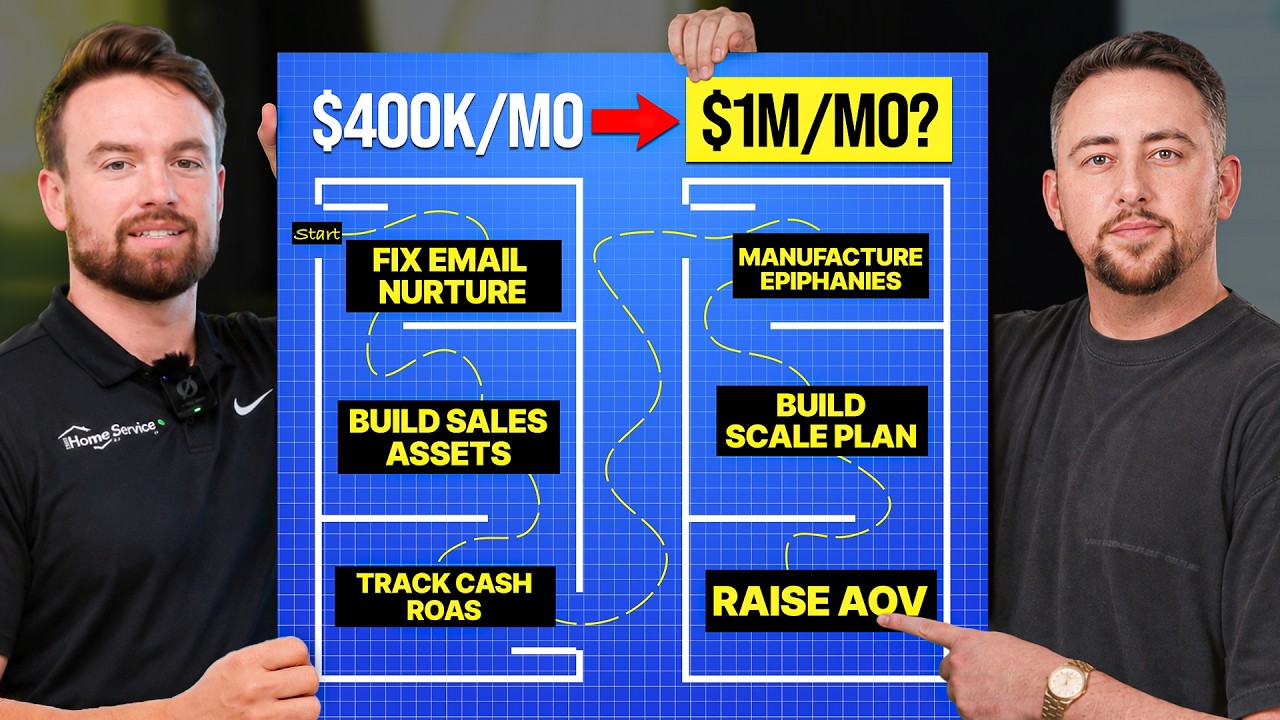
Fix your email sequences. Stay connected to your market. Build a proactive plan. Structure your offers into tiers. Tighten your messaging. And stop going sideways. The opportunity window is closing. Move now.
If you want to learn how we approach these systems in detail, check out Master Internet Marketing, our 7-week live comprehensive training, where we cover back end selling systems, email sequencing, and offer architecture.
Results are not typical. Your results will vary and depend entirely on your individual capacity, business experience, expertise, and level of desire. There are no guarantees concerning the level of success you may experience. The testimonials and examples used are not intended to represent or guarantee that anyone will achieve the same or similar results. We don’t believe in get-rich-quick programs. We believe in hard work, adding value and serving others. As stated by law, we can not and do not make any guarantees about your own ability to get results or earn any money with our information, courses, programs, or strategies.
Get my content first on Google
Add jeremyhaynes.com as a preferred source and Google shows my articles more prominently in your search results, including AI Overviews and AI Mode.


Jeremy Haynes
Owner and CEO of Megalodon Marketing
Jeremy Haynes is the founder of Megalodon Marketing. He is considered one of the top digital marketers and has the results to back it up.