
When to Keep or Replace an Agency Before All the Sales Arrive

I hope you enjoy reading this blog post. If you want my team to just do your marketing for you, click here.
Author: Jeremy Haynes | Published November 18, 2026
Earnings Disclaimer: You have a .1% probability of hitting million-dollar months according to the US Bureau of Labor Statistics. As stated by law, we cannot and do not make any guarantees about your own ability to get results or earn any money with our ideas, information, programs, or strategies. We don’t know you, and your results in life are up to you. We’re here to help by giving you our greatest strategies to move you forward, faster. However, nothing on this page or any of our websites or emails is a promise or guarantee of future earnings. Any financial numbers referenced here, or on any of our sites or emails, are simply estimates or projections or past results, and should not be considered exact, actual, or as a promise of potential earnings – all numbers are illustrative only.
If you replace a marketing agency before the people it brought in have had time to buy, the next agency can inherit the sales. You can walk away convinced the first team failed and the second team fixed everything without ever checking which work created those customers. That’s an expensive way to decide who to keep.
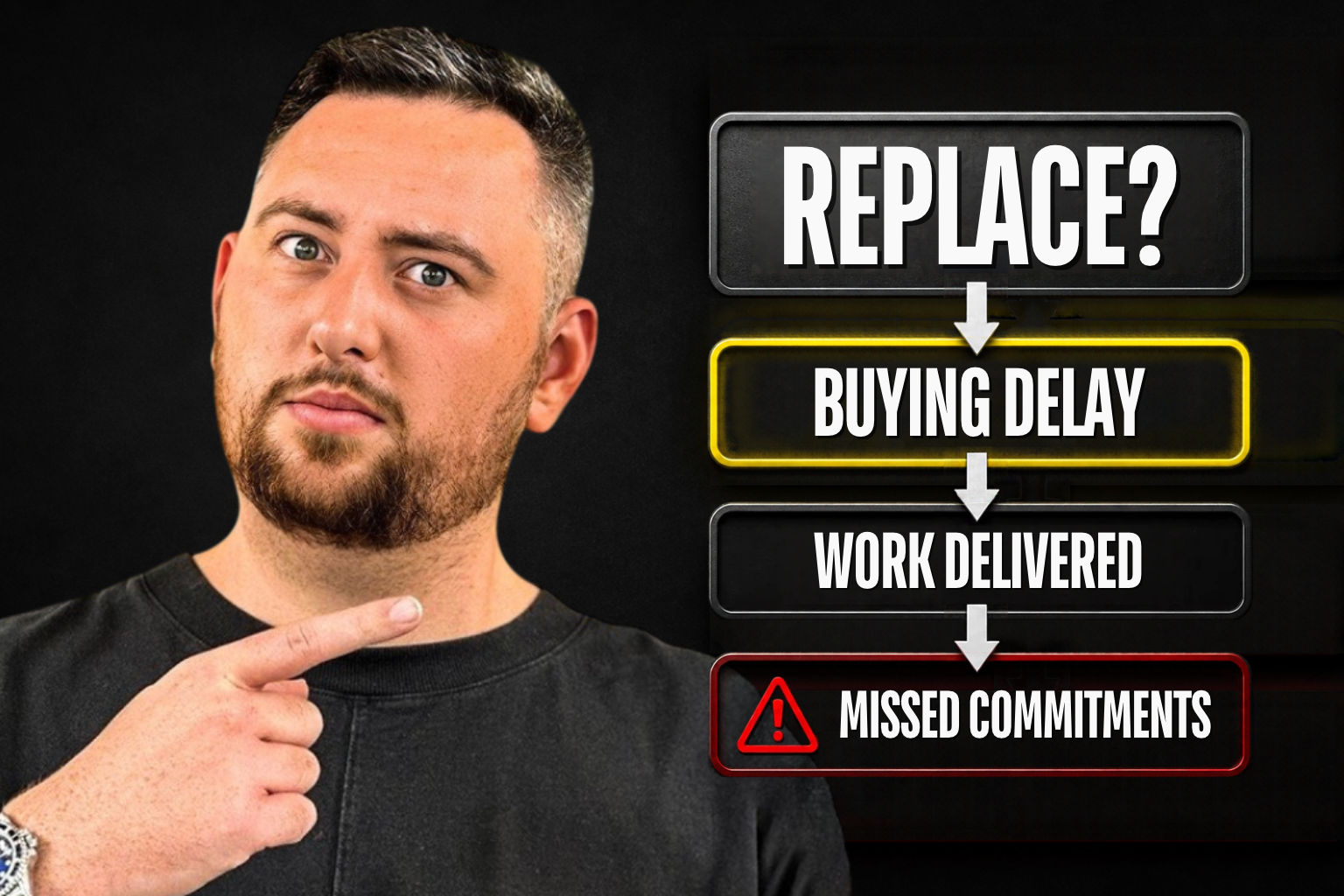
The time to judge a marketing agency’s results depends on your actual lead-to-cash cycle and what the agency agreed to deliver. You can hold it accountable for getting the work done now while checking revenue when the relevant opportunities have had time to develop. Neither part gives the other a free pass.
Already making money? See what it takes to make a lot more.
Why Replacing Agencies Can Restart the Same Argument
I worked with a business that kept rotating agencies while using a book as the beginning of its sales process. Somebody requested the resource, needed time to get through the material, and could buy later. The business wanted the acquisition to pay back much sooner than that path was producing.
That created an argument another agency couldn’t solve just by taking over the account. The company was judging an offer and buying process against a different cash expectation. Unless the funnel or the expectation changed, the new team would inherit the same issue.
Before you decide that more time will solve an account, ask what the customer still has to do before buying. Are they reading something? Waiting for another decision-maker? Working through a sales conversation? If the agency can’t explain where the actual opportunities are, “they need more time” is an incomplete answer.
Also ask whether you can afford the way this funnel pays back. A path can eventually produce customers and still keep your money tied up longer than you can support. That can be a reason to change the funnel. It doesn’t tell you, by itself, that the agency failed to execute the funnel you asked it to run.
The Review Clock Starts When the Work Reaches Buyers
Check when the campaigns, pages, and follow-up actually started reaching people. An invoice date tells you when the relationship began. It doesn’t establish how long the new campaign has been producing opportunities.
If launch was late, find out why. Did the agency miss its work, or did the business still owe it access, approvals, or offer details? You can identify a delay without treating the entire engagement as equally mature. Then decide who needs to clear the problem before more money or time goes into it.
Get the agency to show what went live and when. Open the destination, follow the application or booking path, and check that the sales team received the inquiries. This is the same expectation you should establish while vetting an agency’s plan before hiring. After launch, you can compare the work with that plan.
A long sales cycle can explain why revenue is incomplete. It cannot explain why agreed work never went live. Keep those questions separate when the account conversation gets uncomfortable. Otherwise the agency can use the customer’s buying delay to avoid a discussion about its own delivery.
Ask Which Leads Have Actually Had Time to Buy
Look at the people brought in after the new work went live. Check what happened to those inquiries and how long comparable buyers in your business have taken to pay. That gives you a better basis for the next review than a standard waiting period borrowed from another company.
For an account using Google Ads, Google provides conversion-lag reporting to help show how long conversions take to arrive. The point is practical. Recent traffic can look weak while later conversions are still coming in. Ask what event that report counts, then connect it with the sale or collection you’re trying to judge.
Your CRM and payment records need to finish that explanation. A person might have submitted the form, spoken to sales, and signed an agreement before the first payment clears. Label each event accurately. If you need to establish what the return figure means, use the client ROI reporting checks before using it to decide whether the agency stays.
Also check the reporting window. Google Ads only records conversions inside the window selected for that conversion action. A buyer paying after that window can disappear from the platform’s result even though the business received the money. Have the person managing the account explain those settings and compare the available records.
Keep open opportunities visible without treating them as revenue. If the agency says the pipeline looks promising, ask what the buyers have done and what remains. You can decide to fund more observation while still acknowledging that those sales haven’t happened.
What Must Improve Before You Give It More Time
If the work is live and suitable inquiries are moving through sales, the next review can test whether they continue moving. Write down what you expect to learn. It might be whether the people who booked attend, whether attended calls become offers, or whether buyers who accepted actually pay.
If the inquiries are unsuitable, waiting longer won’t make them suitable. Find out which message or targeting decision brought them in. If people want to buy but can’t complete the next step, examine that handoff. A stage-by-stage funnel review keeps the proposed correction attached to the failure you can see.
Get the person who can change it into the discussion. The agency might own the message and page while the client’s sales manager owns unanswered inquiries. You need both to agree on the next action. Replacing the marketer won’t make somebody inside the client’s business start calling leads they’ve already ignored.
In my Inner Circle, I’d want the operator to bring the launch date, the actual opportunities, and the point where the process stops. That is enough to start a useful discussion about what needs to change. The length of the engagement alone gives us very little to work with.
Results are not typical. Your results will vary and depend entirely on your individual capacity, business experience, expertise, and level of desire. There are no guarantees concerning the level of success you may experience. The testimonials and examples used are not intended to represent or guarantee that anyone will achieve the same or similar results. We don’t believe in get-rich-quick programs. We believe in hard work, adding value and serving others. As stated by law, we can not and do not make any guarantees about your own ability to get results or earn any money with our information, courses, programs, or strategies.
A Fair Test Still Needs a Limit on Further Spend
Patience doesn’t mean leaving the budget open. Decide what you can fund while you wait for the existing opportunities and what work should happen during that time. If you need faster cash than the current funnel can produce, put that requirement in front of the agency directly.
Ask what a different path would change for the buyer and for sales. In the book-led example, the customer had to get value from the resource before becoming interested in more help. Helping book leads use the material before asking them to book is one possible correction. Sending people through a different funnel is another decision, with its own work and requirements.
Don’t approve every suggestion at once. Agree on the change, who is doing it, and the evidence that will tell you whether it helped. Set the next review around when that evidence can reasonably be available. If the agency misses the agreed action, deal with that miss instead of moving the review date again.
You can pause new acquisition while somebody still follows the opportunities you already paid to create. Before you do, check whether the buyer still needs an email, content, or a sales conversation that will stop with the campaign. Make the pause deliberate so the test doesn’t lose the very follow-up required to finish it.
7 weeks. Real frameworks. Covering copywriting, funnels, paid ads, and conversion systems.
If You Change Agencies, Keep the Opportunities Moving
You may still decide to replace the agency. It could be missing commitments, unable to explain the account, or unable to make a needed correction. A long sales cycle isn’t a reason to keep a relationship where you can’t get the work or visibility you agreed to buy.
Before the handoff, identify who will keep working the open inquiries. Keep the campaign launch dates, original sources, known buyer activity, and promised follow-up available to that person. The new agency should be able to tell inherited opportunities from opportunities its own work creates.
If records are in HubSpot, check which properties an export includes and what other conversation history you need to retain through your approved access arrangements. Inspect the file rather than assuming a download contains everything. Give the next team enough context to continue a buyer’s conversation without starting it over.
That’s how I’d approach the keep-or-replace decision. Give completed work a fair chance to produce the outcome its buying cycle supports, address missed work as soon as you can establish it, and keep the prospects moving whichever team handles the account next.
Master Internet Marketing, my 7-week live comprehensive training, connects the funnel with the sales process behind it. That connection matters when you hire help. Know what you’re waiting to learn, what you’re paying the agency to change, and what would make you stop funding the same attempt.
Results are not typical. Your results will vary and depend entirely on your individual capacity, business experience, expertise, and level of desire. There are no guarantees concerning the level of success you may experience. The testimonials and examples used are not intended to represent or guarantee that anyone will achieve the same or similar results. We don’t believe in get-rich-quick programs. We believe in hard work, adding value and serving others. As stated by law, we can not and do not make any guarantees about your own ability to get results or earn any money with our information, courses, programs, or strategies.
Get my content first on Google
Add jeremyhaynes.com as a preferred source and Google shows my articles more prominently in your search results, including AI Overviews and AI Mode.


Jeremy Haynes
Owner and CEO of Megalodon Marketing
Jeremy Haynes is the founder of Megalodon Marketing. He is considered one of the top digital marketers and has the results to back it up.