
What to Do When Your Community Business Revenue Stalls for Months

I hope you enjoy reading this blog post. If you want my team to just do your marketing for you, click here.
Author: Jeremy Haynes | Published August 10, 2026
Earnings Disclaimer: You have a .1% probability of hitting million-dollar months according to the US Bureau of Labor Statistics. As stated by law, we can not and do not make any guarantees about your own ability to get results or earn any money with our ideas, information, programs, or strategies. We don’t know you, and besides, your results in life are up to you. We’re here to help by giving you our greatest strategies to move you forward, faster. However, nothing on this page or any of our websites or emails is a promise or guarantee of future earnings. Any financial numbers referenced here, or on any of our sites or emails, are simply estimates or projections or past results, and should not be considered exact, actual, or as a promise of potential earnings, all numbers are illustrative only.
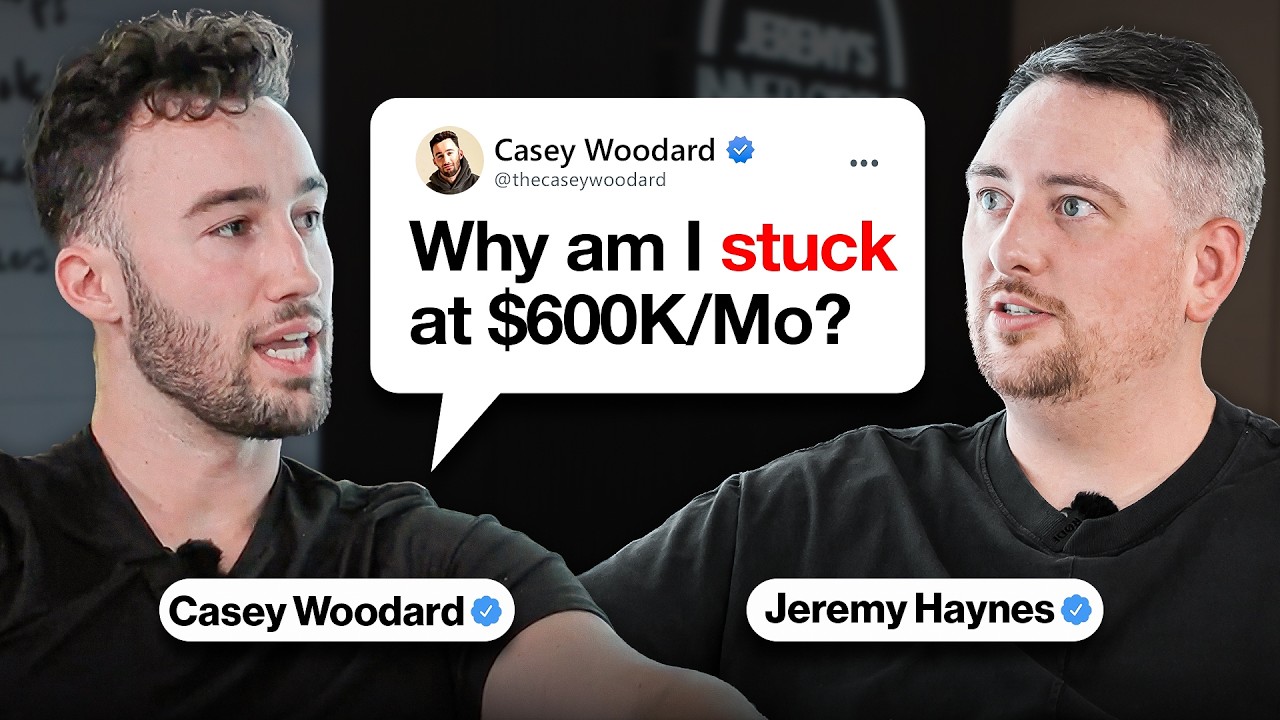
Four months at the same revenue number isn’t sideways growth. It’s a warning sign you’re tolerating constraints that don’t need to exist. When you’re managing multiple low-ticket communities and haven’t moved the needle in months, the problem isn’t your offer or your market. It’s how you’re spending your time and what you’re refusing to delegate.
This breakdown walks through what keeps community-based businesses stuck and the specific systems needed to break through. In my experience working with operators in this exact spot, the issues are rarely about strategy. They’re about execution and resource allocation.
7 weeks. Real frameworks. Covering copywriting, funnels, paid ads, and conversion systems.
How Low-Ticket Community Models Actually Work
Low-ticket recurring communities operate on specific math. I reviewed one Discord-based software and education platform for Amazon and eBay resellers that ran on a 5-day free trial model. The framework included trial signups from paid ads, conversion to paid membership, and lifetime value tracking over twelve months.
The operational reality looked like this: trial signups from paid ads, conversion rates from trial to paid, and customer retention over time. When your acquisition cost is close to your first month’s revenue, the business model depends entirely on retention and upsell execution.
This model works. It just requires precision on conversion rates, churn management, and upsell systems. According to McKinsey’s research on subscription e-commerce, churn is the single biggest challenge facing recurring-revenue businesses, since replacing lost subscribers directly undermines growth and drains cash reserves. If you’re building the low-ticket-to-high-ticket bridge on top of this same model, the mechanics work the same way I laid out in how to liquidate ad spend with a low-ticket to high-ticket funnel.
Why Organic Content Eventually Hits a Ceiling
Some businesses grow entirely on organic social media for the first several months. Multiple posts per day across several platforms drive people into automated funnels. Some boosted posts amplify what was working, but there’s no direct response ad strategy.
That approach works until it doesn’t. Organic content has a ceiling determined by how much content you can produce and how many people the algorithm shows it to. When you hit that ceiling, revenue flatlines.
The framework isn’t just “post more.” You need to understand that organic and paid serve different functions. Organic builds brand recognition over time. Paid gives you control over volume and speed. The system requires both, and someone owning each full-time.
How Conversion Rate Optimization Actually Gets Done
A conversion rate on a free trial sales page might sit at a certain percentage. Getting that page to convert at a higher rate changes the profit per visitor. But CRO doesn’t happen by accident.
It requires constant A/B testing, page iteration, and someone who understands user behavior well enough to know what to test. If you’re the founder and you’re also managing affiliates, handling customer support, and trying to run ads, CRO never gets the attention it needs.
Businesses that scale put a full-time person on conversion rate optimization. Not as a side project. As their only job. Research from VWO’s conversion rate optimization statistics shows that companies running structured on-site testing programs see meaningfully higher conversion rates than those testing inconsistently, and that only a minority of companies apply testing consistently enough to capture that gain.
What Ad Fatigue Looks Like and How to Fix It
One of the most underrated issues with paid ad performance is ad fatigue. Your stats look fine. CPMs are stable, link click-through rates haven’t changed, but suddenly your page is converting at a different rate. The issue isn’t your page. It’s that your ads have been shown to the same people too many times.
The fix is creative refresh. Not new targeting or a new funnel. Just new ad creatives that say the same thing in a different way. I’ve seen pages shift conversion rates just from launching fresh creatives with the same message.
If you’re running the same creatives for months without rotation, you’re leaving opportunities on the table. Build a system where you’re testing new creatives weekly, killing the losers fast, and scaling the winners until they fatigue. Research on Meta ad creative fatigue shows declining click-through rate is the earliest warning sign, showing up days before cost-per-acquisition actually spikes, which is exactly why waiting for CPA to confirm the problem means you’re already reacting too late.
The Isolated Ad Set Testing Framework
When you’re testing multiple different creatives on a daily budget, you need a way to force spend across all of them so you actually know what works. The standard approach of throwing them all in one ad set means only a few ever get real spend.
Here’s the framework I use:
- One campaign.
- One ad per ad set.
- Same targeting across every ad set.
- If you’ve got twenty creatives, you’ve got twenty ad sets.
- Take your total daily budget, divide it by the number of creatives, and set each ad set to that amount.
Now every creative gets spend. You’re forcing the data. The ones that perform well, you scale up individually. The ones that don’t, you kill. Because each ad set is isolated, you can see the true scale ceiling of each creative.
Set up 3-second video view exclusion audiences on each ad set so people who’ve already seen one creative don’t keep seeing it. This keeps your audience fresh and your costs controlled.
How Upsell Systems Should Actually Function
If you’re running a low-ticket subscription model and you’re not systematically presenting upsells, you’re missing the majority of potential revenue. The initial monthly fee is the entry point. Additional revenue comes from what else you can offer once they’re in.
I reviewed one framework where there were upsells at different price points for additional software access and mentorship. But those upsells were only being presented during live community calls that a small percentage of members attended.
That’s a structural problem. If most of your customers never see the upsell offer, you need email sequences, retargeting ads, and customer success managers monitoring usage patterns. I built out this exact kind of triggered upsell structure in the client milestone system for upsells, where the offer shows up automatically at the moment a member is most likely to say yes, instead of waiting for the small fraction of members who happen to attend a live call.
Look at how SaaS companies structure their upsell systems. They monitor user behavior, track feature usage, and present relevant upgrades at key moments in the customer journey. When someone tries to cancel, there’s a systematic retention sequence. That’s operational design, not pressure tactics.
How Customer Success Managers Should Drive Revenue
Customer success managers shouldn’t just onboard people. They should monitor what people are doing inside your platform and identify opportunities to offer relevant next steps.
If someone’s asking questions about a specific feature or hitting usage limits on a tool, that’s a signal. A good CSM sees that and reaches out with a targeted recommendation. Not a generic pitch. A specific offer based on what that person is trying to accomplish.
I’ve seen this work when a CSM noticed the types of questions a member was asking and made a relevant training offer. The person bought because the offer was perfectly timed. That only happens when someone’s actually paying attention.
If your response rate to CSM outreach is low, the problem is probably how you’re writing the messages. Formal emails get ignored because they look automated. Try casual subject lines, short emails, and a tone that sounds conversational. I’ve seen response rates change just from that adjustment.
Stop Accepting Flat Revenue as Normal
The biggest issue here is tolerance. When you’ve been stuck at the same revenue number for four months and you’re still convinced you’re doing everything you can, you need to reassess.
You’re not actually trying new things. You’re doing more of the same actions and calling it progress. Real progress means stopping the stuff you think needs to get done and replacing it with the small percentage of actions that drive most results.
That might mean dropping entire projects. It might mean hiring someone to take over a role you’ve convinced yourself only you can do. It might mean admitting that the randomness consuming your day isn’t going to go away on its own.
You don’t break a revenue plateau by working harder. You break it by working on different things. If you don’t have the time to work on different things because you’re buried in the day-to-day, that’s a hiring problem. I walk through exactly how to hand off that work without losing quality in how to delegate and replace yourself in your business without losing quality or control.
Build a Team Where Each Role Pays for Itself
Every position you add should be a calculated assessment of whether that role will generate more value than it costs. If you’re generating revenue from affiliate relationships and you pay someone to manage affiliates full-time, the question is simple: can that person generate more than their cost by focusing only on that?
If the answer is obviously yes, hire them. If the answer is maybe, you need to get more specific about what outcomes you expect and set a trial period to test it.
The mistake most people make is thinking they need to fully understand a role before they hire for it. That’s backwards. You hire someone who’s better at that role than you, give them clear expectations and a testing window, and see if the framework works.
I hired someone whose only job is creating one lead magnet per day. Pair it with content, create promotional assets, drive people to a form, and convert them into a backend offer. That role has a specific cost and I’ll pay more as it develops because the framework functions.
Already making money? See what it takes to make a lot more.
Give Every High-Impact Role a Single Owner
If you’re running a model where you manage multiple communities, you can’t be the bottleneck on every single one. You need a structure where each high-impact role has a dedicated owner. I broke down what this looks like for a solo operator running a pod team in scaling a solo operator’s pod team structure past the bottleneck.
One person owns content and organic growth. One person owns paid ads and creative testing. One person owns CRO and funnel optimization. One person owns customer success and upsells. One person owns affiliate management.
Each of those roles should be revenue-positive on its own. If the person managing affiliates can’t generate more than their cost, the role doesn’t make sense. If the CRO person can’t justify their position through conversion improvements, same thing.
Bottom line: when you build a team where each person owns one high-impact area, you’re no longer the constraint. The business can develop without you being in the weeds on every decision.
Four months of flat revenue isn’t a market problem. It’s an execution problem. The opportunities exist. The levers are visible: paid ads, CRO, upsells, content systems, hiring the right people. The issue is you’ve been too busy doing everything else to actually pull those levers.
Stop tolerating the randomness. Stop convincing yourself you need to understand every role before you hire for it. Stop doing low-impact work because it feels productive. Start making bigger decisions, hiring faster, and cutting the things that don’t move the number. Businesses that scale ruthlessly prioritize the small percentage of actions that drive most results, and that’s exactly the kind of operational rebuild we work through together inside Inner Circle, our private mastermind, or in Master Internet Marketing, our 7-week live comprehensive training. This is built for operators who are serious about execution.
Results are not typical. Your results will vary and depend entirely on your individual capacity, business experience, expertise, and level of desire. There are no guarantees concerning the level of success you may experience. The testimonials and examples used are not intended to represent or guarantee that anyone will achieve the same or similar results. We don’t believe in get-rich-quick programs. We believe in hard work, adding value and serving others. As stated by law, we can not and do not make any guarantees about your own ability to get results or earn any money with our information, courses, programs, or strategies.
Get my content first on Google
Add jeremyhaynes.com as a preferred source and Google shows my articles more prominently in your search results, including AI Overviews and AI Mode.


Jeremy Haynes
Owner and CEO of Megalodon Marketing
Jeremy Haynes is the founder of Megalodon Marketing. He is considered one of the top digital marketers and has the results to back it up.