Why This Virtual Aesthetics Education Business Was Losing at the Webinar Close
I hope you enjoy reading this blog post. If you want my team to just do your marketing for you, click here.
Author: Jeremy Haynes | Published July 6, 2026
Earnings Disclaimer: You have a .1% probability of hitting million-dollar months according to the US Bureau of Labor Statistics. As stated by law, we can not and do not make any guarantees about your own ability to get results or earn any money with our ideas, information, programs, or strategies. We don’t know you, and besides, your results in life are up to you. We’re here to help by giving you our greatest strategies to move you forward, faster. However, nothing on this page or any of our websites or emails is a promise or guarantee of future earnings. Any financial numbers referenced here, or on any of our sites or emails, are simply estimates or projections or past results, and should not be considered exact, actual, or as a promise of potential earnings – all numbers are illustrative only.
Your webinar booking rate is stuck under 10%, and it’s not because your ads suck. Spend is consistent, clicks are coming in, people are opting in just fine. The traffic side of this funnel is doing exactly what it’s supposed to. The close is where it’s falling apart.
I recently worked with a virtual aesthetician who teaches licensed estheticians how to run skin care consultations over Zoom instead of being stuck in a treatment room all day. Clients get a customized at-home routine instead of a monthly facial.
She was doing consistent monthly revenue but hit a ceiling. Her funnel metrics showed exactly where the constraint lived.
Most people running specialized education businesses shorten their webinar because they assume nobody has the attention span for a long one. That’s backwards. In my experience through Master Internet Marketing, our 7-week live comprehensive training, the businesses seeing the strongest conversions run webinars that go 90 minutes to two hours with a full hour dedicated to the close.
Results are not typical. Your results will vary and depend entirely on your individual capacity, business experience, expertise, and level of desire. There are no guarantees concerning the level of success you may experience. The testimonials and examples used are not intended to represent or guarantee that anyone will achieve the same or similar results. We don’t believe in get-rich-quick programs. We believe in hard work, adding value and serving others. As stated by law, we can not and do not make any guarantees about your own ability to get results or earn any money with our information, courses, programs, or strategies.
7 weeks. Real frameworks. Covering copywriting, funnels, paid ads, and conversion systems.
How Virtual Estheticians Scale Without a Clinic
Virtual aesthetics is exactly what it sounds like. Instead of requiring in-person appointments, estheticians consult with clients over Zoom to build customized at-home skin care routines.
The model works because most skin results come from what clients do at home daily, not from monthly facials. One virtual client session runs 30 minutes. Compare that to traditional in-person facials that require treatment rooms, equipment, and significantly more overhead.
For estheticians already licensed and working, this represents a shift from trading time for money to delivering consultations remotely. The challenge is most estheticians have never operated this way and don’t know it’s possible. Education businesses in this space teach the model, the process, and the systems required to transition.
The One Metric Holding the Funnel Back
This operator was running an automated webinar funnel driving to one-call closes. She was spending roughly $30K monthly on Meta ads with these metrics. The webinar calculator helps model how spend, registration, attendance, booking, and sales rates interact:
- CPM: $49
- Link click-through rate: 2.4%
- Opt-in rate: 12.2%
- Webinar show rate: 37%
- Booking rate: 8.7%
- Call show rate: 50.8%
- Close rate: 33.3%
Her CPMs and click-through rates were solid. The ads were working. People were intrigued enough to click. But the booking rate from the webinar was the constraint choking everything downstream. In my experience, most high-converting webinars in specialized education markets see booking rates well above where hers was sitting, once the presentation properly addresses objections and builds urgency instead of rushing past them.
Why Her Booking Rate Was Stuck at 8%
When your booking rate sits at 8% on webinar leads, something fundamental is broken in how you’re presenting the close.
She was doing a “mini pitch” at 30 minutes, then continuing with more education, then pitching again at the end. The webinar ran about 65 minutes total.
When someone hears a pitch and has unanswered questions, their brain stops processing new information. They’re stuck waiting for clarity on what you already introduced. Going back into education after a pitch creates cognitive friction. Webinar leads should show up to calls enthusiastic and pre-sold. A 50% call show rate signals those leads aren’t excited. They’re lukewarm at best.
Businesses that run traditional formats with 45 to 60 minutes of education, then transition into a full close that handles every possible objection, see dramatically different booking behavior.
How to Structure a Webinar Close That Actually Converts
One-to-many selling is fundamentally different from one-on-one sales conversations. In a private call, you can assess what someone specifically needs to hear and adjust in real time.
In a webinar, especially an automated one, you can’t adjust. You have to cover every objection type that could exist. You need to address all the reasons someone would buy, all the risk reversals that might appeal to different personality types, and every component of your offer in detail. When you stay shallow in the close, you don’t handle what needs handling. Your booking rate suffers as a direct result.
The framework I recommend involves dedicating the entire first hour to education and another full hour to the close. Retention rates of 80% to 90% all the way through are completely normal when the content delivers value. This isn’t about making the webinar longer for the sake of length. It’s about staying in the close long enough to handle every objection that would prevent someone from booking.
How She Doubled Her Opt-In Rate by Addressing Skepticism
This operator had improved her opt-in rate from 7% to 12.2% by adding education to her landing page about what virtual aesthetics actually means.
She added a bold section immediately after the hero that said: “Let’s be completely honest. If you’re a licensed esthetician, your immediate reaction to virtual aesthetics is probably ‘no way, you can’t clear acne from home.'” Then she explained how most results come from daily at-home routines, which estheticians already know to be true.
That single addition nearly doubled her opt-in rate because it addressed the immediate skepticism someone feels when they hear “virtual esthetician” for the first time.
But there was still room to improve. The next logical questions someone has after understanding what it is are: “Is there demand for this?” and “How much can I realistically make?” Adding two more sections to handle those questions could push opt-in rates higher. One section should do the math: show how many clients someone could realistically add per week and what the average transaction looks like.
The other section should demonstrate demand. Pull data on how consumer behavior has shifted toward virtual services. McKinsey’s research on telehealth adoption found virtual consultation usage is highest among younger, higher-income consumers, exactly the demographic that tends to overlap with people seeking specialized at-home beauty and wellness services.
Already making money? See what it takes to make a lot more.
Why Most Education Businesses Fail at Customer Success
Out of over 100 customers sold, only 15 to 20 had posted any kind of success results. That’s a testimonial problem, but more importantly, it’s a success activation problem.
Most of these estheticians weren’t consistently creating content, which was the primary method for generating virtual client bookings. Without content, there’s no discovery. Without discovery, there’s no revenue. The business offered a content service upsell where an agency would script, edit, and post content for clients. Only five people out of over 100 bought it. That’s a 5% upsell rate, which signals the offer doesn’t match what customers actually want or need at that point in their journey.
Frame the initial purchase around a 30-day challenge designed to create a new habit. Send aggressive reminders when people fall behind. Provide daily content ideas, examples, and formats. Make it as easy as possible for someone to show up and execute.
Most people won’t do it even with all that support. Those are the people you upsell the content service to in the 30 to 60 day window. The ones who do execute and start seeing results? Those are the people you offer different backend products to: maybe an annual mastermind, discounted product supplier plug-ins, advanced certifications, or live events.
You can’t upsell people at 90 days if they haven’t seen success yet and you’ve only touched them once per week. That’s 12 total touchpoints over three months. It’s not enough to create behavior change.
Why the First 30 Days Determine Everything
Think about how gyms operate. Someone signs up, excited to get in shape. Then they never show up again. The gym still gets paid because of the membership model, but the customer gets no result.
Now imagine if the gym’s system flagged first-time visitors and employees were trained to congratulate them, offer equipment tutorials, and check in on their experience. Imagine if showing up became easier because the environment actively supported the new habit.
Most education businesses assume that because someone bought, they’re committed. But buying and doing are completely different. Businesses that focus intensely on the first 30 days through in my Inner Circle see dramatically different customer success rates. They build systems that make it nearly impossible for customers not to take action: reminders, accountability sequences, examples, templates, and escalations for people falling behind.
The 30-day window is your success window. The 30 to 60 day window is your fallback-to-success window and your upsell window. If you wait 90 days to check in meaningfully, you’ve already lost most of your customers.
When to Hire a Sales Manager Versus Managing Sales Yourself
This operator was spending most of her day managing closers: jumping on the end of calls to help close deals, role-playing with new hires, and coaching underperformers. One closer had improved their close rate over time. Another just started and needed constant supervision.
You’re always going to be involved in sales as a business owner, especially with a specialized offer that requires education to close. You won’t be on the phones forever, but you’ll always be training. Before offloading the role, do a simple assessment. Is there something else you could be doing that makes more money per hour than managing sales? If yes, it’s time to transition. If no, keep doing it.
But first, optimize what’s taking the most time. Build better training systems. Record your best closes and turn them into training modules. Create objection-handling scripts. Automate the repetitive parts of onboarding new closers. Most people try to hire their way out of inefficiency instead of systematizing first. Fix the system, then hire someone to run it.
How One Software Change Nearly Destroyed Monthly Revenue
One of the most valuable exercises you can run is the “what could destroy me” test. Do it weekly or monthly.
This operator switched from her existing application software to a newer tool mid-month. The tracking broke. Data stopped flowing back to Meta. Call volume dropped from 10 to 14 calls per day down to two. Revenue that month dropped from a projected amount to a significantly lower amount, and the next month started slow.
All because of a single software change. In my experience, unplanned technology changes are consistently one of the highest-risk activities in digital marketing operations, right up there with ad account bans and payment processor issues.
Proactive operators think through these risks ahead of time. Is this a brand-new tool built by someone without a track record? Are we the first movers on something unproven? What’s the downside if this breaks? Other common risks include key employees leaving, ad accounts getting shut down, payment processors dropping you, or platform algorithm changes. You can’t prevent every possible failure, but you can identify your single points of failure and build redundancy around them.
The Highest-Leverage Changes to Make First
The immediate priorities were clear:
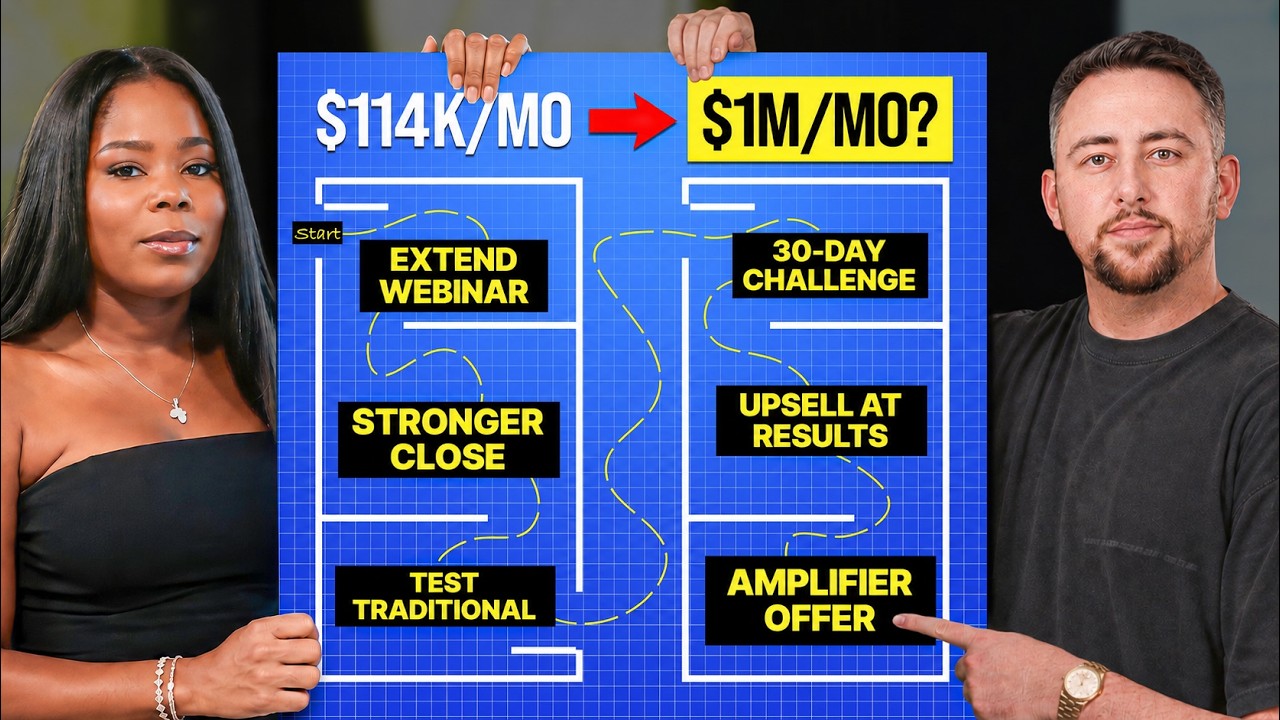
- Run a traditional webinar format with a longer, more thorough close.
- Add two sections to the opt-in page that address demand and income potential.
- Build a 30-day challenge that activates more customers in their first month.
- Develop backend offers that match what successful customers actually want to buy next.
None of this is complicated. It’s just execution on fundamentals that most operators skip because they’re too focused on the front end. If you’re running a specialized education offer in a market that doesn’t fully understand what you do yet, your webinar needs to educate deeply before it sells. Your onboarding needs to create habits, not just deliver access. Your backend needs to serve customers at different stages of success.
Results are not typical. Your results will vary and depend entirely on your individual capacity, business experience, expertise, and level of desire. There are no guarantees concerning the level of success you may experience. The testimonials and examples used are not intended to represent or guarantee that anyone will achieve the same or similar results. We don’t believe in get-rich-quick programs. We believe in hard work, adding value and serving others. As stated by law, we can not and do not make any guarantees about your own ability to get results or earn any money with our information, courses, programs, or strategies.
Get my content first on Google
Add jeremyhaynes.com as a preferred source and Google shows my articles more prominently in your search results, including AI Overviews and AI Mode.

Jeremy Haynes
Owner and CEO of Megalodon Marketing
Jeremy Haynes is the founder of Megalodon Marketing. He is considered one of the top digital marketers and has the results to back it up.