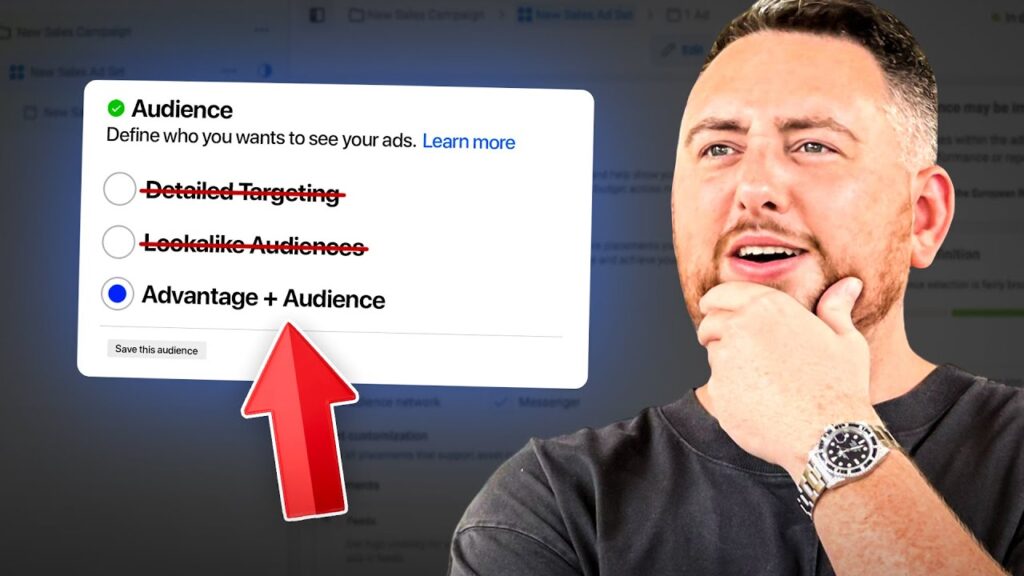
Advantage Targeting
Advantage Targeting is Meta’s system that lets the algorithm expand beyond your selected audience parameters to find better-performing users. Instead of being locked into the exact demographics, interests, and behaviors you choose, Meta can go outside those boundaries if it thinks it’ll get you better results. This is Meta’s way of pushing advertisers to give the algorithm more freedom instead of micromanaging every detail of your targeting. The idea is that their AI knows more about user behavior than you do and can find converting customers you wouldn’t have thought to target manually.
When It Actually Helps
Advantage Targeting works best when you’ve got a proven offer, solid creative, and enough conversion data for Meta’s algorithm to understand what a good customer looks like for your business. If your pixel has tracked hundreds or thousands of conversions, the system can identify patterns and find similar users across the platform even if they don’t fit your original targeting criteria. This is especially useful when you’re scaling because manual targeting eventually taps out and limits your reach. Letting Meta expand your audience can unlock new customer segments you never would have discovered on your own.
Why Some Advertisers Hate It
The biggest complaint about Advantage Targeting is that it feels like giving up control and trusting Meta to spend your money wisely. A lot of advertisers have been burned by the algorithm, spending their budget on completely irrelevant audiences that don’t convert. If your conversion tracking isn’t set up properly or you don’t have enough data, Advantage Targeting can work against you by wasting spend on the wrong people. The key is starting with tight targeting to prove your campaigns work, building up conversion data, and then gradually giving Meta more freedom once the algorithm has learned what success looks like for your specific business.