The 4 Stage Scaling Ladder And How To Win Each Stage
I hope you enjoy reading this blog post. If you want my team to just do your marketing for you, click here.
Author: Jeremy Haynes | Published June 2, 2026
Earnings Disclaimer: You have a .1% probability of hitting million-dollar months according to the US Bureau of Labor Statistics. As stated by law, we can not and do not make any guarantees about your own ability to get results or earn any money with our ideas, information, programs, or strategies. We don’t know you, and besides, your results in life are up to you. We’re here to help by giving you our greatest strategies to move you forward, faster. However, nothing on this page or any of our websites or emails is a promise or guarantee of future earnings. Any financial numbers referenced here, or on any of our sites or emails, are simply estimates or projections or past results, and should not be considered exact, actual, or as a promise of potential earnings – all numbers are illustrative only.
Most businesses don’t fail because they lack hustle or good ideas. They fail because they’re using the wrong playbook for their current stage.
I’ve seen it happen repeatedly. Someone in the early stages tries to operate like they’re already established. They hire a full team, spend heavily on ads for an unproven offer, and burn through cash faster than they can generate it. Six months later, they’re back at zero wondering what went wrong.
The problem isn’t effort. It’s that what works at one stage actively breaks at the next.
That’s why I built a framework around four distinct growth stages. It’s a way to understand exactly where you are, what actually matters at that stage, and what you need to focus on to move forward without destroying what you’ve built. Through my Inner Circle (a private, application-gated mastermind) and our 7-week live comprehensive training Master Internet Marketing, I’ve walked hundreds of operators through this exact progression.
Results are not typical. Your results will vary and depend entirely on your individual capacity, business experience, expertise, and level of desire. There are no guarantees concerning the level of success you may experience. The testimonials and examples used are not intended to represent or guarantee that anyone will achieve the same or similar results. We don’t believe in get-rich-quick programs. We believe in hard work, adding value and serving others. As stated by law, we can not and do not make any guarantees about your own ability to get results or earn any money with our information, courses, programs, or strategies.
Let me break down each stage and show you the operational realities at every level.
Already making money? See what it takes to make a lot more.
What to Focus On When You’re Just Starting Out and Revenue Is Inconsistent
This is the proof stage. You’re in survival mode, and that’s completely normal.
At this stage, revenue is inconsistent. You’re doing everything yourself. There are no real systems, no team, maybe a VA if you’re fortunate. Most people here are still working a day job or living off savings while they figure this out.
The biggest mistake I see at this stage is people trying to optimize for infrastructure before they have anything worth building around. They’re constructing funnels, hiring media buyers, setting up complex automation, spending thousands on ads. All of that is premature.
Your only job at this stage is proving your offer converts. Not building a brand, not running paid traffic at volume, just proving people will pay you money for what you’re selling.
That’s it.
According to research from CB Insights, 42% of startups fail because there’s no market need for their product. The bottleneck here is offer-market fit. If you can’t sell your offer manually, one-on-one or in small group settings, no amount of traffic or marketing infrastructure is going to change that.
What actually works at this stage is manual outreach. DMs, calls, networking events, posting organically and having real conversations with potential buyers. You’re selling directly, getting on the phone, closing deals yourself, and collecting proof.
Your goal is to get your first group of paying clients or customers. Get testimonials. Get case studies. Document what’s working. Iterate the offer based on real feedback from people who actually bought.
Keep your overhead near zero. Don’t rent an office. Don’t hire a team. Don’t invest in expensive software you don’t need yet. Every dollar you generate should either go back into your pocket or into acquiring more clients.
The mindset shift you need here is accepting that you ARE the business right now, and that’s fine. You’re supposed to be doing everything. This stage is about learning what works so you can systematize it later.
You know you’re ready to move to the next stage when you can consistently sell your offer, you have documented proof it works, and you’re turning away business because you physically can’t handle more clients.
How to Build Systems and Processes Once Your Offer Is Proven
This is the systems stage. You’ve proven the offer works. Now you need to build repeatable systems so growth isn’t entirely dependent on you showing up every single day.
Revenue is more consistent here, but it’s fragile. You’re still heavily reliant on your own energy and time. If you take a week off, revenue drops. If you get sick, everything stalls.
The bottleneck shifts from offer-market fit to systems and processes. You need documented ways to generate leads, close sales, and fulfill on what you sold. This is where paid advertising starts to make sense because you have data proving your offer converts.
The focus at this stage is on customer acquisition cost versus lifetime value. Can you acquire customers profitably and repeatedly? The operational framework needs to support that equation.
The biggest mistake here is hiring too fast without documented processes. People hire senior expensive talent when they really need executors who can follow a system. Or they hire multiple people at once and suddenly their margins disappear.
What actually works is documenting SOPs for your core functions. Record yourself doing the work for two weeks. Use those recordings as training materials. Write down every step of your sales process, your fulfillment process, your content creation process.
Introduce a paid traffic system. Meta ads, YouTube ads, Google ads, whatever fits your business model. Start small. Test. Optimize. Scale what works. Here’s how to ramp paid ads to profit without blowing your budget.
Build a basic funnel that works without you manually closing every single deal. This might be a VSL, an application funnel, a webinar, whatever. The point is you need a way to generate sales without you being on every call.
Make your first one to three hires. Usually this is a VA, a media buyer or ads manager, and someone handling customer success or fulfillment. Hire for execution, not strategy. You’re still the strategist.
Shift from one-on-one delivery to one-to-many. Group programs, recorded courses, productized services. You can’t expand if every client requires substantial hours of your personal time per week.
The mindset shift here is realizing you need to work ON the business, not just IN it. Your job is building the machine, not being the machine.
You’re ready for the next stage when you have documented systems, a small team executing those systems, and profitable paid traffic. Revenue is consistent, and the business can run for a week or two without you, even if it’s not optimal.
When to Transition From Operator to Team Leader
This is the team stage. You’re shifting from operator to leader. The business needs you to manage people, not do the work.
Revenue is solid here, but margins might compress as team costs rise. You’re paying salaries, software subscriptions, ad spend, contractors. If you’re not careful, you can grow revenue and shrink profit at the same time.
The bottleneck is people and leadership. Hiring, training, retaining, delegating. This is where a lot of founders struggle because they’ve never managed a team before. They either micromanage everything and become the bottleneck, or they delegate too much too fast and things fall apart.
Paid traffic is now a core growth engine. You’re spending substantial amounts per month. Creative and offer iteration become your competitive edge. You need a constant flow of new ad angles, new hooks, new creative, because what worked last quarter stops working this quarter.
Research from McKinsey shows that companies with strong operational processes grow revenue 2.5 times faster than those without. The focus here is revenue per employee and profit margin. These operational metrics tell you whether you’re building a sustainable business or just creating a complex job for yourself.
What actually works here is hiring a second-in-command or operations manager. Someone who can run the day-to-day so you can focus on strategy, marketing, and growth.
Build departments. Marketing, sales, fulfillment, operations. Each department has a leader, clear KPIs, and weekly check-ins.
Implement project management and communication systems. Slack, Asana, ClickUp, whatever. If you’re still managing everything through text messages and random DMs, you’re going to drown.
Weekly KPI dashboards and meeting rhythms. Every department should know their three to five leading indicators and review them weekly. Revenue, leads, conversion rate, ad spend, ROAS, customer satisfaction, delivery time, whatever matters for that function.
Diversify traffic sources. Don’t rely on just Facebook or just YouTube. If one platform changes their algorithm or restricts your account, you need other channels keeping revenue flowing.
Scale ad creative testing. At this stage, you should be testing multiple ad variations per month. Different hooks, different angles, different formats. UGC, testimonials, founder-led, educational, entertaining. Volume matters.
Start building an actual brand, not just running direct response. People should recognize your name, your face, your company. Brand equity becomes a moat that makes all your marketing more efficient.
The mindset shift is understanding your job is to lead people who do the work. You’re not the best salesperson anymore. You’re not the best marketer. You’re not the best fulfillment person. You’re the person who hires, trains, and leads the best people in each role.
You’re ready for the next stage when the business can run profitably for a month without you being involved in daily operations. You have leaders managing each function, systems are documented and followed, and you’re focused on strategy and vision.
How to Build a Business That Runs Without You Being Involved Every Day
This is the scale stage. You’re in multiplication mode. The question isn’t whether the business works, it’s how durable it is, how much leverage you have, and what your options are.
Revenue is strong. You’re operating at a level where you’re thinking about enterprise value, net profit, owner’s discretionary earnings. You’re building something that could run without you or potentially be acquired.
The bottleneck is strategy, capital allocation, and culture. Where should you invest the cash the business generates? How do you maintain culture as you expand? How do you keep innovating instead of just riding one winning offer until it dies?
The focus shifts to net profit, enterprise value, and what I call the Owner’s Freedom Score. How many days can the business run profitably without you? If the answer is less than 30, you don’t have a mature operation yet.
The biggest mistakes here are chasing top-line revenue at the expense of profit, founder burnout from never fully stepping back, and lack of innovation. I’ve seen businesses operate at high revenue levels where the owner takes home less than someone making a corporate salary because margins are destroyed.
What actually works is launching complementary offers and products. Build an ascension model. Low-ticket to mid-ticket to high-ticket to continuity. Maximize lifetime value across a product suite instead of just having one offer.
Strategic partnerships, joint ventures, affiliate programs. Leverage other people’s audiences and infrastructure to grow faster than you could alone.
Build media assets that compound. A podcast, a YouTube channel, an email list. According to HubSpot, companies that blog regularly generate 67% more leads than those that don’t. These become distribution moats that make every other part of your business easier and more cost-effective.
Bring in CFO-level financial oversight. Cash flow management, tax strategy, reinvestment planning. At this stage, poor financial decisions can be extremely costly.
Consider your exit strategy or long-term wealth-building plan. Are you building this to run for decades? Transition in five years? Take chips off the table and invest in real estate or other assets? You need a plan.
Advanced ad strategies come into play. Broad scaling, international expansion, omnichannel campaigns. You’re spending substantial amounts on ads monthly. You need sophisticated tracking, attribution modeling, and creative systems to make that profitable.
The mindset shift is becoming the visionary and capital allocator, not the operator. You set the vision, you decide where to invest resources, you make the big strategic bets. Everything else is handled by your team.
Through Master Internet Marketing, I walk operators through these exact transitions, showing them the operational frameworks that work at each level.
Results are not typical. Your results will vary and depend entirely on your individual capacity, business experience, expertise, and level of desire. There are no guarantees concerning the level of success you may experience. The testimonials and examples used are not intended to represent or guarantee that anyone will achieve the same or similar results. We don’t believe in get-rich-quick programs. We believe in hard work, adding value and serving others. As stated by law, we can not and do not make any guarantees about your own ability to get results or earn any money with our information, courses, programs, or strategies.
Why Using the Wrong Stage Playbook Destroys Most Businesses
What kills most businesses is using the wrong stage’s playbook.
I see early-stage businesses trying to hire a full team and run substantial ad spend before they’ve proven their offer converts. They burn through capital in three months and have nothing to show for it.
I see second-stage businesses refusing to systematize and hire because the founder wants to “stay lean.” They plateau and can’t break through because they’re doing everything themselves.
I see third-stage businesses where the founder is still on every sales call, still doing all the marketing, still the single point of failure. Revenue is capped because the founder’s time is capped.
And I see fourth-stage businesses that stop innovating. They ride one offer, one traffic source, one strategy until it stops working. Then they panic and try to rebuild everything from scratch.
The research backs this up. The Startup Genome Project found that 74% of high-growth startups fail because of premature scaling. They tried to act like a third or fourth-stage business when they were still in the first or second stage.
Your job is to honestly assess where you are and do what actually works at that stage. Not what you wish worked. Not what works for someone three stages ahead of you. What works for where you are right now.
How to Accurately Diagnose Which Growth Stage You’re Actually In
If you’re not sure which stage you’re in, here’s a diagnostic framework:
You’re in the first stage if: Revenue is inconsistent, you’re doing everything yourself, you don’t have documented proof your offer converts at volume, and you’re still figuring out product-market fit.
You’re in the second stage if: You can consistently sell your offer, you have some clients or customers, but the business completely depends on you showing up every day. You don’t have real systems or a team yet.
You’re in the third stage if: You have documented systems, a small team, profitable paid traffic, but you’re still heavily involved in operations. The business might survive a week without you, but not a month.
You’re in the fourth stage if: You have department leaders, the business runs profitably without your daily involvement, you’re focused on strategy and vision, and you’re thinking about enterprise value and long-term wealth building.
Most people overestimate what stage they’re in. They want to believe they’re further along than they are. That’s ego, and ego is expensive.
Be honest about where you are. Then do the work required at that stage. That’s how you actually grow without destroying what you’ve built.
Why Your Role Must Evolve as Your Business Grows
One of the hardest parts of growth is accepting that your role has to evolve.
At the first stage, you’re a doer. You’re the salesperson, the marketer, the fulfillment person, the customer service rep. You wear every hat because there’s no one else to wear them.
At the second stage, you’re a manager. You’re documenting systems, training people, overseeing execution. You’re still in the weeds, but you’re starting to build the infrastructure that will eventually replace you in certain roles.
At the third stage, you’re a leader. You’re managing managers. You’re setting vision, building culture, making strategic decisions. You’re not doing the work anymore, you’re leading the people who do the work.
At the fourth stage, you’re a visionary. You’re thinking three to five years out. You’re making big bets on new offers, new markets, new opportunities. You’re allocating capital and resources. The business runs without you.
Most founders get stuck because they refuse to let go of the previous stage’s identity. They want to stay the doer even when the business needs a leader. They want to stay the operator even when the business needs a visionary.
Your willingness to evolve your role is directly correlated to how far you can grow. Here’s how to build decision rules that remove you from low-value work at every stage.
7 weeks. Real frameworks. Covering copywriting, funnels, paid ads, and conversion systems.
The Operational Framework That Keeps You Moving Forward
Growth isn’t about working harder. It’s about knowing what stage you’re in and doing what actually works at that stage.
Stop trying to use fourth-stage tactics when you’re in the first stage. Stop refusing to build systems when you’re in the second stage. Stop being the bottleneck when you’re in the third stage.
Diagnose where you are. Do the work required at that stage. Move to the next level when you’re actually ready, not when you’re impatient.
That’s how you build something that lasts.
If you’re ready to build the systems and frameworks that actually work at your stage, I walk through this entire progression in our 7-week live comprehensive training Master Internet Marketing. You’ll see the exact operational playbooks we use at each stage, and how to implement them in your business. For operators who want more hands-on guidance, my Inner Circle (a private, application-gated mastermind) provides the community and accountability to make these transitions stick.
Results are not typical. Your results will vary and depend entirely on your individual capacity, business experience, expertise, and level of desire. There are no guarantees concerning the level of success you may experience. The testimonials and examples used are not intended to represent or guarantee that anyone will achieve the same or similar results. We don’t believe in get-rich-quick programs. We believe in hard work, adding value and serving others. As stated by law, we can not and do not make any guarantees about your own ability to get results or earn any money with our information, courses, programs, or strategies.
Get my content first on Google
Add jeremyhaynes.com as a preferred source and Google shows my articles more prominently in your search results, including AI Overviews and AI Mode.

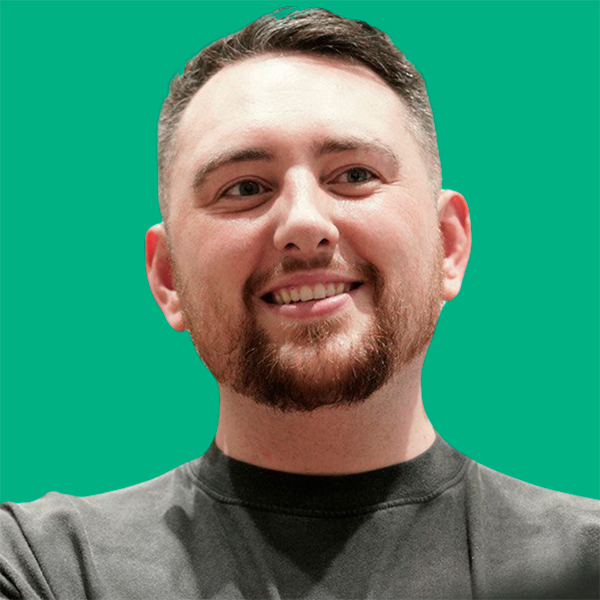
Jeremy Haynes
Owner and CEO of Megalodon Marketing
Jeremy Haynes is the founder of Megalodon Marketing. He is considered one of the top digital marketers and has the results to back it up.