
Choose Lead Magnet Types Around Your High-Ticket Buyer

I hope you enjoy reading this blog post. If you want my team to just do your marketing for you, click here.
Author: Jeremy Haynes | Published October 7, 2026
Earnings Disclaimer: You have a .1% probability of hitting million-dollar months according to the US Bureau of Labor Statistics. As stated by law, we cannot and do not make any guarantees about your own ability to get results or earn any money with our ideas, information, programs, or strategies. We don’t know you, and your results in life are up to you. We’re here to help by giving you our greatest strategies to move you forward, faster. However, nothing on this page or any of our websites or emails is a promise or guarantee of future earnings. Any financial numbers referenced here, or on any of our sites or emails, are simply estimates or projections or past results, and should not be considered exact, actual, or as a promise of potential earnings – all numbers are illustrative only.
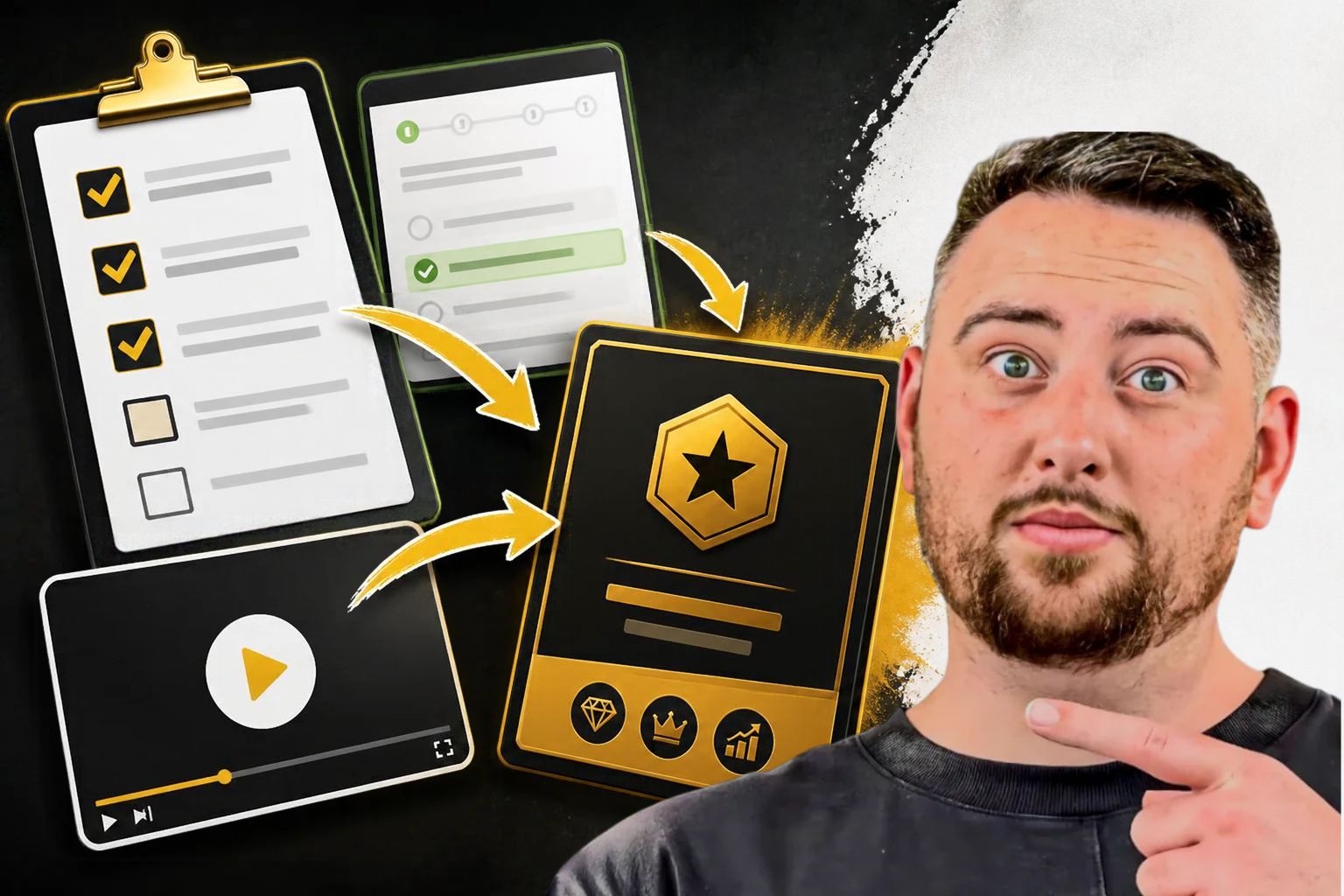
A checklist, an assessment and a training video can all be useful lead magnets for high-ticket offers. Choosing among them starts with what the buyer needs to work out. Someone trying to identify a problem needs different help from someone comparing ways to solve it. Changing the file format will not fix a resource aimed at the wrong decision.
Before building another download, look at the paid offer and the question a suitable prospect would need answered before considering it. Choose a lead magnet format that helps with that question. Then judge the resource by what happens after people use it, including whether the resulting inquiries fit the work you actually sell.
Free does not mean unqualified. Paying for an introductory product does not establish that someone can use or afford the larger offer. The format gives you a way to teach something useful; qualification still requires its own evidence.
7 weeks. Real frameworks. Covering copywriting, funnels, paid ads, and conversion systems.
Already making money? See what it takes to make a lot more.
Start With the Question Before the Purchase
Start with a question that matters to a potential buyer of your actual offer. A broad topic can attract interest while leaving the important buying question untouched.
Consider a business selling help with an existing sales process. A general guide to starting a business addresses a different reader from a resource that helps an operator examine where current opportunities stall. Both might be useful. Only the latter directly fits the situation that service addresses.
That is a proposed content distinction, not a claim about conversion rates. You still need to test whether the intended audience recognizes the problem and finds the resource useful.
Listen to the questions that come up before someone can seriously evaluate the offer. They may need to understand the problem, compare approaches, prepare information or judge whether the work fits their circumstances. Choose a resource that helps with a specific unresolved question.
The relationship between messaging and lead quality matters before the opt-in. A resource promoted with a vague promise can attract people with very different expectations. State who the material is for and what it will help them understand.
Use a Checklist to Make Missing Work Visible
A checklist suits a buyer who already understands the task but needs to check whether the required pieces are in place. Its value comes from helping them inspect something they actually have.
For a service that improves existing funnels, that could mean reviewing the handoff between a form submission and a booked conversation. The checklist would help the reader examine their own process. It would not need to promise a revenue increase to be useful.
Make each item something the reader can answer through inspection. “Improve your follow-up” is too broad to check. “Confirm where a submitted inquiry appears and who receives it” points toward something observable.
A template serves a related but different purpose. It gives the reader somewhere to organize their information or complete a task. Use it when the obstacle is putting the work together, rather than recognizing which work is missing.
HubSpot’s lead magnet guide includes checklists, templates and other formats. That range is useful because there is no reason to dismiss a simple document merely for being a document. The practical question is whether it does the job you promised.
Do not make the free resource deliberately incomplete so the reader has to buy an explanation. Deliver the advertised help. Paid support should have a clear scope of its own.
Use an Assessment When the Problem Is Unclear
An assessment fits someone who needs help identifying where to look. Its questions should distinguish situations that call for different next steps.
If every answer produces the same pitch, the assessment has not helped the person understand anything. It has collected information while pretending to evaluate it. Give the reader a useful explanation of what their answers suggest and what remains unknown.
Keep the limits visible. Self-reported answers may be incomplete, and a short assessment cannot examine everything a paid engagement would investigate. Avoid presenting a simple score as a definitive judgment about a business.
You can still make the result practical. Point the person toward a record to review, a question to settle or information to gather. Those actions can be useful even if they never become a customer.
The eventual application is a separate step. The article on qualification forms that reject the wrong buyers covers how limited response options can distort that decision. Do not treat a lead magnet assessment as a substitute for an accurate sales qualification process.
Also consider whether you need to collect sensitive business information at this stage. Ask only for information needed to deliver the advertised resource and handle it through your established privacy process.
Use Training to Explain a Choice or Show the Work
A training resource makes sense when the reader needs to see how an approach works or understand the tradeoffs behind a decision. Video is useful when showing the work adds something the reader would miss in a short document.
Explain the situation the training addresses before asking for registration. A prospect comparing delivery approaches should be able to tell that the material will help with that comparison. A broad promise to reveal everything about growth leaves the intended viewer guessing.
Keep the teaching complete enough to satisfy the stated promise. If the subject is how to evaluate a particular approach, cover the reasons it might fit and the conditions that could make another approach more suitable. An uninterrupted sales pitch does not fulfill that promise.
Live and recorded delivery have different operating requirements. Live delivery requires a real schedule and someone available to deliver it. Recorded training can be accessed without attending that event. Neither format establishes buyer quality by itself.
The original temptation is to rank formats from serious to unserious. That gets ahead of the evidence. A useful recorded explanation can answer the buyer’s question, while a live event can leave it unresolved.
If you show a case example, use verified, approved material and explain the relevant conditions. Avoid making a selected outcome sound typical or suggesting that watching the training makes it repeatable.
Keep the Free Resource Connected to the Paid Offer
The paid offer should make sense after the resource without requiring a sudden change of subject. Write that connection down before producing the asset.
A reader might use a checklist to identify incomplete work and then consider hiring help to address it. They might use training to compare approaches and then evaluate a provider that implements the relevant approach. The connection is understandable because the same problem continues through both steps.
My public book funnel training discusses the relationship between an introductory product and the main offer. It also acknowledges different book distribution models. The useful point here is to evaluate the relationship between the offers instead of assuming a price tag settles lead quality.
A paid introductory product is a different offer from a free lead magnet. Buying it confirms that purchase. It does not confirm budget, need or readiness for a larger engagement, and it does not guarantee that acquisition costs will be recovered.
If the resource resolves the person’s whole problem, let that be a useful outcome. Do not invent a larger problem to justify the follow-up. Some readers will be satisfied with the resource; others may have a genuine need for the work you sell.
In my Inner Circle, operators can discuss decisions about their offers and marketing. For this decision, bring the resource, the paid scope and the actual questions prospects ask after using it.
Results are not typical. Your results will vary and depend entirely on your individual capacity, business experience, expertise, and level of desire. There are no guarantees concerning the level of success you may experience. The testimonials and examples used are not intended to represent or guarantee that anyone will achieve the same or similar results. We don’t believe in get-rich-quick programs. We believe in hard work, adding value and serving others. As stated by law, we can not and do not make any guarantees about your own ability to get results or earn any money with our information, courses, programs, or strategies.
A Download Does Not Tell You Who Can Buy
A download tells you someone requested a resource. It does not tell you everything you need to know about their suitability for the offer.
HubSpot’s lead scoring documentation separates engagement from fit. Engagement concerns actions and interactions; fit concerns characteristics recorded about the contact or company. Keep that distinction when reviewing who your lead magnet attracts.
A prospect can engage heavily with your content while needing a service you do not provide. Another person can read quietly and later make a relevant inquiry. Your follow-up should establish the missing information instead of assigning financial capacity or urgency based on clicks.
Ask what the person wants help with when a sales conversation becomes relevant. Confirm the scope, the buying process and whether the proposed work belongs in their plans. A lead magnet can prepare that conversation without completing it on the buyer’s behalf.
This also changes how you judge a form. More questions do not automatically create better leads. Collect what you need to deliver the resource, and reserve additional qualification for a step where its purpose is clear.
Keep the follow-up tied to what the reader requested. Someone who asked for a checklist should receive it promptly, rather than discovering that access depends on attending an unexpected sales call.
Already making money? See what it takes to make a lot more.
7 weeks. Real frameworks. Covering copywriting, funnels, paid ads, and conversion systems.
Compare Formats by the Inquiries They Produce
Compare lead magnets using the resulting inquiries as well as the opt-ins. A larger list may be useful, but list size alone cannot tell you whether the resource supports the paid offer.
Record which resource a prospect requested and keep that context with the later inquiry where your systems and consent settings allow. Google Analytics campaign parameters can help identify referring campaigns in reporting. They do not automatically connect every download to a sale; that requires appropriate tracking and records across the rest of the process.
Read the inquiries themselves. Are people asking about work you provide? Do they understand the scope more clearly, or are you correcting the same expectation repeatedly? A recurring misunderstanding can point back to the resource’s promise or the way it is promoted.
Keep comparisons fair enough to learn from. If you change the audience, the promise and the format together, you cannot confidently credit the file type for the difference. Document what changed and describe the result at the level the evidence supports.
For the follow-up after delivery, the existing article on nurturing interest toward a paid offer covers the broader sequence. Here, settle the earlier choice of what the resource needs to help someone decide.
If you want to explore Master Internet Marketing, my 7-week live comprehensive training, the application page has the details. Before building your next lead magnet, write down the buyer’s unresolved question and choose the simplest format that can answer it honestly.
Results are not typical. Your results will vary and depend entirely on your individual capacity, business experience, expertise, and level of desire. There are no guarantees concerning the level of success you may experience. The testimonials and examples used are not intended to represent or guarantee that anyone will achieve the same or similar results. We don’t believe in get-rich-quick programs. We believe in hard work, adding value and serving others. As stated by law, we can not and do not make any guarantees about your own ability to get results or earn any money with our information, courses, programs, or strategies.
Get my content first on Google
Add jeremyhaynes.com as a preferred source and Google shows my articles more prominently in your search results, including AI Overviews and AI Mode.


Jeremy Haynes
Owner and CEO of Megalodon Marketing
Jeremy Haynes is the founder of Megalodon Marketing. He is considered one of the top digital marketers and has the results to back it up.