
How to Build a Book Funnel That Scales to Over $1M Per Month

I hope you enjoy reading this blog post. If you want my team to just do your marketing for you, click here.
Author: Jeremy Haynes | Published December 9, 2025
Earnings Disclaimer: You have a .1% probability of hitting million-dollar months according to the US Bureau of Labor Statistics. As stated by law, we can not and do not make any guarantees about your own ability to get results or earn any money with our ideas, information, programs, or strategies. We don’t know you, and besides, your results in life are up to you. We’re here to help by giving you our greatest strategies to move you forward, faster. However, nothing on this page or any of our websites or emails is a promise or guarantee of future earnings. Any financial numbers referenced here, or on any of our sites or emails, are simply estimates or projections or past results, and should not be considered exact, actual, or as a promise of potential earnings – all numbers are illustrative only.
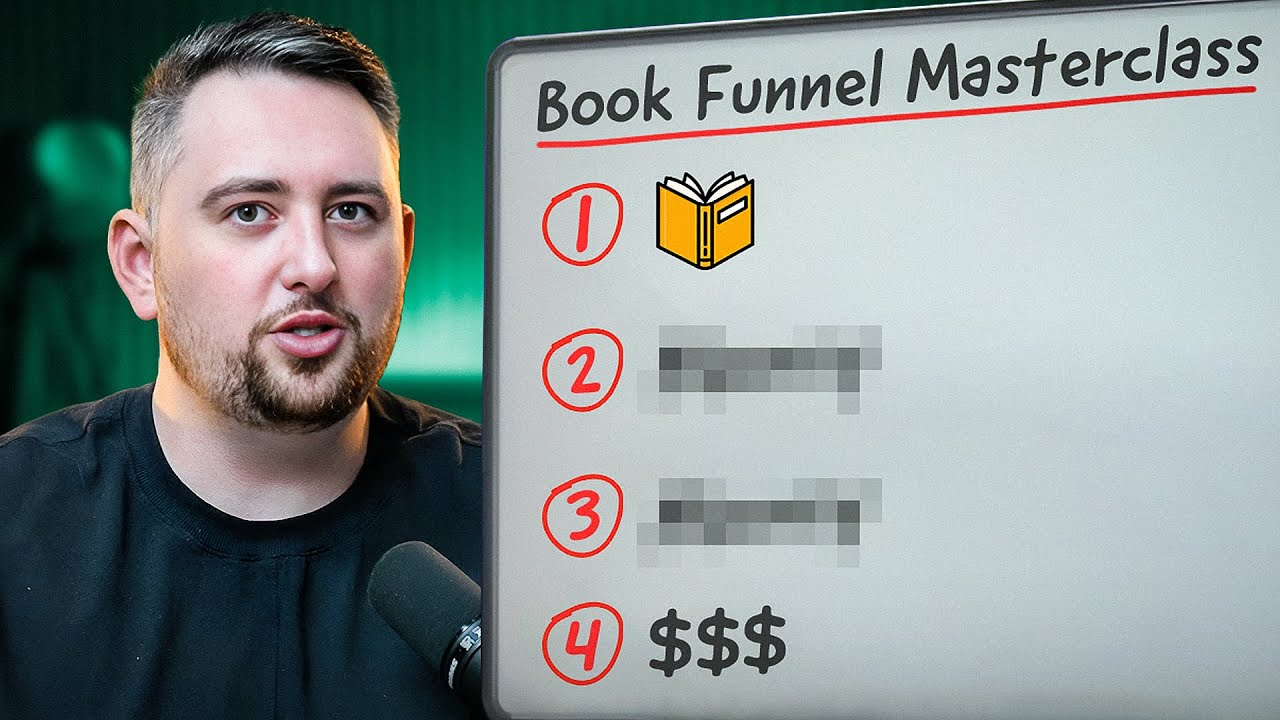
Today we’re going to be talking about scaling up book funnels. They can be surprisingly a really strong revenue driver.
We have a client right now doing about $1.6 million a month and it mainly comes from book funnels. Not all of it, but more than a million a month of it.
It’s impressive. It’s an OG funnel. It’s a classic. Used to work extremely well. Had a short duration of time where it was a little iffy.
And then just recently like webinars, challenge funnels, long-form content, we’ve seen low ticket to high ticket in general make a pretty substantial comeback.
Not to say that it completely died and it didn’t work. It’s just had a lot more friction in the past the most recent few years.
But now, oh man, friction be gone. It’s ripping again.
So we’re going to talk about not just the basics of book funnels. That’s not what this is for. We dedicate all the lessons here to talking about million-dollar months.
So more so from a scale perspective, we’re going to be talking about book funnels and how they play their part in that specific game.
We’re also going to be taking a majority of the focus here today and isolating it to the best practices of taking somebody from buying a book, some of the ascension that happens in the OTO offers, and then we’re going to get to the point where we talk about ascending them to a high ticket product, which is obviously what a book funnel is all about, in order to make some real money off this thing.
If you’re new here, welcome in. To reiterate all we talk about here, million-dollar months.
We don’t make income claims saying that you’re going to do it. We just take the lessons of the currently 41 different businesses that we’ve gotten there, hand them down to you in content just like this.
If your business is already generating $100k+ per month, My Inner Circle is where you break through to the next level. Inside, I’ll help you identify and solve the bottlenecks holding you back so you can scale faster and with more clarity.
If you are already following along, welcome back. It’s a pleasure to have you. Really excited to talk about this lesson here today.
So here we go.
Should You Give Your Book Away Free or Actually Sell It for Money
Book funnels. Let’s be clear on what that means.
Usually, you’re driving traffic from a standard direct response ad and you’re telling people, “Go buy my book.”
This is done differently. Some people do it for free. Some people do it for shipping and handling, which they’ll generally articulate as free. And then some people literally just sell the book.
Depending on how you want to do it. I got to keep it real and saying like I’m not really that particular on one of these three mechanisms over the others.
I haven’t seen one like heavily biased in, you know, creating too dramatic of an effect where it’s like, “No, no, don’t do these, only do this.”
I will say this though, if you pick one of them that actually involves some money like shipping and handling and you can still give them a digital copy of the book, I am a little against the shipping and handling angle because a lot of people will articulate it as though it’s free and it’s not.
Research on paid vs free lead magnets suggests that asking for even a small payment or fee increases the likelihood of attracting serious customers and dissuades those only looking for freebies.
You know, they got to pay money and then because you articulate it as free, I like to believe they have a lower probability to ascend to the upsells that come after getting it for free.
Why Selling Your Book Attracts Better Buyers Than Giving It Away Free
Usually free attracts broke people. Free lead magnets tend to draw many users who just want something free and may not convert into buyers. Studies and marketing experts often warn that free lead magnets attract lower-quality leads compared with paid lead magnets, which tend to bring in buyers who are already willing to spend.
You don’t see Louis Vuitton or Gucci or high-end brands or Lamborghini or Ferrari or whatever level of the spectrum – you know, luxury watch brands aren’t giving out free things.
They only give out free things when you spend an exorbitant amount of money with them.
Point being doesn’t matter what the brand is when it’s a sell to rich people brand. Rarely does free attract the right people. Generally attracts the general public.
So anyway, I like to sell to rich folks. I obviously want to sell a book with the intention of upselling those people on something that’s high ticket.
So I do generally prefer to sell the book, but again, free shipping and handling, sell the book – all have worked really well.
So I’m not biased. I just like to think I attract a better person when I actually try to sell it.
So anyway, try to bias towards selling the book, but it is what it is if you do the other ones.
What to Sell After Someone Buys Your Book to Increase Your Revenue
Now from here, there’s generally three different OTO offers.
So this is an opportunity for somebody to increase their average order value right here. We generally like to do three of them.
These are one of those things where after you’ve gotten the book, no matter which one of the initial three options you’ve selected, you then get routed over to a page that tries to sell you something else.
So here are a few things that work really well.
Number one, the audio version of the book. This can also be like video lessons that you pair.
So as an example, take all the chapters in the book, just make a video talking about that specific chapter, pair it as an upsell. It’s an easy upsell. It generally has a really high take rate, and it does awesome.
And it depends. I want to be fair and just peppering in a few things real quick before we continue on to OTO 2 and OTO 3.
They’re very simple things. I have a high ticket product client right now that sells red light panels. And their high ticket customer is typically a business, a sports franchise, a med spa, a physical therapist of some kind, or just a high ticket personal trainer that’s selling to like celebrities and rich people.
They can sell the panels to anybody, but for the way that we do their version of a book funnel, we take the book and we try to appeal to those specific demographics.
So even for physical products, book funnels still apply.
We mainly and originally deployed this strategy inside of the info space. That was the first place that we really saw life with this specific strategy.
We even rolled it out to the high ticket services niche that’s not selling info but can lead with info and then sell their high ticket service.
As an example, we did this with some wealth managers.
So anyway, I generally like to think that all these things apply to all those scenarios I just articulated, but take the general concepts of what I’m saying and try to apply it to your niche.
All this should apply across the board for any type of high ticket product or service. That’s how I’m thinking of it when I articulate it to you.
So anyway, whatever the book is, sell the audio version of it on the OTO 1 and or sell the video chapter lessons from each one of those.
How to Break Out Pieces of Your Main Product to Sell as Book Upsells
Now OTO 2, this is just, by the way, a quick side tangent. Big thing that drives a really low take rate on book funnels is just selling random stuff with the book.
You know, it’s like you sell them the book and you try to sell them like a completely different course on the back end of these things. Doesn’t really make much sense.
Ideally, what you’re selling on these OTOs, these little upsells is something that relates to the book and is like clearly relatable. Not like loosely relatable, like clearly relatable.
Like the audios and the video lessons, obvious give or take the person and who we’re working with.
I’ll give you an example with info. We like to do like a mastermind event footage bundle.
This crushes especially if it has relatability to the book’s topics.
So as an example, let’s say you have a few speeches you’ve done at masterminds or events or like something that just even looks like it and it relates to like more advanced topics or examples or like something else that comes with the book – that rips too.
Another example to the second one that works really well if there’s something you could sell somebody we call it like a breakout product.
So I’ll give you a quick visual, right? Let’s say that this is the main product. And let’s say that it’s made up of like a dozen different things.
If you can break out those dozen different things and you can strategically sell one or two of those dozen different things and it clearly has relatability to the main thing that you’re selling, then it makes sense to do a breakout product.
So if I can take like two of my dozen different things that make up the main thing and branch out of it.
A quick example of that, in my marketing agency and my education products, I’m very well known for these things. I call them content ad strategies. I also sometimes refer to them as like propaganda machines or just propaganda content.
I have a little under a dozen of these content ad strategies and they range in usage and niche and like, you know, audience type.
And if I just took my main product, which is made up of like just shy of a thousand training videos, some of my products like the Inner Circle, they have one-on-one calls, weekly group calls, masterminds, we do them four times a year.
We have group chats full of rich people trying to get richer in that offer. And we also include Jeremy AI now with unlimited usage for the Inner Circle.
The Inner Circle has access to I think currently it’s like 28 different SOPs. Some of those SOPs being the content ad strategies.
I have years worth of mastermind footage that those people get access to. I have I want to say almost a hundred weekly group calls that we’ve done that are logged in a training library that are super advanced like built for the rich people.
Not just my student base as a whole, but like specifically folks that are already at a couple hundred grand or even a million a month trying to hit the next million.
There’s also just shy of a thousand training videos in there in general that have been shot over the years and that continue to get shot and added.
And even if I just looked at those, like which one of those could I break out, right? I could take, let’s just say, two dozen of just shy of a thousand training videos, I could break that out as long as they’re themed and like have some relatability to my book that I’m selling.
You see? And the topic of the book, like what’s discussed in the book, the book itself to a big degree is one of these things. It’s like breakout information, you know? It’s something that they still get a tangible result with.
I’ll use another example. I have so many training videos and courses and like Q&As that go over just improving show rates, right?
To the point where I could take a fraction of that content and it could be my OTO 2. You see what I’m saying?
I could take just the content ad strategies, break them out, bang, that’s OTO 2. You know, it’s like a bundle of the SOPs and OTO 3 could be like a bundle of the mastermind talks I’ve done on those topics.
You know, OTO, whatever number is the training video specific to like in the ads manager implementing those topics.
And I could do another OTO where it’s like just a long list of all the examples of content that relate to the different ad strategies.
You see what I’m saying? It’s all contextual and related to like what the book’s topic might be in that example, but it still is just a tiny little fraction.
You know, that’s a great use case of doing all the content I make for you guys. I can sit down. I can put you guys on extreme levels of game, but it’s still without exaggeration like a tiny little fraction of what’s inside of all my paid offers, which you can of course find links for down below.
And I’d encourage you to. They’re a lot more helpful than this.
So anyway, my point being breakout offers – that logic is really what you want to do for all these OTOs up here. That’s the main thing.
Why Your Book Funnel Should Be Profitable Before You Scale Ad Spend
And need I not say with an OTO, with a one-time offer that you’re making to people, you are essentially just giving them like a buy or die – like you know ideally it’s a good price. You’re trying to walk out.
Let me just be clear on the intention. The intention of these like the OTOs one through 3 is to get the AOV to go up to a point where you’re profitable on what it costs to get somebody to convert in the first place from the direct response ad. Data shows that upsell/OTO funnels can reliably boost average order value when conversion rates stay in the 20-40% range, with businesses that effectively use one-time offers seeing conversion rate increases of up to 30%, making this kind of profitable scaling plausible.
So if I get a cost per book purchase, let’s just say at 20 bucks, right? I just want my AOV to be higher, as high as possible of course, but just higher than what it costs to acquire the customer.
Data shows that upsell/OTO funnels can reliably boost average order value (AOV) when conversion rates stay in the 20‑40% range, making this kind of profitable scaling plausible.
I am not one of those guys that tells you to lose money on the front end on stuff unless it’s something that is set up to lose money on the front end like a call funnel, a DM strategy, even a webinar, you know, sometimes a challenge because we do paid challenges a lot as well.
Research shows that upselling and cross-selling programs lift revenue and AOV by 10-30% on average, with strategic post-purchase offers proven to increase average order value while maintaining profitability on front-end acquisitions.
Point being low ticket to high ticket I am not a fan of losing money even though we’re going to make a lot of money on upselling the person and that’s technically where the real revenue is at.
I just know from a large swath, just a giant sample size of clients we’ve worked with over the years, high-level Inner Circle members that do these kinds of things and even my student base as a whole – book funnels can be one of those things that’s profitable on the front end.
So why not be profitable? I want to go into it ideally shooting for about a 2 to 1. That’s the benchmark.
The tolerable zone is like a little bit above break even. Not at break even, a little bit above break even.
The more profitable we are, the more we can deal with the fluctuations of advertising. You know, around holidays, ad costs go up. Around turbulent news, costs go up.
You know, and obviously, need I not say, different times of year, costs go up naturally. Like Q4 is a great example.
I want to have enough profitability to endure those random cycles and some of those predictable cycles that we already know are going to happen anyway.
How to Get Double Digit Conversion Rates on All Your Book Upsells
So you do not want to see single-digit conversion rates on OTOs. Ideally, at a minimum, you’re seeing double digits across the board. Even if it’s as low as 10%. It should ideally be double digits.
And you should, by the way, see – this is a very uncommon talked about strategy with OTOs. Some of your OTOs are going to have a higher take rate than others.
The ones that have the highest take rate should be first, and the ones that have a lower take rate should be second and third and ideally tested with something else as time goes on.
The reason we want to have the highest take rate OTO first is because it’s going to have an even higher take rate if it is first.
The thing with OTOs is people go into it thinking like I’m only here to spend the amount of money or the cost of the book.
So every one-time offer that you make them here is something that adds an additional cost that they didn’t perceive they were otherwise going to have to pay.
It’s kind of like the Costco analogy. Like you’ve probably heard this in your life once or twice – for those international folks like pick some bulk store that just sells a bunch of random stuff.
People go in there with a specific list, a specific – this is what I’m here to buy. But the stores are set up in a strategic way to influence you and dramatically increase the odds for them that you’re going to buy more than just what you came there to purchase.
So you walk out spending more money than what you otherwise intended.
Now when that occurs, again, you anticipated only spending a certain dollar value, but the things that you added along the way, they were no-brainers. You were like, you know, like we bought, we’re going to add this, too.
You don’t really care because it just makes sense to buy.
That’s the point of OTOs. You don’t want to have like a fatigue in your OTOs where somebody’s like, “Oh, I bought the book. Like, are you now trying to offer me other stuff?”
Like, “No, no, no.” Again, the things that you sell here should be great enough, have enough alignment, like we talked about with the main thing you’re selling for them to be like, “Yeah, this makes sense. I want to buy it.”
So again, you’re walking out of this at this point in the funnel with a higher AOV than what it cost to acquire the customer itself.
So we have the cost of growth factored in, can officially start to scale.
How to Use Multiple Facebook Pixels to Scale Book Funnels Past $1M Monthly
Now once we get past OTO 3, let’s work our way down here to the final thing.
There’s two more pages that we ideally want to add. One of them is a call scheduler.
I want to give people the ability at the end of this funnel to schedule a call with the team.
This is typically done through an application and a scheduler. Some clients that we have, they’ll skip the application because they feel like, hey, if the person got this far, great.
They sometimes even route people who purchase like a certain dollar threshold to go to the scheduler page and not have an application because they deem them qualified.
There’s a really high take rate on higher ticket products when they originate from already buying something like a low ticket product of any kind, but mainly with a book funnel.
So anyway, after they go to the call scheduler, there’s really two pages depending on if you did any kind of conditional logic or app grading here.
We have our qualified confirmation page and then we have our unqualified confirmation page.
So I generally like to route people just from a pixel conditioning perspective to one page or the other based on application data.
You can also, by the way, just as I described above, use a grading tool to enable you to route people to a scheduler after they’ve purchased a certain amount in the funnel itself, right?
So that can also allow you to dictate where they go or where they don’t go and which scheduler they would therefore see.
But, I digress. Point being, what this is going to do, this is going to allow me to pixel the people who are good.
And I can still obviously add a pixel here. But again, like the point of the pixel is I’m going to add the standard event of like schedule or I’m also going to use like complete registration as another standard event that can be applicable here.
And I am not going to be adding any kind of standard event for the unqualified people.
Now what this gives me the ability to do just from a pixel conditioning perspective and this is very important to understand strategically.
How to Get Book Buyers to Schedule High Ticket Sales Calls Automatically
So most people – this technically is the initial confirmation page. So OTO 1 is the first place that they land after they actually buy the book.
And you can obviously optimize this for purchase. That’s a standard event linked to somebody who bought the book but did not buy anything else.
So you’re simply optimizing around book buyers in that example, which is a great strategy.
I’m going to put you guys on to a very high level of game with what I’m about to discuss. And we’re going to get into some pro tips.
This next part is very important to understand. I can either use custom conversions here or I can just move that standard event of purchase further down the funnel.
So I can take this purchase event and instead of it being on OTO 1, I could put it on OTO 3 as an example.
Now this is an even stronger pro tip, which honestly, you’re lucky I’m even telling you this before buying one of my products because this level of what I’m about to describe is sick.
I can have a purchase standard event on all three of these pages and have it linked to three separate pixels that I can optimize for.
So I can have pixel 1, pixel 2, and pixel 3.
Now listen to this. I can therefore have three campaigns running all optimized for purchase but linked with a different pixel and one of them optimizes around OTO 1.
The second pixel optimizes around people who bought OTO 1 and officially hit OTO 2’s purchase page signifying they bought on OTO 1.
And then OTO 3 I can have a third pixel optimizing as though people hit there and bought OTO 1 and OTO 2 or just bought one of the original OTOs and got to that page with a certain dollar value spent.
And I could do the same thing by the way down here with a fourth pixel optimized for purchase as well.
And then need I not say on these pages over here, the qualified and unqualified page, mainly the qualified one – as I described already, I also have a pixel here that I can optimize for schedule or complete registration or I could do cyclic campaigns and technically do both.
If you struggle to follow along with what I just said and you want a lot more in-depth information, examples, and us to even hold your hand in doing it, check out the links below for something like the Inner Circle or our Master Internet Marketing class.
Master Internet Marketing is a 7-week class that goes through a lot of in-depth information, 3 to 5 hours per class, dozens of videos in between.
You can ask Jeremy AI to hold your hand as an example doing these different things.
The Inner Circle is for the higher level of those of you reading this. You’re already at $100K a month or more. Ideally, you’re at least doing a couple hundred grand a month.
Some of you are already doing a million a month trying to tack on the next million. The Inner Circle is more for you and we’ll hold your hand in doing these things.
I’ll make myself personally available to answer your questions. You can tag my staff who helps me do these things and ask them questions.
You could ask Jeremy AI as well because you don’t have any limit in the Inner Circle on your usage for it.
You can go into the group chat and ask all the other high-level people how to do it. You get a lot of answers there.
You can ask it on our one-on-one calls on our weekly group calls. We could do a whole talk about this. We also could talk about it at a mastermind and as I described, you could just throw it into the group chat in general and have somebody answer it as well.
Check those links below if you’re interested in getting your hand held through this process and getting extremely in-depth on this and how to execute it.
Anyway, if you didn’t hear that correctly, let me just say it like this. That’s going to allow me to have more than just a singular campaign optimized for purchase.
It’s going to allow me to have almost eight campaigns in that example optimized for purchase. Four of which are optimized for purchase. Two of which can be optimized for schedule and complete registration.
And need I not say that I can use the same logic of having not just one but upwards of two, three, or even four different pixels on my confirmation page for somebody who qualified, booked a call.
I could run those in different accounts. I could run them in different business managers. There’s a lot of scaling strategies besides just spending vertically. I can also spread risk horizontally as well, which is smart to do when you’re scaling to million-dollar months.
My point being all of this is just what happens when you take somebody from direct response and push them over to book a call at the end of it with three OTOs in between after this occurs.
And like I told you before, we go in depth here, but I still hold a lot back.
That’s the one thing that I want to make really clear. The links down below to purchase one of our products – they give you all the examples, the how-tos, the SOPs, and the call support that you need to make sure that you don’t mess this up here.
I want to be fair and saying I’m talking to you at a relatively surface level. It’s probably more information than what some paid courses that you’ve gone through have essentially exposed you to, but still, I just want to be clear, just because you’ve been let down by other people doesn’t mean that there’s not great people out there that can help you and actually follow through on their word.
We have a lot of great information on these topics.
How to Get People to Actually Read Your Book After They Buy It
So anyway, then we have the email sequences. These emails are very important.
They are generally about 3 weeks for a daily or every other day campaign.
People when they buy a book, they have to be encouraged to read the book. They have to be enticed to read the book.
One of the biggest mistakes that typically happens, I see it the most in call funnels is people will assume like, “Hey, this guy or girl booked a call.” Like that means they’re already sold on showing up to the call.
And I’ve never taken that stance. Like if that was the case 100% of people would show up to calls.
People show up still with questions. They don’t show up at all if they’re not sold enough to show up. You see what I mean?
So obviously there’s selling that has to be done between a call being booked and a call being scheduled.
I like to think it’s the same with a book funnel and just reading it, right? Just because you bought a book doesn’t mean you’re necessarily sold on reading it.
I don’t know about you. I mean, I’ve bought a book here and there that’s just still to this day never been opened. It’s a minority by far. But still, my point being sometimes I can open a book and it just looks too small, looks like it’s going to strain my eyes and it makes me not want to read it, you know.
But if I got a bunch of emails daily or every other day that sat there and like shared the lessons of each chapter as an example that linked me to additional videos, remember the whole point of the book funnel is to lead to a high ticket sale.
So if I went from, okay, I’m going to share with you content going through the lessons from chapter 1. And I write those lessons out in the email. I link to a piece as well and I end the email with a call to action to go check out the high ticket thing that supports them in a greater way compared to the book.
The biggest thing that happens with books that you’re going to hear is an objection for buying the high ticket thing or delaying the purchase of the high ticket thing is I want to read the book first. I want to get a result with the book first.
That’s a real thing and that’s fair.
So what do we have to do? What’s our job? Our job is to get them the lessons of the book. Entice them to read the book. Make it feel like they got the value of the book.
So the speed in which they’re willing to purchase the high ticket thing is condensed and or so we actually sell them on using the book’s information to get that result that they’re after.
You see what I mean? We got to help the person get the result. That’s the main thing that the emails are for.
And guess what? If you combine that with a strategy like the hammer them sequence, but you spread it out a little bit.
Instead of just trying to get such a high quantity of content in such a short duration of time in front of the person, try to spread it out a little further.
Try to do an audience of people that might be getting hit with this over the same duration of time that your email sequence is set to drip, which is obviously manually set by you.
Could be 10 days of an email sequence, four weeks of an email sequence. That’s the time that you want to have all this hammer them content.
Remember, hammer them content is 30 to 50 short form pieces of content. Plus, we ideally want to have about 20 to 30 long form pieces of content.
This is very important you understand this. When I do the combination of the emails plus that diffused hammer them approach where instead of such a tight time frame that I’m trying to hit them with a high frequency of content, I just spread that out a little bit and evenly match it with the emails.
Again, all I’m doing here from an intention perspective is I’m increasing the rate of people who are using the value from the book, getting the value from the book, and increasing my speed, my velocity to getting that high ticket sale conversion event.
Need I not say you ideally have call to actions that you’re able to hit people with.
So beyond the hammer them strategy, I’m also going to do a nice direct response email sequence. I’m going to do a direct response ad campaign as well.
And what I’m doing is I’m providing value in the email sequence, but I’m also peppering call to actions. Go check out the high ticket thing. Go look over here at this.
The hammer them campaign – that’s just content. That really doesn’t ever have call to actions. They’re just value from the book that I’m forcing in front of people and I’m making sure I reference that this is from the book that they got access to and purchased or got for free.
How to Convert Book Buyers into High Ticket Customers Using Ads and Emails
The direct response ad campaign, this is intended to drive people down to that high ticket product.
This is typically where you’re driving them to a combination of a few things depending on where you’re at in your business.
It could just be one of these. For most of you reading this that are already in a scaled position and you’re just trying to scale up more aggressively, you likely have a combination of a few of these things in place.
I am going to have my setters start to dial people right away once they buy. And just start to establish communication.
Sometimes we delay that. I want to be very fair in saying that. Sometimes we delay that. Sometimes it’s not that day. Sometimes we’ll give them to them like a week later, likely just to allow the activation period to occur.
But once we get to the point where we’re officially hitting people with the direct response ads to go and look at the high ticket thing, the call funnel, the webinar, the upcoming challenge, that upcoming physical event, the DM strategy to message us or just officially communicating with them – this is officially the point where I am trying to make my high ticket sale happen.
You see, that’s all that I’m trying to get to here.
And I ideally don’t have too long of a span for that to occur. I want to make it as tight as I can, but I don’t want to push people through it at an unreasonable rate.
Usually, as an example, for let’s say you do a call funnel and it takes two weeks for somebody to buy or seven days for somebody to buy, you’d expect about twice as long for them to go from a book funnel to the high ticket sale conversion.
Because you’re also factoring in that the time of your normal buying cycle is factored in anyway once they get to the point of conversion.
If I have a 7-day sales cycle through a call funnel, I would, as an example, just add another week time in front of that for them to go through the book funnel before they get to the point of the call funnel sales cycle timeline.
You see what I’m saying? You’d like to think the book funnel might speed up your sales cycle a little bit, but that’s generally not the case.
A lot of these best practices are what speed up the sales cycle that would otherwise be lengthened even greater.
You know, you don’t get a shorter sales cycle from adding a book to it in almost all instances. You get a shorter sales cycle from some of these best practices.
How to Get Expert Help Scaling Your Book Funnel to Seven Figures Monthly
Now of course, there’s many more best practices related to book funnels and a lot more depth that we could cover, but unfortunately for you, you’re not inside of one of my paid programs yet.
And if you are, go check out a lot of the course content that we’ve got on materials just like this.
Feel free to shoot me a DM or ask a question in the group chat to be directed on where to go to watch it all.
If you’re in the Inner Circle, of course, just ask, “Hey, can we do a topic on this specific thing for one of our group calls?” And we’ll consider it and likely do it.
And again, if you’re not in one of those yet, check out the links down below where you can get all the information on everything that we can do for you in one of our paid offers and we can help you.
By the way, conclude which one might be best for you. Just fill out one of the applications. Talk with our team. We’ll put you where it’s best for you.
You know, we don’t just try to sell you on the stuff that’s going to make us the most money. We do genuinely care about the people who go through our paid offers and try to make sure that to the best of our ability, you get the outcomes and the results that you’re after.
But we also are very cautious to sell to people with exaggerated expectations or unrealistic expectations.
We don’t make any income claims or any kind of promises.
Almost all of our paid products that we have promoted here below are offers that require you to do things too.
So through our buying process, we look for characteristics and traits that make us have certainty that you’re an individual that can actually get results. Everything you’ve got to consume and put into practice in order to get the results from.
So as long as you fit our criteria, I promise you this. We’re not going to let you down. We’re not going to just take your money and not do anything for you.
We’re going to fit you with which one of our offers is actually best for you.
Most business owners waste years figuring out what actually works. In my Master Internet Marketing program, I compress that learning curve into 7 weeks, covering copywriting, funnels, ads, and more. If you’re ready to invest $5k and get serious about your skills, apply here.
They’re all lessons on getting to million-dollar months. Like I said, no income claims for you. Just all the top lessons from people that we’ve been there and done that with.
Handing them down to you here.
Go get richer.
Watch the video:
Get my content first on Google
Add jeremyhaynes.com as a preferred source and Google shows my articles more prominently in your search results, including AI Overviews and AI Mode.


Jeremy Haynes
Owner and CEO of Megalodon Marketing
Jeremy Haynes is the founder of Megalodon Marketing. He is considered one of the top digital marketers and has the results to back it up.

