I hope you enjoy reading this blog post. If you want my team to just do your marketing for you, click here.


I hope you enjoy reading this blog post. If you want my team to just do your marketing for you, click here.
Author: Jeremy Haynes | founder of Megalodon Marketing.
Earnings Disclaimer: You have a .1% probability of hitting million-dollar months according to the US Bureau of Labor Statistics. As stated by law, we can not and do not make any guarantees about your own ability to get results or earn any money with our ideas, information, programs, or strategies. We don’t know you, and besides, your results in life are up to you. We’re here to help by giving you our greatest strategies to move you forward, faster. However, nothing on this page or any of our websites or emails is a promise or guarantee of future earnings. Any financial numbers referenced here, or on any of our sites or emails, are simply estimates or projections or past results, and should not be considered exact, actual, or as a promise of potential earnings – all numbers are illustrative only.
You’ve got 30 seconds to explain what you do. Research shows the average attention span has declined to around 8 seconds, making your ability to capture interest in those crucial first moments more critical than ever.
Someone asks, “So, what’s your business about?” and you freeze. Or worse, you launch into a rambling explanation that makes their eyes glaze over before you finish the second sentence.
Maybe you go the other direction – you try to sound professional and end up sounding like every other generic business pitch. “We help companies optimize their synergistic solutions to drive transformational outcomes.”
Cool. Nobody knows what that means, and nobody cares.
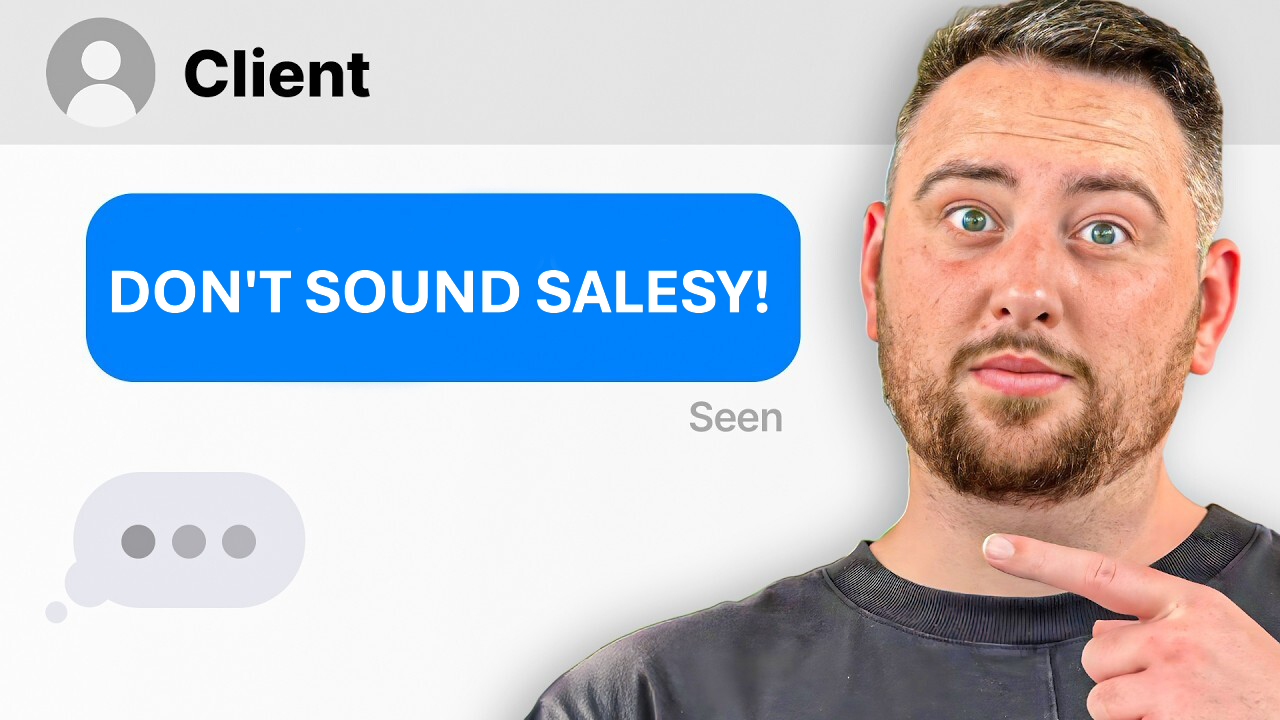
Here’s the problem: Most people either undersell themselves (too humble, too vague) or oversell themselves (too pushy, too salesy). Both approaches kill opportunities before they even start.
The elevator pitch is dead. What you need is an elevator upgrade.
I’m going to show you how to communicate your value in a way that’s compelling, memorable, and actually leads to real conversations – without sounding like a used car salesman or a corporate robot.
Let’s fix your pitch.
Before anything else, if your business is already generating $100k+ per month, My Inner Circle is where you break through to the next level. Inside, I’ll help you identify and solve the bottlenecks holding you back so you can scale faster and with more clarity.
The classic elevator pitch formula goes something like this: “I help [target audience] achieve [desired outcome] through [your method].”
Sounds good in theory. In practice? It’s boring, forgettable, and makes you sound exactly like everyone else in your industry.
Why doesn’t it work?
First, it’s too abstract. “I help businesses scale” could mean literally anything. You haven’t created any mental picture or sparked any curiosity.
Second, it’s all about you. Your process, your methodology, your company. The person listening is thinking, “okay, but why should I care?”
Third, it triggers sales resistance. When people hear a pitch, their defenses go up immediately. They’re already thinking of how to politely exit the conversation.
Research on consumer psychology confirms that exposure to selling messages activates cognitive defenses and can foster resentment, with prospects automatically raising objections to discourage salespeople even when the solution would genuinely help them.
The traditional pitch puts the focus in the wrong place and activates the wrong response in your listener.
We need a completely different approach.
Here’s the fundamental shift: Stop trying to pitch. Start trying to have a conversation.
A pitch is one-directional. You’re talking AT someone, trying to convince them of something.
A conversation is two-directional. You’re exploring whether there’s mutual interest, creating dialogue, building connection.
When someone asks what you do, they’re not asking for a sales presentation. They’re making conversation. They want to understand you, not evaluate whether to buy from you.
Your answer should invite further questions, not try to close a deal.
This mindset shift changes everything about how you communicate value.
Instead of: “Let me tell you about my comprehensive business scaling framework”
Think: “I help founders figure out why their business hit a ceiling and can’t seem to break through”
See the difference? The second one creates curiosity. It touches on a problem many people relate to. It invites them to say “Oh interesting, how do you do that?” or “Yeah, I’ve felt that way.”
You’re opening a door, not forcing someone through it.
Here’s the framework I use and teach. It’s simple, it works, and it doesn’t sound rehearsed:
Part 1: The Problem You Solve (The Hook)
Part 2: The Transformation You Create (The Bridge)
Part 3: The Unexpected Insight (The Differentiator)
Let me break down each part.
Start by identifying a specific, relatable problem your ideal client experiences.
Not a vague problem. A specific one that makes people go “oh yeah, I know exactly what you mean.”
Bad: “Businesses struggle with growth”
Good: “A lot of companies hit $2-3M in revenue and then just get stuck there, working harder but not actually growing”
The second version paints a picture. People can see themselves in it. It’s specific enough to be meaningful but broad enough to be relatable.
Your problem statement should:
This is your hook. If you nail this part, people lean in. If you miss it, they tune out.
Now describe what changes when you solve that problem.
Not what you do. What happens for them.
Bad: “I provide strategic consulting and implementation support”
Good: “I help them break through that ceiling and get to $10M+ while actually working less than they were before”
Notice how the second version focuses on the outcome, not the method. And it includes a compelling detail – “while actually working less” – that makes it even more interesting.
The transformation should be:
This is your bridge from problem to solution. You’re showing them what’s possible.
This is where you differentiate yourself and create real memorability.
Share a brief insight or perspective that challenges conventional thinking or reveals something surprising.
Bad: “I use proven methodologies and best practices”
Good: “Most people think they need to work harder to scale. Turns out, the companies that scale fastest are actually simplifying and removing things, not adding more.”
This unexpected insight does several things:
This is your differentiator. It’s what makes people remember your conversation days later.
Here’s what the full framework sounds like in practice:
“You know how a lot of companies hit $2-3M in revenue and just get stuck there, working harder but not actually growing? I help them break through that ceiling and get to $10M+ while actually working less than before. Most people think scaling means doing more – more marketing, more sales, more everything. But the companies that scale fastest are actually simplifying and removing things. It’s counterintuitive, but it works.”
That’s it. 45 seconds. Conversational. No jargon. Creates curiosity.
Notice what happens after you say this. The other person almost always asks a follow-up question. “How does that work?” or “What kind of things do they remove?” or “That’s interesting, I feel stuck like that.”
Boom. You’re in a real conversation now, not delivering a pitch.
The framework stays the same, but how you deliver it should flex based on who you’re talking to.
For Someone in Your Target Market:
You can be more specific with industry language and problems. They’ll immediately relate.
“You know how SaaS companies around $5M ARR struggle to crack the enterprise market because their sales cycle completely changes? I help them build the systems and messaging to close enterprise deals consistently.”
For Someone Adjacent to Your Market:
Pull back on insider language. Focus on the broader transformation.
“You know how some businesses just seem to hit a wall and can’t grow past a certain point no matter how hard they try? I help them figure out what’s actually blocking them and break through to the next level.”
For Someone Outside Your World:
Use universal language and relatable concepts.
“I help business owners who are working crazy hours figure out how to grow their company without burning out. Turns out most of them are stuck because they’re solving the wrong problems.”
Same framework. Different levels of specificity based on who you’re talking to.
Read the room and adjust.
How you say it is as important as what you say.
Tone: Conversational, not rehearsed. You’re sharing something interesting, not delivering a memorized script.
Pace: Don’t rush. Speak at a normal conversational pace. Rushing makes you seem nervous or salesy.
Energy: Be engaged but not overly enthusiastic. Genuine interest in the topic, not fake excitement.
Eye Contact: If in person, maintain natural eye contact. You’re having a conversation, not performing.
Body Language: Open and relaxed. Closed-off body language undermines even great words.
The best delivery feels unrehearsed even though you’ve said it hundreds of times.
Practice until it’s natural, then forget you practiced.
When you nail your value communication, people ask questions. That’s the goal.
Here’s how to handle common follow-ups:
“How do you do that?”
Share a brief example or story, not your entire methodology.
“Well, for example, I had a client who was spending $50K a month on marketing but wasn’t tracking which channels actually converted. We cut their spending in half, focused only on what worked, and their revenue went up. Sometimes less really is more.”
“Who do you typically work with?”
Be specific about your ideal client profile.
“Mostly B2B service companies doing $5-15M who want to scale to $25M+ but feel maxed out on capacity. The founder is usually still way too involved in day-to-day operations.”
“What does that look like / How does it work?”
Give them the 30,000-foot overview, not the detailed process.
“We start by diagnosing where the real bottlenecks are – usually it’s not what they think. Then we build systems to remove those bottlenecks and get the founder out of the weeds. Usually takes 6-12 months to really transform the business.”
“That’s interesting, tell me more”
Now you can go deeper on specific aspects. But still in conversation mode, not pitch mode. Ask them questions too.
“What about you – is that something you’ve experienced in your business?”
See how this works? You’re having a real dialogue, not delivering a monologue.
Let me save you from the pitfalls I see constantly:
Mistake 1: Too Much Detail Too Soon
Nobody needs to know your entire methodology in the first 30 seconds. Create curiosity first, provide detail later.
Mistake 2: Using Industry Jargon
Unless you’re 100% sure the person understands the terminology, avoid it. Jargon creates distance and confusion.
Mistake 3: Making It About You
“I’m passionate about…” “I love helping…” Nobody cares about your passion yet. They care about their problems and whether you can solve them.
Mistake 4: Being Too Humble
“I kind of help with…” “I try to…” Own your expertise. Confidence is attractive. Hedging is not.
Mistake 5: Going Into Sales Mode
The moment you shift into “So would you like to schedule a call?”, you’ve killed the natural flow. Let the conversation develop organically.
Mistake 6: Memorizing Word-For-Word
Your pitch should be a framework you can riff on, not a script you recite. Memorized pitches sound memorized.
Mistake 7: Talking Too Long
If you’re still talking after 60 seconds without the other person asking questions, you’ve lost them. Keep it tight.
Sometimes the three-part framework isn’t the right fit. Here’s an alternative approach that works great: the micro-story.
Instead of describing what you do, tell a quick story about a specific client transformation.
“You know, I was just working with this company that was doing $5M in revenue but the founder was working 80-hour weeks and completely burnt out. We spent three months systematically getting him out of daily operations. Now they’re at $8M and he works maybe 30 hours a week. It’s wild how much changes when you actually build a business that can run without you.”
Then pause.
They’ll either ask how you did that, relate their own similar situation, or ask what kind of company it was.
Either way, you’re in conversation mode.
Stories work because:
The story approach is especially effective at networking events or social situations where a more structured pitch might feel too formal.
Recent research published in The Quarterly Journal of Economics found that the impact of statistics on beliefs fades by 73% over the course of a day, but the impact of a story fades by only 32%, demonstrating the lasting power of narrative communication.
Different contexts require different approaches. Here’s how to adjust:
Keep it conversational and brief. People are meeting lots of folks. Be memorable, not comprehensive.
“I help companies that are stuck at a revenue ceiling figure out how to break through without working themselves to death. What about you?”
You can be slightly more structured here, but still avoid sounding rehearsed.
“I work with mid-sized B2B companies on scaling strategy. Specifically, helping founders who’ve built something successful but feel maxed out figure out how to get to the next level without burning out.”
You have more time. Start with the framework, but be ready to go deeper quickly.
“So my focus is really on that $5-15M range where companies tend to hit a wall. The systems that got them there stop working, but they don’t know what to change. That’s where I come in.”
Be even more casual. You’re not networking, you’re socializing.
“I basically help business owners figure out why they’re stuck and how to get unstuck. Sounds simple, but it’s surprisingly complex. What do you do?”
Read the room and match the energy.
The goal isn’t just to communicate your value. It’s to be remembered.
Here’s how to increase memorability:
Use Specific Numbers: “$5M to $15M range” is more memorable than “mid-market companies”
Include Unexpected Elements: “Working less while growing more” contradicts expectations and sticks
Create Visual Language: “Hit a ceiling” creates a mental image that “struggle to grow” doesn’t
Use Contrast: “What got you here won’t get you there” creates a clear before/after
Tell Micro-Stories: Brief examples are infinitely more memorable than abstract descriptions
Have a Signature Phrase: Something unique you say that people associate with you
The most effective value communication is the one people remember and repeat to others.
Your pitch isn’t set in stone. It should evolve based on what works.
After conversations, ask yourself:
Pay attention to which phrases get the strongest reactions. Which parts create the most questions. Which elements people reference later.
Double down on what works. Cut what doesn’t.
Test variations with different audiences. A phrase that lands with one group might fall flat with another.
Your pitch should be a living thing that improves over time, not a fixed script you’re stuck with.
Great value communication opens doors. But you still have to walk through them.
When the conversation goes well:
Exchange Contact Info Naturally: “We should continue this conversation. What’s the best way to reach you?”
Reference Something Specific: When you follow up, mention something from your conversation to show you were actually listening.
Provide Value First: If appropriate, send a relevant article, intro, or resource before asking for anything.
Create a Clear Next Step: “I’d love to buy you coffee and hear more about [specific thing they mentioned]”
The pitch gets you the at-bat. The follow-through is how you score.
Stop using whatever generic pitch you’re currently using.
This week, do this:
Grab a piece of paper and answer these questions:
Use your answers to craft your three-part framework.
Practice saying it out loud until it feels natural. Not memorized. Natural.
Test it in three real conversations this week. Pay attention to reactions.
Refine based on what worked and what didn’t.
Repeat until you can communicate your value in a way that feels authentic, creates curiosity, and leads to real conversations.
The elevator pitch is dead. The elevator upgrade is about having real conversations that create real opportunities.
Stop trying to sell in 30 seconds. Start trying to connect.
That’s how you pitch value without sounding salesy.
And honestly? That’s how you build a business that grows through relationships, not through pressure tactics.
What I can teach you isn’t theory. It’s the exact playbook my team has used to build multi-million-dollar businesses. With Master Internet Marketing, you get lifetime access to live cohorts, dozens of SOPs, and an 80+ question certification exam to prove you know your stuff.
Now go practice your upgrade.

Jeremy Haynes is the founder of Megalodon Marketing. He is considered one of the top digital marketers and has the results to back it up. Jeremy has consistently demonstrated his expertise whether it be through his content advertising “propaganda” strategies that are originated by him, as well as his funnel and direct response marketing strategies. He’s trusted by the biggest names in the industries his agency works in and by over 4,000+ paid students that learn how to become better digital marketers and agency owners through his education products.

Jeremy Haynes is the founder of Megalodon Marketing. He is considered one of the top digital marketers and has the results to back it up. Jeremy has consistently demonstrated his expertise whether it be through his content advertising “propaganda” strategies that are originated by him, as well as his funnel and direct response marketing strategies. He’s trusted by the biggest names in the industries his agency works in and by over 4,000+ paid students that learn how to become better digital marketers and agency owners through his education products.


This site is not a part of the Facebook website or Facebook Inc.
This site is NOT /endorsed by Facebook in any way. FACEBOOK is a trademark of FACEBOOK, Inc.
We don’t believe in get-rich-quick programs or short cuts. We believe in hard work, adding value and serving others. And that’s what our programs and information we share are designed to help you do. As stated by law, we can not and do not make any guarantees about your own ability to get results or earn any money with our ideas, information, programs or strategies. We don’t know you and, besides, your results in life are up to you. Agreed? We’re here to help by giving you our greatest strategies to move you forward, faster. However, nothing on this page or any of our websites or emails is a promise or guarantee of future earnings. Any financial numbers referenced here, or on any of our sites or emails, are simply estimates or projections or past results, and should not be considered exact, actual or as a promise of potential earnings – all numbers are illustrative only.
Results may vary and testimonials are not claimed to represent typical results. All testimonials are real. These results are meant as a showcase of what the best, most motivated and driven clients have done and should not be taken as average or typical results.
You should perform your own due diligence and use your own best judgment prior to making any investment decision pertaining to your business. By virtue of visiting this site or interacting with any portion of this site, you agree that you’re fully responsible for the investments you make and any outcomes that may result.
Do you have questions? Please email [email protected]
Call or Text (305) 704-0094