
How I Build Confirmation Pages That Educate Buyers Before Calls

I hope you enjoy reading this blog post. If you want my team to just do your marketing for you, click here.
Author: Jeremy Haynes | Published October 13, 2026
Earnings Disclaimer: You have a .1% probability of hitting million-dollar months according to the US Bureau of Labor Statistics. As stated by law, we cannot and do not make any guarantees about your own ability to get results or earn any money with our ideas, information, programs, or strategies. We don’t know you, and your results in life are up to you. We’re here to help by giving you our greatest strategies to move you forward, faster. However, nothing on this page or any of our websites or emails is a promise or guarantee of future earnings. Any financial numbers referenced here, or on any of our sites or emails, are simply estimates or projections or past results, and should not be considered exact, actual, or as a promise of potential earnings – all numbers are illustrative only.
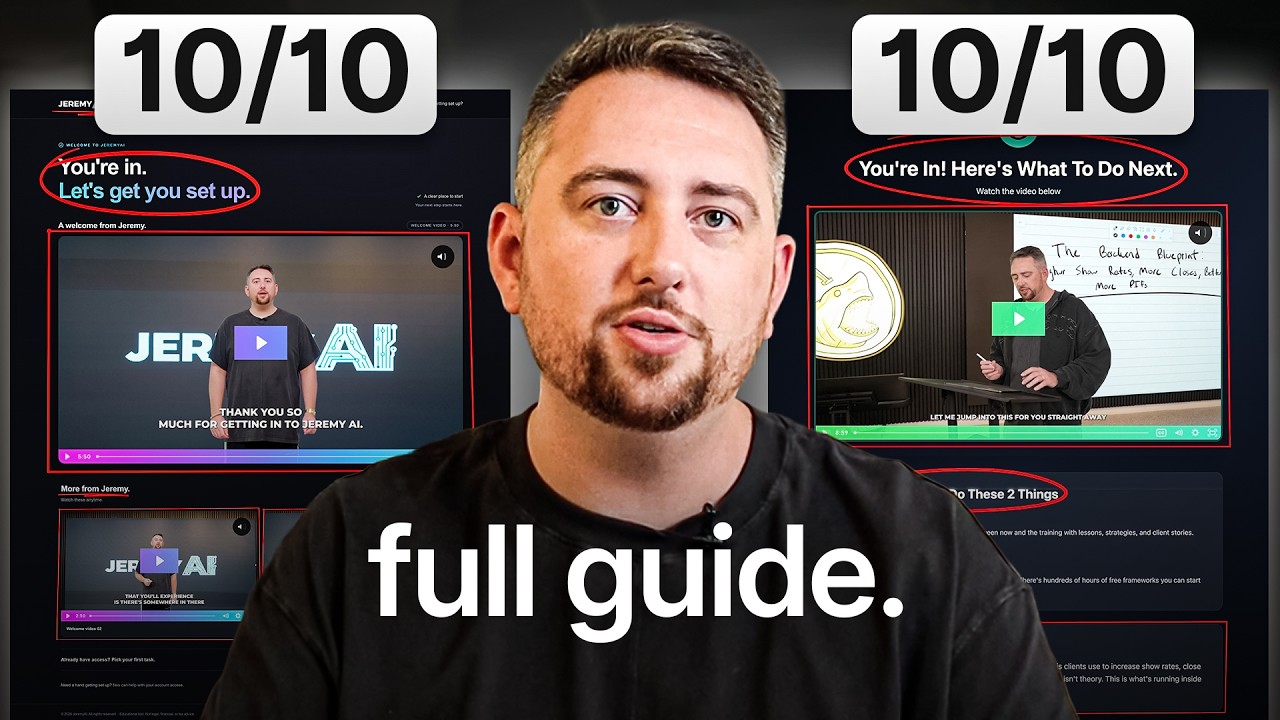
Someone books a call, lands on your confirmation page, and gets told to check their email. You just paid to get that person’s attention, and now you are handing them back to everything else competing for it. I want that page to give them a reason to stay interested, answers to the questions they are already asking, and a clear understanding of what happens next.
A confirmation page starts the education that your sales team would otherwise have to do later. That applies after a call booking, a webinar registration, or a purchase. The action changed what the person needs from you. Before they committed, they were deciding whether to click. Now they are deciding whether the next step deserves their time.
I start with that decision when choosing the main video, the breakout topics, and the information that belongs elsewhere in the follow-up. A page full of content can still leave the buyer’s actual concern unanswered. Get the concern right before you worry about how many videos to film.
7 weeks. Real frameworks. Covering copywriting, funnels, paid ads, and conversion systems.
Why Education Starts as Soon as Someone Converts
The education process starts as soon as someone takes the action you asked them to take. Waiting until the appointment leaves the buyer to work out the next decision alone.
I call the earlier stage scanner mode. Someone scrolling through an ad is making a quick judgment about whether the message applies to them. After they register or book, I call it justification mode. They have expressed interest, but they still need reasons to make the time, trust the business, and continue.
Think about the appointment from their side. They have work to finish and other things they could do. Your calendar invitation tells them when to arrive. It says very little about why they should care enough to arrive.
That is where backend selling systems belong. Useful education can begin before the closer speaks. You are giving the prospect information they need to decide whether the conversation makes sense.
I developed this approach because salespeople kept asking for leads who already understood the offer. My answer was to move more of that education into marketing. The closer still has a job to do. The confirmation page gives them a better starting point.
Start by acknowledging the action. If the person booked a call, confirm it. If they registered for a webinar, make that clear. Then direct their attention to the first useful piece of information. Acknowledgment and education belong together.
Choose the Main Video From the Buyer’s Concern
I choose between a due diligence video and an urgency video based on what the buyer needs to believe next. Putting the same welcome speech on every offer misses that decision.
A due diligence video makes sense when trust in the person behind the offer is central. If I am asking you to take my ideas seriously, you need a reason to believe that I know what I am talking about. Familiarity with the category alone will not answer that.
For my own due diligence content, I help people research me. I walk through searches for my name, reviews, and concerns they might have. I also show information from my payment processor rather than expecting someone to accept a claim because I said it confidently.
The useful part is the willingness to deal with uncomfortable questions. Show what the evidence actually says. Explain the context. Be clear about the limits. A carefully selected success story cannot answer every question about buying from you.
An urgency video addresses a different concern. The person may understand the category and believe the offer is relevant, but still see no reason to prioritize it now. Give them a real reason that they can check.
The main video should resolve the question keeping the buyer from taking the next step. If the concern is trust, explain why they can evaluate you seriously. If the concern is timing, explain what has actually changed and why it matters.
Skip invented deadlines and vague claims about missing out. A real reason to attend can be explained without pressuring someone into a financial decision they have not evaluated.
What the Co-Living Example Taught Me About Priority
A co-living education business showed me why answering questions can still leave the main reason to attend untouched. The offer involved renting individual rooms in a home, so prospects had plenty of practical questions.
We put breakout videos on the confirmation page to address those questions. People wanted to understand how the approach differed from alternatives, what restrictions mattered, and what the business provided. There were 19 breakout videos in that example.
The people who started watching were interested, but the page still needed a stronger reason to begin. We added a main video explaining the timing of the opportunity, using the market information the operator had gathered.
That changed the job of the first video. It gave people a reason to care about the practical answers underneath it. The breakout videos had useful information; the opening video connected that information to a decision the prospect was considering.
For an offer involving regulations, check the actual rules in the relevant location before making a claim. Research assistance can help find material, but the original authority needs to support the statement. A past example is no substitute for checking what is allowed now.
I would carry the reasoning into another offer before copying the page. What makes this relevant now? Can the buyer verify that reason? Does it actually explain why they should attend? If those answers are weak, adding more videos underneath will leave the same gap.
Build Breakout Topics From Real Sales Questions
Breakout videos should cover what prospects ask and what the sales team needs them to understand. Start with those conversations instead of filming whatever you feel like talking about.
Ask your closers which questions keep coming up. Ask where buyers get confused and what takes too long to explain. Also identify information you want the person to know before they attend, even if they have not thought to ask for it yet.
A breakout video gives one topic its own place on the page. The title should make the answer easy to find. A prospect trying to understand the delivery should be able to recognize that video without watching a promotional introduction first.
The 19-video example is not a recommended quantity. Your questions determine how much belongs there. If an offer has fewer meaningful questions, creating extra videos to imitate the example adds work without giving the buyer something useful.
I also use breakout videos to explain participation expectations, how applicants are screened, and how a real waitlist works. Someone considering a peer mastermind should understand the responsibility to communicate and contribute before joining. If capacity is genuinely limited, explain who gets contacted when a place becomes available rather than copying a scarcity line.
Keep the answer direct. Explain the issue, show what matters, and stop when the person has enough information to understand it. Do not turn every answer into another pitch for the entire offer.
These topics also give the team material for value-dense emails. A question that matters before the call can deserve an answer in more than one place.
For the wider marketing education behind this approach, see Master Internet Marketing, my 7-week live comprehensive training. The page itself still needs to reflect your offer and the questions your buyers actually bring.
Results are not typical. Your results will vary and depend entirely on your individual capacity, business experience, expertise, and level of desire. There are no guarantees concerning the level of success you may experience. The testimonials and examples used are not intended to represent or guarantee that anyone will achieve the same or similar results. We don’t believe in get-rich-quick programs. We believe in hard work, adding value and serving others. As stated by law, we can not and do not make any guarantees about your own ability to get results or earn any money with our information, courses, programs, or strategies.
Make Each Video Easy to Choose and Navigate
People need to know what a video will answer before they press play. The thumbnail, title, and opening should all make the same promise.
If the page contains several breakout videos, use clear image-based thumbnails that let someone distinguish the topics. For a page with fewer videos, a video preview can help when the selected moment shows what the person will learn.
Clear topic labels matter. A blanket rule against text on thumbnails misses that point. What I want to avoid is a page where the buyer cannot tell which video answers their question.
Longer videos can benefit from chapters. I use them so someone can find the part they care about without committing to every minute. Wistia’s chapter feature lets viewers move to a specific section of a video. Name those sections around real questions.
Give the buyer control over finding the answer. If they already understand one part of the offer, making them sit through it again creates unnecessary work before they reach the concern that matters.
The same thinking applies to the written copy. Bold a few meaningful lines so a reader can follow the main point while scanning. The page should remain understandable even when someone reads selectively.
When One Video Fits the Rest of Your Follow-Up
A single video can make sense when the rest of the education has a deliberate place in the follow-up. The question is where the buyer will receive the information.
For one of my webinar confirmation pages, I used a due diligence video at the top and delivered further teaching through emails linking to my YouTube content. I wanted people to consume those lessons in that sequence, rather than put every lesson on the confirmation page.
A call funnel with a short gap before contact creates a different situation. There is less time for another channel to do the work, so more useful information may belong on the page immediately. The full call funnel has to account for that timing.
After a purchase, the next decision changes again. For my AI product, I separated the welcome and expectations, the introduction to the support team, and help using the product. A buyer looking for access should find that information quickly.
Separate videos also let me see which information gets consumed. If people watch the welcome but skip the explanation of support, I can inspect that specific handoff instead of guessing from one long video’s overall performance.
Keep the amount of content tied to the job. A webinar registration, a booked call, and a completed purchase should not all receive the same page just because the template is convenient.
Read Play Rate and Engagement as Different Signals
Play rate tells you whether people start watching. Engagement tells you how much they watch after starting. Each points to a different part of the problem.
Wistia defines play rate using unique plays divided by unique page loads. Average engagement summarizes how much viewers watched. Check the date range and page location before comparing reports.
If visitors load the page but ignore a video, inspect the topic and how you present it. Does the label describe something they want to know? Is the video easy to notice? Does that audience want to receive this information through video?
If people start and then leave, watch the point where they drop off. You may have attracted them with the right question and then spent too long getting to the answer. You may also be explaining something different from what the thumbnail promised.
Keep the numbers attached to what they measure. Aggregate engagement does not prove that every buyer watched every video. A page load does not mean someone watched anything. Avoid turning a convenient dashboard summary into a claim about individual behavior.
Another business’s play rate should not become a promise about yours. Use your own measured response to decide what deserves attention. Compare it with attendance, the conversations your team has, and what buyers still need explained.
A video can hold attention while answering the wrong sales question. That is why the viewing report and the team’s feedback belong in the same review.
Keep the Same Answers Across the Pre-Call Channels
The confirmation page, your emails, and your setters should communicate consistent answers. You do not know in advance which channel each prospect will pay attention to.
That does not require copying the same script into every format. An email can explain an answer in writing. A setter can answer a person’s specific question. A video can show the evidence. The explanation of the offer should remain consistent across them.
If a question matters but the page’s video gets ignored, try presenting it more clearly and reinforce it through the other channels. Deleting an important answer because its first packaging performed badly leaves the buyer’s concern unresolved.
Some audiences will respond better to a conversation or a useful email than a page full of videos. Let the observed behavior guide that choice. Occupation alone does not tell you how an individual prefers to learn.
Pre-call education also extends to relevant content advertising. Keep that material connected to the same questions so the buyer hears a coherent explanation across the follow-up.
Then look for the distinction between people failing to receive the information and receiving information that does not help. Low consumption points you toward access, delivery, or presentation. Questions that remain after genuine consumption point you toward the explanation itself.
Check what the closer heard and what actually happened at the appointment before giving the page change credit. Other parts of the sales process may have changed too.
Answer Skepticism Before Adding More Testimonials
I am cautious about filling a confirmation page with testimonials because a buyer can see the selection and still wonder what happens when things go badly. A success story leaves that question open.
Testimonials can have a place. They need to be real, credible, and presented honestly. The FTC’s endorsement guidance explains that endorsements must be honest and cannot support claims a marketer could not otherwise make.
Start by asking what the skeptical buyer wants to know. Who is the offer unsuitable for? What responsibility remains with the buyer? What happens if they struggle? What are the limits of the support being offered?
Answer those questions with the same care you give the appealing parts. That is the transparency I want on the page. Avoid suggesting that an exceptional result is what the next buyer should expect.
A review badge does not finish due diligence. Someone can click it and find concerns you never addressed. I would rather answer real concerns directly than assume a high rating settles them.
That also matters when people research the business through search engines or AI tools. Keep public information accurate and explain the offer clearly. There is no need to invent claims about what every search system will show or try to influence it with hidden instructions.
The prospect should leave with enough honest information to make a better decision. Treat that as the purpose of proof, rather than measuring success by the number of testimonials you managed to fit on the page.
Already making money? See what it takes to make a lot more.
Fix the Unanswered Question Before Adding Content
When a confirmation page disappoints, start with the question it failed to answer. A new layout or another video cannot compensate for talking about something the buyer does not care about.
Review the opening promise, which topics get played, where viewers leave, and what the sales team still has to explain. Use those observations to choose the next change. Keep the page connected to the rest of the follow-up so you can see where education actually happens.
AI can help organize the questions and prepare a draft, but it needs accurate information about the offer. Check its research, remove invented claims, and make sure the finished explanation sounds like the person who will be responsible for it.
If you model the effect on a webinar, the webinar calculator can help compare attendance and conversion assumptions. Keep those assumptions separate from actual results while deciding what to test.
Operators considering my Inner Circle can review the current mastermind details and decide whether that peer setting fits their business. Whatever your next step, make the confirmation page useful from the moment someone arrives. They have expressed interest. Give them an honest reason to continue.
Results are not typical. Your results will vary and depend entirely on your individual capacity, business experience, expertise, and level of desire. There are no guarantees concerning the level of success you may experience. The testimonials and examples used are not intended to represent or guarantee that anyone will achieve the same or similar results. We don’t believe in get-rich-quick programs. We believe in hard work, adding value and serving others. As stated by law, we can not and do not make any guarantees about your own ability to get results or earn any money with our information, courses, programs, or strategies.
Get my content first on Google
Add jeremyhaynes.com as a preferred source and Google shows my articles more prominently in your search results, including AI Overviews and AI Mode.


Jeremy Haynes
Owner and CEO of Megalodon Marketing
Jeremy Haynes is the founder of Megalodon Marketing. He is considered one of the top digital marketers and has the results to back it up.