Common Business Scaling Mistakes That Destroy Profitable Seven Figure Companies

I hope you enjoy reading this blog post. If you want my team to just do your marketing for you, click here.
Author: Jeremy Haynes | Published October 27, 2025
Earnings Disclaimer: You have a .1% probability of hitting million-dollar months according to the US Bureau of Labor Statistics. As stated by law, we can not and do not make any guarantees about your own ability to get results or earn any money with our ideas, information, programs, or strategies. We don’t know you, and besides, your results in life are up to you. We’re here to help by giving you our greatest strategies to move you forward, faster. However, nothing on this page or any of our websites or emails is a promise or guarantee of future earnings. Any financial numbers referenced here, or on any of our sites or emails, are simply estimates or projections or past results, and should not be considered exact, actual, or as a promise of potential earnings – all numbers are illustrative only.
The risks of scaling. Sometimes your salespeople string you up and they’ll have you spending money to fill their calendars up.
Meanwhile, you don’t have your tracking dialed in. You’re getting absolutely burnt every single time you book a call onto their calendars and you have no idea.
Sometimes that happens.
In other instances, you start scaling. You try to gaslight yourself into thinking, “I’m hiring A players. I’m hiring the best people I can afford.”
Your payroll’s inflated more than you could possibly have ever considered into the high hundreds of thousands. Maybe you even cracked a million in payroll depending on who you are sitting here.
And you’re thinking to yourself, “I got the best people I could possibly get.”
And then couple months go by and you realize you hired people that have started to run your business into the ground. Studies show that 74% of companies admit to hiring the wrong person, with the average bad hire costing companies nearly $15,000 and up to 30% of the employee’s first-year salary.
In both of these situations, these are some of the risks of scaling. They become a highly politicized thing that involves emotions to make the necessary cuts.
Everything starts going so much faster as you scale. And so it becomes a little bit more chaotic and a little less dialed in and you have a little less clarity than you ever have before. Research from MIT shows that while 80% of companies successfully ideate and incubate ventures, only 16% successfully scale them, making scaling one of the hardest disciplines in business.
And you’ve started the process to finally follow that age-old advice – hand things off to people instead of doing it all yourself. And sometimes these things can blow back on you.
In addition to stories like these, there are plenty more risks to scaling. And in this specific piece, we’re going to be going through them.
If you’re new to the site, all we talk about around here is cracking million-dollar months. We don’t make any income claims because we have no idea who you are and whether you literally have any probability to go out there and make any money at all.
We’re talking to people who are ideally already cracking a couple hundred K a month. You might even already be at a million a month looking to tack on the next million. You’re in the right place if that’s you.
But again, no earning potential, no income claims. You’re not going to read a piece and make tons of bucks.
Moral of the story is welcome back to the site if you’re already a subscriber. Without further ado, let’s dive in.
If your business is already generating $100k+ per month, My Inner Circle is where you break through to the next level. Inside, I’ll help you identify and solve the bottlenecks holding you back so you can scale faster and with more clarity.
How Poor Ad Tracking Cost One Business $100,000 in One Month
Just recently, we had a member that’s part of my Inner Circle group join in the month of July.
And I start digging into their business and I find very quickly that they have no idea what they’re doing from a tracking perspective. Their tracking is lagging and it’s inaccurate at best.
Now to be clear, they’re in the middle of scaling is what they tell me.
So they go through the month of August just gassing the ad spend. As a matter of fact, they’re not even really doing it from the perspective of everything’s profitable at scale.
They’re doing it from the perspective of the sales team’s going to quit if their calendar’s not full. And that’s what the sales manager keeps telling this specific Inner Circle member.
They just keep saying, “Look, I got a few guys that are about to quit. You know, the calendars aren’t full. We got to dial in the calendars. I got to get this thing cranking.”
Salespeople get paid how? How do you pay your salespeople?
Almost every organization we work with pays them on a gross percentage of the revenue that they can generate typically off cash collected. Some of them even front cash depending on a payment plan, but hopefully that’s not you.
Either way, moral of the story is you’re typically paying your sales team on gross commissions.
So whether you are technically netting any money every time you book a call onto their calendars, they make money regardless.
The incentives for the sales team inside of any inbound sales and advertising process that you’ve got – book a call funnel, webinars, challenge funnels, DM ads, low tickets to high ticket, whatever it is – the incentive, they make money regardless. They just have to close a few deals.
Now here’s the thing. You’d think the incentives align to try to make sure that you net as much as possible, but there is literally no incentive beyond “I need these people to give me more calls onto my calendar so I don’t have to sit around and do outbound calls all day.”
That’s the only real incentive that exists from a net profit perspective that the sales team would care about. And most of them are oblivious to that.
All they do is just consistently come to you and tell you, “You got to fill the calendar. You got to fill the calendars.”
So again, your tracking is not dialed in and you start to press the gas and then bam, the month of August concludes.
You bring in somebody, a forensic analysis is done on your accounting and your overall tracking that you’ve got. You finally have the clarity you need starting in the month of September.
You look and you see you lost $111 every single time you booked a call into those closer calendars.
Why Sales Teams Book Unprofitable Calls Without Tracking Systems
Now, this was not with a light amount of ad spend, by the way. This was not with a small organization, a specific organization.
In the month of August, they put up $250,000 onto the VSSL funnel. They went from about $7,000 a day in ad spend on just the VSSL funnel all the way up to $12,000-ish dollars a day in ad spend booking calls onto those closers calendars.
Closers, of course, promise in the world to get us more calls, of course, we’ll generate more revenue.
Revenue technically came in, but it didn’t exceed 250. Didn’t exceed $250,000.
That specific member, they lost $111 per call.
Now, they go into the month of September absolutely fed up. They tell the sales team, “Go away. Fire whoever you need to fire. Let whoever needs to quit quit. We don’t care.”
And they realized through the tracking and the accuracy of their reporting that obviously they weren’t going to run their business that way.
But because they didn’t have tracking dialed in before that, they couldn’t have made that decision in real time. And they burnt just above about $100,000 in ad spend. Just vaporized it.
But all the sales people walked away profitable that month.
And businesses, I see this all the time at slightly larger scales than that. At smaller scales than that, usually happens at smaller scales because respectfully, usually people who are at an aggressive level of daily ad spend or at the least couple hundred grand in ad spend, they got their tracking dialed in for the most part.
But that’s the thing.
Why Scaling Too Fast Expands Small Problems Into Major Business Crises
That’s kind of one of the risks of scaling is this first point – you go too fast. Research shows that premature scaling accounts for 70% of startup failures, and companies that scale prematurely have 20x lower growth rates and are 3x more likely to never exit.
And as a result of going too fast, you put yourself in this position where everything gets bigger so much quicker than it ever has in the past. And it’s not one thing at a given time. All amplifies at once.
Your refund rate might stay the same, but the quantity of refunds goes up. You have an illusion in your head when you look at it like it’s a lot more people refunding than ever before.
At the same time, your sales team’s pressing you, “Hey, I got people that are going to quit if we don’t get more calendars. We got to fill up the more. We got to fill up all these spots on the calendar. Fill them up. Fill them up.”
You’re like, “Okay, yeah, go ahead.” You’re not even really looking.
There’s holes that used to be this big that as you scale, they expand.
I’ll give you a crazy metaphor just to give you a perspective on this so you have a visual of it.
Did you know that any girl with a belly ring, if she gets pregnant, that that little tiny hole, the little tiny hole that the belly ring is in, that piercing expands?
Look up a crazy photo. This was not a willful photo that I wanted to see myself. And editors, please do not share a photo of this. It’s just yucky.
But again, my point is that little tiny piercing hole that you never otherwise would think would be as crazy looking as it is if they got pregnant, as an example.
It’s like that’s what happens when you scale all the time. You got tiny little holes that you don’t even realize. But all of a sudden, as things just get bigger far faster, you’re like, “Oh look at that. Oh my god, I don’t want it to look like that.”
And then because there’s so many of these that typically happen at once, you don’t follow the best practice that you should follow, which is you’ve got to prioritize what has the most impact.
And you’ve got to also learn how to strategically place the right people in.
The High Salary Hiring Mistake That Costs Six Figures Monthly
Let’s keep it real. As you scale up dramatically, 15K a month, maybe even 25K a month payroll positions that you used to think, “How are people buying those? Who’s paying that?”
You’re now, without even considering it, willful to throw that amount of money at people. And you think, “Well, hey, if I hired somebody in that specific range, they’ve obviously got to be the best.”
And you likely omit the fact that there’s still some training, that there’s an adaption curve that has to occur, that there’s some accountability that these people typically need to be their actual best self.
And even the people that you hire in these roles, they’ll openly admit these things. They don’t hide it. Everybody loves being held accountable to be their best self when they’re a true A player.
But here’s the illusion. Again, you’re going so fast that you are willing to spend those amounts of money. And so you start to ask your network, “Hey, I need somebody to do so and so. I need this person who can handle that. Who you got?”
And you get some advice from people that you know, you loosely have heard revenue numbers from and you think, “Well, this or that person, you know, they’re doing well. Let me get a referral from them.”
They are operating in the same kind of way where they’re loosely gaining affiliation and a network as time passes, but they haven’t really vetted these people out.
They haven’t really worked with these people at a high level. A lot of it’s just hearsay. A lot of it’s like, “Oh yeah, I know so and so or I know such and such or that person.”
When you ask, they ask two or three other people and they’re like, “Hey, do you know anybody?” And it’s like people like to be helpful.
And so the people that you ask these questions to, they’ll contribute somebody to you in most instances, but again, is that somebody actually good?
Or if you can’t find somebody from the network and you look to bring in these people, you’re going to try to convince yourself that they’re the best person that you could have hired for that specific role that you’ve now placed them in.
How a Five Million Dollar Monthly Business Collapsed From Bad Hiring Decisions
We had this friend of ours and I mean, my god, this was a catastrophic failure of a story.
This guy scales all the way up to five plus million dollars a month at near the speed of light. Scientists could have studied this man’s growth and found some lessons there about quantum speed.
This guy went from literally nothing and in a year, that was how long it took. Only a year – a fraction of time, which by the way, again, I’m in no way, shape, or form implying you’re ever going to even remotely come close to the speed of this.
But this guy gets $5 million a month in under a year. And holy heck did he make some of the most terrible decisions in hindsight that you could observe and reflect on to find lessons in.
Guy started traveling internationally at a high rate. Guy started to really mess around. But why did he mess around? Because he had the illusion. He gaslit himself into saying, “No, I have…”
He was at $1.3 million a month in payroll. Just in payroll. 1.3 million a month in payroll.
Of course, he has the illusion that he’s got the best possible people he could have. From individuals in a trench level role to managers like middle managers to high-level executives that are supposed to operate at each level and have the accountability in check.
No, no, no, no, not at all.
As a matter of fact, most of these people inside of these mid-manager and executive roles made some of the most terrible decisions that you could observe happening in a business at this scale.
So much terrible stuff happened repeatedly, day in and day out.
Now, you had people like me that were in this business observing this stuff. And keep in mind, I’m not on the payroll as an employee. It’s like we’re just a contractor vendor in this case, operating as an agency in the deal.
And we look, and this is one of my friends, one of my good friends. I tell the guy, I’m like, “Look, man. I think there’s a bunch of people that you have in these roles that aren’t great, and here’s why.”
And this guy completely dismisses the feedback of people like me, and it wasn’t just me, there were a handful of other people that were in the business that all said the same thing.
Now, this business not only absolutely implodes on itself and fails, does not exist today – it failed at lightning speed. Can’t even put to words how fast it felt like it unraveled.
And again, it falls under this umbrella lesson of the guy was going too fast, but from a different perspective, rather than the going too fast being, “Well, let’s load up the sales team’s calendars without the visibility of whether this is profitable or not.”
This guy thought he hired the right people. And by thinking he hired the right people, he operated from that perspective of “I can mess around, you know, I can live the dream that we’ve all been told about as business owners that exists.”
That for some reason very few of us have ever actually experienced in reality of the ability to just completely detach – that we have perfect people in place and we never have to do anything other than just get some kind of report sent to us about how awesome everything is while it all still perpetually grows.
Why Conventional Business Wisdom Destroys Scaling Companies
And I can’t stress this enough. This is the other thing that you really want to make sure you understand – handed down beliefs.
Handed down beliefs. Perfect little bridge for you here with that last part.
The illusion of what you’ve heard trying to be materialized in what you build can violently hurt you. Violently hurt you.
It puts you into a terrible place to project onto what’s currently going on in your operation.
Like, let’s keep it real. Your operation, you got a tight-knit group of people that are running the team. You’re pretty involved.
Every time that you’ve tried to mess around, you’ve learned the hard way that you can’t and you’ve therefore got to stay involved. Which might just mean something as simple as holding people accountable, doing some training here and there.
You’re not a coal miner. You know, like you’re not having to go out there and do actual crazy hard work. You’re having to click buttons. You’re having to send voice notes. You’re having to do Zoom calls here and there.
You know, it’s nothing remotely close to crazy.
But what you start to do is you start to have this illusion that you project onto what your business could be.
And instead of trying to stay at a high level of involvement, what you start to do instead is you start to try to detach a bit, and you see the effects – you start to see the cracks in the wall as soon as you do every time.
And the bad part is this is where it kind of goes bad. It’s a huge risk of scaling.
Instead of acknowledging those cracks and being willing to jump back in, the feeling and desire to be able to get to the point where you can actually detach puts an illusion over that wall.
Makes it so the cracks are invisible to you when in reality they’re getting worse and worse and worse by the day.
Big-time risks when scaling happen all the time from handed down beliefs.
How One CFO Cut Profitable Facebook Ads and Crashed Revenue by Hundreds of Percent
We have a CFO that just recently joined a client account of ours. And we’re all for CFOs. We love accountability, especially when it comes to reporting and tracking and we love that kind of stuff.
Not trying to in any way, shape, or form demonize CFOs, but in this story, the CFO is absolutely a demon for sure.
So the CFO comes in. We spent for this particular client a little over – it was a little over $700,000 like a hair over – in a month and it was very profitable.
It was just shy of 4 to 1 profitability. Some funnels were a little higher, some funnels were a little lower. None of them were unprofitable. All of them were profitable.
Now here’s the thing. CFO comes in immediately with a narrative that Facebook Instagram Meta is a succubus and just sucks the life out of businesses that actively spend money on it and it does nothing other than just leech and leech and leech and that it should be something that’s minimized and hedged against.
Well, that $700 plus thousand dollars that was spent on Meta at a profitable rate – that business made more in that particular month than they ever had prior.
They hit a record month from that 700K being spent. They had more profit that they were able to walk away from as a business than they ever had before because of that $700,000 spent on Meta going into good old Mr. Zuckerberg’s pockets.
But with a smile on our face because again returned profitably.
This CFO projecting this belief from who knows where. It’s like because again the reality of the situation, the actual wall itself in this case was sturdy as heck.
It was a beautiful wall made of solid gold.
This CFO came in and she projected an illusion onto the wall that it was slimy and gross and should be stayed away from and we shouldn’t have anything to do with that. You know, that was the illusion.
We get word from the business owner going into the next month that the budget for that month was going to be $75,000 on paid ads.
I look at that text. I called the business owner. I go, “What is this? What are you talking about? Why are you making this decision?”
Client goes, “Don’t worry about it. We’re going to pull back from Facebook. We’re going to allocate more spend towards other channels. I want you to spend this much on this channel, this much on this channel, this much on this channel.”
And I go, “Client, you just spent – we can do all that, too, but why are we rugging the budget for something that just hit your record?”
And this client goes, “Oh, don’t worry. We’re going to be able to make up for that organically.”
So I tell a client point blank, I go, “This is really dumb. This makes no sense, but hey, I understand right now in this whole narrative that we’re living in based on what you’re believing in currently, I’m probably looked at as some kind of villain. So look, I understand you’re probably not going to listen to anything I’m saying, but I just want to make it known. This is my take on this whole thing. Let’s let this next month play out, but it’s going to be a hard set of lessons.”
Clients are like, “Oh, don’t worry. We’ll be fine.”
Dude, next month goes by and the client just as anticipated contracts hundreds of percent. Like it was brutal the lesson.
And you think, “Oh, the CFO is going to get fired and this narrative is going to just go away and vaporize,” but it’s like no, the client and the CFO and the other executives in this business, they commit further onto that narrative of, “Oh, well, this happened because…”
And it’s like, oh my god, there’s a great book. It’s called Vital Lies and Simple Truths. And it talks about how when you’re in pain psychologically or physically, we’ll do whatever it takes, including lie to ourselves to retract ourselves from reality, create a false world to participate in that doesn’t have the pain.
That can be good in a lot of senses, but when it comes to business, you never want to lie to yourself. You want to be as tapped into reality as you can possibly be at all times to make real-time decisions on how things actually are in the real world, not in some fantasy land that you’re projecting onto things or some evil hellscape that you’re projecting onto things when in reality it’s the exact opposite of whatever you’re trying to put onto it.
Handed down beliefs come in so many different shapes and sizes. And we’ve seen it so many times over.
I’ve told a story on this site before about one of our clients from, you know, several years ago at this point. I think it’s been almost eight, nine years at this point.
And this guy had a belief with an offer that was at a couple million bucks a month that that specific offer type only has life for a year.
There’s not a single thing in reality that agreed with that thesis. But this guy had a handed down belief that that was the case because he heard it from so-and-so who he believed to be credible and an authority figure.
In reality, we were already almost two years deep on that offer and it was ripping. Still wasn’t a thing in the world that could stop that thing besides the client absolutely sabotaging it from taking that belief and turning it into actions.
Beliefs cause wars. That’s what you have to understand about how critical your beliefs really are for shaping behavior.
And your organization has key people that also make decisions on behalf of the company where their beliefs also have to be monitored, managed and maintained in a specific frame to benefit.
Because again, our actions follow whatever our beliefs are.
Handed down beliefs – insane in terms of the liability that they create.
Financial Modeling Requirements Before Increasing Ad Spend
Let’s go on to the last one here in this piece. And let me be really clear when I say this – this is not chronological. This isn’t some ranking system. Each one of these has a serious and significant weight. And I don’t want to make one sound more important than the other.
But I will say this, this next one to me based on how often I talk about it is extreme for how much I typically see it hurting somebody.
And that’s scaling too fast. When you couple scaling too fast with this whole second half, which is not doing the math.
We have financial models for every client at every point in time for every specific funnel. We have week-to-week tracking documents that we use.
We have some proprietary AI that we also leverage to be able to have real-time analysis and create essentially an automated alert system when real-time KPIs fall outside of the financial model KPIs without having to rely just on people to be able to say with a lagging indicator, “Hey, this is outside of our KPI.”
And we then try to make real-time decisions on these things like what needs to happen next.
If you couple “I’m spending too much too quickly” without actually having done the math, you are going to have a bad time.
Because if you go from let’s use the example in this math here – let’s say you’re spending a wholesome $50,000 a month in ad spend. A respectable amount of money and you’re ready to go balls to the wall here.
You’re ready to throw them onto the table and see if that ROI you’ve got at 50K holds at 200K. Got a little bit of extra cash and you’re ready to throw it down.
That right there is a huge mistake.
It’s like go into your financial model and do the math and have what’s called flex stats.
Project the current stats to be a little bit worse than they currently are now. That cost per lead, that cost per call, make it a little higher in your financial model. Your show rates, make them a little worse.
You got to remember – I’ll give you a perfect story of this exact situation for why this matters.
How to Build Marketing Assets Before You Need Them When Scaling
We have a client, they were at when we first met these people, they were at about 120K a month.
This guy, if you talk to him, he’ll say, “This guy changed my life. This guy helped me so much.”
We got him all the way up to just shy 2 mil a month. Got him to about 1.6, 1.7 mil a month, give or take the month.
That entire time we had the math dialed in as we would go from low tens of thousands of dollars in spend to literally half a million dollars a month in ad spend as an example on some months.
We would factor things in like, “Okay, well, our audience is probable to change somewhere in this threshold of tens of thousands of dollars a month and a couple hundred thousand a month. So we need to prepare our statistics, our systems, our sales team, our marketing assets to be able to sell to people that are more in a needs-convinced category rather than an in-market demographic.”
And so rather than being in a reactive position, which is a big point of this third one that I’m making, which is reactivity versus being proactive in comparison.
Every single time, think about this. Ready?
We’re going from tens of thousands a month to hundreds of thousands a month in ad spend. We’re going to grow the heck out of that revenue as we scale up. There’s going to be a shift in audience type.
Would I rather have that shift occur and then just have my sales team start to say things like, “Yeah, people are coming in a lot colder. Sales cycles seem a lot longer. We’re noticing that there’s just longer periods of time for people to make a decision. And it requires a lot more convincing to get people over the fence.”
Would you rather then be like, “Okay, I got to make all this stuff for the needs convinced category. I better start studying all Jeremy’s pieces on the needs convinced category of cold markets.”
You know, that’s reactive. You’re behind if that’s the case.
But what’s probable to occur in those situations is you’re probable to still keep trying to gas the spend. And when that occurs, that’s where you hurt yourself in this specific example.
If you manage to understand, there’s threshold math that I want you to become a master in.
Where you don’t just think to yourself, “Oh, I spent 10K a month. Time to scale to 200K a month in ad spend.” And everything’s just going to stay the exact same.
I had a great piece on my site recently where I talked about what’s called the scaling trough, which is this illusion that after you start to spend a little more that your ROAS is going to hold.
It’s actually probable to drop – your stats are probable to get a little worse and then that’s where most people revert back to the lower level of spend.
Whereas in comparison if they pushed through that, if they pushed through that little trough where the ROI drops a little bit, there’s a floor to it where all your stats all of a sudden hold and you’ve adapted your sales and marketing systems around a slightly colder audience that’s a bigger audience.
Why Customer Acquisition Gets Harder as You Scale and How to Prepare
It’s kind of like fracking in Texas in all our oil fields here in that specific state in the United States.
There used to be these big old oil pockets where all you had to do was so simple. All you had to do is just take a well, dig it down a few hundred feet. You’re in a little pocket like an ocean, like a little mini ocean.
Not even a lake, a big old pocket of oil. You just suck it out of the ground. Easy game.
Well, through time, those big old pockets of oil just resting in there, they ran out. And you know what they had to do instead? They had to introduce what’s called fracking.
Which has now caused some earthquakes throughout Texas and Oklahoma and some of these little pocket areas where they do fracking at.
Fracking is crazy. It’s actually a really interesting process if you look up how it works. They don’t just get to drill down straight. They kind of have to drill down sideways.
The oil is in these little shelves and they take water in some instances because there’s a lot of water content inside of most of these little pockets – they’re just not as concentrated in terms of the oil and they have to suck it out.
They take the water because some of these little pockets have upwards of 90% water and 10% is actually the oil they want.
And they take the water out and they blast it right back down into the ground and it creates a huge pressure pocket that gets some of that other oil that’s stuck in those shelves to a point where they can suck it out of the ground and extract it and then pump the water right back down.
Dude, some of these things have caused geysers from how much pressure they’ve put under the ground. Some of them have caused little issues like this.
You think the oil companies were just like, “Oh, let’s just pull fracking out of our rear when they started to run out of the giant oil pockets they were just casually drilling into.”
It’s like, “No, dude. I bet they knew about fracking a decade before they ever actually needed to pull it out of their pocket.” They just said, “Well, let’s save that until stuff gets a little worse.”
Well, not in your business. In your business, you just run square into the problems, you know? You just run square into every wall that you come across.
And every time your team, you ask them, you’re like, “How did we not anticipate getting hurt this hard?” And your team’s just like, “Well, I mean, you know, it’s like be a little proactive for once in the business.”
You choose to be proactive. It’s a big difference between just naturally being a reactive donkey versus for once trying to anticipate problems and building assets for things that may or may not occur, but when they occur, you already got all the stuff you need.
Executive Planning Strategies to Avoid Scaling Disasters
Couple some of these beliefs together. Take that logic of, “Oh, I want to detach and do nothing in my business” to, “Okay, I may not need to do every single thing in the business that’s happening right now, but if I did start to have that executive foresight to be able to anticipate of these potential problems that I could run into or that I’m probable to run into, and I built out assets for them, I’d likely be in a much better spot.”
We’d already have everything we need. We could immediately adapt and we could continue the scaling process at the rate we are.
And that’s where you really conclude to the fact that you simply just don’t know what you don’t know.
You can take that logic and just say, “You know, I genuinely don’t know everything that there is that I’m probable to run into.”
My bet would be though that you do have a pretty good foresight on all the things that could hurt you.
My bet would be that you do have the awareness that there’s a finite amount of people at a given time that are probable to just convert when they see your ads and that there’s some of them that are going to require a little more convincing and therefore need different assets from a marketing and sales perspective.
Might require completely different funnel. And it might require somebody in the business to actually say, “I’m going to take the time to start anticipating. I’m going to take the time to start studying how I could get hurt and build those things out now instead of later.”
So when things are good and you’re trying to make them even better, you keep them at the rate they are in terms of things being good and things being better by anticipating what’s probable to hurt you.
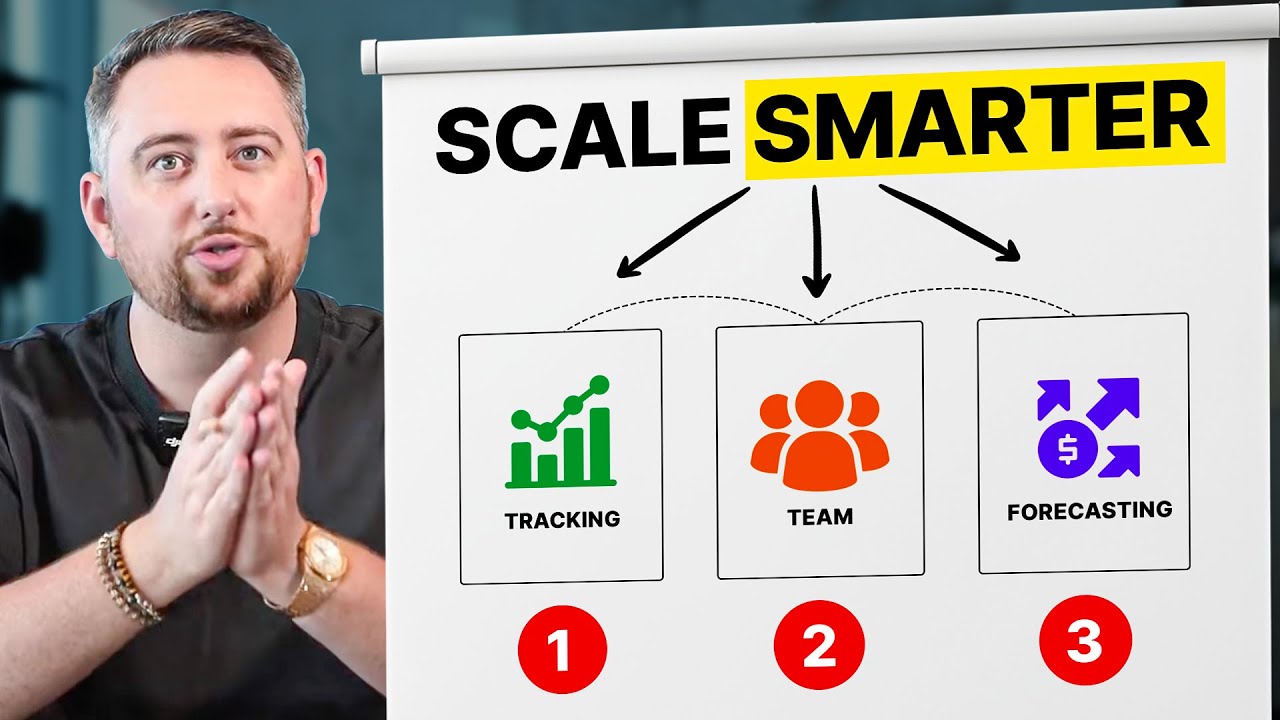
And in this piece, I’ve covered three of these things, but of course, there’s so many more.
And I can also help you lead yourself and your team to the awareness that’s necessary to scale at the rate in which you likely want to grow.
But I do that here on this site with a fraction of what I could otherwise teach you inside of my paid offers.
High Ticket Coaching Programs for Seven Figure Business Growth
You’ll find Jeremy’s Inner Circle, which is an opportunity to join into a mastermind group. I do my one-on-one calls there. I do twice of those a month with you.
We do weekly group calls. They’re each about an hour-ish long, some of them a little longer, some of them just a tad less.
They’re on lessons built for rich people trying to get a ton richer on problems just like this, but extreme depth.
We also, of course, have four times a year a mastermind event. One day we come up here to the penthouse. The other day we go over to our facility.
It’s a big old rectangle, 220-inch screen on the wall. Church chairs, some of the most comfortable chairs you’ll ever sit in at an event. I assure you that.
A pool table perfectly leveled for the exact area it’s in. A ping pong table. Great networking. We have what we call the flex fest outside. Do those four times a year. The top of every quarter.
We record them all. You got a vault full of all the history of this group. Got a very active group chat. Got Jeremy AI.
There’s also a program – it’s called Master Internet Marketing. It’s a 7-week class. Extremely in-depth. Each class is about 3 to five hours. There’s homework libraries in between each live class. There’s a lot of information in there.
And if you’re just looking to get your digital marketing skills sharpened up, it’s a great program for you.
We don’t have any income qualifiers. We just got to make sure that you can actually afford the program. We’ll sell it to you.
Jeremy’s Inner Circle though – no, we got a lot of restrictions for that comparatively. So you got to apply to join that. You have questions for us, we got questions for you. Let’s see if it’s a good fit.
Check out those links. And of course, either way, go check out some of the other pieces here on the site. They’re all perfect for you if you’re looking to scale up big time.
What I can teach you isn’t theory. It’s the exact playbook my team has used to build multi-million-dollar businesses. With Master Internet Marketing, you get lifetime access to live cohorts, dozens of SOPs, and an 80+ question certification exam to prove you know your stuff.
And we go through all kinds of stuff. Go check and see for yourself. And either way, get rich. Talk soon.
Watch the video:
Get my content first on Google
Add jeremyhaynes.com as a preferred source and Google shows my articles more prominently in your search results, including AI Overviews and AI Mode.


Jeremy Haynes
Owner and CEO of Megalodon Marketing
Jeremy Haynes is the founder of Megalodon Marketing. He is considered one of the top digital marketers and has the results to back it up.