
How to Sell Agency Services Alongside a Client’s Internal Team

I hope you enjoy reading this blog post. If you want my team to just do your marketing for you, click here.
Author: Jeremy Haynes | Published October 30, 2026
Earnings Disclaimer: You have a .1% probability of hitting million-dollar months according to the US Bureau of Labor Statistics. As stated by law, we cannot and do not make any guarantees about your own ability to get results or earn any money with our ideas, information, programs, or strategies. We don’t know you, and your results in life are up to you. We’re here to help by giving you our greatest strategies to move you forward, faster. However, nothing on this page or any of our websites or emails is a promise or guarantee of future earnings. Any financial numbers referenced here, or on any of our sites or emails, are simply estimates or projections or past results, and should not be considered exact, actual, or as a promise of potential earnings – all numbers are illustrative only.
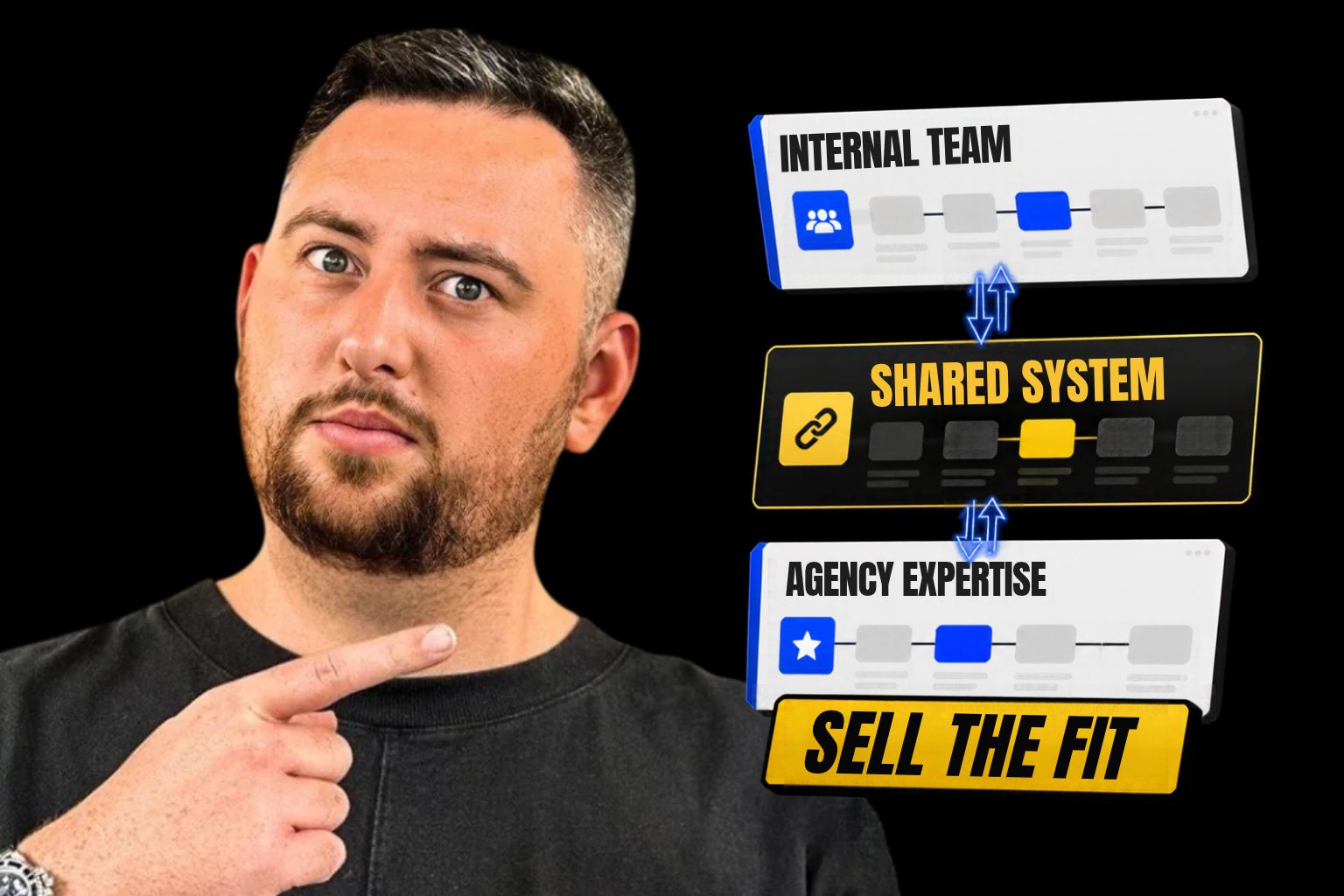
If you want larger agency clients, be ready to explain how you will work with the people they already employ. An established team can be a reason to pursue the account. I want people inside the business who can act on the work, understand the numbers, and take responsibility for the parts my agency does not own. Selling as though I need to replace everybody makes that conversation harder than it needs to be.
A company can have marketers and still need outside expertise. The useful question is what those people do today and where your agency could make a meaningful contribution. Until you can answer that, a bigger proposal is just a bigger guess.
Already making money? See what it takes to make a lot more.
Why an Existing Team Can Make an Agency Client a Better Fit
I actively look for clients with people we can work alongside. That lets us bring expertise into a business that already has someone available to help put it into practice.
Some jobs make more sense inside the client’s organization. A person working there full time can see parts of the business that an outside agency cannot follow with the same depth. I do not want to build an unnecessary duplicate of that role inside my own company.
Reporting is a good example. My agency can report on the funnels and traffic it runs. Someone inside the client can connect that work with other marketing and sales activity across the organization. Those are different views of the same business, and both can be useful.
Before pitching, find out what the internal team already handles well. Ask where they need help and what they would actually do with that help. An existing team gives you people to work with, provided the work between you is clear.
The larger agency relationships you pursue determine who your team works with every day. Before chasing the next account, understand how your expertise would fit alongside the people already doing the job.
What Your Agency Would Own Alongside Their Staff
You need to explain your contribution without taking credit for the entire business. Running an acquisition campaign does not mean you also run intake, sales management, fulfillment, and every other channel.
I would work through a real campaign with the prospect. Who provides the offer information? Who supplies the material needed for creative? What happens after an inquiry arrives? Which person can tell us whether it became a useful sales opportunity?
The answers reveal whether the proposed relationship can function. If the agency assumes the client’s team handles follow-up while the client assumes the agency does, the gap will survive the sales call and appear after launch.
Keep the service scope tied to the work the result requires. Taking over unrelated tasks to make the proposal look substantial can pull your team away from the contribution the client actually needs.
Make responsibility easy to understand in the tools you use. Asana distinguishes a task’s assignee from its collaborators. Several people can participate while a specific person remains responsible for completing the task. Whatever system the client uses, everybody being included should not leave everybody waiting for somebody else.
Why Client Understanding Helps the Work Move
I want clients who understand enough about marketing to participate in a useful conversation. They can bring an idea, question a conclusion, and recognize what their own team needs to do next.
That is different from a buyer approving the invoice and disappearing. When the agency needs information about the offer or a decision about the sales process, someone in the business has to engage with it.
Ask the internal team to explain how the current acquisition process works. Listen to what they know about the funnel and what they are still trying to find out. A missing answer is something to resolve together before treating it as a campaign assumption.
I also want the team to challenge the agency intelligently. If the numbers look wrong, ask why. If a proposed test does not address the problem, talk through it. Accountability is useful when the people involved understand what they are holding each other accountable for.
The connection between the offer, ads, funnel, and sale is part of Master Internet Marketing, my 7-week live comprehensive training. Understanding those connections makes the conversation with a specialist much more useful.
Results are not typical. Your results will vary and depend entirely on your individual capacity, business experience, expertise, and level of desire. There are no guarantees concerning the level of success you may experience. The testimonials and examples used are not intended to represent or guarantee that anyone will achieve the same or similar results. We don’t believe in get-rich-quick programs. We believe in hard work, adding value and serving others. As stated by law, we can not and do not make any guarantees about your own ability to get results or earn any money with our information, courses, programs, or strategies.
How Reporting Can Cover Both Sides of the Relationship
Agree on which information the agency can see and which information has to come from the client. A campaign report cannot explain events that never reach it.
An inquiry generated by advertising and a sale recorded by the client’s team are different events. You need to understand the path between them before arguing about the campaign. If the agency sees inquiries but nobody provides the sales outcome, it is missing part of the answer.
Ask who can connect those records. That may be a client-side reporting person, an operations lead, or another person with the relevant access. The title matters less than whether someone can explain the numbers and investigate a mismatch.
Check access as well as the existence of a dashboard. HubSpot’s dashboard guidance explains that access to a dashboard does not necessarily give someone access to every report or its underlying data. Seeing the dashboard name is not enough to establish that both teams can review the same information.
I would rather surface that limitation before work starts. Otherwise, the agency may optimize around one view while the client judges it using another. Get the relevant people looking at the same problem, with the differences explained.
What Account Access Does and Does Not Hand Over
Access should let your team do the agreed work without pretending that the client has handed over its entire business. Be clear about the assets involved and who controls them.
An established client may already have an advertising account, reporting tools, and people responsible for those systems. Learn how those pieces are arranged before proposing a replacement. Changing something that works needs a reason beyond making it familiar to your team.
Google Ads explains that linking an existing client account to a manager account does not grant the manager administrative ownership by default. Managing advertising and controlling all administrative decisions are different permissions.
Work out what the agency needs to change, what requires the client’s participation, and who can provide that participation. Do not promise a launch around access nobody has confirmed.
The same care applies when deciding between internal creative work and an outside agency. The people making the assets still need a clear message and somebody able to give useful feedback. Changing where the work sits does not remove that requirement.
Why Expertise Still Needs Room to Influence the Account
Working with an internal team should leave room for your expertise to affect decisions. If you are hired to solve a problem but can only carry out instructions that preserve it, the relationship needs another conversation.
I want clients who regard us as specialists and are willing to discuss why we recommend something. That does not make their staff irrelevant. Their knowledge of the business is part of what makes the recommendation useful.
Watch what happens when the evidence challenges an existing opinion. Can the people involved examine it together? Can they agree on what to try? Or does the conversation stop because someone would prefer the original explanation?
Speed matters here too. A useful recommendation can sit untouched if nobody inside the business can act on it. Find out whether the team has the authority, time, and resources to carry its part through.
You do not need to insult the current team to demonstrate expertise. Show that you understand the work, explain your reasoning, and be specific about where their participation matters. A prospect who wants help should be able to see how you would help.
7 weeks. Real frameworks. Covering copywriting, funnels, paid ads, and conversion systems.
The Larger Client You Can Actually Work With
Before pursuing the account further, be able to describe what the agency contributes and what the client’s people contribute. If the explanation keeps changing, resolve it before making a broader promise.
A bigger company name is a poor substitute for that answer. Look for a business with work you can genuinely influence, people who understand their responsibilities, and a willingness to examine what the numbers show.
The conversation may reveal that the client needs a different service first. It may also show that your agency can be useful precisely because the internal team already exists. Let the actual situation decide.
Operators in my Inner Circle can work through these client decisions with peers. I would bring the proposed relationship, the work each side would own, and the part that still feels unclear. Choose the account because you can see how the people will work together, rather than because the size of the prospect makes the deal difficult to turn down.
Results are not typical. Your results will vary and depend entirely on your individual capacity, business experience, expertise, and level of desire. There are no guarantees concerning the level of success you may experience. The testimonials and examples used are not intended to represent or guarantee that anyone will achieve the same or similar results. We don’t believe in get-rich-quick programs. We believe in hard work, adding value and serving others. As stated by law, we can not and do not make any guarantees about your own ability to get results or earn any money with our information, courses, programs, or strategies.
Get my content first on Google
Add jeremyhaynes.com as a preferred source and Google shows my articles more prominently in your search results, including AI Overviews and AI Mode.


Jeremy Haynes
Owner and CEO of Megalodon Marketing
Jeremy Haynes is the founder of Megalodon Marketing. He is considered one of the top digital marketers and has the results to back it up.