Facebook Algorithm Update Showing Prospects All Competitors How to Adapt
I hope you enjoy reading this blog post. If you want my team to just do your marketing for you, click here.
Author: Jeremy Haynes | Published November 7, 2025
Earnings Disclaimer: You have a .1% probability of hitting million-dollar months according to the US Bureau of Labor Statistics. As stated by law, we can not and do not make any guarantees about your own ability to get results or earn any money with our ideas, information, programs, or strategies. We don’t know you, and besides, your results in life are up to you. We’re here to help by giving you our greatest strategies to move you forward, faster. However, nothing on this page or any of our websites or emails is a promise or guarantee of future earnings. Any financial numbers referenced here, or on any of our sites or emails, are simply estimates or projections or past results, and should not be considered exact, actual, or as a promise of potential earnings – all numbers are illustrative only.
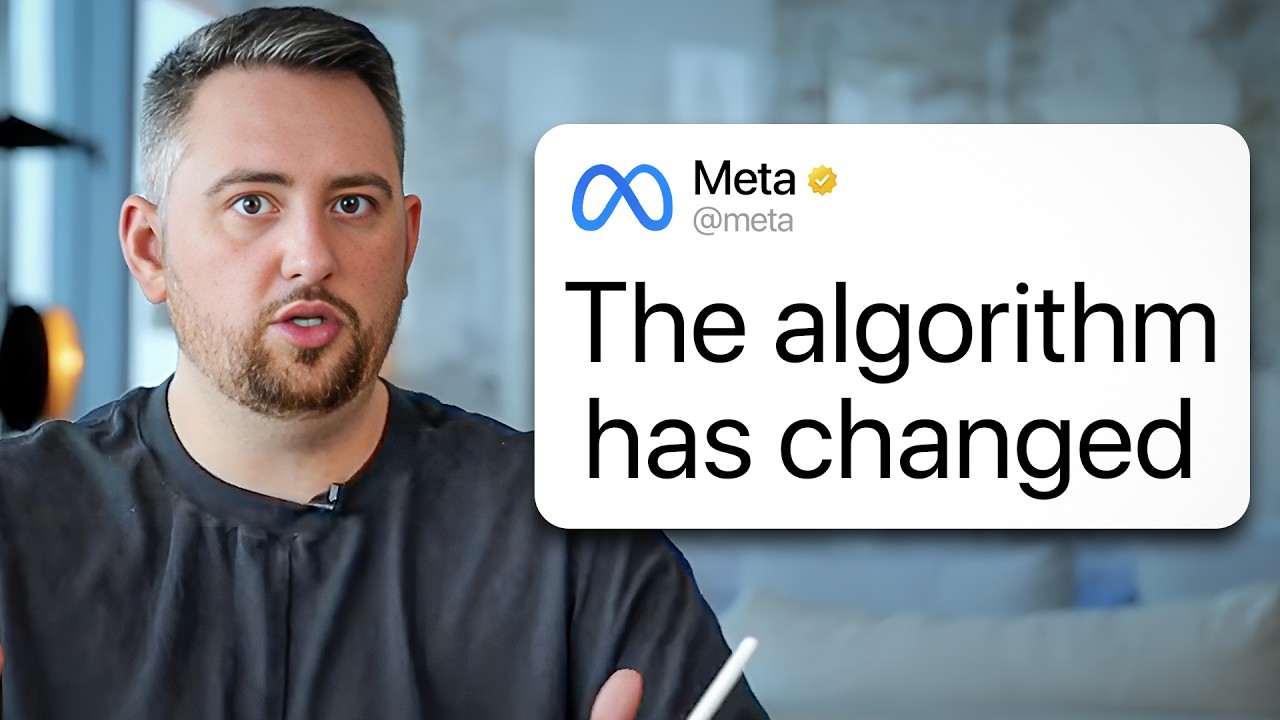
It’s a new advertising algorithm update that just got pushed out by good old Facebook and Zuckerberg, that’s caused some chaos, uncertainty, and unpredictability across a lot of different businesses’ advertising accounts.
Whether you’re seeing inconsistency in result volume, inconsistency in the types of leads you’re getting, or this one’s kind of interesting, completely new objections that you haven’t historically got, this blog is going to help you make sense of all of that, why it’s happening, and what to do about it.
I spend a couple of million dollars a month on advertising. Been an agency owner now for over a decade. I help businesses hit million-dollar months. It’s all we do around here, and it’s all we talk about.
Every piece of content is dedicated to that topic, and it’s a pleasure to welcome you in if you are new here. For all those that are already following along, of course, welcome back. It’s a pleasure to have you.
If your business is already generating $100k+ per month, My Inner Circle is where you break through to the next level. Inside, I’ll help you identify and solve the bottlenecks holding you back so you can scale faster and with more clarity.
Without further ado, let’s dive into today’s topic.
Why Sales Teams Are Suddenly Hearing 2 to 5 Competitor Names Per Call
Just recently, we had a business that we worked with that spends about four to six hundred thousand a month on ad spend start to get some really different objections that were coming through from the sales team that they were struggling to deal with.
And they mainly related to competitors of that business.
So what was happening was historically we’ve had none of this. There’s generally just been us as that business outspending everybody else that’s considered a competitor and just running circles around people.
And in the most recent month and a half, almost two months now, the feedback from the sales reps is that the average qualified lead that shows up to a call to close is bringing up anywhere from as low as two and as high as five competitors of the business.
The salespeople are perplexed. They’re like, “We’ve never heard any of this kind of stuff before. Nobody’s ever brought up alternatives. If they have, at most, it’s been like a single competitor.”
And it’s not even the same competitor every time. It’s just like an occasional random alternative that the person brings up.
Now every lead, and this is the craziest part, without exaggeration, every lead is showing up saying, “Oh yeah, I’m considering buying from,” and they list off like two to five different businesses.
Facebook Algorithm Change Affecting Multiple Businesses Across Industries
This is one of the most interesting things that you kind of first have to reflect on. If it wasn’t just that single business, if it was only that single business that was giving me that kind of feedback, I likely wouldn’t have thought much of it.
But what was interesting was we noticed across a lot, like a majority of the other businesses that we were working with, for the ones that had really articulate closers specifically, if you’ve been getting tremendous feedback that’s articulate from your salespeople, you’ll be able to tap into this kind of new wave of reasons people aren’t closing and kind of new challenges a lot faster than the businesses who are just told by their sales teams, which is highly unacceptable by the way, “All these leads are just unqualified.”
Big difference when you get articulate feedback versus non-articulate feedback.
So again, we’re seeing this across a few different businesses that people are showing up on average aware and considering several more businesses than they ever had prior.
And so when I had reflected on some of my own just kind of news feed experiences in the most recent two months, I had a key moment of inflection where I kind of said, “Wow, I think I realized what happened.”
Case Study How Facebook Served 7 Tax Strategist Ads in a Row
So I get hit hard by taxes. I’m just a cash cow here in the United States that my government milks every month for the opportunity to make money within this country.
And I get milked every month. I pay about six figures monthly in taxes. And I do that so I don’t have to lump sum a seven figure check. That just feels awful.
So anyway, I pay monthly and I get hit hard. So I start obviously talking, I have tax attorneys and tax accountants and I also have tax strategists that all work together to lower my overall tax burden.
So I get targeted by tax stuff pretty frequently. And one guy recently targeted me with a great set of messaging.
He was like, “Look, you’re rich now. You don’t just need a CPA. You don’t just need a tax attorney. That worked while it worked. You need tax strategist.”
And so again, I ended up working with somebody like this. And here’s my initial experience with this, just to be super clear on my point.
I get hit by an ad for a tax strategist. I clicked to the ad. Now I’m on the landing page. Some of the verbiage on the page was something about W2 people made me feel like it wasn’t for me.
So I leave.
The next seven ads that I see, not exaggerated, the next seven ads I see in a row. So it’s like yes, I see content and then an ad and then content and then an ad.
Next seven ads, were all tax strategists.
So whether I did or did not respond to that guy instantaneously, I’m targeted by alternatives and competitors to that specific business that had targeted me first that reached me first with that messaging.
Now to be clear and this is really important to understand, this has been the case for a while now with that type of system being implemented. That’s what’s made this alien level technology behind these advertising algorithms so effective.
It is hyper relevant to a person’s real-time interests and that’s what helps them get businesses and those types of buyers connected together and that’s what makes businesses come back and spend again and again and give huge percentages of their total revenue to these ad platforms.
Competitive Density and Concentration The Main Facebook Algorithm Change
Now to be clear about that which is really important to understand is that it is immediate and concentrated.
This is the main thing that changed more than anything else. It’s competitive density and concentration.
It’s a big difference compared to how it was historically. You might have seen a handful, like a couple at most of alternatives to whatever business you might have just real-time expressed interest in.
And they’ve done that to be mindful of this. This scenario that now exists is what they were trying to essentially prevent historically.
But somebody might have got fired. They might have just started coding the advertising algorithm with what Zuck’s been talking about on recent podcasts. Who knows why the changes?
But what we do know is that boundary that they historically haven’t crossed of creating a little bit of chaos and introducing every possible competitor that you have that you might not even be aware of to the potential lead or that customer immediately, that’s what’s changed.
How Facebook Algorithm Now Serves Same Category Ads After Interest Click
Let’s use the example with some visuals here just kind of explaining it. If we have business type A, and then we have some content, content, content, and then we have business type B.
So let’s say A in my case is the tax strategist. And I don’t click on it. I don’t express interest. I just keep scrolling.
So here I am scrolling and I get targeted by more content. And then boom, now we’re getting targeted by business type B. And let’s just say this is for like some shoes or something.
Then again, I’m not responsive to that. I just get targeted by more content. And then boom, I get targeted by business type C.
Now this continues on until essentially I get remarketed by an interest that the algorithm deems at a higher rate of interest compared to all the other things.
So in this case, again, business type A being tax strategist, business type B being shoes, and let’s say business type C, I get targeted pretty frequently by like Four Seasons and hotels and resorts and things like this.
So let’s say that that’s business type C. I don’t travel that frequently. It’s a much lower priority to me, but again, I see those ads relatively often just respective of what I get targeted by.
Business type B with shoes. I do buy shoes quite frequently. And as a matter of fact, I was recently just in the market for a completely new brand I had never shopped with before, recommendation by my doctors and chiropractors.
I’m at the age where I’m taking shoe recommendations from doctors. Anyway, I digress.
Business type A though with tax strategist, that is extremely pressing. I mean, that’s a six figure a month problem. That’s insane. I don’t want to tolerate that. I want to lower that burden.
I assure you, out of shoes and resorts, lowering that tax bill is of far greater priority to me and I agree with the algorithm.
So what’s the algorithm choose to do for that fourth ad? Well it resets everything and it targets me again with another person that’s selling some kind of tax strategy related service.
I see it. That one hits me harder than the first one and I click on it.
So I officially click the ad. Now here’s what happens next.
Why Clicking Ad Without Converting Triggers Immediate Competitor Ad Flood
Again, I leave the landing page. I remain unconverted. It had some verbiage about W2 stuff on it. And so we’re back to scrolling.
Now the next ad was also business type A, another tax strategist. And I’m like, wow. I get targeted again.
And then boom, another business type A.
And so at this point, the algorithm has identified. It’s like, oh well, this guy clicked to that page. He didn’t convert. Must have been a reason.
Let’s serve him up a bunch of other people that are similar to that that might solve the specific problems that the other one failed to articulate that could solve.
There was a reason that guy expressed interest and failed to convert and we didn’t see that standard event fire back. So let’s just hit them aggressively with a bunch of other stuff that’s similar to that that likely will get the person to convert.
And so they grabbed without exaggeration every business that they had that sold tax strategy and they just kept targeting me with it.
So much so that I became hyper aware of it to the point where I was like, I started counting. I was like what is going on? Like why all of a sudden are there only ads for tax strategy?
And that was, without exaggeration, nothing else. No shoes, no resorts, no hotels, nothing. Literally just tax strategy business type A.
So I kill the app. I get off the platform and I switch. This is actually on Facebook. This happened to me to be clear.
Instagram Algorithm Test Confirms Same Competitor Flooding Pattern
So I switch over to Instagram and as an advertiser who’s hyper self-aware about this kind of stuff, I try to test it out with something else.
So on Instagram, now we’re on a totally different experience. I get served with content, content, content. And then the first business that gets served to me is actually a shoe business.
Now coincidentally, this is actually really coincidental. I had bought a pair of shoes like I described. It’s some company called On, might be more than that, but it’s like On is the shoe brand, one with the holes in the sole.
And again, I purchased two pairs of shoes from this business. So the first ad I see is that specific business remarketing me to go back and buy other shoes.
And I’m totally new to this brand. I was told to buy a very specific pair. That’s what I had bought. I didn’t really explore all the other stuff that they had because to be honest, they weren’t really like cool shoes. They seemed like dad shoes.
My doctor told me to buy this kind of shoe. It didn’t feel good as a brand I wanted to explore. You know what I’m saying?
So anyway, I see this ad though and I’m like, “Oh.” Like, you know, this is this business I spent some money with. Let me go check them out.
So I again, I click. I click the ad and I just wanted to see. I’m like, is the same thing going to happen?
And no joke, the same exact thing happens.
So I get targeted by the shoes again. And this is a different business at this point. I don’t remember the name of this one, but I get targeted by somebody that’s essentially selling like custom Nikes. Like they’ll take like a dunk, like a Nike dunk and they’ll customize it.
I’m not sure if that’s legal or not because it sure didn’t look endorsed by Nike but anyway, then I start getting targeted by some collaboration that that On Cloud brand thing did, a shoe brand that I bought from. They had a collaboration they did with some company I’d also never heard of. Apparently another shoe brand called Loewe.
And I start getting targeted by the Loewe brand and then again, all shoes. That’s it. Just all shoes right after I click the ad.
So I kill it. I go back over to Facebook and again I’m trying to seek, am I only going to get targeted by tax strategist? Am I only going to get targeted by shoes?
How Algorithm Update Rapidly Increases Market Sophistication and Awareness
Here’s what’s interesting that I want to make abundantly clear. The objections that historically have happened that have related to market sophistication, they change and they vary relative to how aware somebody is of competitors and options.
Like if you’re in a small town and there’s a really good steakhouse and another really good steakhouse opens up, there’s a really high probability you’re going to be aware of it because it’s a small town.
And then from there, that original steakhouse you’ve been going to for years, they’ve now got a competitor. And you might in your business start hearing about that other steakhouse and you might have to start making adaptations and changes and menu items, pricing changes, marketing changes, all relative to the fact you got a new competitor.
Now if you do that same thing in a city like where I live in Miami where you go to a great restaurant, like same thing like a steakhouse, there could be another like twenty steakhouses that opened up in the most recent year, ten years. I’d have no clue for the most part unless somebody brings it up to me or unless like an ad strategically hits me.
Which didn’t happen that often. That’s what I want to make clear.
To increase my awareness as a consumer of new steakhouses in my city, I have to literally look it up. I had to go out of my way to look it up.
What advertising did with all these new algorithms, not the most recent one, but the ones that were prior to this, if I expressed interest in a steakhouse that had a pixel on it, there’s a high probability I’m going to get targeted by other restaurants.
And they might not all be steakhouses though. They might just be other restaurants in general. It would have been like, “Hey, this person’s got interest in restaurants. Let’s show them a bunch of other stuff.”
And it might have shown some other steakhouses, but not every single ad right afterwards a steakhouse.
That’s really what’s changed.
Before and After Facebook Algorithm Shows 5 to 12 Competitor Ads in Row
So think of it like this again. I have to go out and intentionally increase my awareness as a consumer.
Historically, advertising on these social platforms introduced, I might express interest in something and then get targeted by a handful of similar businesses.
Now, like literally now, this most recent algorithm change is if I express interest in a steakhouse or remotely close am identified as being interested in steakhouses and I click on that page or I watch that content too long, every single ad that follows for the next five to twelve ads are just going to be another steakhouse in your city, another steakhouse in your city, another steak.
It’s just all that. That’s all it is. And there’s no deviation from it until you kill the app.
That was what blew me away and that’s what made me think differently when I started hearing these sales teams articulate things about a much higher quantity of qualified consumers bringing up competitors and far more competitors than what they ever had prior.
And so we had to deploy a solution immediately.
Hammer Them Content Retargeting Strategy with 30 to 50 Pieces
The solution involved tweaking some of our core fundamental strategies that we have. Here’s what we had to tweak.
First of all, we have my hammer them content remarketing campaign. This involves anywhere from about thirty to fifty short form pieces of content and anywhere from about fifteen to thirty long form pieces of content.
And what we do is after somebody takes a key action, we just blitz them with content.
And in a buying process, if somebody goes and they click an ad and they book a call, the call doesn’t happen immediately and that transaction doesn’t occur typically for whatever the average sales cycle is, which can be days at the minimum in most instances, sometimes a week plus.
In that window, that’s when we’re blitzing people with this content. That’s when we’re hammering people.
And that’s where we’re taking that opportunity to put strategic information in front of them. Questions, second layer questions, meaning questions that come up after the first ones get answered, objections and expectation related content.
It’s a lot of what that type of content is in that strategy.
We had to start adding in a lot of content that talks about the unique mechanism of that business.
So if we go back to steakhouses, as simple as that is, sometimes the unique mechanism might be like a specific way that they serve or bake the steaks.
If they grill the steaks over a certain type of wood or a charcoal grill or there’s this one in New York I’m thinking of, very famous brand, they broil the living daylights out of their steaks and then they serve it raw in the middle but super seared on the outside and it’s like this far away from the broiler at the top of this extreme heat, it’s like eighteen hundred degrees and they only salt it.
Or I saw a steak recently somewhere in Europe I think it was in the UK. It was an old dairy cow which had like the craziest fat marbling ever and the fat was more yellow comparatively to white which you see on steaks a lot.
Again, in this example, those are their unique mechanisms. It’s like, oh, our steak that we serve is this old dairy cow. Oh, the way that we cook our steak is this crazy broiler and we only season it with salt.
Everybody’s got their own unique mechanism.
We had to add a lot more content to our hammer them campaign with unique mechanism information.
This ended up being a huge point that added a lot more certainty that the closers could lean into when they were on these calls.
So instead of just getting an objection about how there’s a lot of competitors, the closers would be able to bring up like, “Oh, are you aware about how we produce the result for you and what makes us different?”
And a lot of the times when you run the hammer them campaigns effectively and you have enough unique mechanism content in there that changes the game because it aids your closers in having something that’s already in the mind of the user that the other businesses likely do not have.
And that’s a huge advantage when you take an action like the hammer them campaign. You’re adding a lot more pre-framing material because keep in mind if the algorithm is going to serve content again and again and again and again that all relates to that specific topic, if it starts by having the variance of businesses, but as soon as there’s any level of interest in a specific type of business, it’s going to heavily lean into that specific type of content.
You’d want to be there with as much of that type of content as you can. You understand?
Reverse Fly Trap Strategy for Unconverted Clickers Before Key Action
So again, the hammer them campaign is a paid content distribution strategy where we’re strategically picking and choosing the content that we want to distribute and making sure that it’s there with some paid dollars.
And outside of our hammer them campaign, because keep in mind that’s for after somebody takes the key action. Well what about before?
Because in that example that I provided to you, both with the shoe example and with the tax strategist example, those both included me clicking but not converting. That’s very important to understand.
With the shoe example, I clicked an ad to explore the page again, but I left. I’d already bought a shoe previously, not from an ad, but again, when I got served with the ad in both scenarios, I clicked and left. I remained unconverted.
So I have this strategy. I call it the reverse fly trap. And this is an OG strategy of mine. It’s an iteration of my Venus fly trap strategy.
So whether it’s the Venus fly trap one point zero or the Venus fly trap two point zero, what I do in that strategy is very simple. I typically take content and I put it in a sequence where somebody has to watch a certain threshold of the content in order to unlock that next set of content.
And then again for the third step and then the fourth step is the direct response ads where we’re going to make our call to actions and attempt to get the person to actually buy.
That’s my Venus fly trap strategy.
What I do in the reverse fly trap is I start with the direct response and then I do two things. I remarket people with more direct response, but in addition to that, I’m serving them what we call a content cycle bin.
And a content cycle bin is a little different than how the hammer them campaign works. They’re structurally set up the same within the campaigns.
However, the difference is the hammer them strategy has a frequency goal and it’s a very aggressive frequency goal, a very high frequency goal and it’s loaded up with typically a lot more content.
A content cycle bin is a key term that I use throughout my content marketing strategies that I have. Really no matter which one it is, generally they involve some type of content cycle bin.
It is less about the frequency that we achieve and it’s more about having content available to be consumed by the right people at different stages of our sales process.
Why Wide Range of Ad Creatives Essential in New Facebook Algorithm
So as an example, if somebody clicked on an ad and failed to convert like I did with the shoes or the tax strategist, that business, if they set up their campaigns in a traditional way, the only real retargeting they would have is that campaign serving me ads from them again.
And if they don’t have a wide range of ads, these algorithms do not typically bias towards serving you the exact same ad again and again and again and again. That creates a bad user experience.
So they stay away from that. Instead, what they do is they serve you many different ads from the same businesses and from different businesses.
So if you as an example are leveraging dynamic creative and have a lot of assets in there or even if you’re using individual ads and you have a lot of individual ads that you’re running, not an exuberant amount to be clear, just even a handful, you right away have a higher probability to have retargeting handled for you.
If you have a single ad, you’re pretty stuck. Just to be extremely clear based on this algorithm.
So a lot of the people, as an example, just to kind of take a side note here, that come to us that are experiencing inconsistencies with this new algorithm deployed that are having all kinds of new objections come up related to competitors, they’re just hearing about all these businesses they’ve never had to sell against before.
And they’re also at the same time dealing with a lot of inconsistency in qualified lead flow. There’s a really high probability that those other businesses are taking the qualified lead from you.
If your business is not set up with content and with a wide range of ads for your direct response ads, you’re at a huge disadvantage with this new algorithm.
Because like I said, as soon as somebody expresses interest in your stuff, which happens all the time, go look at the quantity of people that have clicked to your pages that have not converted. That’s the largest chunk of people you have in most instances.
And they’re getting swarmed immediately. As soon as they go back onto the platform, they’re getting swarmed immediately by every competitor you’ve got.
So creative, simply put, what we found is creative matters so much and having range with your creative in this new algorithm, having a range of both direct response creative and content.
Because that’s what I mentioned we do here with this reverse fly trap strategy. We will have the direct response lead the way, but instead of just having direct response and having a slim amount of it at that, we’ll have a standard remarketing campaign set up, which we haven’t had to do in the most recent years.
A lot of retargeting is done by that main campaign, even if it’s all towards cold people. That’s why frequency gets driven up in cold campaigns because it’s going back and it’s showing ads to the same people again because it handles the retargeting for you.
But we’ll intentionally set up a retargeting campaign as well. That way we just play more into how this algorithm is working.
In addition to that, we’ll have a campaign set up with a content cycle bin in it. Something optimized for engagement, video views, things like this that just has a wide range of content showing the unique mechanisms.
Process Content Strategy to Differentiate from Competitors in Ad Campaigns
The other main piece of content that we’ve had to work into the hammer them and all of our content cycle bins has been process content.
So process content is a little different than unique mechanism content. So unique mechanism demonstrates, let’s go back to the steakhouses, like that steak that gets put into the oven and has the broiler right there just searing the daylights out of that steak. And the only thing they do is salt it. That’s their unique mechanism.
But the process goes back several steps before that.
So the process in this case, they could start off at the farm if they wanted to. They could sit there and talk about, hey, we buy our cows from this place, this is how we butcher up, this is how we do XYZ.
They could start literally way back there if they wanted to to articulate their process. And that’s the cool thing about process content. Some of their content could go that far back farm to table and flex on me that you do it better than everybody else who doesn’t.
But process content can also start like, okay, so we start by dry-aging the steak as soon as we get it. Doesn’t have to go all the way back to the farm.
It could just be, alright, steak shows up, shows up fresh, butchered that day. We’re immediately dry-aging it. Here’s where we’re going to dry it. Start showing the dry-aging chamber, start showing how long it’s dry-aged and then talk about how thick the cuts are.
Then get to the point where you also demonstrate the unique mechanism in that content of putting the steak in the broiler, salting it heavily and cooking it without the customer’s request being accepted or not. They just cook it pretty much raw. It’s like as close to medium rare raw that you can picture in your head right now.
That’s their unique mechanism. But their process is all of that. You see?
So process content and unique mechanism content.
Eugene Schwartz Market Sophistication Concept Applied to Facebook Algorithm
There’s a great book, Breakthrough Advertising by Eugene Schwartz. Widely considered one of the most sophisticated books on advertising ever written, it’s become essential reading for master-level direct-response copywriters who reference it regularly to understand market sophistication concepts. Probably one of the more costly books you’ll ever buy in your lifetime, but well worth it if you end up purchasing it.
Or if you already have, you already know what I’m talking about. And there’s again, there’s this concept. It’s called market sophistication and market awareness.
Generally, the more that people get pitched by similar businesses, the more sophisticated and the more aware they are. Marketing experts define market sophistication as the level of knowledge your market has on any given topic, specifically how many similar products they’ve been exposed to before.
But awareness can be isolated to its own lesson. And it’s very important to understand the distinction between the two.
Sophistication just means simply put, I’ve just been pitched a lot of times. I’m now aware of how other people, what their processes are, what their unique mechanisms are, what their pricing is. I get to make choices at a higher level as a result of having that level of sophistication as a consumer.
And as a business, it takes a different type of marketing to sell to that type of consumer.
Market awareness is as the consumer becomes that much more sophisticated, they also are just hyper aware they’ve got leverage because they’ve got choices.
And again, things change with how you’ve got to entice this type of person based on what they know going through the buying process.
These two things, simply put, what I’m seeing is a rapid ascension of sophistication and awareness due to this algorithm update.
And because of that, what Eugene Schwartz talks about in his book, Breakthrough Advertising, is that unique mechanism content and process content can overcome these dilemmas that you face if you have inconsistency.
If your qualified buyer leads are getting poached by competitors who immediately target your stuff, better messaging, more articulate messaging, better content, better creative.
Confirmation Page Breakout Videos to Answer Questions Before Sales Calls
And we didn’t just have to update the hammer them strategies. We didn’t just have to deploy more content cycle bins and strategies like a reverse fly trap.
We also had to take our breakout videos, which is a confirmation page best practice. If you are inside of my inner circle program, and the master internet marketing students, they’re soon to get this document as well.
My confirmation page best practices include this concept called breakout videos, which essentially means we’re going to have anywhere between like five and twenty of these individual videos that are generally about a minute to three minutes long that each individually answer a question that’s on the mind of a lead that’s otherwise going to fail to convert.
If these questions go unaddressed, it’s going to make the sales team’s job harder. They’re going to have to educate more if you don’t have these types of content pieces, if you aren’t doing things like the hammer them strategy, and if you are not doing value dense email sequences.
These things in addition to a handful that I’ll leave off that I leave exclusively for people in my inner circle program, exclusively for people in my master internet marketing program that have access to all of my SOPs with information like this.
They also have access to my training library and AI Jeremy to communicate with about ensuring that all these things get executed at the highest levels.
These people are protected because they’re ahead of this, not behind this in a reactive position.
Why Every Lead Now Sees Dozen Competitors After Clicking Your Ad
If you find yourself just getting hammered right now, I promise you this, your business is officially alongside about let’s call it a dozen other businesses as soon as somebody expresses interest in your ads or in one of your competitor’s ads.
That’s kind of the upside too, is that when you are a business that’s similar to all your competitors businesses, if they are spending a ton of money, you might have recently seen a lift in your overall performance and quantity of people buying from you because of somebody who’s driving the market by spending more money than you.
You’re not the leading advertiser in that example that might have interest that doesn’t get converted. You in that case are kind of getting the secondary position.
You see the person who expressed interest is becoming aware of your business after.
So think about it like this. If you have somebody that’s spending, outspending you aggressively, and you want to become more competitive, think about if you implemented these things.
Think about if you had content cycle bins, think about if you had range with your direct response ads, a wide range of hooks, a wide range of creatives, a wide set of conversion mechanisms that people could come into. That would do a lot for you if you were in that position.
And vice versa, think if you’re the leader in the market and you’re the one spending the most. Think about how much more you have to protect and hedge against one of these smaller players.
You’re the big shark and you just got these tiny little sharks on your underbelly that are eating off you. They’re living off you. You are the ecosystem.
You have to adapt. You have to change. You have to evolve your strategies that you’re deploying relative to the fact that they’re going to become, that consumer is going to become immediately aware, literally immediately aware of everybody else they could possibly do business with that’s similar to you.
And that’s kind of what’s happened. That’s what I was saying happened with that business that was spending four to six hundred thousand a month.
They’re outspending every little small player that’s trying to compete with them. But like I said in the most recent two months, that’s not preventing every qualified lead that comes onto the call being hyper aware, very sophisticated of every competitor that exists and is actively considering those people.
Why Broad Targeting Makes Facebook Competitor Flooding Permanent Change
And I just want to be clear, all this really comes as a result of, in this case, Facebook and Instagram and Google Ads is doing this too. They’ve been pushing broad targeting and they’ve been pushing these open-ended, like all your targeting now if you do cold targeting for the most part is considered a suggestion.
And some ad accounts literally label it as that. Your targeting options are just suggestions.
The good news is all the warm audience targeting like when you target social interaction or video viewers or website visitors or email list, customer lists, those are still respected and those are typically not treated as broad targeting, which is great.
That still enables us to do well and have very specific strategies like this in play.
But let me be clear, all cold targeting is essentially broad targeting at this point. Research from 2024-2025 shows that Meta has strategically shifted toward broad targeting, with algorithms now treating detailed targeting options primarily as suggestions rather than strict parameters.
They believe, these platforms believe that advertisers are what limit this from historically happening a lot more anyway.
With all this broad targeting in place, it’s more up to the algorithm than ever before about who’s going to get served what, and it has so much less to do with targeting.
And that really just goes to demonstrate that these platforms have so much more confidence in their ability to match interests, real-time interests to solutions that businesses offering can provide to them.
That’s why they’ve stripped away the ability for you to mess this up through controlling your targeting more.
So this system’s not going away. I don’t think this is going to change. I don’t know if this is like an ethics thing that historically has prevented them from doing this or if it’s been targeting that’s historically prevented them from having this level of interest relevance.
But I will say this, it is pretty interesting how different the experience of advertising is relative to what you have to talk about on the back end just due to the fact that almost everybody is coming through extremely aware and extremely sophisticated now.
It’s very different than what it was.
How to Adapt Marketing to Higher Market Sophistication and Awareness
Again, historically, almost every market at a given time could have a different stage of sophistication and a different stage of awareness.
Right now, you can treat all advertising and all marketing opportunities like they are these later stages of market sophistication and awareness.
You can just kind of skip over the “I can just make the claim. I can outspend everybody and make the claim.”
I can start talking about unique mechanisms. You have to now start talking about your process and unique mechanisms. You just go straight to having to talk about the unique mechanism and the process and the claims.
It’s just not as simple as it once was.
So I want to be really clear when I say this, you have to know this kind of stuff and you have to have a team in place that is aware and educated and making changes relative to this because this is as real time as it gets, this information that I’m giving to you right now.
And again, my inner circle members, my master internet marketing students, my clients obviously, they’re all well equipped to deal with this. They’re not experiencing a lot of the negatives and the downsides.
But I’ll tell you what, the new people who come to us who are vulnerable about what’s going on or just the people that we see out there in the market that ask us questions, they are getting swarmed by this thing and they have no idea what to do.
So anyway, this is me trying to help you, give you some insight, lend you a hand and help pick you up.
I’ve tried to put enough information in this blog to still give you what you need in order to go out there and get richer and solve this set of problems.
But I do want to be clear, per usual, I withhold a tremendous amount as a result of it being free. And I would actively encourage you if this is a serious and costly problem for you and you know that there’s a lot of financial upside on the other side of solving this specific issue, check out some of the information available and get the paid help that you need.
Because that’s going to be where we don’t hold anything back and that’s going to be where we really try to get you to the next level. And we understand the name of the game. Our goal is to make you far more than what you’re going to pay us.
We don’t make any income claims. We’re by no means telling you that you’re going to hit a million dollars a month. All we do is just hand down all the top lessons of the people who have been there, done that, and what they’re doing.
And this blog is no different. It’s just us trying to help you get richer. And hopefully we’ve done that here today.
The Facebook algorithm update is permanent. Broad targeting means every competitor swarms your prospects the second they show interest. Market sophistication and awareness have been artificially accelerated overnight.
Your only defense is more content, better creative range, unique mechanism messaging, process content, hammer them campaigns, reverse fly traps, breakout videos, and value dense email sequences.
Without these systems, you’re fighting blind against a dozen competitors on every single lead. With them, you’re the only voice in their head when it’s time to buy.
Most business owners waste years figuring out what actually works. In my Master Internet Marketing program, I compress that learning curve into 7 weeks, covering copywriting, funnels, ads, and more. If you’re ready to invest $5k and get serious about your skills, apply here.
Watch the video:
Get my content first on Google
Add jeremyhaynes.com as a preferred source and Google shows my articles more prominently in your search results, including AI Overviews and AI Mode.


Jeremy Haynes
Owner and CEO of Megalodon Marketing
Jeremy Haynes is the founder of Megalodon Marketing. He is considered one of the top digital marketers and has the results to back it up.