
Why Prospects Want Your Agency but Reject the Delivery Model

I hope you enjoy reading this blog post. If you want my team to just do your marketing for you, click here.
Author: Jeremy Haynes | Published November 4, 2026
Earnings Disclaimer: You have a .1% probability of hitting million-dollar months according to the US Bureau of Labor Statistics. As stated by law, we cannot and do not make any guarantees about your own ability to get results or earn any money with our ideas, information, programs, or strategies. We don’t know you, and your results in life are up to you. We’re here to help by giving you our greatest strategies to move you forward, faster. However, nothing on this page or any of our websites or emails is a promise or guarantee of future earnings. Any financial numbers referenced here, or on any of our sites or emails, are simply estimates or projections or past results, and should not be considered exact, actual, or as a promise of potential earnings – all numbers are illustrative only.
A prospect can want your agency’s help and still have a good reason to reject the way you deliver it. If they are trying to get marketing off their plate, an engagement that asks them to become the project manager creates another problem. Before you lower the price or question the closer, find out what the buyer thinks they will have to do after paying you.
I care about that distinction because wanting a result and wanting an arrangement are different decisions. A buyer can believe you know your work, afford your fee, and still look at the proposal and decide it does not fit their business. You need to hear which part they are turning down before deciding what to change.
Already making money? See what it takes to make a lot more.
Why the Buyer Can Want Help and Still Say No
The buyer is evaluating the work that comes with the purchase. You are describing the campaign, the expertise, and the improvement you want to make. They are thinking about who will attend the calls, gather the assets, approve the changes, and keep the project moving.
Those questions deserve an answer. If the owner already has an overloaded team, another service can feel like another department they need to manage. Explaining the value of advertising again does very little to address that concern.
When I talk about what wealthy buyers value in an offer, buying back time is part of the conversation. Apply that thinking to your own proposal. Does the engagement give the buyer useful capacity, or does your team need so much direction that the owner becomes the unpaid account manager?
That does not mean a client should have no responsibilities. An agency needs information, access, and decisions it cannot invent for them. The issue is whether the person buying understands that work and has a realistic way to carry it.
Interest in your service does not tell you whether the buyer can use your service. You have to ask about the arrangement itself, including the inconvenient parts you would rather leave until onboarding.
What the Prospect Is Actually Turning Down
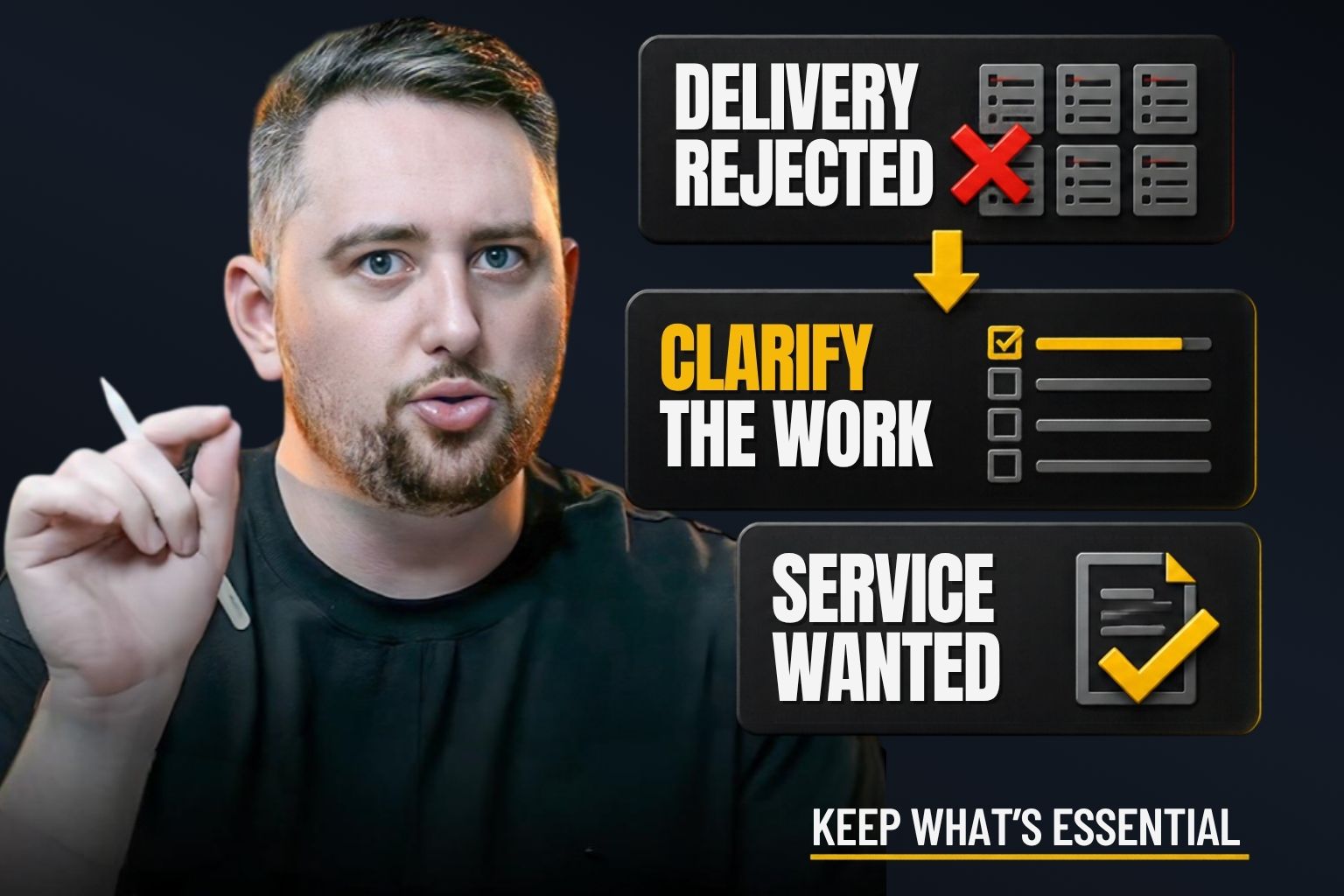
Ask the prospect which part of working together does not make sense for them. Give them room to describe it before supplying your preferred explanation.
Someone who says they have no time for calls could mean several things. They may expect another meeting full of updates they could have read. They may lack the person who would turn your recommendations into work. They may want you to take execution off their hands altogether.
Each answer changes the conversation. If the concern is pointless updates, explain what the meetings are for. If nobody can implement the work, another explanation of your expertise will not create that capacity. If they want execution and you sell advice, make that difference clear.
I would listen for the task attached to the objection. Who would have to find the content? Who would have to chase approvals? Who would be responsible for the work between conversations? The closer needs to understand that answer before trying to handle the objection.
Keep the buyer’s actual words. “We cannot assign someone to implement this” tells you something useful. “They weren’t serious” tells you what your team thought of them. Treating the second statement as the explanation can send you back to selling harder when the real issue is still sitting there.
How Your Offer Gives the Client Another Job
Your offer can create hidden work when the proposal describes your deliverables but leaves the client’s contribution vague. A list of things your agency will produce is only part of the relationship.
Follow an actual piece of work through the engagement. If you are producing advertising, someone needs to explain the offer, supply accurate information, and approve what can be claimed. If you are advising an internal team, someone needs to make the changes. Work can stall while everybody believes they have already done their part.
You can see the distinction in a task tool. Asana gives a task an assignee and allows collaborators. Being involved and being responsible are different things. Adding everyone to a conversation does not establish who will get the next action done.
I want that to be clear in the sale. Tell the buyer which responsibilities stay with their people and what your team takes over. If the proposal depends on a person who does not exist in the client’s business, address it before making a commitment.
An established internal team can make the relationship more useful. The work is deciding how the agency fits alongside that team. The buyer should be able to explain the arrangement to their staff without discovering an entirely new workload in the process.
When More Access Makes the Offer Less Appealing
More access can become a burden when every additional conversation requires the buyer’s time without helping a decision move. A longer list of calls is easy to present as added value. The person expected to attend them can see it differently.
Ask what happens in those conversations. Is somebody making a decision that requires the client’s judgment? Is the team getting useful feedback? Or is the call mainly a person reading information off a screen while the owner waits for the part that concerns them?
I want useful participation. I also want the delivery to make sense for the person paying. A buyer who wants direct execution may prefer a clear update and a specific approval request. Another buyer may want a detailed conversation because their own team will carry the work forward.
Make those differences visible. A meeting can be essential in one arrangement and unnecessary in another. Repeating “we provide more support” does not explain which arrangement you are offering.
The same consideration applies to hiring creative help internally or through an agency. Somebody still needs to supply direction and feedback. Moving the work outside the company does not automatically remove the owner’s involvement.
Understanding the connection between the offer, the marketing, and the work after the sale is part of Master Internet Marketing, my 7-week live comprehensive training. A persuasive offer needs to describe a relationship the buyer can actually enter.
Results are not typical. Your results will vary and depend entirely on your individual capacity, business experience, expertise, and level of desire. There are no guarantees concerning the level of success you may experience. The testimonials and examples used are not intended to represent or guarantee that anyone will achieve the same or similar results. We don’t believe in get-rich-quick programs. We believe in hard work, adding value and serving others. As stated by law, we can not and do not make any guarantees about your own ability to get results or earn any money with our information, courses, programs, or strategies.
Which Client Responsibilities Need to Stay
Keep a responsibility when the work genuinely depends on the client’s authority, knowledge, or participation. You do not need to remove every requirement because a prospect would prefer an easier purchase.
Your agency cannot truthfully approve business facts it does not know. It cannot grant itself permission to use an account. And it cannot make the client’s salespeople follow through simply by writing that outcome into a proposal.
Explain why the responsibility exists and who can carry it. The owner may not need to prepare every input personally. A person on their team may be able to do the preparation while the owner keeps the decision that genuinely requires their involvement.
Atlassian’s roles and responsibilities exercise compares how people understand their work and identifies responsibilities that have no owner. That is a useful distinction in a buyer conversation. Having people available does not establish that someone has accepted the task your engagement requires.
If the prospect cannot supply an essential input, say what that means for the service. You can examine an alternative you are equipped to deliver, or recognize that the engagement is not a fit. Promising to work around a missing requirement without knowing how puts the problem on your delivery team.
Make the requirement easier to understand before deciding it needs to disappear. A buyer who misunderstood the commitment needs clarity. A buyer who understands it and cannot meet it needs a different decision.
Why a Discount Can Leave the Objection Unchanged
A lower price leaves the workload in place. If the owner cannot attend the required sessions or assign an implementation person, paying less does not solve either problem.
It can also hide useful information from you. The sale closes, so the team assumes the objection was handled. Then onboarding reveals the same missing person, delayed assets, or disagreement about who was supposed to do the work.
Before changing the fee, check whether the buyer understood the arrangement you actually offer. If your agency will do the execution and the prospect thinks they must do it, correct that misunderstanding. If they understood you correctly, decide whether a different service makes sense.
Changing a service takes more thought than changing a sentence. Work out who will deliver the additional responsibility and what it costs the agency to own it. Adding execution to an advisory relationship changes what your people have agreed to provide.
Keep the scope tied to the work the buyer needs. You can remove an unnecessary demand without pulling every adjacent service into the engagement. The point is a better fit between the purchase and the buyer’s situation.
I would also check the language that created the expectation. The FTC’s advertising guidance addresses material omissions as well as direct claims. A responsibility that matters to the purchase should be visible before the buyer commits, rather than buried under a broad promise of support.
7 weeks. Real frameworks. Covering copywriting, funnels, paid ads, and conversion systems.
What to Change Before You Sell the Offer Again
Change the part of the engagement you have evidence the buyer is resisting. A complaint about the delivery does not require a complete rebuild of your positioning, pricing, and sales process.
Review the conversation with the people who would deliver the work. Can they explain the requirement more clearly? Can they remove work that serves no useful purpose? Is the prospect asking for a different relationship from the one the agency is prepared to offer?
Keep those possibilities distinct. An unclear explanation needs better selling. An unnecessary burden needs a delivery improvement. An essential requirement the buyer cannot meet may be a reason to decline the account.
After a change, pay attention beyond the signature. Does the client understand what happens next? Does someone own their part? Is the delivery team now doing work that was never included? Those answers tell you whether you clarified the relationship or simply made the purchase easier to say yes to.
In my Inner Circle, operators can compare the decisions behind offers like these. I would bring the buyer’s exact concern and the real work the agency needs from them. That gives the discussion something concrete to work with, and gives you a better next move than assuming every interested prospect needs another push.
Results are not typical. Your results will vary and depend entirely on your individual capacity, business experience, expertise, and level of desire. There are no guarantees concerning the level of success you may experience. The testimonials and examples used are not intended to represent or guarantee that anyone will achieve the same or similar results. We don’t believe in get-rich-quick programs. We believe in hard work, adding value and serving others. As stated by law, we can not and do not make any guarantees about your own ability to get results or earn any money with our information, courses, programs, or strategies.
Get my content first on Google
Add jeremyhaynes.com as a preferred source and Google shows my articles more prominently in your search results, including AI Overviews and AI Mode.


Jeremy Haynes
Owner and CEO of Megalodon Marketing
Jeremy Haynes is the founder of Megalodon Marketing. He is considered one of the top digital marketers and has the results to back it up.