
13 Years of Marketing Advice on Offers, Sales, Content, and AI

I hope you enjoy reading this blog post. If you want my team to just do your marketing for you, click here.
Author: Jeremy Haynes | Published November 2, 2026
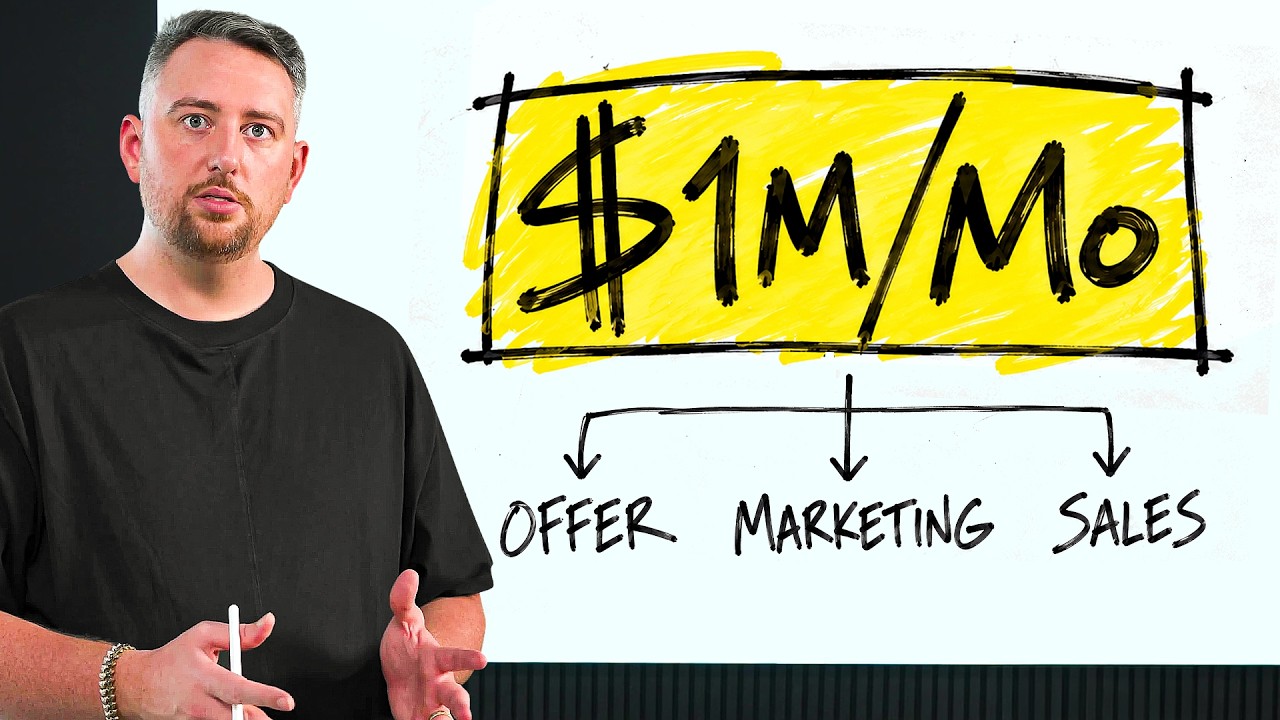
Earnings Disclaimer: You have a .1% probability of hitting million-dollar months according to the US Bureau of Labor Statistics. As stated by law, we cannot and do not make any guarantees about your own ability to get results or earn any money with our ideas, information, programs, or strategies. We don’t know you, and your results in life are up to you. We’re here to help by giving you our greatest strategies to move you forward, faster. However, nothing on this page or any of our websites or emails is a promise or guarantee of future earnings. Any financial numbers referenced here, or on any of our sites or emails, are simply estimates or projections or past results, and should not be considered exact, actual, or as a promise of potential earnings – all numbers are illustrative only.
Marketing best practices are only useful if they work together. A strong ad cannot carry an offer people do not want. A booked call does not mean the buyer understands your approach. And putting AI into a weak process can give you more of the same weak work. After 13 years in marketing, I care a lot more about how those pieces connect than how many tactics a business can say it uses.
Start with what you sell, then look at what the buyer needs to understand and who is going to help them understand it. That changes the funnel you choose, the content you produce, and the work you ask technology to do. Get those decisions right before treating another tool or campaign as the answer.
Already making money? See what it takes to make a lot more.
Your Offer Has to Be Stronger Than Your Sales Team
When almost every number looks bad, I look at the offer. Expensive attention, weak clicks, weak page conversion, poor attendance, and difficult sales conversations can point back to something more fundamental than campaign settings.
That does not make every bad campaign an offer problem. It means you should stop treating each weak number as an unrelated mystery. If people resist the promise, the method, or what they have to do to get value, the same resistance can show up all the way through the funnel.
I want an offer strong enough that the business does not depend on an exceptional closer rescuing every conversation. The buyer should be able to understand why it matters and why the approach makes sense.
Build that explanation for somebody encountering you through cold traffic. Longtime followers bring context that a new person does not have. An offer that only works after months of familiarity can give you the wrong impression about how ready it is for paid acquisition.
The scope of the high-ticket service still matters. More deliverables can make the promise harder to fulfill without making the purchase more compelling. Strengthen the actual reason to buy instead of making the list longer.
Choose a Funnel Your Sales Team Can Actually Close
Your sales team helps determine which funnel you can run successfully. What you personally feel like launching is only part of the decision.
A team used to organic inquiries may be speaking with people who already know the business, understand the approach, and want help. Put that same team in front of colder leads and the missing skill can become obvious. They have to educate somebody before asking for the purchase.
A webinar can do more of that work before the handoff. A call funnel may leave more of it for the salesperson. Neither format removes the need for someone to explain the problem, the method, and the decision.
I call that the educator sales role. You can have somebody support the team with difficult explanations, but I want the salespeople developing that ability themselves. Otherwise, a different lead source can expose the same weakness again.
Listen to what the team struggles to answer. A prospect who asks how your approach differs from another option needs a useful explanation. Labeling them a bad lead leaves that question unanswered.
Move More Buyer Education Into the Marketing
Making salespeople better educators and taking some education off their plate can happen together. I want marketing to do more of the explanation before the conversation begins.
Confirmation pages are one place to do it. After somebody books, give them something worth consuming. Explain the approach, answer meaningful questions, and make the upcoming conversation easier to prioritize. A calendar confirmation by itself does very little of that work.
Email is another. Value-dense emails should contain useful answers, rather than repeatedly telling the person to watch something elsewhere. Setters also need assets they can send when a specific question comes up.
That asset might be a video, a document, or a presentation. Different people prefer different ways of consuming information. Choose the format that helps communicate the answer instead of assuming every prospect wants another long video.
Review the questions appearing across your sales calls. Recurring confusion gives you a practical starting point for training and marketing assets. AI can help identify patterns, but read the underlying calls before turning its summary into the team’s explanation.
The connection between offers, funnels, and advertising is part of Master Internet Marketing, my 7-week live comprehensive training. Keep the buyer’s missing understanding in view when deciding what to build next.
Results are not typical. Your results will vary and depend entirely on your individual capacity, business experience, expertise, and level of desire. There are no guarantees concerning the level of success you may experience. The testimonials and examples used are not intended to represent or guarantee that anyone will achieve the same or similar results. We don’t believe in get-rich-quick programs. We believe in hard work, adding value and serving others. As stated by law, we can not and do not make any guarantees about your own ability to get results or earn any money with our information, courses, programs, or strategies.
The Buyer Keeps Learning After Booking Your Call
Booking with you does not stop somebody from discovering alternatives. That is one of the most expensive assumptions a business can make about follow-up.
I use the dart system to describe how feeds keep testing a person’s interests, then serve more related material when something gets their attention. The practical lesson is that your prospect can keep learning from other people while waiting to speak with you.
YouTube identifies viewing history, searches, and feedback among its recommendation signals. Different surfaces weigh signals differently. My dart analogy helps explain the competitive situation; it does not mean every platform delivers an identical sequence.
I experienced this while looking for a landscaper. Homeowners’ videos helped me understand what I wanted. A business with the relevant service then got my inquiry. The people who educated me and the business positioned to receive my money were different.
That can happen in your market too. You can create awareness that somebody else converts, or receive an inquiry after somebody else’s content did the earlier teaching. Either way, waiting until the call to explain your own approach leaves a lot to chance.
Give Buyers Useful Answers While They Compare
The period after an opt-in or booking is what I call the justification window. The person has taken an action, but they still need reasons to feel good about continuing.
Value density matters here. Say something that helps them make a decision quickly. Explain a real concern, show what delivery involves, or answer a difficult question that other businesses avoid.
Refunds, complaints, and what happens when an engagement goes poorly can be part of that conversation. If you discuss your record, use accurate information and explain what the figures cover. A selected number without context can create a very different impression.
The FTC’s substantiation policy requires a reasonable basis for objective advertising claims before they are shared. Do not turn reassurance into an unsupported promise that nobody faces risk.
My confirmation-page approach starts education while the person is already engaged. Keep answering the questions that determine whether the next conversation feels worthwhile. Repeating the appointment time cannot replace that.
Paid and Organic Content Need to Cover the Buying Journey
I think about content in terms of awareness, nurture, and conversion. People discovering the problem need something different from people comparing approaches or deciding whether to speak with your team.
If you only make introductory content, you leave the later questions to somebody else. If every post asks for a purchase, you give a new viewer very little help understanding why they should care.
Organic content gives people more ways to encounter your thinking. Paid distribution can put relevant teaching in front of a selected audience. Direct-response ads still have an important job, but they do not replace all the explanation around that job.
My hammer them strategy uses paid educational content around a meaningful action such as booking a call or registering for a webinar. The intention is to keep useful information available during that decision period. Different short and long explanations give the buyer more than the same repeated pitch.
Think about the different jobs of content advertising and direct response. An explanation can address uncertainty while a separate invitation makes the next step clear. Those pieces should support the same offer rather than behave like unrelated campaigns.
Explain Your Mechanism Before the Sales Conversation
Your mechanism is how you go about producing the outcome the buyer wants. It needs to mean more than a new name attached to an ordinary service.
An agency saying it runs ads has identified a category. A business explaining how it researches the buyer, develops the message, and connects acquisition with sales has started explaining an approach. The actual work needs to support that explanation.
People can become familiar with competing methods before your call happens. If they hear reasons to prefer a different approach and never hear yours, your salesperson inherits a comparison they may not even know exists.
That is what happened when my wife and I looked into sleep training for our child. We encountered conflicting approaches before the scheduled conversation. The business we contacted had left its explanation too late, and we arrived more confused. They needed to explain why they favored their approach while we were still comparing it.
In my own marketing, using a sales team is part of the approach I advocate. Somebody hearing that they can avoid a sales team entirely may see my recommendation as unnecessary work. I need to explain why I favor it, including what the team contributes.
The beliefs underneath an offer matter for the same reason. If the approach requires someone to invest effort, build a team, or pursue a larger business, talk honestly about why you consider that worthwhile. Give the person enough reasoning to decide whether they agree.
Use AI to Improve Work That Already Matters
I separate AI tools, people who know how to implement them, and the workflows those people build. Buying a tool is different from changing how useful work gets done.
Custom application and scheduling tools are one example. An operator may have requirements an off-the-shelf product does not handle well. AI-assisted development gives them another route to explore. The resulting software still needs to work reliably for the people using it.
Content repurposing is another. A recording can become several useful assets through a workflow, with people responsible for checking what comes out. The valuable part is carrying the original thinking into formats the audience can use.
Anthropic distinguishes predefined workflows from agents that direct their own tool use. That distinction is useful when deciding what you actually want built. A fixed sequence and a system making decisions have different review needs.
I want somebody in the organization paying attention to these possibilities and applying them to real problems. That does not mean adding AI everywhere. More output can still be poor output if the person directing it has no clear idea of what good work looks like.
Start with something the business needs to do better. It might be finding unanswered questions in sales calls, adapting useful teaching, or removing an awkward handoff. Judge the work it produces, including mistakes and the effort required to correct them.
7 weeks. Real frameworks. Covering copywriting, funnels, paid ads, and conversion systems.
Make the Parts Work Together Before Adding More
Look at the whole path. Does the offer make sense to someone new? Can the sales team educate the people the funnel brings in? Does marketing explain the method while those people are still deciding?
Then look at the content and technology. Are you covering the questions buyers actually have, or simply producing more? Is AI helping people execute something valuable, or giving the business another stream of work to review?
These are connected decisions. A weak offer makes the salesperson’s job harder. Missing education makes a suitable lead look less interested. Automation can repeat either problem faster.
Operators can work through those choices with peers in my Inner Circle. Bring the offer, the actual buyer questions, and the part of the process that is struggling. The next useful move should strengthen the system you have, rather than leave you managing another disconnected tactic.
Results are not typical. Your results will vary and depend entirely on your individual capacity, business experience, expertise, and level of desire. There are no guarantees concerning the level of success you may experience. The testimonials and examples used are not intended to represent or guarantee that anyone will achieve the same or similar results. We don’t believe in get-rich-quick programs. We believe in hard work, adding value and serving others. As stated by law, we can not and do not make any guarantees about your own ability to get results or earn any money with our information, courses, programs, or strategies.
Get my content first on Google
Add jeremyhaynes.com as a preferred source and Google shows my articles more prominently in your search results, including AI Overviews and AI Mode.


Jeremy Haynes
Owner and CEO of Megalodon Marketing
Jeremy Haynes is the founder of Megalodon Marketing. He is considered one of the top digital marketers and has the results to back it up.