Your Goals Are Too Small If You Want to Build a Million Dollar Per Month Agency

I hope you enjoy reading this blog post. If you want my team to just do your marketing for you, click here.
Author: Jeremy Haynes | Published April 28, 2026
Earnings Disclaimer: You have a .1% probability of hitting million-dollar months according to the US Bureau of Labor Statistics. As stated by law, we can not and do not make any guarantees about your own ability to get results or earn any money with our ideas, information, programs, or strategies. We don’t know you, and besides, your results in life are up to you. We’re here to help by giving you our greatest strategies to move you forward, faster. However, nothing on this page or any of our websites or emails is a promise or guarantee of future earnings. Any financial numbers referenced here, or on any of our sites or emails, are simply estimates or projections or past results, and should not be considered exact, actual, or as a promise of potential earnings – all numbers are illustrative only.
Most agency operators think too small.
I’m serious. You’re out here trying to squeeze another improvement when you should be thinking about completely reimagining your operation. And I get it, when you’re in the weeds, it feels safer to make incremental tweaks. But that’s exactly the trap that keeps you stuck.
The operators I’ve worked with in my Inner Circle who break through? They don’t think like everyone else. They’ve shifted their entire operational mindset from “how do I do this a little better” to “how do I completely reimagine what’s possible here.”
Results are not typical. Your results will vary and depend entirely on your individual capacity, business experience, expertise, and level of desire. There are no guarantees concerning the level of success you may experience. The testimonials and examples used are not intended to represent or guarantee that anyone will achieve the same or similar results. We don’t believe in get-rich-quick programs. We believe in hard work, adding value and serving others. As stated by law, we can not and do not make any guarantees about your own ability to get results or earn any money with our information, courses, programs, or strategies.
That’s what we’re breaking down in this article. Not theory. Not motivation. Just the real operational framework that separates different approaches to agency operations.
Already making money? See what it takes to make a lot more.
Why Most Agency Operators Get Stuck Using the Same Old Playbook
Here’s what doesn’t work first.
Most operators default to the same playbook when they want to grow: add more clients, raise prices, or hire more people. Sounds logical, right? More clients, more revenue. Higher prices, better margins.
Except there’s a ceiling to this approach.
You add more clients and suddenly you’re dealing with higher overhead, more complexity, and operations that feel chaotic. You raise prices and some clients start shopping around. You hire more people and your margins get thinner.
The operators who are actually building different types of operations? They’ve completely abandoned this playbook. They’re not asking “how do I get bigger” but “how do I build systems that work without me in every decision.”
That’s the shift. That’s where different operational models emerge.
What a 10x Operator Mindset Actually Looks Like
So what does a 10x operator actually look like?
First, they’re curious about what’s working in the agency space and what’s not. They’re not sitting around defending how they’ve always done things. They’re actively looking for gaps, studying what top performers are doing, and asking better questions.
Second, they’re adaptable. Markets change. Platforms evolve. Client needs shift. The 10x operator doesn’t resist change, they anticipate it and move before they have to. They see adaptation as part of the operational framework, not a burden.
Third, they focus on peer learning. This is huge. Generic business advice doesn’t cut it when you’re running an agency. You need to learn from people who’ve actually solved the exact problems you’re facing in similar contexts. That’s where the real insights live.
According to Chronus’s research on peer-to-peer learning, operators who actively engage with peers in similar industries make faster operational decisions and implement changes more effectively than those working in isolation.
Fourth, they’re data-driven but pragmatic. They don’t chase shiny tech for the sake of it. They evaluate tools based on how quickly they can implement and what specific operational problem they solve. If something doesn’t fit the operational framework, they move on.
And fifth, they understand that continuous incremental improvements compound. They’re stacking what I call “one percenters,” small operational refinements that don’t look like much individually but create different operational realities when combined.
This isn’t about being smarter or having more resources. It’s about thinking differently about operations from the ground up.
How to Rethink Your Agency Goals From the Ground Up
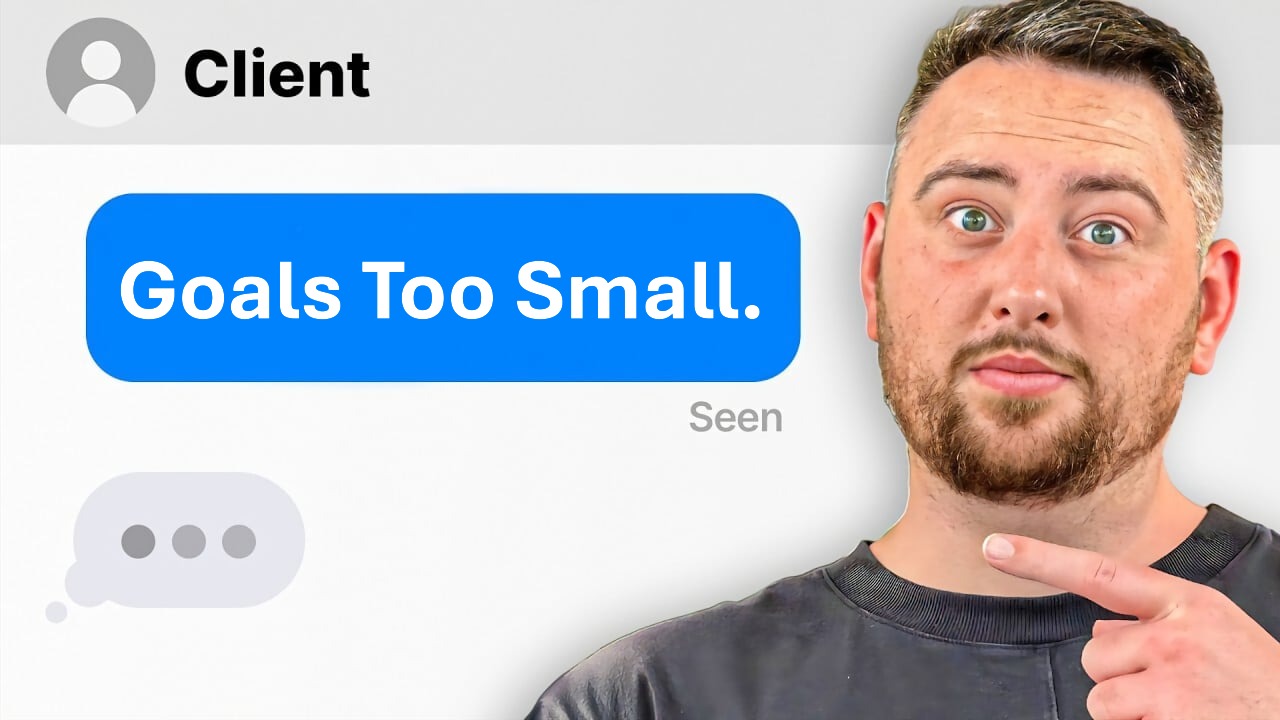
Here’s the uncomfortable truth: your goals are probably too small.
I’m not saying that to be harsh. I’m saying it because I see it constantly. Operators set goals based on what feels achievable given their current constraints. “Let’s try to add five more clients this quarter.” “Let’s reduce ad spend slightly.” “Let’s hire one more account manager.”
These aren’t bad goals. They’re just incremental goals in a space that rewards exponential thinking.
When you’re building toward larger operational capacity, you can’t get there with small additions. The math doesn’t work. You need to fundamentally reimagine what your operation is capable of and build systems that support that vision.
This means asking different questions. Not “how do I optimize my current client onboarding” but “how do I completely redesign my onboarding system to remove bottlenecks.” Not “how do I reduce employee turnover slightly” but “how do I create a training and operational system that makes my agency the place people want to stay.”
The goal isn’t just bigger numbers. It’s a complete operational transformation that makes different outcomes possible.
And here’s what’s interesting: once you start thinking this way, you realize the resources you need are often already there. You don’t need more clients. You need better systems for the clients you have. You don’t need more infrastructure. You need smarter operational frameworks.
The Operational Levers That Actually Matter in Agency Growth
Let’s get tactical. What are the actual levers 10x operators focus on?
- Client selection. Most operators are still taking whoever will pay them. Meanwhile, the operators building different types of agencies have specific frameworks for who they work with. The difference? Operational clarity. When you know exactly who you serve, every other system becomes simpler to build.
- Service delivery systems. Your time is finite. If you’re custom-building every deliverable or personally involved in every client interaction, you’re capped. The operators I’ve worked with who’ve built differently have systematized service delivery: documented processes, clear handoffs, and repeatable frameworks that don’t require their direct involvement.
- Team training. Not generic “here’s how we do things” training, but performance-based training that actually improves operational efficiency. Things like how to run a client call, how to analyze campaign data, how to handle objections. Small improvements per team member multiply across your entire operation.
- Data infrastructure. This is non-negotiable at this point. If you’re not using systems to understand client performance, team productivity, and operational patterns, you’re operating blind. The operators I know who’ve implemented proper data infrastructure see immediate clarity around what’s working and what needs attention.
According to Phocas Software’s research on data-driven organizations, companies with strong data-driven cultures make faster operational decisions and improve their process cycles significantly compared to those still relying on gut instinct.
- Automation. This is about removing repetitive manual work. Better reporting systems. Automated client communication sequences. Streamlined approval processes. Strategic implementation of tools that improve efficiency without requiring massive operational changes.
None of these require you to double your team or build complex new infrastructure. They’re about operational excellence with existing resources.
How Small Operational Improvements Stack Into Major Changes
This is where the framework gets interesting.
One percenters are small, measurable improvements that individually don’t seem like much but compound into different operational realities. Think of it like this: if you improve ten different aspects of your operation by just small amounts each, you’re not looking at small total improvement. Because these gains stack and interact, you’re often looking at substantially different operational capacity.
Here’s what this looks like in practice:
- You optimize your client onboarding and reduce time to first deliverable.
- You implement better team training and reduce revision requests.
- You adopt better project management and improve delivery timelines.
- You refine your reporting system and reduce time spent on client updates.
- You improve your sales qualification and work with better-fit clients.
Individually, none of these are transformative. But stack them together over months, and you’ve completely changed your operation’s capacity.
The key is being systematic about it. You can’t just randomly implement improvements and hope they stick. You need to identify the highest-leverage opportunities, test changes methodically, measure what happens, and iterate based on what the data tells you.
Operations I’ve worked with in our 7-week live comprehensive training at Master Internet Marketing who embrace this framework don’t just see incremental gains. They fundamentally change how their agency operates.
Results are not typical. Your results will vary and depend entirely on your individual capacity, business experience, expertise, and level of desire. There are no guarantees concerning the level of success you may experience. The testimonials and examples used are not intended to represent or guarantee that anyone will achieve the same or similar results. We don’t believe in get-rich-quick programs. We believe in hard work, adding value and serving others. As stated by law, we can not and do not make any guarantees about your own ability to get results or earn any money with our information, courses, programs, or strategies.
Why Technology Choices Are Now Critical Business Decisions
Let’s talk about tech for a second, because there’s a lot of confusion here.
Technology isn’t optional anymore. It’s not something you adopt because it’s trendy or because a sales rep pitched you well. In today’s environment (with platform changes, increasing complexity, and rising operational costs) the right technology is a critical business decision.
But not all tech is created equal.
The 10x operators I know evaluate technology through a very specific lens. First question: does this solve a real operational problem I’m facing? Not theoretical benefits. Not “could potentially.” A specific problem.
Second question: how quickly can I implement this? If a technology requires months to set up, it’s probably not the right move right now. You need solutions that integrate into existing operations without massive disruption.
Third question: does this have proven use cases in agencies similar to mine? Too many operators adopt technology because everyone else is doing it, not because it addresses their specific operational challenge. That’s backwards.
According to McKinsey’s technology trends research, business leaders who focus on identifying the high-impact use cases relevant to their specific operations move faster and see better adoption than those chasing every emerging trend.
When you evaluate tech this way, your decisions become clearer. You’re not chasing shiny objects. You’re strategically implementing tools that directly impact your operations.
And you test smart. Small pilots with one team or one client type before rolling out agency-wide. Controlled experiments where you can actually measure impact. Data-driven decisions, not assumptions.
This is how technology becomes part of your operational advantage instead of just another expense.
How to Learn From Other Agency Operators Who’ve Solved Your Exact Problems
Here’s something most operators miss: the best insights come from peers, not consultants or generic business content.
When you’re running an agency, generic advice doesn’t help much. You need to learn from people who’ve solved the exact problems you’re facing in similar contexts. That’s peer learning.
The protocol is straightforward:
- Find case studies from operators in your space who’ve built what you’re trying to build.
- Study what challenges they faced, what solutions they implemented, and what frameworks they used.
- Adapt those insights to your unique context.
Then adapt those insights to your unique context. Don’t just copy what someone else did. Understand the principles behind their approach and apply them to your specific situation.
Operations I’ve worked with who take peer learning seriously move faster and make better decisions. They’re not reinventing the wheel. They’re learning from real-world implementations and avoiding mistakes others have already made.
This also means being part of communities where operators share real information. Not surface-level networking events. Deep, tactical conversations about what’s actually working and what’s not.
The performance gap between operators who actively learn from peers and those who don’t is substantial and growing.
Why the Gap Between Top Agency Operators and Everyone Else Keeps Growing
Here’s what’s happening in the market right now.
The gap between top performers and everyone else is getting wider.
The operators who’ve embraced the 10x mindset (who are curious, adaptable, data-driven, and focused on continuous improvement) are building different types of operations. They’re working with better clients, building more efficient systems, and creating more valuable businesses.
Meanwhile, the operators who resist change, who stick with old methods, who wait until they’re forced to adapt? They’re finding it harder to compete every quarter.
This isn’t about being harsh. It’s just market reality. In competitive environments, operational excellence is what separates different performance levels.
And the thing is, this gap compounds. The better operators get access to better tools, better talent, and better opportunities. They invest those resources back into their operations, which widens the gap even more.
If you’re not actively working to be on the right side of this divide, you’re defaulting to the wrong side.
The good news? You can make the shift. It’s not about having more resources or being smarter. It’s about changing how you think about operations and committing to continuous improvement.
7 weeks. Real frameworks. Covering copywriting, funnels, paid ads, and conversion systems.
How to Build Your Own Implementation Plan for Operational Transformation
So how do you actually implement this?
- Audit your current operation honestly. Where are you losing efficiency? Where are your biggest operational drains? Where do other operators seem to have better systems?
- Prioritize the highest-leverage opportunities. Don’t try to fix everything at once. Pick two or three areas where small improvements could have outsized impact.
- Find peer examples. Look for case studies of operators who’ve solved similar challenges. Study what they did and why it worked.
- Design small tests. Don’t overhaul your entire operation overnight. Run controlled pilots where you can measure what happens and learn quickly.
- Measure everything. If you’re not tracking performance before and after changes, you’re just guessing. Data tells you what’s actually working.
- Iterate based on what you learn. Double down on what works. Stop what doesn’t. Keep testing and improving.
Think bigger. If your goals don’t require you to build new systems, they’re too small. What would have to be true for you to build a substantially larger operation? What systems would need to exist? What capabilities would you need to develop?
Work backwards from that vision and start building the operational foundation to support it.
This is how operators transform their businesses. Not through massive capital investments or radical pivots. Through systematic, continuous improvement guided by exponential thinking.
The 10x operator mindset isn’t about being perfect. It’s about being relentlessly focused on getting better, learning from the best, and refusing to settle for incremental gains when exponential growth is possible.
Your goals are too small. Your operation is capable of more than you think. The question is whether you’re willing to think differently enough to build it.
If you’re ready to learn the operational frameworks that top agency operators use, our 7-week live comprehensive training at Master Internet Marketing covers the complete system. And for operators who want ongoing support and peer learning, Inner Circle is my closed-door mastermind where we work directly with agency owners on implementation.
Results are not typical. Your results will vary and depend entirely on your individual capacity, business experience, expertise, and level of desire. There are no guarantees concerning the level of success you may experience. The testimonials and examples used are not intended to represent or guarantee that anyone will achieve the same or similar results. We don’t believe in get-rich-quick programs. We believe in hard work, adding value and serving others. As stated by law, we can not and do not make any guarantees about your own ability to get results or earn any money with our information, courses, programs, or strategies.
Get my content first on Google
Add jeremyhaynes.com as a preferred source and Google shows my articles more prominently in your search results, including AI Overviews and AI Mode.


Jeremy Haynes
Owner and CEO of Megalodon Marketing
Jeremy Haynes is the founder of Megalodon Marketing. He is considered one of the top digital marketers and has the results to back it up.