I hope you enjoy reading this blog post. If you want my team to just do your marketing for you, click here.


I hope you enjoy reading this blog post. If you want my team to just do your marketing for you, click here.
Author: Jeremy Haynes | founder of Megalodon Marketing.

Earnings Disclaimer: You have a .1% probability of hitting million-dollar months according to the US Bureau of Labor Statistics. As stated by law, we can not and do not make any guarantees about your own ability to get results or earn any money with our ideas, information, programs, or strategies. We don’t know you, and besides, your results in life are up to you. We’re here to help by giving you our greatest strategies to move you forward, faster. However, nothing on this page or any of our websites or emails is a promise or guarantee of future earnings. Any financial numbers referenced here, or on any of our sites or emails, are simply estimates or projections or past results, and should not be considered exact, actual, or as a promise of potential earnings – all numbers are illustrative only.
Look, I’m going to be straight with you. If your call funnel isn’t converting the way you want it to, there are specific patterns you’re falling into. I see it all the time with businesses that are already doing decent revenue but can’t seem to scale their call funnels past a certain point.
Let me clarify what I mean by “call funnel” so we’re on the same page. You might be running DM ads with setters scheduling calls with closers. You could be doing webinars that lead to call bookings. But the most common version is direct response advertising that drives people to a funnel with a video sales letter or mini webinar, an application, and a scheduler. From there, you’re either running a one-call or two-call close system.
Everything I’m about to share applies to any of these models.
Here’s what most people don’t understand. There’s a massive difference between organic traffic and paid traffic, and you’re probably not adjusting your strategy accordingly.
With organic, people have higher intent. They’ve consumed your content, watched your videos, engaged with your brand over time. Sometimes for months. You know this happens, but you underestimate the timeline. Your sales team tells you someone saw your content a few days ago and bought. But how much content did they actually consume? Sometimes people sit there for months absorbing everything before they buy.
Here’s the problem: with paid advertising, we need to compress that timeline down to days or even hours. We have to become exceptional at framing content to replicate what happens naturally with organic traffic. According to HubSpot’s research on buyer behavior, the average B2B buyer consumes multiple pieces of content before making a purchase decision, which means your paid funnel needs to deliver that same volume in a compressed window.
This is where the four quadrants of content come in. These are the key moments where framing matters most, both before and after sales conversations.
First quadrant: Questions. These are the most common things that come up on sales calls when you’ve done a terrible job at framing. People show up with general curiosity, trying to figure things out, essentially qualifying whether it’s worth their time.
Second quadrant: Questions that stem from answers. After those initial questions get answered, more questions emerge. Let me give you an example. I work with a business owner in my flagship program who teaches people to do sober living homes. When you first hear about it, you ask basic questions about what it is and how it works. He explains you can buy specific pieces of real estate and turn them into facilities. Right away, you realize this is a real estate play. That opens up a whole new worldview and set of questions.
Results are not typical. Your results will vary and depend entirely on your individual capacity, business experience, expertise, and level of desire. There are no guarantees concerning the level of success you may experience. The testimonials and examples used are not intended to represent or guarantee that anyone will achieve the same or similar results. We don’t believe in get-rich-quick programs. We believe in hard work, adding value and serving others. As stated by law, we can not and do not make any guarantees about your own ability to get results or earn any money with our information, courses, programs, or strategies.
Third quadrant: Expectations. Once people are sold on the vehicle and how it works, the perspective shifts. Now they want to know what it takes to be successful, the timeline, if there’s additional cash required, what the risks are. People don’t care about expectations until they’ve gone through those first two categories.
Fourth quadrant: Objections. After expectations are laid out, it’s all about handling objections. These are the things holding people back, and you need to address them directly.
All of this content can come from reflecting on your sales process. What questions come up? What questions emerge after those get answered? What expectations do people have? What objections keep appearing?
This is where the “hammer them” strategy comes in. I’m talking about six emails a day. A frequency between 15 and 20 impressions between when someone books a call and when the call actually happens. We’re going to slam people with content to frame them properly.
Here’s a pro tip: pepper in some long-form content too. I did a podcast about two years ago that was an hour and 55 minutes long. I dropped it on Facebook and ran a video view campaign targeting people I wanted to sell to. Would you pay a small amount to get someone to watch an hour and 55 minutes of content that historically increases your sales? I would.
When you take all that content, the hammer-them strategy, plus your best organic content, and you blast it at people after they book, after sales calls when they didn’t buy, even after they’ve bought to increase upsell probability, you dramatically influence the success of your call funnels.
If you want to go deeper on call funnel optimization and the systems I use to diagnose conversion issues, I cover this extensively in my 7-week live comprehensive training.
Results are not typical. Your results will vary and depend entirely on your individual capacity, business experience, expertise, and level of desire. There are no guarantees concerning the level of success you may experience. The testimonials and examples used are not intended to represent or guarantee that anyone will achieve the same or similar results. We don’t believe in get-rich-quick programs. We believe in hard work, adding value and serving others. As stated by law, we can not and do not make any guarantees about your own ability to get results or earn any money with our information, courses, programs, or strategies.
Most people don’t hire separate teams for organic versus paid traffic. You roll your organic team over to paid advertising. The problem? Your salespeople are used to warm layup deals. They’re not really selling that much because people come in exceptionally well-framed from organic content.
When you start running paid ads and you’ve done a terrible job at framing people, your sales team gives you feedback like “all these leads aren’t as good as the warm ones.” That’s because they haven’t flipped the switch.
Your team needs to understand there’s a slightly different sales process required for paid versus organic. You can’t show up to every organic call with the brute force required on a paid call. And you can’t show up to a paid call expecting a layup deal. There’s a much shorter duration of time that paid traffic has been exposed to your business.
Research from Gartner’s sales effectiveness studies shows that B2B buyers are increasingly self-directed, which means your paid traffic prospects need more education during the sales conversation itself.
This requires one of two things:
Different training. Have specific training for paid advertising leads versus organic layup deals. Train your team on the differences in follow-up systems, sales assets, and marketing automation required for each.
Different teams. Have one team solely for organic and another dedicated to paid advertising. This prevents comparison bias from occurring. When teams handle both, their perspective gets tainted. They can’t help but compare, and if they can’t flick the switch between the two, separate teams are required.
This one drives me crazy. I was at one of my recent masterminds, and a business owner told me he did a strong month but didn’t hit his target. I asked him why. He didn’t know the numbers.
We did the math together. Cost per call, closing rate, one-call versus two-call close model, show rates, cost per call over the last 90 days. We reverse-engineered exactly how much spend needed to happen. It was a negligible number. If he would have risked a bit more spread over 30 days, he could have hit his goal.
He didn’t close it because he didn’t do the math.
This is where financial models come in. I walk almost everyone I work with through these models. They’re simple, but most people aren’t doing them.
For a two-call close model, you need to track: ad spend, cost per call, show rate, second call booking rate, second call show rate, close rate, cash collected per sale, marketing costs, sales commissions, and gross profit.
For a one-call close model, it’s similar but without the second call metrics.
Here’s what’s wild: when you do the math, you realize that every statistic compounds against you in a two-call close. Every additional step in your process costs you money. When you simplify to a one-call close, you can operate with a lower close rate and still collect the same amount of cash.
According to Salesforce’s State of Sales report, top-performing sales organizations are significantly more likely to track and analyze their funnel metrics consistently. The differences in approach are notable, but you only know this if you do math regularly.
Some of you are running two-call models on razor-thin margins and wondering why you’re always struggling. You don’t even track these statistics accurately.
You have to do math. It’s how the game works. It’s like playing Monopoly without knowing the rules. You’re operating blind, and it’s costing you.
Once you’ve got your framing dialed in, your sales team trained properly, and you’re doing math regularly, here’s one more strategy that makes a significant difference.
Create something for the big dogs that occasionally come through your process. You don’t need to do this on every call, but for the right person, having a higher-ticket offer can dramatically increase your cash collected per sale.
I work with a business owner who teaches people how to buy businesses. She has multiple offer tiers. If she can get a portion of people who show up to calls to go to the higher tier, look at what that does to the numbers.
In my own business, most people go through my 7-week live comprehensive training. But for the right person who could benefit more from our done-for-you agency services at Megalodon Marketing, we’ll push them in that direction. It’s not an opportunity on every call, but for the right person, it makes more sense.
Results are not typical. Your results will vary and depend entirely on your individual capacity, business experience, expertise, and level of desire. There are no guarantees concerning the level of success you may experience. The testimonials and examples used are not intended to represent or guarantee that anyone will achieve the same or similar results. We don’t believe in get-rich-quick programs. We believe in hard work, adding value and serving others. As stated by law, we can not and do not make any guarantees about your own ability to get results or earn any money with our information, courses, programs, or strategies.
If you can get a portion of your buyers to purchase something more expensive than your standard offer, watch what happens to your total cash collected. This gives you more cash to take more risks in your advertising. It allows you to deliver higher-level value to the right clients.
Your call funnel doesn’t have to underperform. Most businesses that struggle with call funnels are making the same mistakes: poor framing, sales teams that aren’t trained differently for paid versus organic, no financial modeling, and no higher-ticket offers for qualified buyers.
When you fix these four areas, you’ll see improvements. You’ll convert more calls, generate more revenue per customer, and have the data you need to scale confidently.
The businesses that scale aren’t doing anything magical. They’re executing on these fundamentals consistently. They’re doing the math, training their teams properly, framing their prospects effectively, and maximizing lifetime value.
If you’re already generating solid revenue but can’t seem to break through to the next level, these are the areas to focus on. Fix your framing process. Train your sales team differently for paid traffic. Do the math on your funnel metrics. Create offers for your highest-value prospects.
These aren’t theoretical concepts. These are the exact systems I cover in depth inside my flagship program and my 7-week live comprehensive training.
Results are not typical. Your results will vary and depend entirely on your individual capacity, business experience, expertise, and level of desire. There are no guarantees concerning the level of success you may experience. The testimonials and examples used are not intended to represent or guarantee that anyone will achieve the same or similar results. We don’t believe in get-rich-quick programs. We believe in hard work, adding value and serving others. As stated by law, we can not and do not make any guarantees about your own ability to get results or earn any money with our information, courses, programs, or strategies.
Watch the video:
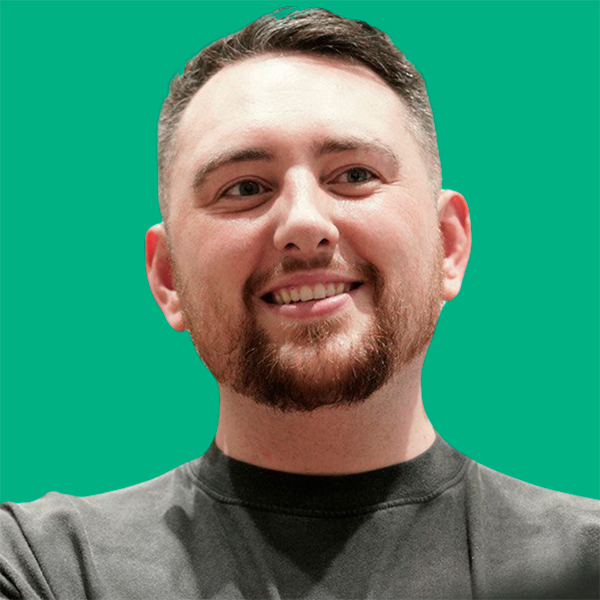
Jeremy Haynes is the founder of Megalodon Marketing. He is considered one of the top digital marketers and has the results to back it up. Jeremy has consistently demonstrated his expertise whether it be through his content advertising “propaganda” strategies that are originated by him, as well as his funnel and direct response marketing strategies. He’s trusted by the biggest names in the industries his agency works in and by over 4,000+ paid students that learn how to become better digital marketers and agency owners through his education products.
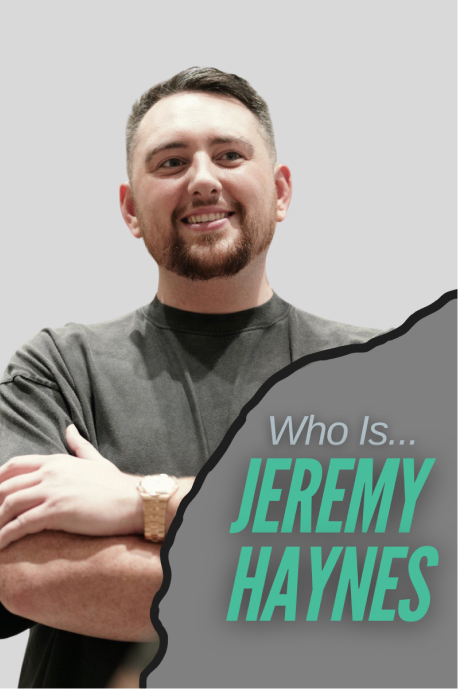
Jeremy Haynes is the founder of Megalodon Marketing. He is considered one of the top digital marketers and has the results to back it up. Jeremy has consistently demonstrated his expertise whether it be through his content advertising “propaganda” strategies that are originated by him, as well as his funnel and direct response marketing strategies. He’s trusted by the biggest names in the industries his agency works in and by over 4,000+ paid students that learn how to become better digital marketers and agency owners through his education products.


This site is not a part of the Facebook website or Facebook Inc.
This site is NOT /endorsed by Facebook in any way. FACEBOOK is a trademark of FACEBOOK, Inc.
We don’t believe in get-rich-quick programs or short cuts. We believe in hard work, adding value and serving others. And that’s what our programs and information we share are designed to help you do. As stated by law, we can not and do not make any guarantees about your own ability to get results or earn any money with our ideas, information, programs or strategies. We don’t know you and, besides, your results in life are up to you. Agreed? We’re here to help by giving you our greatest strategies to move you forward, faster. However, nothing on this page or any of our websites or emails is a promise or guarantee of future earnings. Any financial numbers referenced here, or on any of our sites or emails, are simply estimates or projections or past results, and should not be considered exact, actual or as a promise of potential earnings – all numbers are illustrative only.
Results may vary and testimonials are not claimed to represent typical results. All testimonials are real. These results are meant as a showcase of what the best, most motivated and driven clients have done and should not be taken as average or typical results.
You should perform your own due diligence and use your own best judgment prior to making any investment decision pertaining to your business. By virtue of visiting this site or interacting with any portion of this site, you agree that you’re fully responsible for the investments you make and any outcomes that may result.
Do you have questions? Please email [email protected]
Call or Text (305) 704-0094