
How to Update Your Waitlist When the Offer Changes Before Launch

I hope you enjoy reading this blog post. If you want my team to just do your marketing for you, click here.
Author: Jeremy Haynes | Published October 5, 2026
Earnings Disclaimer: You have a .1% probability of hitting million-dollar months according to the US Bureau of Labor Statistics. As stated by law, we cannot and do not make any guarantees about your own ability to get results or earn any money with our ideas, information, programs, or strategies. We don’t know you, and your results in life are up to you. We’re here to help by giving you our greatest strategies to move you forward, faster. However, nothing on this page or any of our websites or emails is a promise or guarantee of future earnings. Any financial numbers referenced here, or on any of our sites or emails, are simply estimates or projections or past results, and should not be considered exact, actual, or as a promise of potential earnings – all numbers are illustrative only.
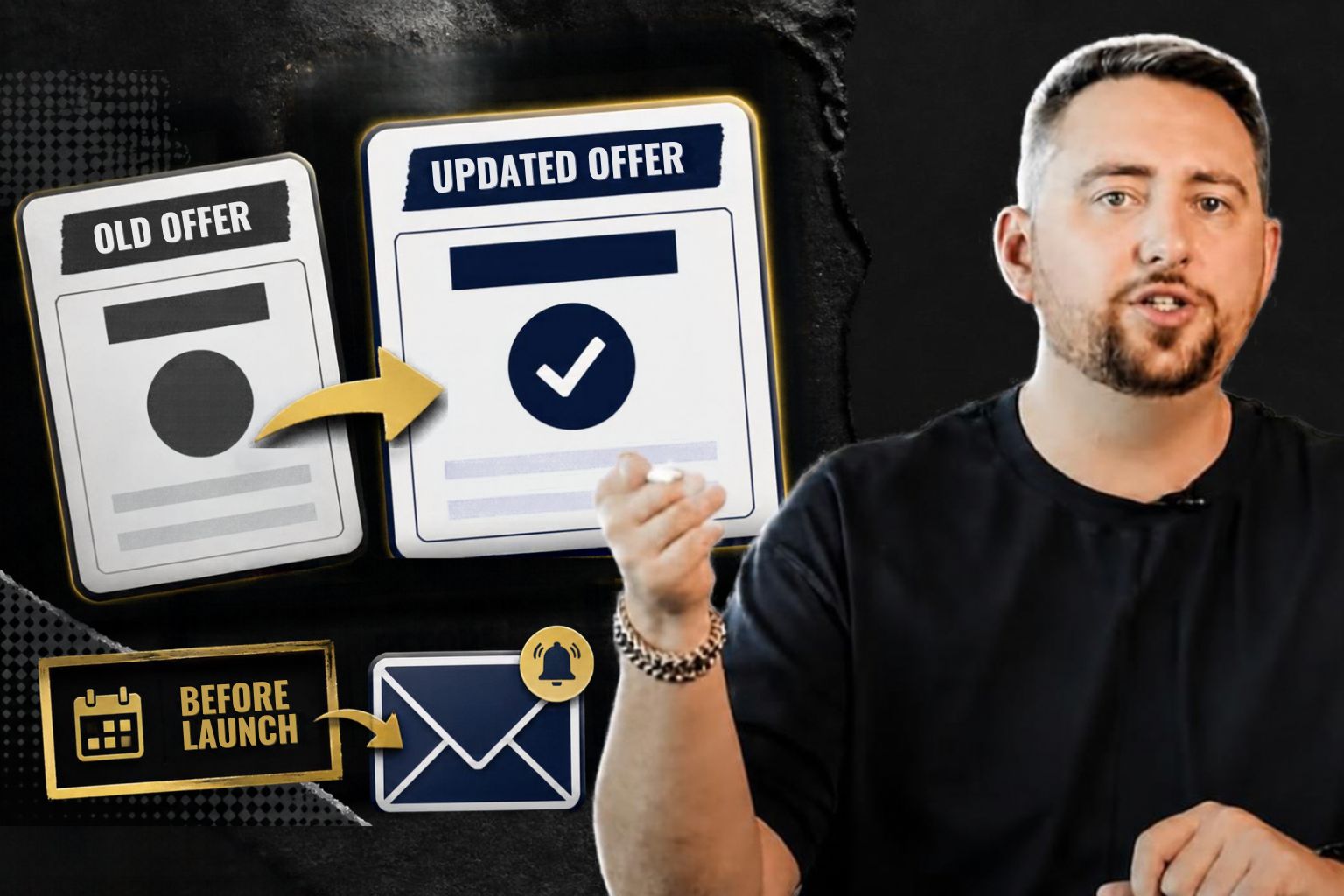
Someone joined your waitlist for the offer you described at the time. If the price, start date, or delivery changes before launch, your next waitlist email needs to explain the difference. Give that person the current details and a clear way to say whether they are still interested. You should not have to spend the opening sales call untangling a promise your own emails made.
That is a different job from attracting people to a new offer. You already have their attention. Now the work is making sure the offer they are considering matches the one you intend to sell.
7 weeks. Real frameworks. Covering copywriting, funnels, paid ads, and conversion systems.
What Your Waitlist Was Originally Told
Start by reading the page and confirmation email people saw when they signed up. Compare those with the offer you are preparing to open. Use the actual copy, including anything your team sent in replies, rather than your memory of what you meant.
A change deserves a direct explanation when it could affect someone’s decision. Moving from individual support to group delivery belongs in that category. So does changing the start date, the work included, or the amount the buyer would need to consider.
Changing a page color does not call for the same treatment. Keep the update focused on what the buyer would care about. Otherwise, the important detail can disappear inside a long announcement about everything you have been working on.
Check the difference between something you promised and something you were still considering. If you clearly described a feature as undecided, say what you have now decided. If you presented it as included, acknowledge that the offer has changed.
The old signup tells you which version attracted the person. Keep that context while you ask them to consider the current version. A prelaunch waitlist can remain the same list while the buying decision underneath it changes.
Explain the Change Before Asking for a Decision
Put the changed detail near the start of the message. If delivery has changed, explain what the buyer would now receive. If the timing has moved, state what you can currently confirm and what remains unsettled.
Then explain the reason in ordinary language. Avoid turning a removed feature into a vague announcement about an upgraded experience. Describe the current offer well enough that someone can compare it with what they remember.
You can be direct without turning the email into an apology essay. Acknowledge the earlier information, state the current information, and explain what the change means for the person considering it. Leave internal debates and irrelevant production details out.
My discussion of the buyer risk spectrum makes a relevant distinction here. A buyer can be interested while still needing questions answered about expectations or timing. Asking those questions is different from having no interest in the offer.
Applied to a changed launch, give those questions somewhere to go. Invite a reply about the changed detail before pushing the person toward an application. Do not label someone unqualified simply because they noticed that the delivery now looks different.
When the New Price Changes the Conversation
If you shared a price before signup and now intend to charge something different, make the new price visible before asking people to continue. State what it covers. Do not leave a lower number in an old email while the application quietly introduces a higher one.
If no price was previously announced, avoid writing as though subscribers had already accepted it. They expressed interest without that information. Give them a chance to consider the actual offer once the price is available.
Keep your response to price questions specific. If someone asks whether the delivery changed along with the price, answer that question. Repeating the benefits without explaining the difference leaves the original question unresolved.
This does not require creating a discount or a new promise for early subscribers. If you already made a commitment to them, deal with that commitment directly through your approved process. If you have not, do not invent a founding-member benefit just to make the update sound more exciting.
For broader marketing education, you can explore Master Internet Marketing, my 7-week live comprehensive training. Keep the immediate task clear while you consider further training. The prospect needs to understand the price and offer actually available to them.
Results are not typical. Your results will vary and depend entirely on your individual capacity, business experience, expertise, and level of desire. There are no guarantees concerning the level of success you may experience. The testimonials and examples used are not intended to represent or guarantee that anyone will achieve the same or similar results. We don’t believe in get-rich-quick programs. We believe in hard work, adding value and serving others. As stated by law, we can not and do not make any guarantees about your own ability to get results or earn any money with our information, courses, programs, or strategies.
Give People a Clear Way to Update Their Interest
After explaining the change, ask whether the updated offer still fits what they want. Make the response useful. Someone who wants the launch announcement has given you a different answer from someone who needs a later start.
A reply can be enough while you are handling this manually. If you use a form, ask about the changed decision rather than making the person repeat their whole application. You need to know whether the new timing, delivery, or price changes their interest.
For an optional software implementation, Mailchimp’s preferences center lets contacts update their profiles and group preferences, subject to its availability restrictions. That is a tool feature, not a requirement to rebuild your funnel around Mailchimp. Use the system you already have if it can record the answer clearly.
Keep the answer separate from a sale. Interested in the revised offer, requested more information, and purchased should remain different statuses. Do not turn a preference update into a customer count.
No reply leaves the question unanswered. You can record that honestly without assuming the person approved the change or rejected the business. Keep the next communication within the permission they have given you, and make it easy to stop receiving it.
Stop Sending the Old Promise After the Update
Review the remaining messages before they go out. An accurate update is not enough if the next automated email repeats the old date or describes support you removed. Check the signup page, confirmation, scheduled nurture, application, and any sales notes containing the changed detail.
Give the person handling replies the same current explanation. They should not have to decide which version is correct while a prospect waits. Keep a record of the earlier promise alongside the current offer so questions about the difference can be answered plainly.
If your email platform supports it, separate contacts by the information you actually have. Mailchimp’s segment documentation describes filtering contacts using conditions. In this situation, a useful distinction would be who requested updates about the revised offer and who is waiting for clarification.
Do not send a launch-ready message to someone whose delivery question is still sitting unanswered. Resolve the question or make the uncertainty visible. The point of keeping different statuses is to make the next message fit the conversation.
You can still send useful educational emails while preparing the offer. Keep those lessons connected to the problem people signed up to solve, and update any offer references inside them. Educational value should not become a way to avoid explaining a material change.
Already making money? See what it takes to make a lot more.
Send the Launch Invitation With the Current Facts
Before inviting people to apply, read the launch message against the current offer. Check the price, delivery, availability, and next step. Anything still undecided should be described that way instead of hidden behind a confident deadline.
Keep preference and unsubscribe controls working during the update. Google’s email sender guidelines describe its delivery requirements, including applicable unsubscribe requirements. Treat those as a sending baseline, not evidence that everyone receiving the message wants to buy.
When someone does apply, carry their question or updated timing into the sales conversation. Ask whether the current offer fits what they are trying to do. There is no reason to make them explain the same concern again because the launch list and sales notes were handled separately.
If you are considering my Inner Circle, review its current details before deciding whether it fits. Give your own prospective buyers that same clarity. A launch invitation should let them evaluate the offer available now, with the changes already explained.
Results are not typical. Your results will vary and depend entirely on your individual capacity, business experience, expertise, and level of desire. There are no guarantees concerning the level of success you may experience. The testimonials and examples used are not intended to represent or guarantee that anyone will achieve the same or similar results. We don’t believe in get-rich-quick programs. We believe in hard work, adding value and serving others. As stated by law, we can not and do not make any guarantees about your own ability to get results or earn any money with our information, courses, programs, or strategies.
Get my content first on Google
Add jeremyhaynes.com as a preferred source and Google shows my articles more prominently in your search results, including AI Overviews and AI Mode.


Jeremy Haynes
Owner and CEO of Megalodon Marketing
Jeremy Haynes is the founder of Megalodon Marketing. He is considered one of the top digital marketers and has the results to back it up.