How to Build a Waitlist That Turns Cold Strangers into Warm Buyers Before You Ever Launch

I hope you enjoy reading this blog post. If you want my team to just do your marketing for you, click here.
Author: Jeremy Haynes | Published February 3, 2026
Earnings Disclaimer: You have a .1% probability of hitting million-dollar months according to the US Bureau of Labor Statistics. As stated by law, we can not and do not make any guarantees about your own ability to get results or earn any money with our ideas, information, programs, or strategies. We don’t know you, and besides, your results in life are up to you. We’re here to help by giving you our greatest strategies to move you forward, faster. However, nothing on this page or any of our websites or emails is a promise or guarantee of future earnings. Any financial numbers referenced here, or on any of our sites or emails, are simply estimates or projections or past results, and should not be considered exact, actual, or as a promise of potential earnings – all numbers are illustrative only.
Most businesses launch something new and pray people show up ready to buy.
They build the offer. They create the landing page. They run some ads. And then they open the doors and hope that the people who see it for the first time are warm enough, trusting enough, and convinced enough to hand over their money right then and there.
Sometimes it works. A lot of the time it doesn’t. And the reason it doesn’t work comes down to one simple thing. You’re asking someone to make a significant purchase decision based on their first real interaction with your offer. No buildup. No anticipation. No time to sit with the idea and get comfortable with it.
That’s not how sophisticated buyers make decisions. Especially not the kind of buyers you’re trying to attract in high-ticket markets. These people have been sold to a thousand times. They’re skeptical by default. They don’t just see a new offer and immediately trust that it’s going to be different from the last five things that disappointed them.
What actually works is warming them up before the doors ever open. Building anticipation over weeks and months so that by the time you launch, the people on your list aren’t strangers considering your offer. They’re already convinced. They’ve been watching you build something. They already trust you. And they’ve been waiting for this moment.
That’s what a properly built waitlist does. It creates a pipeline of warm, engaged, ready-to-buy people who are genuinely excited when launch day arrives.
I’ve built waitlists that converted at rates that would make most people think something was broken. And the reason those waitlists performed so well isn’t because of some clever email trick or a fancy landing page. It’s because of what happened in the weeks and months leading up to the launch. The warming process.
Let me walk you through exactly how I’d build one from scratch.
If your business is already generating $100k+ per month, My Inner Circle is where you break through to the next level. Inside, I’ll help you identify and solve the bottlenecks holding you back so you can scale faster and with more clarity.
Why You Should Start Putting Out Problem Content Two to Three Months Before You Launch Anything
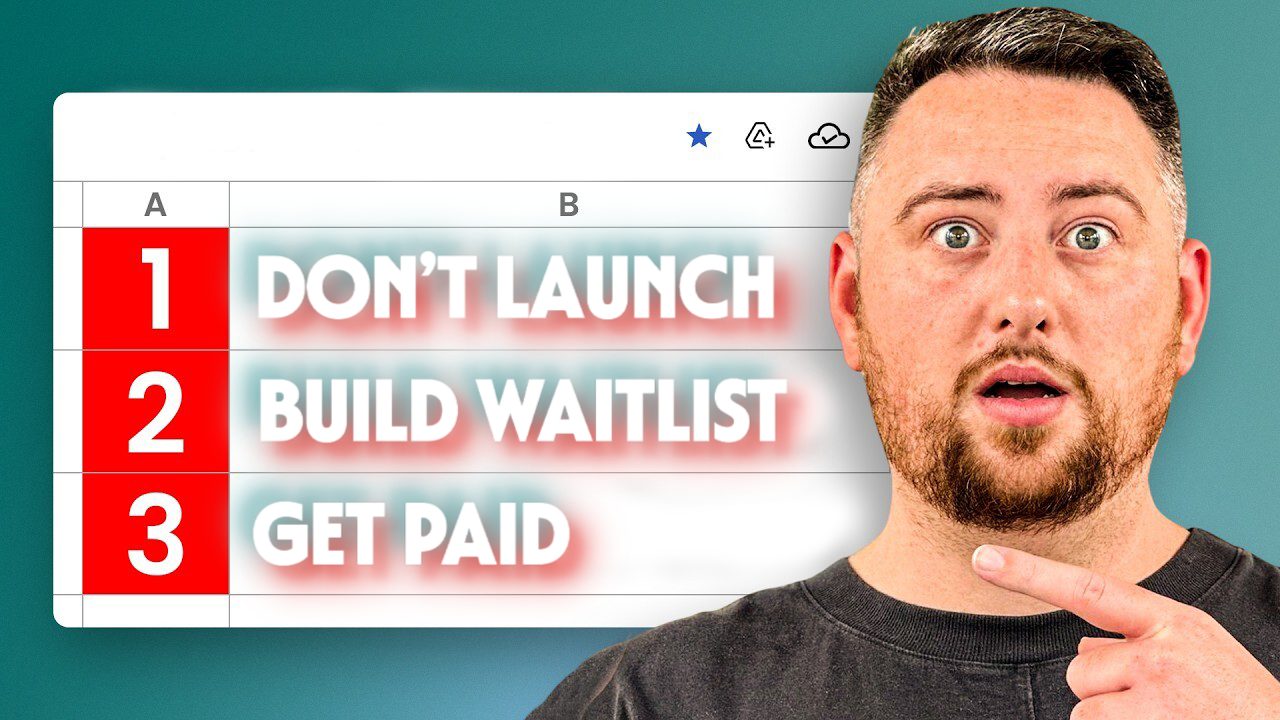
The biggest mistake people make with waitlists is treating them as a launch-day tool. They build the product, create a waitlist page, run some traffic to it, and call it a day. That’s not a waitlist strategy. That’s just collecting emails.
A real waitlist strategy starts two to three months before you ever launch anything. And it starts with content that has nothing to do with your offer directly. It starts with the problem.
Before anyone knows you’re building something, you’re putting out content that digs into the exact pain your offer is going to solve. Blog posts, social media content, emails, whatever channels you’re already active on. All focused on the problem in excruciating detail.
Why? Because you’re doing two things simultaneously. You’re validating that the problem is real and that people care enough about it to engage with content about it. And you’re positioning yourself as the person who truly understands this problem better than anyone else in your space.
I do this with every new offer I build. Two months before launch, I start putting out content about the problem I’m solving. I’m not teasing the solution yet. I’m just going deep on the pain. What it feels like to experience it. Why it happens. What most businesses try that doesn’t work and why.
The engagement I get on that content tells me everything I need to know: companies with strong nurture strategies generate 50% more sales-ready leads at lower cost. Early engagement is predictive of future conversion.
If people are sharing it, commenting on it, reaching out to say this is exactly what we’re dealing with, I know the demand is there, and waitlist conversion data shows that engaged audiences contacted within a month convert around 50%, confirming early interest matters. If the content gets ignored, I need to rethink the problem I’m going after.
That early content also does something powerful psychologically. It makes people feel understood. In most markets, people are used to being pitched at, not understood. When they come across content that genuinely nails their problem and makes them feel like someone finally gets what they’re going through, they pay attention. They remember who created that content. And they associate that person with authority on that problem.
By the time you eventually reveal that you’re building a solution, those people aren’t strangers. Lead nurturing emails generate up to 10x the response rate and deeply engage subscribers before purchase.
They’re people who’ve already been getting value from you for weeks. They already trust your understanding of the problem. So when you say “I’m building something that solves this,” their first reaction isn’t skepticism. It’s curiosity.
That transition from problem content to “I’m building something” is the moment where your waitlist page becomes relevant. Not before. The waitlist page should feel like a natural next step for people who are already engaged, not like a random interruption.
How to Design a Waitlist Page That Makes Signing Up Feel Like the Smart Move Not Just Passive
Once you’ve built enough awareness around the problem and established yourself as someone who deeply understands it, you create your waitlist landing page. But this page isn’t just a form that says “coming soon, enter your email.” That’s lazy and it converts terribly.
Your waitlist page needs to give people a compelling reason to sign up that goes beyond just being notified when something launches. It needs to make joining the waitlist feel like the smart move, not just a passive action.
The headline should reference the problem and the promise without giving away the full solution. Something that makes someone who’s been following your problem content think “yes, this is exactly what I need.” They should feel like this page was built specifically for them because of the problem content they’ve already consumed.
Below the headline, you want to articulate what being on the waitlist means in terms of concrete value. Not just “be the first to know.” What are they actually getting? Early access before the public launch. Founding member pricing that locks in before prices go up. Exclusive bonus content that only waitlist members receive. Behind-the-scenes access to how you’re building the offer.
Make the incentives feel genuine and valuable. Not like generic bonuses you threw together. Like real, thoughtful rewards for people who were early enough to pay attention. The people who sign up for your waitlist are showing you something important. They’re saying “I trust you enough to give you my attention and my email.” That deserves to be rewarded.
I also include a brief survey or a couple of questions on the waitlist page. Nothing long. Just two or three questions about their specific situation. What’s the biggest challenge they’re facing related to the problem? What have they already tried? What would the ideal outcome look like for them?
Those answers do two things. They help me build a better offer because I’m getting real information about what people actually need. And they make the person feel like they’re being heard. They’re not just another email on a list. They’re someone whose input is actually informing the product being built.
The page itself should be clean and simple. No massive walls of text. No generic stock imagery. Just a clear statement of the problem, a clear statement of what the waitlist offers, the signup form with your couple of questions, and social proof if you have it.
That last point matters more than people think. If you’ve already got a handful of waitlist signups and some of those people have said something positive about the problem content you’ve been putting out, reference that. Even small amounts of social proof on the waitlist page create momentum. People want to join lists that other people are joining.
How to Build a Nurture Sequence That Keeps Waitlist Members Engaged and Warm Until Launch Day
Here’s where most waitlists completely fall apart. People sign up and then they hear nothing for three weeks until launch day. Or they get one generic “thanks for signing up” email and that’s it until the doors open.
By the time launch day comes, they’ve forgotten who you are. The excitement they felt when they signed up has completely evaporated. And you’re basically starting cold again, which defeats the entire purpose of having a waitlist.
The nurture sequence is the engine of your waitlist strategy. Regular nurture emails have been shown to double conversion rates compared to one-time blasts, proving ongoing value keeps buyers warm.
It’s what transforms signups into warm, engaged, ready-to-buy people over the weeks between when they join and when you launch.
The sequence should span the entire pre-launch period. If you’re launching in eight weeks and your waitlist has been open for four of those weeks already, your nurture sequence runs for those remaining four weeks. Every single week, your waitlist people should hear from you with something valuable.
Your first email goes out immediately after signup. It’s not just a confirmation. It’s a welcome that makes them feel like they made a smart decision. Thank them for joining. Give them a preview of what’s coming in the nurture sequence. And include something immediately valuable. A quick win related to the problem they’re trying to solve. Something they can implement today that gives them results before they ever buy anything from you.
That first email sets the tone for everything that follows. It shows them that being on this waitlist isn’t just about waiting. They’re actually getting value right now. That’s the foundation of trust.
After that, you’re sending content on a regular cadence. Every few days to once a week depending on your list size and how warmed they already are. Each piece builds on the last.
Early in the sequence, you’re going deeper on the problem. You already put out content about the pain before the waitlist launched. Now you go even deeper. You share specific data or case studies or stories that really drive home how big this problem is and how much it’s costing people.
Mid-sequence, you start revealing pieces of your solution without giving it all away. Behind-the-scenes updates on what you’re building and why. Frameworks or concepts that are going to be part of the offer. Not the complete solution, but enough that they can see the quality of thinking behind it and start anticipating how it’s going to work.
Late in the sequence, you shift to social proof and urgency. Share testimonials from beta testers if you have them. Or feedback from people you’ve been consulting with who are facing this problem. Start creating anticipation around the launch date and what happens when the doors open.
Each email should be valuable on its own. Not just a teaser that says “you’ll find out more when we launch.” Something they can take away and use immediately. Because that’s what builds the kind of trust that converts to purchases. Consistent proof that you deliver value before anyone even pays you a dime.
I track engagement on every email in the sequence. Open rates, click rates, replies. People who are engaging heavily with the nurture content are my warmest leads. When launch day comes, those are the people I know are most likely to buy. And I can prioritize them accordingly.
The people who drop off early, who stop opening emails, those are people who probably weren’t a great fit to begin with. That’s fine. The sequence naturally segments your list for you without you having to do anything fancy. The engaged people stay engaged. The disengaged people fall off. And by launch day, you know exactly who’s warm and who isn’t.
How to Create Real Scarcity on Your Waitlist Without Fake Countdown Timers or Manufactured Urgency
One thing that’s critical to get right in a waitlist strategy is how you use scarcity. Because scarcity is one of the most powerful drivers of action, but only when it feels genuine. Fake scarcity destroys trust instantly, especially with sophisticated buyers who’ve seen every trick in the book.
The way I approach scarcity in waitlists is through positioning, not manufactured urgency. I don’t say “only one hundred spots left” when there are actually five hundred. I don’t create fake countdown timers. I build real constraints into the offer and communicate them honestly.
For example, if I know my offer involves some level of personal attention or limited cohort size, I genuinely can only take a certain number of people. So I set that limit for real and communicate it on the waitlist page and in the nurture sequence. “We’re only taking forty founding members into this initial cohort because of the hands-on component. Waitlist members get first access before it opens to the public.”
That’s real scarcity. It’s not a marketing tactic. It’s an honest constraint based on how the offer actually works. And sophisticated buyers can feel the difference between that and some fake countdown timer on a landing page.
Another way I create genuine urgency is through founding member pricing. The first people who sign up and commit when doors open get access at a price that will never be available again. Not because I’m playing games with pricing. Because the founding members are taking a risk by buying before there are reviews or case studies or proof that the offer delivers. They’re betting on me based on the relationship we’ve built during the waitlist period. That risk deserves to be rewarded with pricing that reflects it.
I’m transparent about this in the nurture sequence. I explain that founding member pricing exists because these people are taking a leap of faith before anyone else. And I explain that once the founding cohort is full, pricing goes up to reflect the now-proven track record and the reduced risk for future buyers.
That kind of transparency actually increases urgency rather than decreasing it. Because people can see the logic. They understand why the pricing works the way it does. And they don’t feel manipulated. They feel like they’re being treated like an intelligent adult who deserves to understand the economics.
The scarcity also comes from the exclusivity of the waitlist experience itself. The content they’re getting, the access they have to the building process, the pricing they’re being offered. None of that is available to random people who stumble onto your website on launch day. It’s specifically for the people who were paying attention early enough to sign up and stay engaged.
That exclusivity creates a sense of belonging and privilege that makes people want to act when the opportunity presents itself. They’re not just buying an offer. They’re claiming their spot as someone who was early, who trusted you, who was part of the journey from the beginning.
How to Structure Your Exclusive Waitlist Launch Window So Members Buy Before the Public Ever Sees It
Everything you’ve done in the weeks leading up to launch has been building toward this moment. The launch window. When the doors actually open and your waitlist members have the opportunity to buy.
And here’s the critical thing. You don’t open to everyone at the same time. Your waitlist members get access first. Before the public. Before any ads run. Before anyone who didn’t sign up months ago has a chance.
I give waitlist members a forty-eight to seventy-two hour window of exclusive access. During that window, the offer is only available to them. They get the founding member pricing. They get priority onboarding or whatever special treatment you’ve promised. And they know that after this window closes, pricing goes up and the exclusivity disappears.
The launch email to your waitlist is one of the most important emails you’ll ever send. It shouldn’t feel like a sales pitch. It should feel like a natural next step in the conversation you’ve been having for months. Something like “the thing we’ve been building is ready. Here’s how to get in.”
Keep it short. Your waitlist members already know what the offer is. They’ve been watching you build it. They don’t need a lengthy sales email. They need a clear, simple path to purchase.
Include a direct link to the offer page. Include a reminder of the founding member pricing and when it expires. Include one line of social proof if you have early feedback. That’s it. Don’t overcomplicate the moment.
Then send a couple of follow-ups during the exclusive window. A reminder email halfway through. A “doors closing soon” email near the end. Not pushy. Just helpful reminders for people who might have gotten busy and not had a chance to act yet.
After the waitlist window closes, you open to the public with standard pricing. At this point you shift to a normal launch strategy. Ads, social proof from founding members, the whole playbook. But the foundation of that launch is the revenue and the testimonials you already generated from your waitlist.
That’s what makes the public launch so much stronger. You’re not launching cold. You’re launching with proof. With founding members who are already in and already getting results. With testimonials that show the offer delivers. With a track record that reduces the risk for anyone considering buying.
The waitlist didn’t just warm up buyers for your launch. It gave you the ammunition to make the public launch significantly more effective than it would have been if you’d tried to launch cold.
What Metrics to Track on Your Waitlist to Know If the Warming Process Is Actually Working
If you’re going to invest the time and effort into building a waitlist that warms buyers over months, you need to be measuring whether it’s actually working. Not just vanity metrics like total signups. Real metrics that tell you if the process is creating warm, converting buyers.
The first metric that matters is signup to engaged ratio. Of the people who sign up for your waitlist, how many are actually engaging with the nurture sequence? Opening emails, clicking links, replying? If you’ve got five hundred signups but only fifty are engaging with your content, you’ve either got a targeting problem or a nurture problem.
I aim for at least thirty to forty percent engagement with the nurture sequence. If I’m below that, I go back and look at what’s breaking down. Is the welcome email not compelling enough? Is the content in the sequence not valuable enough? Is the cadence wrong? Those are fixable problems but I can only fix them if I’m measuring.
Second metric is signup to purchase conversion. When launch day comes and your waitlist has the chance to buy, what percentage of your total signups actually convert to customers? This is the ultimate measure of whether your waitlist strategy is working.
For a well-executed waitlist with strong nurture, twenty percent or higher conversion is realistic. Some waitlists I’ve built have converted significantly above that. If you’re way below twenty percent, something in the warming process isn’t working and you need to diagnose where the breakdown is happening.
Third metric is lifetime value of waitlist buyers versus buyers from other channels. Are the people who came through your waitlist actually better customers? Do they engage more with your offer? Do they get better results? Are they more likely to buy again or refer others?
If waitlist buyers are significantly higher value than cold buyers, that validates the entire strategy. You’re not just generating revenue at launch. You’re generating high-quality customers who are worth more over time. That’s the real payoff of warming people up before they buy.
Fourth metric is cost per acquisition compared to other acquisition methods. What did it cost you to generate each waitlist signup versus each cold customer? The waitlist might cost more in time and effort to set up, but if the resulting customers are higher value and higher quality, the cost per acquisition is actually lower when you factor in lifetime value.
Track these metrics religiously and use them to improve your waitlist strategy with every launch. Each time you do this, you learn something about what works for your audience and your offer. And each time, the waitlist gets more effective.
Why a Waitlist Strategy Gets More Effective with Every Launch and Creates Better Customers Long Term
Building a waitlist strategy the right way doesn’t just work once. It compounds.
Every time you launch with a warmed waitlist, you generate customers who are more engaged, more satisfied, and more likely to become long-term relationships. Those customers become your best source of referrals and testimonials. They tell other people about their experience. They share your content. They become advocates.
Those advocates make your next waitlist easier to build. Because now you’re not just putting out problem content and hoping strangers find it. You’ve got people who have genuinely benefited from working with you going out and telling the world about it.
And the process gets tighter every time. You learn which content drives the most engagement during the pre-waitlist phase. You learn which nurture emails generate the most excitement. You learn which incentives convert the best. Each launch teaches you something that makes the next launch more effective.
I’ve watched this compound in my own business over multiple launches. The first waitlist I built was decent. Maybe fifteen percent conversion at launch. The second one was better because I refined the process. By the third and fourth, I was converting at rates that made the traditional cold launch approach look almost quaint.
That’s because I was getting better at warming people up. Better at understanding what my audience needed to feel before they were ready to buy. Better at delivering value in the weeks leading up to launch so that purchase felt like a natural next step instead of a big decision.
The businesses that figure this out early have a massive advantage. Because everyone else is still launching cold and fighting for attention from strangers. You’re launching to an audience that’s been waiting. That’s been excited. That’s been getting value from you for months before you ever ask them for money.
That’s not just a better launch strategy. It’s a fundamentally different relationship with your customers. And that relationship is what drives the kind of sustainable, compounding growth that actually builds a business worth having.
Start building your waitlist months before you need it. Warm people up consistently with real value. And watch what happens when launch day finally arrives.
Unlike most courses that stop the moment you buy, my Master Internet Marketing course gets updated every year with fresh cohorts, live Q&A, and the latest strategies that are actually working today. It’s a $5k investment designed to keep paying you back. Apply here.
Get my content first on Google
Add jeremyhaynes.com as a preferred source and Google shows my articles more prominently in your search results, including AI Overviews and AI Mode.


Jeremy Haynes
Owner and CEO of Megalodon Marketing
Jeremy Haynes is the founder of Megalodon Marketing. He is considered one of the top digital marketers and has the results to back it up.