I hope you enjoy reading this blog post. If you want my team to just do your marketing for you, click here.

I hope you enjoy reading this blog post. If you want my team to just do your marketing for you, click here.
Author: Jeremy Haynes | founder of Megalodon Marketing.
Earnings Disclaimer: You have a .1% probability of hitting million-dollar months according to the US Bureau of Labor Statistics. As stated by law, we cannot and do not make any guarantees about your own ability to get results or earn any money with our ideas, information, programs, or strategies. We don’t know you, and besides, your results in life are up to you. We’re here to help by giving you our greatest strategies to move you forward, faster. However, nothing on this page or any of our websites or emails is a promise or guarantee of future earnings. Any financial numbers referenced here, or on any of our sites or emails, are simply estimates or projections or past results, and should not be considered exact, actual, or as a promise of potential earnings – all numbers are illustrative only.
Most businesses collect testimonials and then let them sit in a folder somewhere. Maybe they throw a few on their website. Maybe they post one to social media when they remember.
That’s not how you use testimonials if you actually want them working for you.
Testimonials aren’t just nice things customers say about you. They’re sales assets. And like any asset in your business, they need to be organized, deployed strategically, and integrated into your actual sales systems.
I’m going to walk you through exactly how I approach testimonial systems for businesses. Not the fluffy “social proof is important” advice you’ve heard a thousand times. The actual mechanics of organizing customer feedback into tools that work across your entire funnel.
Here’s the difference between a testimonial and a sales asset.
A testimonial is someone saying “Great service, highly recommend!” That’s nice. It might make you feel good. But it doesn’t do much operationally.
A sales asset is specific, contextual, and addresses the exact objections or questions your prospects have at different stages of the buying process.
When I work with businesses to build this out, the first thing we do is audit what they already have. Most of the time, they’ve got dozens of testimonials that are completely unusable because they’re too vague or don’t speak to anything meaningful.
The goal isn’t to collect more testimonials. It’s to collect the right ones and then deploy them where they actually matter.
You need testimonials that include context. Who is this person? What problem did they have? What specifically changed after working with you? What can they point to that’s concrete?
Without that structure, you’re just collecting noise.
If you want to learn how I approach testimonial systems and other operational frameworks, check out my 7-week live comprehensive training.
Results are not typical. Your results will vary and depend entirely on your individual capacity, business experience, expertise, and level of desire. There are no guarantees concerning the level of success you may experience. The testimonials and examples used are not intended to represent or guarantee that anyone will achieve the same or similar results. We don’t believe in get-rich-quick programs. We believe in hard work, adding value and serving others. As stated by law, we cannot and do not make any guarantees about your own ability to get results or earn any money with our information, courses, programs, or strategies.
Not every testimonial belongs everywhere.
Your prospects are in different stages of awareness. Some are just realizing they have a problem. Others are comparing you to competitors. Some are ready to buy but have one final objection they need addressed.
The testimonial that works for someone at the top of the funnel is completely different from what works at the bottom.
Early-stage prospects need relatability. They need to see someone who had the same pain point they’re experiencing right now. The testimonial should focus on the problem, not the solution. “I was struggling with X and didn’t know where to start” hits harder than “This company is amazing.”
Mid-funnel prospects need proof. They’re evaluating options. This is where detailed case studies work. You want specifics, timelines, and context. Show them what the process looked like when someone actually executed.
Bottom-funnel prospects need reassurance. They’re almost ready to buy, but they’ve got one or two lingering doubts. Maybe they’re worried about implementation. Maybe they’ve been burned before. The testimonials here should directly address those final objections.
When I approach this system, we map testimonials to these stages and make sure the sales team knows which ones to use when. It’s not complicated, but most businesses skip this step entirely. According to Gartner’s research on B2B buying behavior, buyers spend significant time in independent research before ever talking to sales, which means your testimonials need to do heavy lifting before a conversation even happens.
You can’t deploy what you don’t have.
Most businesses wait for testimonials to come in organically. That’s a mistake. You need a system for collecting them at the right time, in the right format.
The best time to ask is right after a win. Not weeks later. Not when you randomly remember. Right when the customer just experienced a result.
In my businesses, we automate this. When a customer hits a milestone or completes a key step, they get a request. It’s not a generic “How did we do?” survey. It’s a specific ask tied to what they just accomplished.
The format matters too. Written testimonials are fine, but video testimonials carry more weight. If you can get both, even better.
For video, you don’t need production value. You need authenticity. A customer talking on their phone about a real experience is worth more than a scripted, polished testimonial that feels fake.
When you’re collecting these, guide the conversation. Ask specific questions:
What was the situation before?
What changed?
What was the result?
Would you recommend this, and if so, why?
The more specific the testimonial, the more useful it is as a sales asset.
Here’s where most businesses completely drop the ball.
They collect testimonials, maybe put them on a website, and then the sales team never touches them. That’s insane.
Your sales team should have a library of testimonials organized by objection, industry, use case, and buyer stage. When they’re on a call and a prospect raises a concern, they should be able to pull up a relevant testimonial in seconds.
This means your CRM needs to be set up to support this. Tag testimonials by the objection they address. Tag them by industry. Tag them by the type of customer.
When a prospect is in your pipeline, your sales team should know exactly which testimonials to send based on where that prospect is in the buying process.
Same thing with email sequences. If someone downloads a lead magnet, they should see testimonials that speak to early-stage pain points. If they book a call, they should see case studies with context. If they’re in the decision stage, they should see testimonials from people just like them who made the same decision.
This isn’t manual work. Once you build the system, it runs automatically. HubSpot’s research on sales enablement shows that having organized, accessible content for sales teams is one of the most overlooked operational gaps in growing businesses.
Testimonials shouldn’t just live on your testimonials page.
They should be embedded in your landing pages, your email sequences, your sales presentations, your ads, your social content, and anywhere else a prospect might interact with your brand.
On landing pages, place testimonials near the objection they address. If you’re selling a high-ticket service and the main objection is “Is this worth the investment?” put a testimonial right there that speaks to the experience of making that decision.
In email sequences, use testimonials as proof points, not as the main content. Don’t send an email that’s just a testimonial. Send an email that makes a point and then backs it up with a testimonial.
In sales presentations, have testimonials ready to go for each objection you know you’ll face. When a prospect says “I’m not sure this will work for my industry,” you pull up a testimonial from someone in their exact industry.
On social media, short-form testimonials work best. Pull a single quote or a 15-second video clip. The goal isn’t to tell the whole story. It’s to create enough interest that someone wants to learn more.
In ads, testimonials can be powerful creative, but only if they’re specific. Generic praise doesn’t cut through the noise. A testimonial that addresses a specific pain point and shows a specific experience will outperform vague praise almost every time.
Here’s something most people miss entirely.
If you want your testimonials to show up in AI-generated search results and rich snippets, you need structured data. That means schema markup.
Schema markup is code you add to your website that tells search engines exactly what your testimonials are. It makes them eligible to appear in Google’s rich results and in AI-generated answers.
This isn’t optional anymore. With zero-click searches becoming the norm, if your testimonials aren’t marked up properly, they’re invisible to a huge portion of your potential audience. SparkToro’s research on zero-click searches found that the majority of Google searches now end without a click to any website, which means your content needs to be structured for visibility in the search results themselves.
You don’t need to be a developer to implement this. There are plugins and tools that do it for you. But you need to make sure it’s done.
Same thing with video testimonials. Host them on platforms that allow embedding and indexing. Make sure they have proper titles, descriptions, and tags so they’re discoverable.
The goal is to make your testimonials work for you even when prospects aren’t directly on your site.
There are a few ways to completely mess this up.
Using fake or exaggerated testimonials. Don’t do it. Ever. It’s not just unethical, it’s illegal in a lot of cases, and it will destroy your credibility the second someone finds out. The FTC’s guidelines on endorsements are clear on this, and the consequences aren’t worth it.
Using testimonials without permission. Always get explicit consent before using someone’s name, image, or words in your marketing. This should be part of your collection process.
Over-relying on testimonials from the same type of customer. If all your testimonials are from one industry or one use case, prospects outside that group won’t see themselves in your proof.
Letting your testimonial library get stale. Update it regularly. Retire old ones. Add new ones. Keep it fresh and relevant.
Treating testimonials as a replacement for actual sales skills. Testimonials support your sales process. They don’t replace it. Your team still needs to understand the product, handle objections, and close deals.
If you’re running an established business and you don’t have a testimonial system like this, you’re missing an operational opportunity.
Start by auditing what you have. Organize it by stage, objection, and use case. Then build the collection system so you’re constantly adding new assets. Integrate it with your CRM and sales workflows. Train your team to actually use it.
This isn’t a one-time project. It’s a system that becomes part of how you operate.
And if you’re serious about building systems like this into your business, that’s exactly what we focus on in my 7-week live comprehensive training and inside my flagship program. We don’t just talk about strategy. We work through the systems and how they fit into your business.
Results are not typical. Your results will vary and depend entirely on your individual capacity, business experience, expertise, and level of desire. There are no guarantees concerning the level of success you may experience. The testimonials and examples used are not intended to represent or guarantee that anyone will achieve the same or similar results. We don’t believe in get-rich-quick programs. We believe in hard work, adding value and serving others. As stated by law, we cannot and do not make any guarantees about your own ability to get results or earn any money with our information, courses, programs, or strategies.
Testimonials are one of the most underutilized assets in most businesses. Not because they don’t work, but because nobody takes the time to organize and deploy them properly.
You’ve got the proof. Now use it.

Jeremy Haynes is the founder of Megalodon Marketing. He is considered one of the top digital marketers and has the results to back it up. Jeremy has consistently demonstrated his expertise whether it be through his content advertising “propaganda” strategies that are originated by him, as well as his funnel and direct response marketing strategies. He’s trusted by the biggest names in the industries his agency works in and by over 4,000+ paid students that learn how to become better digital marketers and agency owners through his education products.
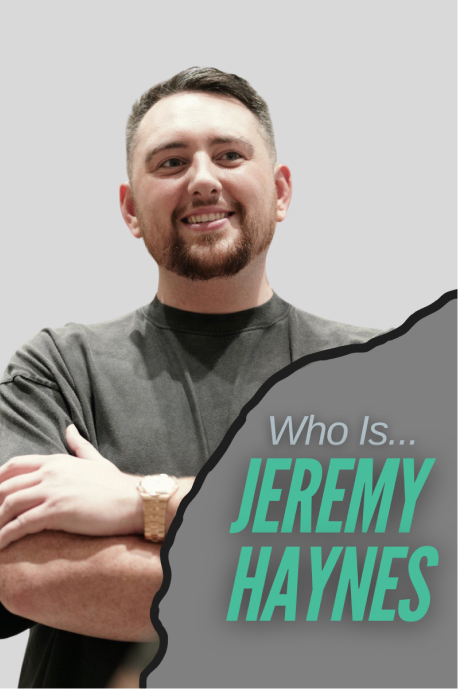
Jeremy Haynes is the founder of Megalodon Marketing. He is considered one of the top digital marketers and has the results to back it up. Jeremy has consistently demonstrated his expertise whether it be through his content advertising “propaganda” strategies that are originated by him, as well as his funnel and direct response marketing strategies. He’s trusted by the biggest names in the industries his agency works in and by over 4,000+ paid students that learn how to become better digital marketers and agency owners through his education products.


This site is not a part of the Facebook website or Facebook Inc.
This site is NOT /endorsed by Facebook in any way. FACEBOOK is a trademark of FACEBOOK, Inc.
We don’t believe in get-rich-quick programs or short cuts. We believe in hard work, adding value and serving others. And that’s what our programs and information we share are designed to help you do. As stated by law, we can not and do not make any guarantees about your own ability to get results or earn any money with our ideas, information, programs or strategies. We don’t know you and, besides, your results in life are up to you. Agreed? We’re here to help by giving you our greatest strategies to move you forward, faster. However, nothing on this page or any of our websites or emails is a promise or guarantee of future earnings. Any financial numbers referenced here, or on any of our sites or emails, are simply estimates or projections or past results, and should not be considered exact, actual or as a promise of potential earnings – all numbers are illustrative only.
Results may vary and testimonials are not claimed to represent typical results. All testimonials are real. These results are meant as a showcase of what the best, most motivated and driven clients have done and should not be taken as average or typical results.
You should perform your own due diligence and use your own best judgment prior to making any investment decision pertaining to your business. By virtue of visiting this site or interacting with any portion of this site, you agree that you’re fully responsible for the investments you make and any outcomes that may result.
Do you have questions? Please email [email protected]
Call or Text (305) 704-0094