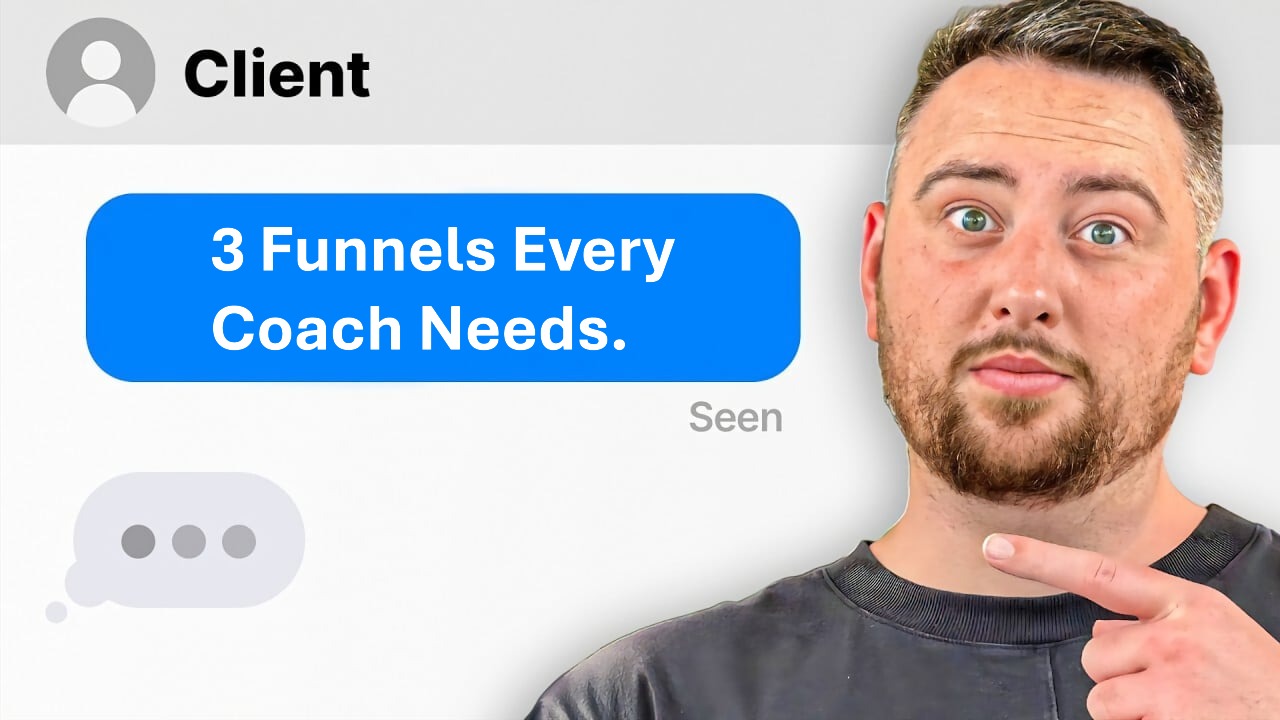
What Three Funnels Every Coach Needs to Hit Consistent High Revenue Months
I hope you enjoy reading this blog post. If you want my team to just do your marketing for you, click here.
Author: Jeremy Haynes | Published January 19, 2026
Earnings Disclaimer: You have a .1% probability of hitting million-dollar months according to the US Bureau of Labor Statistics. As stated by law, we can not and do not make any guarantees about your own ability to get results or earn any money with our ideas, information, programs, or strategies. We don’t know you, and besides, your results in life are up to you. We’re here to help by giving you our greatest strategies to move you forward, faster. However, nothing on this page or any of our websites or emails is a promise or guarantee of future earnings. Any financial numbers referenced here, or on any of our sites or emails, are simply estimates or projections or past results, and should not be considered exact, actual, or as a promise of potential earnings – all numbers are illustrative only.
Most coaches have way too many funnels. Because without a structured funnel strategy, coaches risk losing potential clients at various stages of their journey, leading to lower conversion rates and wasted marketing efforts.
You’ve got a webinar funnel that nobody registers for. A challenge funnel that got decent signups six months ago but hasn’t converted anyone since. A tripwire offer that’s supposed to lead people into your high-ticket program but mostly just attracts freebie seekers.
Your business looks like a tangled mess of landing pages, email sequences, and opt-in offers that all seemed like a good idea at the time.
And meanwhile, you’re wondering why you’re not hitting consistent five-figure months when you’re working this hard on your marketing.
Here’s what I’ve learned after years of testing every funnel strategy under the sun: you don’t need seventeen different funnels. You need three really solid ones that work together.
That’s it. Three funnels that feed each other, that handle different types of prospects at different stages, and that consistently fill your calendar with qualified people who actually want to work with you.
Everything else is just noise that’s diluting your message and confusing your audience.
Let me show you exactly which three funnels you need and how to set them up so they’re actually generating revenue instead of just sitting there looking pretty in your Kajabi dashboard.
If your business is already generating $100k+ per month, My Inner Circle is where you break through to the next level. Inside, I’ll help you identify and solve the bottlenecks holding you back so you can scale faster and with more clarity.
Why Most Coaches Have Too Many Funnels and Should Focus on Three That Work Together
Before we get into the three funnels you actually need, let’s talk about why you probably have too many right now.
Every time you see another coach launch something new, you think you need it too. Someone’s crushing it with a quiz funnel? You build a quiz. Someone else is getting great results with a five-day challenge? You create a challenge.
The problem is you’re building funnels based on what’s working for other people instead of what your business actually needs.
And here’s the thing about funnels. They only work when you commit to them. When you build a funnel, test it for two weeks, see mediocre results, and then abandon it for the next shiny strategy, nothing ever gets optimized. Nothing ever gets good.
You end up with a dozen half-built funnels that all kind of work but none of them work great.
The coaches who are consistently hitting 30k, 50k, 100k months aren’t doing it with more funnels. They’re doing it with better funnels. Fewer funnels that they’ve actually taken the time to optimize and perfect.
They’ve figured out exactly where their ideal clients are coming from, exactly what those clients need to see before they buy, and exactly how to move them from stranger to paying client as efficiently as possible. An effective funnel attracts, nurtures, and converts leads by guiding them through stages from awareness to decision.
That’s what we’re building here. Not more funnels. Better funnels.
The three I’m about to show you handle every type of prospect you’ll encounter. The people who are ready to buy now. The people who need more time. And the people who found you but aren’t quite sure yet.
Master these three and you won’t need anything else.
How to Build a Discovery Call Funnel That Books Qualified Sales Calls with High Show Rates
This is your bread and butter. The funnel that books qualified sales calls and turns them into paying clients.
Most coaches already have some version of this, but most coaches are doing it wrong. They’re sending cold traffic straight to a calendar link and wondering why their show rates are terrible and their close rates are even worse.
Here’s how the discovery call funnel actually works when you do it right.
Someone finds you through content, a referral, an ad, whatever. They land on a simple landing page that does one thing: gets them to book a call. Not a sales call. Not a pitch call. A discovery call where you’re going to help them figure out if you’re the right fit.
The language matters here. “Book a free strategy session” feels pushy. “Schedule a discovery call to see if we’re a good fit” feels collaborative. You’re not trying to trick people into a sales call. You’re inviting the right people to have a conversation.
That landing page needs to speak directly to their biggest pain point. Not ten pain points. One. The one thing that keeps them up at night. The one problem that made them start looking for a coach in the first place.
For me, when I’m talking to business coaches, that pain point is usually inconsistent revenue. They’re tired of the feast-or-famine cycle. They want to know how to predictably hit 30k months. So that’s what my landing page talks about.
Once they book, the confirmation sequence kicks in. This is where most coaches completely drop the ball. They send a calendar invite and that’s it.
You need an immediate confirmation email that builds anticipation. Tell them what to expect on the call. Give them a quick win or piece of value right away so they’re already getting results before you even talk. Include a simple questionnaire or intake form so you can show up prepared.
Then you need reminders. Twenty-four hours before, three hours before, fifteen minutes before. Each one should feel personal and reference something specific about their situation based on what they told you in the intake form.
The goal of this entire funnel is to get qualified people on the phone with you when they’re excited to talk and you’re prepared to help them. That’s it.
If your discovery call funnel is doing that consistently, you’re most of the way to consistent high-revenue months. Because when you have five to ten qualified discovery calls per week and you close 30-50% of them, the math works itself out.
The key is qualified. This funnel shouldn’t be booking everyone. It should be booking the people who are actually a good fit for what you offer.
That means your landing page needs to be clear about who you work with and what results you help them get. That means your intake form needs to include qualifying questions. That means you’re okay with some people self-selecting out because they’re not ready or not the right fit.
Quality over quantity. Always.
How to Build an Application Funnel That Filters Tire Kickers and Attracts Serious High Ticket Buyers
Now let’s talk about the funnel that filters out tire kickers and attracts serious buyers who are ready to invest.
The application funnel works completely differently than the discovery call funnel. Instead of making it easy to book a call, you’re making people work for it a little bit.
This is perfect for high-ticket offers or if you’re getting too many unqualified leads through your discovery call funnel. It adds a layer of qualification that ensures you’re only spending time with people who are genuinely interested and financially capable of working with you.
Here’s how it works. Someone lands on your application page after seeing your content or clicking an ad. Instead of immediately getting access to your calendar, they fill out a detailed application first.
This application is doing several things at once. It’s qualifying them based on their current situation, their goals, and their budget. It’s getting them to self-reflect on where they are and where they want to be. And it’s creating a micro-commitment before they ever talk to you.
The questions you ask matter a lot here. You’re not just collecting information. You’re pre-framing the conversation you’re going to have with them.
Ask about their current revenue. Ask about their revenue goal. Ask what’s stopping them from getting there. Ask what they’ve already tried. Ask if they have the budget to invest in coaching.
That last question is crucial. Not “can you afford it” but “do you have budget set aside for this.” You’re framing it as a given that coaching requires investment. You’re weeding out people who are just browsing.
Once they submit the application, they don’t immediately get to book a call. They get a message saying you’ll review their application and reach out within 24-48 hours if it looks like a good fit.
Then you or someone on your team actually reviews the applications. The ones that look qualified get an email with a link to book a call. The ones that aren’t ready yet go into a nurture sequence.
This does something really important psychologically. It positions you as the expert who gets to choose who you work with. You’re not desperate for anyone who’ll book a call. You’re selective. You only work with people who are serious and ready.
That frames the entire sales conversation differently. They’re not doing you a favor by getting on a call. You’re doing them a favor by making time for them.
Your close rates on calls that come through an application funnel will be significantly higher than calls from a regular discovery funnel. Because everyone who makes it through is pre-qualified, pre-committed, and already thinking about working with you.
The downside is you’ll get fewer calls total. But you’ll close a higher percentage at higher prices. For high-ticket coaching offers, that math works out beautifully.
I use the application funnel for my premium coaching. Anyone who wants to work with me one-on-one goes through an application first. My discovery call funnel feeds people into group programs and lower-ticket offers. Different funnels for different offers.
How to Build an Email Nurture Funnel That Warms Cold Leads Automatically Over Time
Okay, so you’ve got people booking discovery calls. You’ve got people filling out applications. Great.
But what about everyone else? What about the people who aren’t ready to buy right now but might be ready in three months? What about the people who found your content, loved it, but aren’t at the point where they can invest yet?
That’s what the email nurture funnel is for. And this might be the most important funnel of the three because it’s working 24/7 even when you’re not actively selling.
Here’s the truth about coaching: most people aren’t ready to buy the first time they hear about you. They need to see you show up consistently. They need to consume your content. They need to start seeing results from your free advice before they trust you enough to invest.
The email nurture funnel keeps you in their world while they’re making that decision. Nurtured leads tend to make larger purchases and build trust over time through regular, valuable touchpoints.
It starts with a lead magnet. Something valuable that solves a specific problem for your ideal client. Not a generic PDF. Not a checklist that took you ten minutes to make. Something actually useful that gets them a real result.
For me, it’s usually a training or a guide that walks them through a specific process. Something that takes 20-30 minutes to consume and leaves them thinking “wow, if the free stuff is this good, the paid stuff must be incredible.”
They opt in for the lead magnet, and that kicks off your email sequence. This is where most coaches go wrong again. They either send nothing after the initial delivery email, or they send seven emails in seven days trying to push people into a discovery call.
Neither approach works. The first one wastes the lead. The second one burns them out before they’re ready.
Your email nurture sequence should do three things. It should deliver value consistently. It should build your authority and credibility. And it should make soft offers at strategic points. Consistent email nurturing helps coaches maintain engagement and build relationships that convert over the long term.
I’m talking about two to three emails per week. Mix of educational content, stories from your own journey, client results, and occasional invitations to book a call or check out an offer.
The key word there is occasional. You’re not selling in every email. You’re nurturing. You’re staying top of mind. You’re being helpful. And every few emails, you make an offer.
Maybe it’s an invitation to a free training. Maybe it’s a case study with a call to action to book a discovery call. Maybe it’s a flash offer on a low-ticket product. But it’s not aggressive. It’s natural.
This email sequence should run for at least 30 days with 15-20 emails. After that, people should roll into your regular broadcast emails where you’re continuing to provide value and make offers.
Some people will book a call within the first week. Great. Some people will need six months of emails before they’re ready. Also great. The funnel accommodates both.
And here’s what makes this funnel so powerful – it’s completely automated. You build it once, and it’s nurturing leads while you sleep, while you’re on calls, while you’re working with current clients.
Every time someone opts in for your lead magnet, they’re entering a system that’s working to convert them without any additional effort from you. That’s leverage.
Most of my clients who come through an application or discovery call have been on my email list for weeks or months. They’ve consumed my content. They’ve seen me show up consistently. They’re pre-sold before we ever talk.
That’s what a good nurture funnel does. It turns cold leads into warm leads into hot leads over time, automatically.
How These Three Funnels Work Together as a System to Turn Strangers Into Clients
Now here’s where it gets really powerful. These three funnels aren’t operating independently. They’re feeding each other and working together as a system.
Someone finds your content on social media or through a referral. They’re interested but not ready to commit yet, so they opt in for your lead magnet. That puts them into your email nurture funnel.
Over the next few weeks, they’re getting consistent value from your emails. They’re starting to see you as the expert who can help them. Then they see an email inviting them to a free training or offering them a discovery call.
They click through and either book directly through your discovery call funnel or fill out an application if it’s for your high-ticket offer. Now they’re in one of your other two funnels moving toward a sales conversation.
See how that works? The nurture funnel feeds the other two funnels. It’s warming people up so that when they do book a call, they’re already halfway sold.
But it also works the other direction. Someone books a discovery call, you have a great conversation, but they’re not ready to move forward right now. Maybe budget is an issue. Maybe timing is off. Whatever the reason, they’re a “not yet” instead of a “no.”
Instead of just letting them disappear, you add them to your email list if they’re not already on it. Now they’re back in the nurture funnel, getting regular touchpoints from you, staying warm until they’re ready to re-engage.
Or someone fills out an application but doesn’t qualify yet. Maybe their revenue isn’t quite high enough for your program. Maybe they haven’t tried the foundational stuff yet. You send them a kind rejection email and add them to a specific segment of your email list focused on getting them ready for when they do qualify.
All three funnels are working together to capture leads at different stages, move them forward at their own pace, and ensure nobody falls through the cracks.
This is how you build a business that consistently does 30k, 50k, 100k months. Not by having the perfect funnel. By having a system of funnels that work together to move people from stranger to client as efficiently as possible.
What to Build First When Starting Your Three Funnel System This Week
I know what you’re thinking. “Jeremy, this sounds like a lot. I don’t have time to build three funnels from scratch.”
Fair enough. Here’s how you actually implement this without spending the next six months in funnel-building hell.
Start with whichever funnel you need most urgently right now. If you have plenty of leads but they’re not qualified, start with the application funnel. If you have traffic but no way to capture it, start with the email nurture funnel. If you just need more sales conversations, start with the discovery call funnel.
Build one. Get it working. Then build the next one.
Each funnel can be built in a week if you focus. The discovery call funnel is just a landing page, a calendar link, and an email sequence. You can knock that out in a few days.
The application funnel is a form, a thank you page, and a follow-up process. Another few days.
The email nurture funnel takes the longest because you need to write 15-20 emails, but even that can be done in a week if you block out time and focus.
Don’t overthink the tech. You don’t need a fancy funnel builder. A simple landing page tool and an email service provider is all you need. I’ve built million-dollar funnels on the most basic tech stack you can imagine.
And don’t wait until everything is perfect. Launch it when it’s 80% done and improve it based on real data. Your first version of each funnel will not be perfect. That’s fine. Get it out there, start running traffic to it, and optimize based on what you learn.
The coaches who are winning aren’t the ones with the prettiest funnels. They’re the ones who have functional funnels that are consistently converting traffic into calls into clients.
Start simple. Build one funnel at a time. Get them all working together. And watch your business transform from unpredictable hustle to predictable, scalable revenue.
That’s how you hit record months. Not by having seventeen different funnels. By having three really good ones that work together to turn strangers into clients systematically and consistently.
Build these three funnels and you’ll never wonder where your next client is coming from again.
What I can teach you isn’t theory. It’s the exact playbook my team has used to build multi-million-dollar businesses. With Master Internet Marketing, you get lifetime access to live cohorts, dozens of SOPs, and an 80+ question certification exam to prove you know your stuff.
Get my content first on Google
Add jeremyhaynes.com as a preferred source and Google shows my articles more prominently in your search results, including AI Overviews and AI Mode.


Jeremy Haynes
Owner and CEO of Megalodon Marketing
Jeremy Haynes is the founder of Megalodon Marketing. He is considered one of the top digital marketers and has the results to back it up.