Three Aggressive Facebook Ad Scaling Strategies For Million Dollar Months

I hope you enjoy reading this blog post. If you want my team to just do your marketing for you, click here.
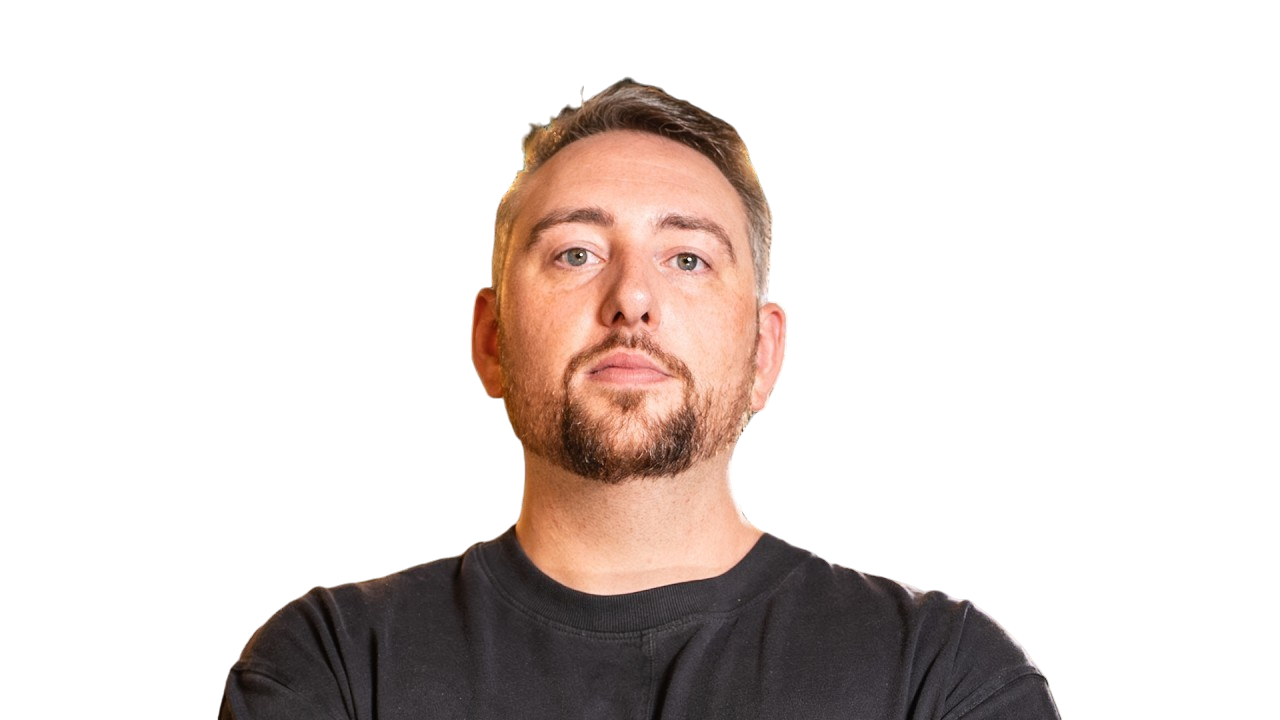
Author: Jeremy Haynes | Published October 17, 2025

Earnings Disclaimer: You have a .1% probability of hitting million-dollar months according to the US Bureau of Labor Statistics. As stated by law, we can not and do not make any guarantees about your own ability to get results or earn any money with our ideas, information, programs, or strategies. We don’t know you, and besides, your results in life are up to you. We’re here to help by giving you our greatest strategies to move you forward, faster. However, nothing on this page or any of our websites or emails is a promise or guarantee of future earnings. Any financial numbers referenced here, or on any of our sites or emails, are simply estimates or projections or past results, and should not be considered exact, actual, or as a promise of potential earnings – all numbers are illustrative only.
Let me tell you about some aggressive and some very safe by comparison advertising scaling strategies when you’re on your path to million-dollar months.
One of the most important variables is being able to punch up. Being able to take something that’s working, scale the heck out of it, milk it for all it’s worth, and make a ton more money.
It’s one of the most critical parts about scaling to million dollar months.
And in this specific guide, I want to be very fair when I say this – there’s other pieces on this site where I’ll talk about some additional scaling strategies, things that relate to backend upsells, taking somebody from low ticket to high ticket and ascending them up, increasing lifetime value, selling to rich people, and being able to make more AOV per sale on average, strategies that can get you more pay-in-fulls.
But in this specific guide, we’re going to be talking about advertising scaling strategies specifically.
Meaning you have a specific set of campaigns or a campaign that you now want to scale out and be able to make a ton more money with.
So if that’s the case, you’re in that specific situation, pay attention. This one’s for you.
If you’re a new person to the site, you’ve never been here before, welcome. We talk about million-dollar months around here. That’s all we care about. That’s all we talk about.
Whether you’re trying to get your first million a month or add that next million a month to what you do, you’re in the right place.
We don’t make any income claims, though. No, no, there’s no earning potential with any of these pieces. All I’m doing is handing down the lessons of the people who have been there, done that, passing them down into these bite-sized pieces for you.
So welcome in if you’re new. It’s a pleasure to have you with us.
Today, 25+ members are doing over $1M per month, and two have crossed $5M+. If you’re ready to join them, this is your invitation: start the conversation at My Inner Circle.
And of course, if you’re already a subscriber, welcome back. Always a pleasure to have you. Got another banger for you here today. Let’s get started.
Understanding Safe vs Risky Scaling Strategies
So in front of us, we have this spectrum. And you’ll notice on the far left, we have the word “safe” and then on the far right, we have the word “risky.”
That’s because there’s a tremendous difference in the scaling strategies that you can deploy that are going to be wildly riskier or far a lot safer.
So let’s just get started with some of the most aggressive ones. First, I think that’s very fun.
At the specific time I’m creating this, there’s a holiday here in the United States, and I have a handful of clients that are running holiday themed sales.
As a result of that, I have a finite window where I can scale the living daylights out of a specific campaign in order to get the most out of it.
Now, as a result of that, I don’t have the opportunity to be able to stay safe and cozy and, you know, milk these campaigns slow and steady. No, no. I have to do the far riskier strategies when it comes to scaling to be able to punch up and hope fingers crossed that the market holds, that my cost per purchase or my cost per lead holds and that my AOV holds as well.
As I take some of these more aggressive risks – because some of these risks that we’ll talk about, they can blow the entire profitability of the campaign if things go south.
Thus why they’re on the far riskier end of the spectrum.
Surfing Strategy Scaling From 1K To 36K Daily
So let’s get started with number one. So this very first strategy we call it surfing.
I want to give a huge shout out to one of my longtime buddies, a guy named Tim Burd. Have you never heard of Tim Burd? He’s an advertising OG. I’ve learned from Tim over the years.
I’ve had Tim speak at my Internet Earners Summit back in the day, which was an event we did where we’d get a big house in Beverly Hills, get about 150-ish people there, get a bunch of people who make seven, eight, nine figures a year from the internet with internet money on stage speaking to folks.
It’s an incredible event series. I think I did about two or three of them if I remember correctly. And anyway, Tim spoke at one of those events.
On and off over the years, had a handful of conversations and talk time with Tim, spoken at some of his events and vice versa.
So anyway, this specific strategy with surfing comes from Mr. Tim Burd. So quick shout out and credit to Tim.
All right, let’s use the example that you have a campaign like I did literally earlier this past day where it starts off at $1,000 a day.
With this strategy, I can’t stress this enough. I launched a campaign. It was a holiday related sale. It was for a ticket event for a few months later, but it was like the earliest bird pricing.
And we themed that earliest bird pricing around the holiday that we were experiencing at the time of promotion.
So I started it off with a random budget of $1,000 a day. I determined that would be a great place to start because I knew I was going to bias towards this extremely aggressive surfing strategy.
So as a result of starting at the $1,000 a day, I let about 8 hours pass. After that initial 8 hours passed, I launched this bad boy at midnight Eastern Standard Time.
I woke up in the morning, took a peek at the campaign, and it was in a good spot. I had about a $57 cost per purchase. Cost per purchase – we can also just call it cost per result.
And I had about a $90-ish AOV, so I was profitable just shy of a 2:1.
Now, at that point, I was like, time to punch up. What do I want to punch it up to?
The concept of surfing is – and there’s many different ways to surf. I’ve learned it from Tim a little differently than how I’m going to articulate it to you, but nonetheless, I still like this specific high-risk version that I’ve done.
I kicked it up at that point from $1,000 a day to $3,000 a day.
Now, at this point, I want to remind you it’s 8 in the morning. I only have a couple more hours until midnight.
So I kick it up. I want to at that point wait about three hours and I want to see where my cost per result is and I also want to see where my AOV is.
Real Surfing Example Tripling Budget Every 3 Hours
What ended up happening in this case was really good. So when I go check the campaign 3 hours later, it’s now 11:00 a.m. Eastern Standard Time.
At this point, my CPR, my cost per result, actually dropped down a little bit. It was now $51. Phenomenal.
In addition to that, my AOV dropped just a little bit. It was at 87 bucks at this point in the day.
So unfortunately for me, my AOV started to slip a little bit, but it was questionable as to why. I wasn’t going to make any conclusions yet. I wanted to continue riding the wave.
So at that point, again, we’re at 11:00 a.m. I doubled it. I went from $3,000 a day to $6,000 a day within the same campaign.
I didn’t relaunch the campaign. I didn’t do anything else.
And this is a very simple campaign, by the way, in terms of the structure. I had the campaign. The campaign was set for CBO in this case. I could have done CBO or ABO. It really didn’t matter because I had one ad set.
Inside of that one ad set, I had a warm audience stack and that was it.
That warm audience stack consisted of a few different things. Web audiences, email list, all social interaction, video viewers, I think lead form interaction I peppered in there as well for the handful of times that we’ve done that.
From there, I had a set of dynamic ads. And my dynamic ads in this case, the client didn’t shoot any videos. We didn’t want to whip up anything. They gave it to me at like – dude, this is actually kind of crazy.
So I launched at midnight like I was saying. I got the ads like 11-something that night. So I didn’t have that much time to do anything else.
I threw five body copy variations. And in this case, I do want to point out we’ve run a similar funnel to this in the past. So I already had some good proven copy from that past campaign.
And after reading it, I realized it was still technically applicable to this. I just had to update it a little bit around the themed sale.
So that was the structure.
Anyway, at this point, another 3 hours passed. I’m sitting now at about two in the afternoon, Eastern Standard Time, and I was at 6K a day.
Now, here’s what was cool. It’s actually really good news. I had a $54 cost per result when I checked it at this point. I’d gotten off a pretty good chunk of spend. Nothing too crazy, but still it was pretty good.
I don’t remember the exact AOV at this point, but I was in the 90s for my AOV. Went back up a little bit. So I was feeling good.
Now, here is where things can get a little crazy, depending on how you choose to surf from this point forward.
Going from $1,000 a day to $6,000 a day within about – what is that – a 14-hour window. That’s not that bad.
Believe it or not, when you have the audience size, which this specific client’s a relatively well-known personal brand, their warm audience is tremendously large. I got a lot of scale potential.
And very important to note, I’ve already had ceilings that I’ve tapped that were far above $6,000 a day on this specific warm audience.
In the past on campaigns that I’ve scaled differently, I’ve been able to get up to about $55,000 a day inside of a warm audience for, believe it or not, a cost per purchase campaign.
So I felt pretty good about the amount of potential that I had left here.
So to be clear, at this point, it’s very important to understand what I peppered in at the beginning of this in terms of this whole risk spectrum.
How I Scaled To 36K Daily Budget Same Day
This is where surfing can to a degree really hurt you. Remember, as the wave gets bigger and you’re surfing that wave, god forbid you fall, those waves can sometimes literally kill you. You know, they can drown you or the level of impact that the wave has when it crashes down on you can crush your bones.
There’s a lot of bad things that can happen as the wave gets bigger.
But at 6K a day, like I said, relative to the fact that we’ve scaled campaigns in this specific account to 55K a day on that specific audience type, there was still a lot of potential to go.
And so at this point, I was like, “All right, let’s get a little more aggressive.” So that’s exactly what we did.
I’m just playing the doubles game if you can’t tell yet. Going from $1,000 a day to $3,000 a day – that was just a random choice of choosing to triple it so I can get the number bigger faster.
At this point, we then doubled it to 6K a day. I then doubled it again. You’ll notice in the next series of what I do, I actually get a little more aggressive than that.
So again, I let another 3 hours go by. That next 3 hours turns into 5:00 p.m. EST. We’re towards the tail end of the day now.
Again, I don’t actually remember the exact CPA at this point in the day for my cost per result. And I also don’t remember the exact AOV, and I won’t make it up for you guys. I only tell you the things I actually remember and know.
So again, I was still in the 50s and I was still in the 90s for my cost per result, my overall AOV. And that’s what mattered. That’s what truly meant the entire world to us on this account – was staying in that range because as long as we were in that range, we can continue to double up.
Now, there’s a few things to consider from this point. I’m later in the day. I’m at about 5:00 p.m. on the East Coast. I’m at about 2 p.m. on the West Coast inside of the United States. That was the geographic area that I was choosing to target for this campaign.
The time of day will dictate wildly what I’m going to choose to do and what I’m not going to choose to do.
At this point, you have to rely on historical patterns and trends within the account for determining the level of risk that you want to take next, especially as you get to these higher levels of spend.
I determined based on the fact that I launched a campaign at midnight prior on a weekend and saw great results from essentially midnight through 8:00 a.m. the following morning that everything would be fine if I just rammed a ton of spend.
The only downside is that I’m going to be asleep. So I could rely on automated rules to obviously determine if my cost per result goes too high, it just shuts off the campaign, which is what you want to choose to do if obviously you’re going to be asleep.
However, in this case, I generally was going to stay up until about midnight, maybe 1:00 a.m. And I was going to ride this out until about that time frame.
And at that point, I would choose to set up my automated rules. I wasn’t doing anything. Wasn’t going to leave the house. I was in the house and I was checking the account every other hour or so.
So I was like, let’s get aggressive.
At this point, I went big and I did a little triple. So I went up to 36K a day.
Now, going from $1,000 a day to $36,000 a day within the same day with several increments in between – I just want to point out a few critical things before I continue to talk.
When To Use Aggressive Scaling With Confidence
Number one, the reason that this is at the level of risk that it is is because this can wildly mess up the performance of an account and a campaign.
This in itself can cause for a tremendous lift in cost per result.
If you hit a hypothetical ceiling somewhere in between the jumps in ad spend – so let’s use the example that I was not aware that I’ve already taken this specific audience in the past with this specific standard event to $55,000 a day – I would be a little more cautious.
I’d tell you that right now just to be extremely direct with you and pepper that in as kind of a risk disclaimer to a high-risk strategy.
If I did not know the ceiling of a specific standard event correlated to a specific audience and correlated to a specific offer, I wouldn’t necessarily feel as comfortable or as confident as I did in this specific scenario to take it up even as high as I did at $12,000 a day, let alone to then triple it and go to 36K a day.
The reason that I felt very confident and competent to be able to do that was because of the patterns and historical data that I had to lean into.
I’ve already taken that warm audience to 55K a day literally for the same offer, just with several months in between that last time I promoted it and this time of promoting it.
The only real variable here was I did not promote it with a holiday sale last time. I had only had the opportunity to promote it as an early bird sale and we had some inflationary holidays that we didn’t theme it around. So that was one mistake that we wanted to overcome this specific go-around of promoting this.
And outside of all of that, the 55K a day, the same exact audience, it was also the same exact standard event and the same funnel type.
You understand?
So it’s like the confidence was there. That’s a time where you can lean into something that’s a little more risky.
It’s like when I go drive one of my supercars and hypothetically, let’s use the example, I’m driving it relatively fast and there’s a little bit of water on the road. It’s like naturally I can’t be as aggressive as I would be if it was a great day. I’m in warm weather. I’ve already driven the car and warmed it up. The tires are warmed up. I’ve already driven that exact route before. I know how the car handles. I’ve just recently serviced the car. I know to the degree the tires are currently in in terms of their conditions.
It’s like that enables you to be a little more confident behind the wheel and take more risks. You understand?
It’s like you don’t do this kind of stuff on something that you have no historical bias to have confidence in.
I want to be fair for the few of you that read this because at the end of the day, let’s be honest. When you’re trying to scale to a million a month or you’re trying to tack on the next million a month, you likely have a high risk profile. You’re likely willing to put your balls on the table and keep them on the table.
And I just want to make sure I pepper in a little disclaimer, which is don’t over-leverage yourself because at the end of the day, this specific client makes a few million dollars a month.
Them essentially having an unfortunate return – let’s use the example that this return went negative. It’s like, well, in reality, the event that we’re promoting in this case is a challenge funnel. It’s a virtual event.
So if something does go wrong and I actually quote unquote “lose money” on the front-end ROAS here with the ticket sale, really doesn’t mean much because at the end of the day, I have a really high probability to be able to get a return because I’m selling something super high ticket at the thing that I’m selling here.
You understand?
So it’s like that also helps reduce the risk. If I was just selling something directly that’s low ticket, and I highly doubt that any of you would do that, but regardless, if you’re reading this and for some reason you are, you should probably reconsider.
But regardless, you have a fail safe. You know, with the amount of money that you make, the level of risk that you can take, factoring in that it’s not going to financially ruin you if things go wrong.
And in this case, we have the fail safe of look, we’re not even really trying to make money on this. Like it’s just cool to make money on this and be ROI positive. The real thing we’re trying to make money on is the backend thing, which in this case is about two months away from the time I’m promoting it right now.
So can’t stress that enough.
Setting Automated Rules For Overnight Campaigns
Okay? So anyway, I then kick it up. And we get pretty aggressive.
Now, at this point, I run this with no other changes through midnight. Because at midnight on this specific night, that’s when I was going to go to bed. That’s when I wanted to set up my automated rules.
Now, this actually got pretty crazy. Give or take the time of day, I was in the 60s for my cost per result throughout the rest of the evening, but I’d also seen it as low as the 40s for my cost per result.
By the time that bedtime came around at about midnight, I was in the low 60s. So I was a little bit inflated comparatively to where I was at, but not much.
But it’s important to note just because it’s only a couple dollar difference or like a 10-ish dollar difference that doesn’t necessarily matter. What matters is the percentage difference.
The percentage difference is something that you have to absolutely factor in when you make these kinds of decisions. Marketing experts recommend monitoring key performance metrics like ROAS and CPA when scaling ad campaigns.
Because if you don’t, you could see – as an example, if I was at $100 for my cost per result and I inflated 30%, it’s 130 bucks. If I was at $1,000 for my cost per result and I inflate 30%, that’s $1,300 now.
So it’s like, you know, the percentages, although again, they’re less meaningful when they’re at smaller levels of the number being smaller, it doesn’t have as much impact to have a higher percentage change. But still, it’s like we’re trying to be as profitable as we can, and we want to keep that in mind.
Also an unfortunate thing that happened was I was now in the 80s, specifically the mid-80s for my AOV. So I had compressed my ROAS a little bit by tripling up this budget.
Now, I did not lose confidence, though. I had determined that, okay, although this was good at some points and kind of bad at others and my AOV had dropped a little bit – that’s likely just because I tripled the budget from $12,000 to $36,000.
And I had only allowed, if you really look at it, about 7 hours to pass, you know, because I took it from 5:00 p.m. to midnight on the Eastern time zone here.
So at this point, I was going to let it ride. But I was going to go to bed with some automated rules in place.
And those automated rules were pretty simple. They were, I am going to ensure that if my cost per result goes above $70, it just immediately cuts off. That was essentially the rule.
Moral of the story, very important you understand this next part because this next part’s very important.
If I remember the original way that Tim Burd taught the surfing strategy to me, this was taught to me as, okay, at midnight, you ideally want to roll the budget back.
So what you originally started with in this case is what you would actually want to reset the campaign’s budget to going into the following day.
I personally don’t like that approach. I want to let it ride. I don’t like to reset it all the way down then and have to repeat this process. It’s a very hands-on process to do this.
When I reach a scale and it’s working, I’d rather maintain that scale.
So at this point, we’re just going to bed with it at $36,000. And we got some automated safety rules in place. So that’s what we do.
Campaign Stabilization After 48 Hours Of Scaling
And here’s the cool thing. This is actually really sick.
So over these next 48 hours, I don’t touch it. I don’t want to increase it further. I actually, believe it or not, and this is a little bit irresponsible to a degree, but I like to push my clients.
They said, “You have a $40,000 total budget for this, but if we’re profitable, you have an unlimited budget.”
Now, generally, when a client says that, they don’t actually mean it. But when I hear them say that, I take it very literally.
So anyway, they give me a $40,000 budget. I had already blown through that $40,000 budget into the early morning hours of the following day. At $36,000 the previous day and at $36,000 the current day.
Oh, and by the way, I want to point out in the first day I didn’t spend a full $36,000. I think I spent into the low 20s at this pace. I did not reach the full $36,000, nor did I go above that.
That’s kind of the disappointment of surfing is you don’t actually reach what you set as the daily budget the first day. You absolutely can the second day, assuming you don’t lift it higher like I did.
So anyway, that following 48 hours, the main reason I didn’t want to scale further is the budget. I needed to reach out to the client, ensure that they understood the level of daily spend that we were at, where the profitability was, and get the official thumbs up that it was okay.
And it was midnight, so I didn’t have the opportunity to do that at that time. I had to wait until the following morning.
Automated rules were in place for safety. I figured knowing this client, had worked with them for a long time, everything would be okay.
So anyway, I wake up the following morning. I get the approval from the client. They’re super excited. Everybody’s happy.
But on my end, as the advertiser at this point, I don’t necessarily want to push it higher. My upper limit for this campaign is going to be 55,000 a day. I know that. I don’t even have the ability to double it at this point.
Realistically, all I have the opportunity to do is get to about 50-ish, maybe 60K a day tops. But 55K being the true upper limit realistically.
I want this to stabilize over that following 48 hours. I want to see my cost per result and I want to see my total AOV. I want to see these become stable.
Ideally in the original range that I saw them in when I was way down here at $1,000 a day. Not every time is that realistic, but because I saw my AOV and my cost per result stay within a very similar range every time that I punched up all the way until I tripled the budget, I figured that I could get back within that range. I just needed time.
Generally, stability can come through time. And in this case, it did. It took until about the 36th hour, though.
So that full next 24 hours, I was within this same general AOV range of the 60s for my cost per result and the 80s, low 80s at that for my AOV.
It took until about the next day, halfway through the next day to be able to see it stabilize again.
My cost per result that climbed a little tiny bit, but my AOV went up. We made some backend changes specifically to the upsell process, and that cut the AOV at the high 90s again.
So everything was AOK and we were spending a lot more money. We got a lot more buyers.
This is one of the most aggressive ways to scale.
I want to point out a very, very important caveat to this whole initial scaling strategy. This is not applicable for a lot of people unless they are attempting to scale a campaign hyper-aggressively.
The best time frames to typically do this are when you have something that you have to milk in a rather short duration of time or if you have a lot of money for a specific campaign and you want to scale it fast, but start it with a rather conservative test budget to a degree.
Once you see approved results, you want to just punch up immediately.
It is in terms of risk the highest probability to have cost per result that just wildly goes out of KPI really quickly on you.
And at that point, if something does go wrong, you have to reset the whole campaign. So you would relaunch the campaign. You’d likely pull the budget all the way back down. And at that point, you’d have some stability again, and you’d have to go a little slower.
You wouldn’t be able to punch up as aggressively. And you also might have to defer to some of the other scaling strategies that are little less risky.
Cost Per Result Scaling Method Explained
One of the ones that’s in the middle is called the cost per result or otherwise known as the cost per X strategy.
So the cost per X strategy is one of my favorites. It’s pretty simplistic. It follows some of the logic of surfing. It just defines what you’re going to do to scale with a little bit cleaner math.
So let’s use the example that I’m currently getting a $100 cost per result. And let’s use the example that tomorrow I want to get an additional 10 results.
That would mean I have to be able to spend an extra $1,000 a day on top of my existing daily budget in order to have the potential to see those extra 10 results. Make sense?
That would assume that my cost per result stays the same. And that would also assume that adding the additional budget is obviously going to get me those additional results.
Now, a lot can go wrong with the cost per X strategy, just as with surfing.
The cost per X strategy specifically has the liability of a lot of the same things as surfing does. It can spin wildly out of control. It has a high probability of failing to get you the result that you want if your cost per result inflates.
As an example, I could add the additional budget for 10 results. But in this case, if my cost per result goes up 10 bucks, I immediately remove the probability to get that additional 10th result and I’m going to have nine additional results. And I’m also going to artificially inflate my CPA.
Both with surfing and with the cost per X result – when they hit, boy do they hit. You’ll know right away because your cost will stay rather stable. Your AOV will stay rather stable or your cost per result will stay rather stable.
And you’re going to have a great time because you’re going to be able to essentially scale more aggressively and get the result that you’re after, assuming you don’t run square into the ceiling, which is what’s most probable to happen with both of these specific aggressive scaling strategies.
You have in most instances unknown ceilings to the audiences correlated to the daily spend you’re going to be able to deploy into those audiences with the specific standard event and funnel that you’re optimizing with.
And you’re going to run square into that ceiling and it’s going to hurt and you’re going to have to pull back.
The good news is you’ll know the ceiling a lot sooner. The bad news is it’s going to eat into that specific day’s profitability and it’s going to inflate your cost per results a little bit.
The cost per X strategy is typically one of my go-tos. It is aggressive, but it’s in between because it’s not nearly as aggressive as what surfing is comparatively.
I don’t like to surf with the cost per X strategy. What I generally do with the cost per X strategy and what makes it a little safer is I add time into the equation.
So I’m typically going to do the cost per X strategy today and then I’m going to wait like two to three days. And then after I see my cost per result has stabilized and my AOV or the backend statistics have stayed the same, I’m going to do another cost per X strategy adjustment and I’m going to scale up the campaign.
Again, this disrespects the safest rule, which is generally to keep everything within about a 10 to 30% per day lift in budget.
But when it works, boy does it work. It’s just riskier because it doesn’t always work.
And as I mentioned, due to the fact that you’re inflating your cost dramatically, that can erode your profitability just like that.
And if you’re not attentive to your account or you’re too trigger-happy and you make the change too soon and you shut it off, you’re not giving it the time that’s necessary to have and experience the potential.
Something to consider.
Safe 10 To 30 Percent Daily Budget Increases
One of the safest things that you can do is the 10 to 30% per day scaling strategy. Industry research shows that increasing budgets by 10-20% every 3-5 days helps maintain performance while scaling.
Now, this is one of those tried-and-true spreads around amongst all advertisers type lessons.
It’s arguably one of the safest. That’s why it’s also one of the most known amongst all advertisers.
No specific individual beyond the ad channels that originated this one. It is again a tried-and-true strategy and it’s on the safer end of the spectrum. Thus why the ad channels themselves recommend it.
You typically take whatever your current budget is and you raise it by anywhere from 10 to 30% per day. Research on Facebook advertising shows that gradual budget increases prevent algorithm disruption and maintain campaign performance.
So generally what it comes down to is you incrementally scale from 10% or 20% or 30% on top of whatever your existing budget is.
So if I start at $1,000 a day budget and I want to scale today at 10%, that gives me additional daily budget of $100. Now my new daily budget’s $1,100. That’s within the same campaign. That’s either added to the ABO or the CBO part of the campaign. Up to you, for however you choose to do it.
At that point, you’re typically going to be able to do that over the following days.
Sometimes you have to add time into it as well and wait like 24 to 48 hours, sometimes even upwards of 72 hours before you can scale it again.
Really depends on how much budget you are starting off with when you start the scaling process.
The cool thing is if you do the math on the 10 to 30% a day scaling plan and you just throw it into a Google sheet or an Excel sheet, whatever you prefer, you’ll notice that 10 to 30% compounds really quickly.
Like you can go from a couple hundred bucks a day to tens of thousands of dollars a day within a 30-day window depending on how often you’re able to scale 10 to 30%.
The cool part about 10 to 30% scaling windows is generally you can do it every day.
Sometimes, as I mentioned, you have to wait anywhere from 2 to 3 days, 48 to 72 hours, and then you get the opportunity to do it again.
That’ll obviously slow your compounded effect to get to bigger numbers faster. Sometimes it’s not appropriate to scale every day relative to what type of funnel you’re running.
Choosing Aggressive vs Safe Scaling For Your Funnel
So let me also be clear. If I’m doing a call funnel, as an example, and I have a limitation on the quantity of people that I can book calls into on the closing team, I’m not going to be able to bias towards the riskier end of the spectrum.
Like there’s no way I’m going to even be able to consider these specific strategies due to the fact that I have limitations of the quantity of people I can book calls into.
The only time I can really take the riskiest strategies are when I have a cost per purchase campaign.
So it works really well for low ticket to high ticket. Works really well for challenge funnels like the specific example I gave you with the AOV and cost per result examples for surfing.
It arguably simply put works really well when there’s just not sales people involved on the backend. That’s really important to understand.
It also works really well for webinars. So if you wanted to run a webinar and the webinar is doing direct to checkout, again, works really well to be able to use a riskier strategy.
Now, it’s important to note typically the safer strategies doesn’t necessarily mean it’s more of a weak scaling strategy because, as I said, if you do the math, scaling 10 to 30% a day is a pretty aggressive thing to do.
If you actually are scaling every single day and you’re starting off with a rather reasonable, you know, couple hundred bucks or even a thousand bucks, it goes a long way really quick within a 30-day window.
However, the safer strategy like the 10 to 30% a day strategy is typically better to bias towards when you have people involved.
So when you have people involved, you have to learn to do closer math. We actually have an entire piece on this site dedicated to closer math. It was at one of my Inner Circle mastermind talks where we do our four time a year quarterly masterminds.
It’s all rich people trying to get a heck of a lot richer. We do one-on-one calls, weekly group calls, unlimited access to AI Jeremy trained on a little over 4 million data points.
By the way, we also have an incredibly wide, super in-depth course library for all the Inner Circle members. And in addition to that, we have a group chat, very active, full of rich people trying to get a heck of a lot richer.
There are a lot of qualification criterias in order to join. There’s a link for it down in the description if you would like to check that out, as well as a course called Master Internet Marketing.
We take our education company very seriously, unlike a lot of these other clowns out here.
So moral of the story is, if you want to get into an education product that is very highly reviewed and well regarded, check out the links.
But at one of those masterminds for the Inner Circle, I did a specific lesson that I published on scaling math and closer math, which you need to be able to do when you are considering how you’re going to scale your ad campaigns.
Just because you could scale something extremely aggressively doesn’t mean that it’s appropriate to scale something extremely aggressively. You understand?
You have to be able to balance when you do what. And to a degree, it’s very important when people are involved to factor in their hiring cycles.
So as with sales people, it can take anywhere from three to four weeks, sometimes longer than that, to get new closers, new setters onto the account, on the calendars, ready to book calls into.
It’s not always just a, “Hey, I can scale the campaign. Let’s throw some more closers onto the account.”
There’s a difference between marketing knobs and people, as Mr. Josh Troy would say.
Next Steps To Scale Your Ad Campaigns
So anyway, long story short, these are three of arguably many different scaling strategies that you can choose to deploy.
Naturally, I’m going to hold back on you here because, hey, you’re reading this for free. Go buy one of my programs and learn all the other scaling strategies. Links are available.
And at the very least, subscribe to the channel if you haven’t done so already. Check out some of my other pieces. They’re all bangers and they’re all lessons on scaling up to million-dollar months.
Unlike most courses that stop the moment you buy, my Master Internet Marketing course gets updated every year with fresh cohorts, live Q&A, and the latest strategies that are actually working today. It’s a $5k investment designed to keep paying you back. Apply here.
No earning claims, no income claims, just lessons around scaling to million-dollar months.
Go get richer. Talk soon.
Watch the video:
Get my content first on Google
Add jeremyhaynes.com as a preferred source and Google shows my articles more prominently in your search results, including AI Overviews and AI Mode.


Jeremy Haynes
Owner and CEO of Megalodon Marketing
Jeremy Haynes is the founder of Megalodon Marketing. He is considered one of the top digital marketers and has the results to back it up.