I hope you enjoy reading this blog post. If you want my team to just do your marketing for you, click here.


I hope you enjoy reading this blog post. If you want my team to just do your marketing for you, click here.
Author: Jeremy Haynes | founder of Megalodon Marketing.
Earnings Disclaimer: You have a .1% probability of hitting million-dollar months according to the US Bureau of Labor Statistics. As stated by law, we can not and do not make any guarantees about your own ability to get results or earn any money with our ideas, information, programs, or strategies. We don’t know you, and besides, your results in life are up to you. We’re here to help by giving you our greatest strategies to move you forward, faster. However, nothing on this page or any of our websites or emails is a promise or guarantee of future earnings. Any financial numbers referenced here, or on any of our sites or emails, are simply estimates or projections or past results, and should not be considered exact, actual, or as a promise of potential earnings – all numbers are illustrative only.
If you’re looking to build better operational systems, the 7-week live comprehensive training covers the foundational frameworks we use.
There’s a specific ceiling most established agencies hit. Not because they lack talent or work ethic, but because they’re running the wrong operating system for the next level.
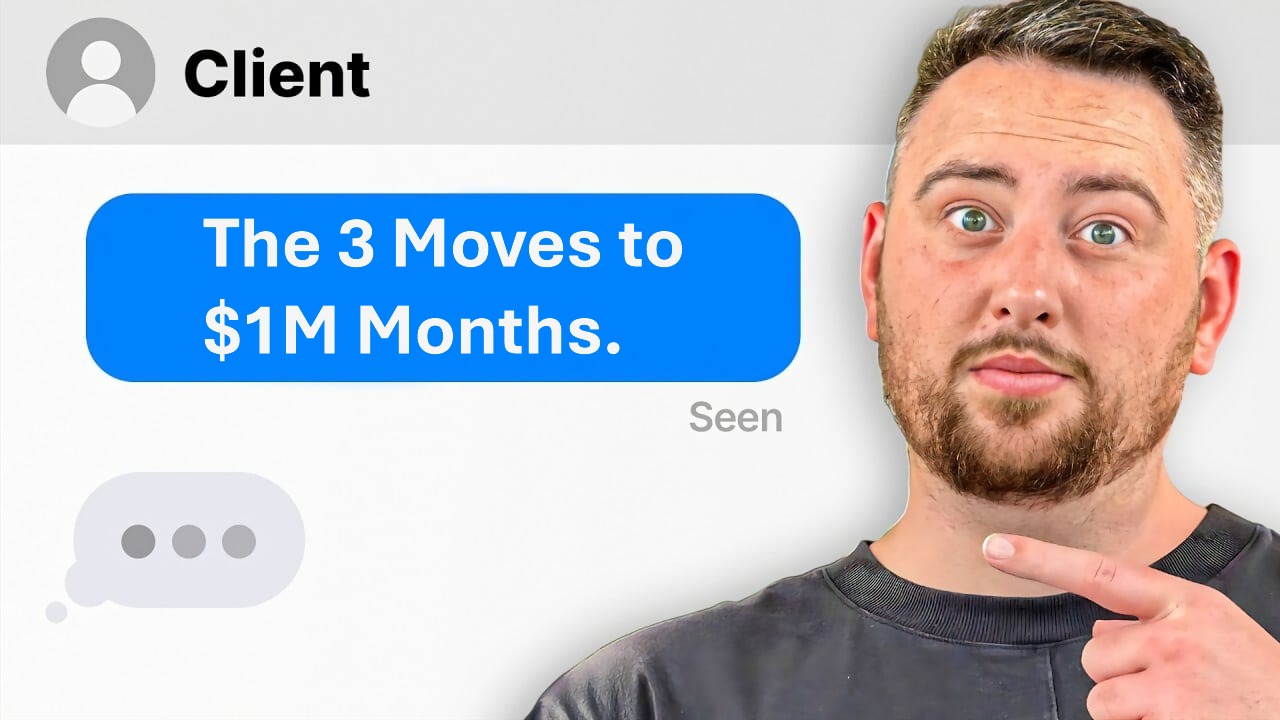
The jump to higher revenue tiers isn’t about working harder. It’s about making three fundamental commitments that completely change how your business operates. These aren’t trendy tactics or motivational concepts. They’re structural shifts in how you handle automation, visibility, and commerce.
Most operators at a certain revenue level are still running manual processes that worked when they were smaller. They’re optimizing for search algorithms that are already obsolete. And they’re creating friction in the buying process that kills conversions at scale.
The businesses I’ve worked with that broke through made these three commitments non-negotiable. Not someday. Not eventually. Immediately.
The biggest difference between agencies that scale and agencies that stall isn’t revenue. It’s operational leverage.
At a certain point, you can still get away with manual marketing tasks. Someone can handle email segmentation by hand. Your team can manually adjust ad bids. Reporting gets compiled in spreadsheets every week.
But here’s what happens when you try to grow revenue with that same infrastructure: everything breaks. Your team drowns in execution. Response times slow down. Errors multiply. You’re hiring just to maintain current output, not to scale it.
The agencies that scale have eliminated manual marketing operations almost entirely. They’ve built systems where AI and automation handle segmentation, campaign deployment, bid optimization, and performance reporting. Human oversight focuses on strategy and refinement, not execution.
Start with an automation audit. List every recurring marketing task your team touches weekly: email campaigns, lead routing, ad management, social posting, analytics reporting. Anything that happens more than once belongs in an automated workflow.
Then systematically replace manual execution with platform-native automation: HubSpot for email and lead workflows, Salesforce for pipeline management, Google Ads automated bidding for campaign optimization, and native scheduling tools for content distribution.
According to McKinsey’s research on marketing automation, companies that implement automation effectively see meaningful efficiency gains across their marketing operations.
In my experience, campaigns launch faster when automation is in place. Errors drop. And your team’s capacity multiplies without proportional headcount increases.
But most operators resist this because they think automation means losing control. The opposite is true. Manual processes create inconsistency and limit your ability to test at scale. Automation gives you reliable systems that execute while you focus on higher-leverage decisions.
The commitment here isn’t just implementing tools. It’s accepting that manual marketing operations are a ceiling, not a feature. If someone on your team is doing repetitive tasks that software can handle, you’re paying premium rates for commodity work.
Traditional SEO is changing rapidly, and many businesses are watching their organic traffic shift without understanding why.
Here’s what changed: AI-powered search summaries now answer user queries directly. Google AI Overviews, Bing Copilot, ChatGPT search — users get answers without clicking through to websites. Traffic that used to flow to your content now stops at the AI-generated summary.
SparkToro’s research on zero-click searches shows that a significant portion of searches now end without a click to any website. If your visibility strategy is still built around ranking for keywords alone, you’re optimizing for a system that’s already shifting.
The agencies scaling effectively have shifted to an AI-first visibility strategy. They’re not just trying to rank for keywords. They’re optimizing to be cited by AI systems as authoritative sources.
This requires different content architecture: machine-readable structured data, topic clusters instead of narrow keyword targeting, and content formatted for conversational queries rather than only search terms.
When someone asks an AI system a question related to your business, your content needs to be the source the AI pulls from and cites. That’s the new visibility game.
Start by auditing your content for structured data implementation: schema markup, FAQ formatting, clear hierarchical organization. AI systems prioritize content that’s easy to parse and verify.
Then shift your content strategy from keywords to conversational queries. What questions do your buyers actually ask? Build comprehensive resources that answer those questions in natural language, not keyword-stuffed articles.
In my experience, the agencies doing this well are recovering visibility by becoming citation sources. They show up in AI-generated answers with attribution, maintaining visibility even when users don’t click through.
This also means optimizing for voice and visual search. People are asking questions out loud and using their cameras to search. If your content isn’t structured for “how do I” and “what’s the best” queries, you’re less visible to these growing search behaviors.
The commitment here is accepting that traditional SEO tactics are becoming legacy systems. Keyword density, backlink volume, and domain authority as you knew it are becoming less relevant when AI systems are the new gatekeepers of visibility.
Your content needs to be authoritative, structured, and conversational. That’s what gets cited. That’s what maintains visibility in an AI-first search environment.
The third commitment separating agencies that scale from those that stall is eliminating every unnecessary step between discovery and purchase.
Most businesses still operate with a traditional commerce model: drive traffic to your site, hope visitors navigate to a product page, hope they complete checkout. Every step is an opportunity for the buyer to leave.
The agencies scaling effectively have collapsed that journey. They’ve integrated commerce directly into discovery channels: social commerce, AR try-ons, shoppable video, voice-activated purchasing. The moment someone discovers your product, they can buy it without leaving that environment.
This is especially critical for mobile commerce, which now dominates transaction volume. Statista’s mobile commerce data shows that mobile transactions continue to grow as a percentage of total e-commerce. If your buying process requires multiple page loads, form fills, or app downloads, you’re losing conversions to friction.
Start with social commerce integration if relevant to your business. Instagram and TikTok now support in-app purchasing. Users can buy directly from posts without ever visiting your website. For businesses with strong social presence, this approach can meaningfully improve conversion.
Then layer in visual and AR experiences where appropriate: 3D product models that work with Google Lens and Snapchat, virtual try-ons for retail products, and camera-based search that lets users point their phone at something and instantly find where to buy it.
These aren’t gimmicks. They’re removing the friction of text-based search and multi-step checkout processes. A user sees something they want, points their camera, and completes purchase in seconds.
In my experience, the agencies that implemented AR shopping experiences report shorter purchase paths. You’re meeting buyers in the moment of interest, not hoping they remember to come back later.
This also means omnichannel integration. Your inventory, pricing, and checkout need to work seamlessly across every platform. A customer should be able to start on Instagram, continue on your website, and complete purchase via voice assistant without any disconnection.
The technical infrastructure for this exists. Shopify, WooCommerce, and enterprise platforms all support omnichannel commerce. The barrier isn’t technology, it’s commitment to rebuilding your buying experience around reduced friction.
Most operators resist this because it requires rethinking their entire commerce architecture. But here’s the reality: customers who experience frictionless commerce elsewhere develop expectations. If buying from you requires more steps than buying from a competitor, you’re at a structural disadvantage regardless of product quality.
The commitment is accepting that traditional e-commerce funnels are losing to integrated commerce experiences.
The pattern I see with agencies that plateau is they’re trying to scale outdated systems instead of replacing them.
They hire more people to handle manual tasks instead of automating. They double down on traditional SEO instead of optimizing for AI visibility. They keep sending traffic to the same checkout process instead of removing friction.
It’s not a lack of effort. It’s applying effort to systems that can’t scale past current revenue levels.
The other mistake is treating these three commitments as optional or sequential: “We’ll automate eventually.” “We’ll worry about AI search later.” “Social commerce isn’t relevant for our industry.”
The agencies that scale effectively implement all three simultaneously. They’re non-negotiable requirements, not nice-to-have features.
You also can’t outsource the commitment. You can hire agencies to execute, but leadership has to understand why these shifts matter. If you’re delegating automation, AI optimization, and commerce innovation without understanding the strategic importance, you’ll get surface-level implementation without structural change.
Here’s how to actually execute on these commitments over the next 30 days.
Week one: audit your current state.
Document every manual marketing task.
Analyze where your organic traffic comes from and how AI summaries are impacting it.
Map your customer journey from discovery to purchase and identify every friction point.
Week two: build your automation roadmap.
Prioritize the highest-volume manual tasks for immediate automation.
Set up the tools and workflows.
Train your team on the new systems.
Start with email and lead management, then expand to ads and reporting.
Week three: restructure your content for AI visibility.
Implement structured data across your site.
Identify the top 10 questions your buyers ask and build comprehensive, conversational content around them.
Optimize for voice and visual search queries.
Week four: integrate frictionless commerce.
Enable social commerce on your primary platforms if relevant.
If appropriate for your business, create 3D or AR assets for key products.
Audit your mobile checkout process and eliminate unnecessary steps.
Test omnichannel buying paths.
This isn’t a complete transformation in 30 days, but it’s the foundation. You’ll have automation running, AI-optimized content publishing, and reduced friction in your buying process.
Then you refine and expand: more processes automated, more content optimized, more channels integrated. The compound effect of these three commitments is what creates operational leverage.
For operators who want structured guidance on implementing these systems, the Inner Circle covers these frameworks in depth with ongoing support.
Results are not typical. Your results will vary and depend entirely on your individual capacity, business experience, expertise, and level of desire. There are no guarantees concerning the level of success you may experience. The testimonials and examples used are not intended to represent or guarantee that anyone will achieve the same or similar results. We don’t believe in get-rich-quick programs. We believe in hard work, adding value and serving others. As stated by law, we can not and do not make any guarantees about your own ability to get results or earn any money with our information, courses, programs, or strategies.
You need different metrics when you’re scaling.
For automation, track time saved versus quality impact. If automating email campaigns saves significant time weekly and maintains or improves engagement, that’s meaningful ROI. But if automation reduces performance, you’ve optimized for efficiency at the expense of effectiveness.
For AI visibility, monitor citation rates in AI summaries, not just keyword rankings. Are you showing up as a source when AI systems answer relevant queries? Track conversational search traffic separately from traditional organic.
For commerce friction, measure completion rates at each step: social commerce conversion versus website conversion, mobile versus desktop, and time from discovery to purchase. Every reduction in friction should show up in these metrics.
The agencies that scale effectively obsess over these operational metrics, not just top-line revenue. They know the revenue is an output of getting these systems right.
Scaling isn’t about working harder. It’s about committing to the operational infrastructure that makes growth sustainable. Automation, AI visibility, and frictionless commerce aren’t optional anymore. They’re the operational foundation for agencies that want to grow.
If you want to go deeper on building these systems, the 7-week live comprehensive training walks through implementation step by step.
Results are not typical. Your results will vary and depend entirely on your individual capacity, business experience, expertise, and level of desire. There are no guarantees concerning the level of success you may experience. The testimonials and examples used are not intended to represent or guarantee that anyone will achieve the same or similar results. We don’t believe in get-rich-quick programs. We believe in hard work, adding value and serving others. As stated by law, we can not and do not make any guarantees about your own ability to get results or earn any money with our information, courses, programs, or strategies.

Jeremy Haynes is the founder of Megalodon Marketing. He is considered one of the top digital marketers and has the results to back it up. Jeremy has consistently demonstrated his expertise whether it be through his content advertising “propaganda” strategies that are originated by him, as well as his funnel and direct response marketing strategies. He’s trusted by the biggest names in the industries his agency works in and by over 4,000+ paid students that learn how to become better digital marketers and agency owners through his education products.

Jeremy Haynes is the founder of Megalodon Marketing. He is considered one of the top digital marketers and has the results to back it up. Jeremy has consistently demonstrated his expertise whether it be through his content advertising “propaganda” strategies that are originated by him, as well as his funnel and direct response marketing strategies. He’s trusted by the biggest names in the industries his agency works in and by over 4,000+ paid students that learn how to become better digital marketers and agency owners through his education products.

This site is not a part of the Facebook website or Facebook Inc.
This site is NOT /endorsed by Facebook in any way. FACEBOOK is a trademark of FACEBOOK, Inc.
We don’t believe in get-rich-quick programs or short cuts. We believe in hard work, adding value and serving others. And that’s what our programs and information we share are designed to help you do. As stated by law, we can not and do not make any guarantees about your own ability to get results or earn any money with our ideas, information, programs or strategies. We don’t know you and, besides, your results in life are up to you. Agreed? We’re here to help by giving you our greatest strategies to move you forward, faster. However, nothing on this page or any of our websites or emails is a promise or guarantee of future earnings. Any financial numbers referenced here, or on any of our sites or emails, are simply estimates or projections or past results, and should not be considered exact, actual or as a promise of potential earnings – all numbers are illustrative only.
Results may vary and testimonials are not claimed to represent typical results. All testimonials are real. These results are meant as a showcase of what the best, most motivated and driven clients have done and should not be taken as average or typical results.
You should perform your own due diligence and use your own best judgment prior to making any investment decision pertaining to your business. By virtue of visiting this site or interacting with any portion of this site, you agree that you’re fully responsible for the investments you make and any outcomes that may result.
Do you have questions? Please email [email protected]
Call or Text (305) 704-0094