I hope you enjoy reading this blog post. If you want my team to just do your marketing for you, click here.


I hope you enjoy reading this blog post. If you want my team to just do your marketing for you, click here.
Author: Jeremy Haynes | founder of Megalodon Marketing.

Earnings Disclaimer: You have a .1% probability of hitting million-dollar months according to the US Bureau of Labor Statistics. As stated by law, we can not and do not make any guarantees about your own ability to get results or earn any money with our ideas, information, programs, or strategies. We don’t know you, and besides, your results in life are up to you. We’re here to help by giving you our greatest strategies to move you forward, faster. However, nothing on this page or any of our websites or emails is a promise or guarantee of future earnings. Any financial numbers referenced here, or on any of our sites or emails, are simply estimates or projections or past results, and should not be considered exact, actual, or as a promise of potential earnings – all numbers are illustrative only.
Look, if you’re running a coaching business right now, you’re probably hitting that ceiling. You know the one I’m talking about.
You’ve got more demand than you can handle. Your calendar is packed with back-to-back sessions. And you’re starting to realize that adding more 1:1 calls isn’t the answer because you’re already exhausted.
The math is simple and brutal. There are only so many hours in a day, and trading time for money has a hard cap. You can raise your prices, sure. But eventually, you price yourself out of the market or you just burn out completely.
I’ve worked with coaching businesses at every level, and this is the pattern I see over and over. The ones who break through aren’t just working harder. They’re restructuring how they deliver value entirely.
This isn’t about cutting corners or delivering less. It’s about building a system that lets you serve more people without destroying yourself in the process.
Most coaches think scaling means “get more clients.” That’s not scaling. That’s just more work.
Real scaling is about leverage. It’s about creating systems where your time investment doesn’t increase linearly with every new client.
The traditional 1:1 model breaks down fast. You hit capacity, quality starts slipping, clients feel it, and your best coaches start looking for the exit because they’re fried.
I’ve seen coaching businesses lose their top talent because they couldn’t figure this out. They kept piling on more sessions, more clients, more everything. And the people actually doing the work couldn’t sustain it.
The warning signs are obvious if you’re paying attention: coaches canceling sessions, response times getting slower, client results dropping off. By the time you notice, you’re already in trouble. According to Harvard Business Review’s research on professional services, burnout in coaching and consulting roles often stems from structural capacity problems, not individual performance issues.
If you’re running a coaching business and want to go deeper on delivery systems and operational frameworks, the 7-week live comprehensive training covers how I approach these models in detail.
Here’s what most people get wrong about group coaching: they think it’s a downgrade from 1:1. It’s not.
When you structure it right, group coaching can deliver better results than individual sessions—not in spite of the group format, but because of it.
The key is in the design. You’re not just throwing people in a Zoom room and hoping for the best. You’re building a system with clear outcomes, structured delivery, and actual accountability.
In my experience working with established coaching businesses, the ones who nail this transition do a few things consistently:
They define exactly what the program delivers and what it doesn’t.
They break everything into repeatable modules.
They create clear checkpoints where progress gets measured.
Group dynamics create peer accountability that 1:1 sessions can’t replicate. People show up differently when they’re part of a cohort. They push each other. They share wins and challenges. The community becomes part of the value delivery, not just the coach’s time.
But you can’t just wing this. You need structure.
This is where most coaching businesses fall apart. They try to scale without a real framework, and it turns into chaos.
Start with scope. What are you actually delivering? What outcomes are you responsible for? And just as important, what are you NOT doing?
Scope creep kills coaching businesses. A client asks for “just one more thing,” and suddenly you’re doing custom work for everyone. That doesn’t scale.
Once you’ve got clear boundaries, break your delivery into actual deliverables. Not vague concepts—specific things that get created, delivered, and checked off.
For example, in a coaching program your deliverables might be weekly live sessions, async video modules, accountability check-ins, and resource templates. Each one is distinct, measurable, and repeatable.
Then decompose those deliverables into work packages. This is where you get granular: who’s doing what, what “done” looks like, and what’s the timeline.
This isn’t bureaucracy for the sake of it. This is how you create consistency across multiple coaches and multiple cohorts. Without this, every coach delivers differently, and quality becomes a lottery.
Document everything in what project managers call a WBS (Work Breakdown Structure) dictionary. It sounds formal, but it’s just a clear record of who owns what, what the standards are, and how you measure completion.
Let’s talk about the tech stack, because this is where you can actually multiply your impact without multiplying your hours.
AI tools aren’t hype anymore. They’re practical leverage for coaching businesses that know how to use them. McKinsey’s research on AI adoption shows that service-based businesses implementing AI for routine tasks see significant time savings that can be redirected to higher-value activities.
Chatbots can handle a large portion of routine client questions: “Where’s the link?” and “When’s the next session?” This frees your coaches to focus on high-value interactions.
Pre-recorded content is another massive lever. Record your core teaching once, deliver it infinitely, and use live sessions for application, Q&A, and deeper work.
The hybrid model works like this: clients get self-paced modules for foundational content, then live sessions for implementation and problem-solving. You’re not repeating yourself every cohort; you’re building on what they’ve already learned.
Automated onboarding is non-negotiable at scale. From the moment someone joins, they should know exactly what to do next without a human walking them through it.
Use video, interactive content, and automated email sequences to get them engaged and moving before the first live session even happens.
The key is personalization at scale. Use technology to create custom experiences without custom work: behavior-based triggers, adaptive content paths, and personalized check-ins based on progress data.
This isn’t cold or robotic when done right. It’s actually more responsive than most manual systems because it reacts to what clients are doing, not just what’s on the calendar.
Your coaches are your business. If they burn out, you don’t have a business anymore.
Cap your group sizes. There’s a limit to how many people one coach can effectively manage in a cohort. In my experience, that number is usually between 15–25 depending on program intensity and support structure. Beyond that, split cohorts or add support staff.
Rotate facilitators if you’re running multiple groups. Don’t put the same coach on every live session. Build a team that can cover for each other.
Create async buffers. Not everything needs to happen live. Use recorded content, written resources, and community forums to handle the bulk of content delivery.
Reserve live time for high-impact moments: strategy sessions, hot seats, and deep dives on specific challenges. This protects your team and improves the client experience—people get access to content when they need it, not just when there’s a scheduled call.
Diversify how you deliver value. Don’t make everything dependent on your coaches showing up live every single time. Build systems that work even when someone’s out sick or on vacation.
Revenue isn’t the only number you should be watching. If revenue is your only metric, you’re probably missing the warning signs.
Track these metrics:
Coach utilization rates: hours spent per client, per cohort, and across programs to see if you’re overloading the team.
Client outcomes: completion rates, milestone achievements, and client-reported progress to measure real results.
Retention and renewal rates: if clients aren’t sticking around, you’re over-promising, under-delivering, or burning people out.
Response times and engagement rates: slow responses or low engagement reveal bottlenecks.
Don’t just collect data—use it to make decisions. If a particular module has low completion rates, fix it or cut it. If a certain coach has better outcomes, figure out what they’re doing differently and systematize it.
The way people find coaches is changing fast. Search is becoming conversational; people are asking AI tools for recommendations, not just clicking through Google results. Search Engine Journal’s analysis shows that AI-generated overviews are changing how users discover service providers.
These systems surface coaching programs that have structured, multimedia content—not just blog posts, but video, interactive resources, and clear frameworks. Video content often appears in AI overviews and preserves branding better than text snippets.
This means your coaching content needs to exist in multiple formats: written, video, audio, and interactive tools. The more ways you deliver your frameworks, the more visible you become.
Zero-click visibility is the new game: people get answers without visiting websites. If your content isn’t structured to be cited by AI systems, you’re invisible.
This isn’t about gaming algorithms; it’s about creating genuinely useful content in formats these systems can understand and reference. Community platforms are also driving organic reach in ways paid ads can’t touch—build real communities around your coaching, and visibility follows.
You don’t need to rebuild everything overnight. Start with one program, one cohort, one system.
Pick your highest-demand offering and restructure it first. Test the model, gather feedback, and refine it.
Automate onboarding this month for immediate time savings and a better client experience.
Record your core content modules next month and create a library for future cohorts.
The following month, implement your first group coaching format. Start small—10–15 people—and learn before scaling.
Build templates for everything: session agendas, client communications, accountability frameworks. If you’re creating it from scratch every time, you’re wasting leverage.
Document as you go. Every process, system, and decision becomes your playbook for scaling and for training new coaches.
Don’t try to be perfect. Build something that works, then iterate. Iteration beats perfection every time when you’re scaling.
Scaling too fast: open the floodgates and you overwhelm systems and team. Growth should be controlled—add cohorts gradually and hire/train before you need them.
Losing the personal touch: technology and group formats shouldn’t make the experience feel robotic. Systems should enable personalization, not eliminate it.
Ignoring client feedback: clients will tell you what’s working and what’s not—listen.
Forcing everyone into the same model: some clients will prefer 1:1. Offer it as a premium tier or limited add-on.
Underinvesting in the tech stack: cheap tools that don’t integrate or scale create more work. Invest in infrastructure: the right CRM, course platform, and communication tools.
Clients join and immediately access a structured onboarding sequence: videos, resources, and clear next steps—no manual walkthroughs needed.
Clients complete self-paced foundational modules on their own timeline. Core content is recorded once and delivered consistently.
Live sessions focus on application and problem-solving—not teaching basics or repeating content.
Between sessions, clients engage in a community platform for peer support, shared wins, and coach responses.
AI-powered tools handle routine questions instantly (“Where’s the worksheet?” “When’s the next call?”), and coaches focus on high-value activities: strategy calls, personalized feedback, and deep-dive sessions.
The business tracks completion rates, engagement metrics, and outcome data. Decisions are based on numbers, not guesses.
New coaches onboard quickly because everything is documented and systematized, not left to guesswork.
The business can grow revenue without proportionally growing hours worked. That’s real scaling.
If you’re ready to scale your coaching business without burning out, start here:
Map your current delivery model: every touchpoint, every hour, and every piece of content.
Identify what’s repeatable and what’s custom. Systematize the repeatable; make custom work a premium offering or eliminate it.
Choose one program to restructure first. Don’t rebuild everything at once.
Build your content library: record core teaching, create templates, and document processes.
Test your first group cohort: small scale, controlled environment; learn what works.
Implement leverage tools: automation, AI, and community platforms that scale with you.
Measure everything and iterate based on data and feedback.
This isn’t a weekend project—it’s a business transformation. Businesses that commit to this process serve more people, generate more revenue, and don’t destroy themselves in the process.
For operators who want hands-on implementation support with these delivery frameworks, the Inner Circle is where I work directly with coaching and agency businesses on building these systems.
Results are not typical. Your results will vary and depend entirely on your individual capacity, business experience, expertise, and level of desire. There are no guarantees concerning the level of success you may experience. The testimonials and examples used are not intended to represent or guarantee that anyone will achieve the same or similar results. We don’t believe in get-rich-quick programs. We believe in hard work, adding value and serving others. As stated by law, we can not and do not make any guarantees about your own ability to get results or earn any money with our information, courses, programs, or strategies.
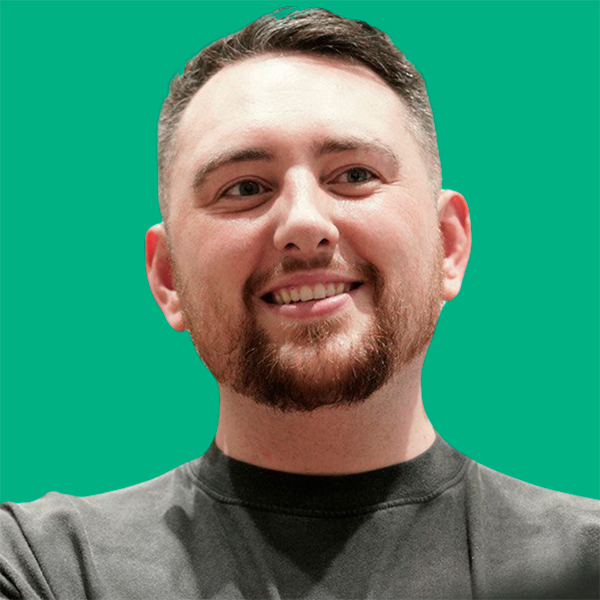
Jeremy Haynes is the founder of Megalodon Marketing. He is considered one of the top digital marketers and has the results to back it up. Jeremy has consistently demonstrated his expertise whether it be through his content advertising “propaganda” strategies that are originated by him, as well as his funnel and direct response marketing strategies. He’s trusted by the biggest names in the industries his agency works in and by over 4,000+ paid students that learn how to become better digital marketers and agency owners through his education products.
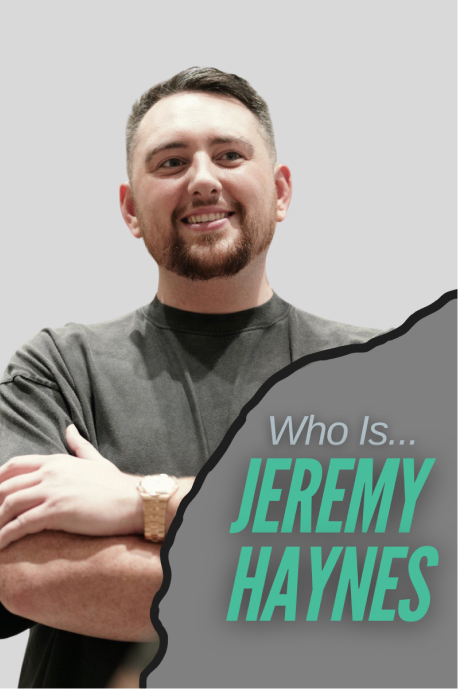
Jeremy Haynes is the founder of Megalodon Marketing. He is considered one of the top digital marketers and has the results to back it up. Jeremy has consistently demonstrated his expertise whether it be through his content advertising “propaganda” strategies that are originated by him, as well as his funnel and direct response marketing strategies. He’s trusted by the biggest names in the industries his agency works in and by over 4,000+ paid students that learn how to become better digital marketers and agency owners through his education products.

This site is not a part of the Facebook website or Facebook Inc.
This site is NOT /endorsed by Facebook in any way. FACEBOOK is a trademark of FACEBOOK, Inc.
We don’t believe in get-rich-quick programs or short cuts. We believe in hard work, adding value and serving others. And that’s what our programs and information we share are designed to help you do. As stated by law, we can not and do not make any guarantees about your own ability to get results or earn any money with our ideas, information, programs or strategies. We don’t know you and, besides, your results in life are up to you. Agreed? We’re here to help by giving you our greatest strategies to move you forward, faster. However, nothing on this page or any of our websites or emails is a promise or guarantee of future earnings. Any financial numbers referenced here, or on any of our sites or emails, are simply estimates or projections or past results, and should not be considered exact, actual or as a promise of potential earnings – all numbers are illustrative only.
Results may vary and testimonials are not claimed to represent typical results. All testimonials are real. These results are meant as a showcase of what the best, most motivated and driven clients have done and should not be taken as average or typical results.
You should perform your own due diligence and use your own best judgment prior to making any investment decision pertaining to your business. By virtue of visiting this site or interacting with any portion of this site, you agree that you’re fully responsible for the investments you make and any outcomes that may result.
Do you have questions? Please email [email protected]
Call or Text (305) 704-0094