I hope you enjoy reading this blog post. If you want my team to just do your marketing for you, click here.


I hope you enjoy reading this blog post. If you want my team to just do your marketing for you, click here.
Author: Jeremy Haynes | founder of Megalodon Marketing.
Earnings Disclaimer: You have a .1% probability of hitting million-dollar months according to the US Bureau of Labor Statistics. As stated by law, we can not and do not make any guarantees about your own ability to get results or earn any money with our ideas, information, programs, or strategies. We don’t know you, and besides, your results in life are up to you. We’re here to help by giving you our greatest strategies to move you forward, faster. However, nothing on this page or any of our websites or emails is a promise or guarantee of future earnings. Any financial numbers referenced here, or on any of our sites or emails, are simply estimates or projections or past results, and should not be considered exact, actual, or as a promise of potential earnings – all numbers are illustrative only.
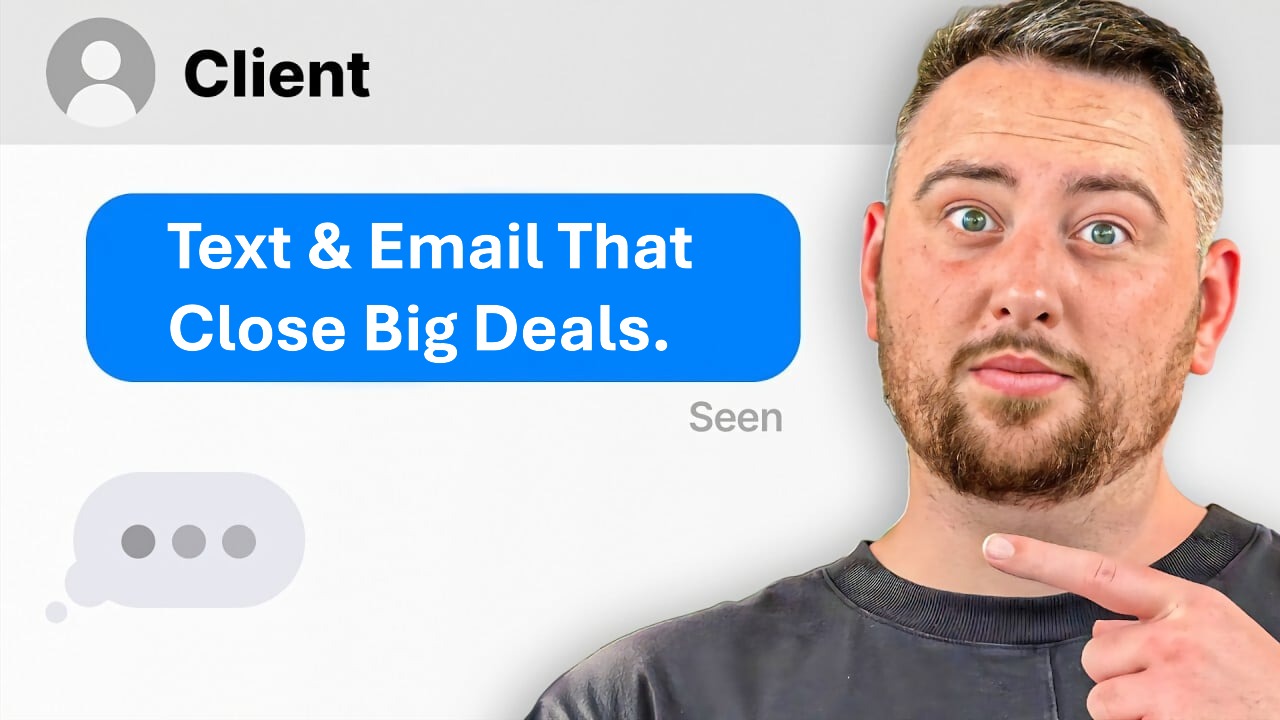
Most coaches think high-ticket sales only happen on calls, and they’re leaving thousands of dollars on the table because of it.
You get someone on a call, they’re interested but not ready to commit, you follow up once or twice via email, they ghost you, and you move on. Deal lost.
Here’s what actually happens with high-ticket buyers: they need multiple touchpoints across multiple channels before they make a decision. Marketing research shows that it takes an average of 8 touchpoints before a prospect converts, with complex B2B sales often requiring even more interactions across multiple channels. The call plants the seed, but the text and email follow-up is where you actually close the deal.
I’ve closed five-figure and six-figure deals entirely through text and email after initial sales calls. Not because I’m some master copywriter, but because I understand how to use asynchronous communication to handle objections, create urgency, and make it easy for someone to say yes when they’re ready.
The coaches who master text and email closing don’t just have higher close rates. They also close deals faster, waste less time on follow-up calls that go nowhere, and create a better buying experience for their prospects.
Let me show you exactly how to use text and email to close high-ticket deals without being pushy, desperate, or annoying.
If your business is already generating $100k+ per month, My Inner Circle is where you break through to the next level. Inside, I’ll help you identify and solve the bottlenecks holding you back so you can scale faster and with more clarity.
Before we get into the tactics, let’s talk about why text and email are actually more effective than calls for certain parts of the sales process.
When you’re on a call with someone, they’re on the spot. They feel pressure to make a decision or to give you an answer even if they’re not ready. This creates resistance and it makes people say things like “I need to think about it” when what they really mean is “I need you to stop pushing me right now.”
Text and email give people space to process information and make decisions on their own timeline. They can read your message, think about it, talk to their spouse, look at their budget, whatever they need to do without feeling pressured.
This is especially true for high-ticket buyers who are used to making big decisions carefully. They’re not impulse buyers. They want to feel in control of the process, and asynchronous communication gives them that feeling.
The other advantage is that text and email allow you to be more thoughtful and strategic with your messaging. On a call, you’re responding in real-time and you might miss opportunities to address objections or frame things correctly. In text and email, you can craft exactly the right message at exactly the right time.
Plus, text and email create a paper trail that reinforces your value and keeps you top of mind. Every message you send is another opportunity to demonstrate your expertise, share social proof, or address a concern they might have.
Let’s start with what happens immediately after a sales call, because this is where most coaches drop the ball.
You get off the call, maybe you send a generic email with a link to your payment page, and then you wait. That’s not enough.
Within five minutes of ending the call, you should be sending a text message. Studies indicate that text messages have a 98% open rate compared to email’s 20% open rate, making SMS follow-up significantly more effective for immediate post-call engagement. Not an email, a text. Something that shows up on their phone immediately while the conversation is still fresh in their mind.
The text should do three things: thank them for their time, confirm the next step, and give them an easy way to move forward. Here’s what that looks like: “Really enjoyed our conversation. Just sent over the payment link and program details to your email. Let me know if you have any questions. Excited to get you started.”
This is simple, it’s friendly, it’s not pushy. You’re just acknowledging the conversation and making it clear what happens next.
If they said they needed to think about it or check with someone, your text adjusts slightly: “Thanks for the great conversation. Take the time you need to think it through. I’ll check back in with you on Thursday like we discussed. In the meantime, if any questions come up, just text me.”
Notice you’re setting a specific follow-up time. Not “let me know when you’re ready,” which is passive and puts all the burden on them. You’re taking ownership of the follow-up and giving them a timeline.
The goal with this immediate post-call text is to maintain momentum and make yourself accessible. High-ticket buyers appreciate responsiveness and they want to feel like you’re there to support them through the decision process.
While you’re texting them right after the call, you should also be sending a detailed follow-up email within a few hours.
This email is not a sales pitch. It’s a resource that helps them make an informed decision.
Start by recapping the key points from your conversation. What did they tell you about their situation? What goals did they share? What concerns or objections came up? Summarize all of this to show that you were actually listening and that you understand their specific situation.
Then outline how your program addresses each of those specific points. Not in a generic way, but customized to what they told you on the call. If they said they’re struggling with sales consistency, explain exactly how your program solves that. If they’re worried about time commitment, address that specifically.
Include social proof that’s relevant to their situation. If they’re in e-commerce, share a testimonial from an e-commerce client. If they’re concerned about ROI, share a case study that shows specific numbers.
End the email with a clear call to action. Either a link to the payment page if they’re ready to move forward, or an invitation to book another call if they have questions, or a specific date when you’ll follow up if they need time to think.
This email serves multiple purposes. It reinforces everything you discussed on the call, it addresses objections before they become reasons not to buy, and it gives them something concrete to review and share with anyone else who’s involved in the decision.
One of the biggest challenges with text and email closing is creating urgency without coming across as desperate or manipulative.
Here’s the secret: urgency needs to be real, and it needs to be about them, not about you.
False urgency is when you say “this price is only available until Friday” but everyone knows the price is actually always available. Or when you say “I only have two spots left” but you’ve been saying that for three months. People see through this and it kills trust.
Real urgency is when there’s an actual reason they should move now instead of later. Maybe your price is genuinely going up next month. Maybe you’re closing enrollment for a cohort and the next one doesn’t start for three months. Maybe they’re losing money every week they don’t solve this problem.
The most effective urgency is tied to the cost of inaction. In your follow-up messages, you’re not saying “buy now or miss out.” You’re saying “here’s what it’s costing you every month you don’t solve this problem, and here’s why waiting makes it harder to get results.”
This could look like: “Based on what you told me about your current close rate, you’re probably leaving about twenty thousand on the table every month. If we can get you started this week, we can fix that in the next sixty days. If you wait until next quarter, that’s another sixty to eighty thousand in lost revenue. Just something to consider as you’re thinking it through.”
You’re not being pushy, you’re being helpful by quantifying what they already know is a problem. This kind of urgency actually serves the prospect because it helps them make a decision that’s in their best interest.
When someone raises an objection after the call, your instinct might be to jump on another call to handle it. Don’t.
Most objections can be handled more effectively via text or email because you have time to craft a thoughtful response and the prospect has time to process it without feeling pressured.
The key is to acknowledge the objection, validate it, and then reframe it or provide information that resolves it.
If someone texts you “I’m worried about the time commitment,” you don’t respond with a sales pitch. You respond with understanding and specifics: “Totally get it. Most of my clients are working full-time when they start. The program’s designed to be about five hours a week, and most of that is implementing in your business, not just learning. Can I send you a breakdown of what the weekly time commitment actually looks like?”
Then you follow up with an email that shows exactly what they’d be spending time on each week, testimonials from people who did it while working full-time, and maybe even a video from a current client talking about how they managed it.
You’re not arguing with the objection. You’re giving them information that helps them overcome it themselves.
If the objection is about money, you acknowledge it and then help them see the ROI: “Investment is always a consideration. Based on the revenue gap we identified on our call, if the program helps you close even two more deals in the next three months, you’ve paid for it and then some. Want me to send you a simple ROI breakdown based on your numbers?”
Then you send an actual breakdown showing their current situation, the projected outcome, and the return they can expect. Make it specific to them, not generic.
The goal is to remove obstacles without being pushy. You’re educating and equipping them to make the right decision, not manipulating them into making a quick decision.
Most coaches either follow up too aggressively or not aggressively enough. Let me give you the actual cadence that works for high-ticket sales.
Day one is the sales call. You send the immediate text and the detailed email like we talked about.
Day two or three, if you haven’t heard back, you send a text checking in. Research shows that 80% of sales require 5 follow-up calls after the initial meeting, yet 44% of salespeople give up after just one follow-up, demonstrating why consistent multi-day follow-up is critical.
Keep it casual: “Hey, wanted to make sure you got the info I sent over. Any questions coming up as you’re thinking through it?” You’re not asking for a decision, you’re offering support.
Day five or six, you send an email with additional value. This could be a relevant article, a case study you didn’t share before, a quick video addressing a concern they mentioned, anything that adds to the conversation without being salesy.
Day seven to ten, you have the follow-up conversation you scheduled on the call. This could be another call if they requested it, or it could be a text: “Wanted to circle back like we discussed. Where are you landing on everything?”
If they’re still not ready, you don’t keep hammering them every day. You space out to weekly check-ins with value-driven messages. You’re staying in touch but you’re not being annoying.
The key is persistence without pressure. You’re following up because you genuinely want to help them solve their problem, not because you’re desperate for the sale.
Here’s a tactic that works incredibly well for high-ticket closing: personalized voice notes and video messages sent via text or email.
After a sales call, instead of just sending a text, you can send a quick voice note: “Hey, just wanted to personally follow up on our conversation. Really enjoyed learning about your business. Sent you an email with all the details. If anything’s unclear, just let me know.”
This takes fifteen seconds to record and it adds a personal touch that a text alone doesn’t have. People appreciate the effort and it keeps the human connection alive.
Video messages work even better for handling objections or addressing concerns. If someone says they need to think about it, you can send a quick Loom video where you walk through their specific situation, show them how your program would apply to them, and address any concerns they raised.
This is way more powerful than a written email because they can see your face, hear your tone, and feel your genuine desire to help them. It’s not a generic sales pitch, it’s a personalized explanation created just for them.
I’ve closed deals worth fifty thousand dollars with a three-minute Loom video sent via email after a prospect went dark. Video in sales outreach has proven highly effective, with personalized video messages increasing response rates by up to 500% compared to text-only emails.
Not because the video was some magical sales tactic, but because it showed I cared enough to create something specifically for them.
Every follow-up message you send is an opportunity to reinforce credibility and build confidence through social proof.
But don’t just randomly throw testimonials at people. Be strategic about which social proof you share and when.
If someone’s concerned about ROI, send them a case study that shows specific revenue numbers. If they’re worried about the time commitment, send them a testimonial from someone who did it while working full-time. If they’re in a specific industry, send them proof from someone in that same industry.
The more relevant the social proof is to their specific situation and concerns, the more powerful it is.
You can also use current client wins as follow-up content. If someone’s thinking about joining and you have a client who just got a big win that’s relevant to the prospect’s goals, send them a message: “Just had to share this with you. One of my clients who was in a similar spot to you just hit a huge milestone. Thought you’d find it encouraging as you’re thinking through everything.”
This isn’t manipulative, it’s genuinely helpful. You’re showing them what’s possible with real-time proof.
Here’s something most coaches struggle with: knowing when to stop following up and accept that someone’s not going to buy.
The answer is that you don’t walk away based on time, you walk away based on behavior.
If someone’s engaging with your follow-up messages, asking questions, giving you legitimate reasons why they haven’t decided yet, you keep following up. They’re still in the process, they’re just taking their time.
But if someone’s completely unresponsive after multiple attempts to reach them, or if they keep giving you vague delays without any real conversation, it’s time to send a breakup email and move on.
The breakup email is simple and non-confrontational: “Hey, I know you’ve got a lot going on and I don’t want to keep bothering you. If now’s not the right time, I totally understand. I’m going to assume you’re not interested unless I hear otherwise. If things change down the road, you know where to find me. Either way, I appreciate the conversation we had.”
This accomplishes two things. It closes the loop so you can stop wasting mental energy on someone who’s not going to buy, and it actually re-engages a surprising number of people who were just procrastinating or distracted.
Sometimes the breakup email is what finally gets someone to either commit or tell you what’s really holding them back.
If you want to start closing more high-ticket deals through text and email, here’s what to do this week.
First, create templates for your post-call text, your follow-up email, and your check-in messages. Don’t copy these word-for-word every time, but have a framework so you’re not starting from scratch after every call.
Second, go back through your recent sales calls and identify anyone who expressed interest but hasn’t bought yet. Send them a personalized follow-up using the strategies I just laid out. You’d be surprised how many deals you can resurrect.
Third, practice creating voice notes and video messages. Get comfortable recording quick personalized messages because this is one of the highest-leverage ways to stand out from other coaches who are just sending generic emails.
Fourth, document the objections you hear most often and create responses or resources that address each one. Build a library of case studies, testimonials, and explainer videos that you can quickly send when specific concerns come up.
Text and email closing isn’t about tricking people into buying. It’s about making the buying process easier and more supportive so that when someone’s ready to move forward, there’s no friction.
Master this and you’ll close more deals, waste less time on calls that go nowhere, and create a better experience for the people you’re meant to serve.
What I can teach you isn’t theory. It’s the exact playbook my team has used to build multi-million-dollar businesses. With Master Internet Marketing, you get lifetime access to live cohorts, dozens of SOPs, and an 80+ question certification exam to prove you know your stuff.
That’s the move.

Jeremy Haynes is the founder of Megalodon Marketing. He is considered one of the top digital marketers and has the results to back it up. Jeremy has consistently demonstrated his expertise whether it be through his content advertising “propaganda” strategies that are originated by him, as well as his funnel and direct response marketing strategies. He’s trusted by the biggest names in the industries his agency works in and by over 4,000+ paid students that learn how to become better digital marketers and agency owners through his education products.

Jeremy Haynes is the founder of Megalodon Marketing. He is considered one of the top digital marketers and has the results to back it up. Jeremy has consistently demonstrated his expertise whether it be through his content advertising “propaganda” strategies that are originated by him, as well as his funnel and direct response marketing strategies. He’s trusted by the biggest names in the industries his agency works in and by over 4,000+ paid students that learn how to become better digital marketers and agency owners through his education products.


This site is not a part of the Facebook website or Facebook Inc.
This site is NOT /endorsed by Facebook in any way. FACEBOOK is a trademark of FACEBOOK, Inc.
We don’t believe in get-rich-quick programs or short cuts. We believe in hard work, adding value and serving others. And that’s what our programs and information we share are designed to help you do. As stated by law, we can not and do not make any guarantees about your own ability to get results or earn any money with our ideas, information, programs or strategies. We don’t know you and, besides, your results in life are up to you. Agreed? We’re here to help by giving you our greatest strategies to move you forward, faster. However, nothing on this page or any of our websites or emails is a promise or guarantee of future earnings. Any financial numbers referenced here, or on any of our sites or emails, are simply estimates or projections or past results, and should not be considered exact, actual or as a promise of potential earnings – all numbers are illustrative only.
Results may vary and testimonials are not claimed to represent typical results. All testimonials are real. These results are meant as a showcase of what the best, most motivated and driven clients have done and should not be taken as average or typical results.
You should perform your own due diligence and use your own best judgment prior to making any investment decision pertaining to your business. By virtue of visiting this site or interacting with any portion of this site, you agree that you’re fully responsible for the investments you make and any outcomes that may result.
Do you have questions? Please email [email protected]
Call or Text (305) 704-0094