I hope you enjoy reading this blog post. If you want my team to just do your marketing for you, click here.


I hope you enjoy reading this blog post. If you want my team to just do your marketing for you, click here.
Author: Jeremy Haynes | founder of Megalodon Marketing.
Earnings Disclaimer: You have a .1% probability of hitting million-dollar months according to the US Bureau of Labor Statistics. As stated by law, we cannot and do not make any guarantees about your own ability to get results or earn any money with our ideas, information, programs, or strategies. We don’t know you, and besides, your results in life are up to you. We’re here to help by giving you our greatest strategies to move you forward, faster. However, nothing on this page or any of our websites or emails is a promise or guarantee of future earnings. Any financial numbers referenced here, or on any of our sites or emails, are simply estimates, projections, or past results, and should not be considered exact, actual, or a promise of potential earnings — all numbers are illustrative only.
Look, I need to be real with you about something that’s holding back a lot of businesses right now. You’re probably sitting there grinding away on organic content, posting every single day, and wondering why your revenue isn’t where you want it to be.
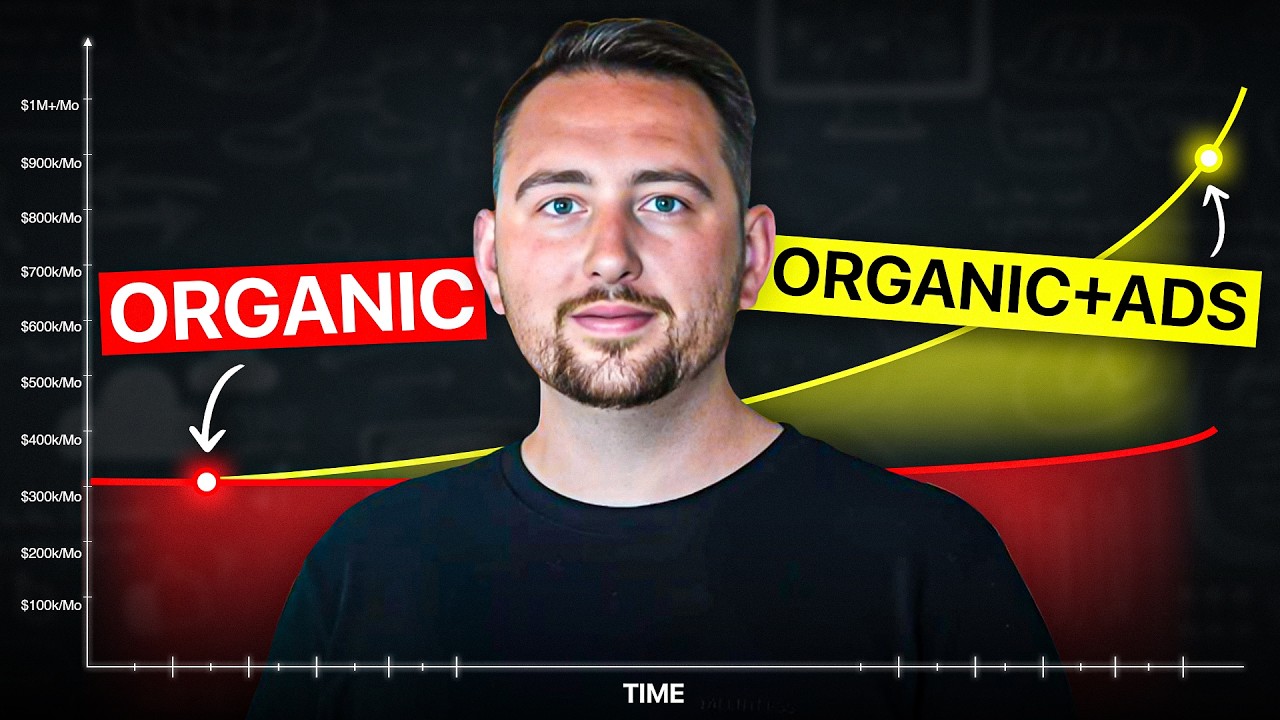
The problem isn’t that organic doesn’t work – it does. But if organic marketing is your only play, you’re building your business on a foundation that’s fragile.
I see this constantly with businesses that have good products, solid offers, and decent execution. They’re stuck in a cycle where they post, hope for engagement, and cross their fingers that someone decides to buy. That’s not a strategy. That’s a prayer.
The truth is, you need to run paid traffic if you want to build a more stable acquisition system. Not because organic is bad, but because relying on one channel is a risk. And more importantly, you’re likely leaving opportunity on the table.
If you want to learn how to build traffic systems that combine organic and paid acquisition, that’s what we cover inside Master Internet Marketing, my 7-week live comprehensive training.
Results are not typical. Your results will vary and depend entirely on your individual capacity, business experience, expertise, and level of desire. There are no guarantees concerning the level of success you may experience. The testimonials and examples used are not intended to represent or guarantee that anyone will achieve the same or similar results. We don’t believe in get-rich-quick programs. We believe in hard work, adding value, and serving others. As stated by law, we cannot and do not make any guarantees about your own ability to get results or earn any money with our information, courses, programs, or strategies.
Here’s what happens when you only do organic. You wake up, you create content, you post it, and then you wait. You’re at the mercy of the algorithm. You’re hoping people see it. You’re hoping they engage. You’re hoping they eventually buy.
That’s a lot of hoping.
And the worst part? Your visibility is completely tied to your output. You stop posting, your reach drops. You take a week off, your visibility dips. You get shadowbanned or the algorithm changes, and suddenly you’re scrambling.
According to Sprout Social’s research on social media algorithms, platform algorithms change frequently and without warning, which creates inherent unpredictability for businesses relying solely on organic reach.
In my experience, businesses that feel tied to constant content creation often describe it like being on a hamster wheel. They can’t take their foot off the gas without visibility falling apart. That’s not freedom. That’s a trap.
Organic is great for building authority, nurturing relationships, and staying top of mind. But it’s not a reliable acquisition system on its own. It’s inconsistent, unpredictable, and it doesn’t scale linearly.
When you add paid traffic into the mix, the dynamic shifts. You’re not waiting for the algorithm to bless you. You’re buying attention. You’re controlling your visibility. You’re deciding how many people see your offer every single day.
The biggest advantage of paid traffic is control. You decide your budget, your audience, and your message. You’re not hoping the right people find you. You’re putting yourself directly in front of them.
This is how you get predictability in your business. You know that if you spend a certain amount, you can expect a certain number of leads based on your testing data. If you dial in your conversion process, you can start to understand what those leads are worth to your business. That’s when you can actually forecast and plan.
In my experience working with businesses who made this shift, they went from feeling like they were constantly hustling just to stay afloat to having a system that consistently brings in leads. They could take time off without their pipeline disappearing. They could hire people because they had visibility into what was coming in.
That’s what control does for you.
And here’s the thing: paid traffic forces you to get better at everything else. Your messaging has to be tight. Your offer has to be clear. Your conversion process has to work. You can’t hide behind organic engagement metrics when you’re spending real money on ads.
Let me ask you something. What happens if Instagram changes its algorithm tomorrow and your reach drops significantly? What if TikTok gets restricted? What if the platform you’ve built your entire business on decides they don’t like your content anymore?
Your visibility disappears. That’s it. You’re starting over.
I’ve seen this happen. Businesses that were doing well on one platform, completely dependent on organic reach, then had the platform change the rules. Suddenly they were trying to figure out how to get visibility again from scratch.
HubSpot’s research on marketing channel diversification shows that businesses with multiple traffic sources have more stable lead generation than those dependent on a single channel.
That’s the risk of putting all your eggs in one basket. And it’s a risk you don’t have to take.
When you diversify your traffic sources, you’re protecting yourself. You have organic building your brand and keeping you visible. You have paid traffic driving consistent leads. You have email keeping your audience engaged. You have multiple ways to reach people and multiple ways to generate revenue.
That’s a real business. That’s sustainability.
A lot of people are scared of paid traffic because they think it’s expensive or complicated. And yeah, if you don’t know what you’re doing, you can burn through money fast. But that’s true of anything in business.
The key is to start small and test. You don’t need to drop a huge budget on ads right out of the gate. You can start with a modest amount, test your messaging, see what resonates, and scale from there.
In my experience, the businesses that succeed with paid traffic are the ones that treat it like a system. They’re tracking their numbers. They know their cost per lead. They know their conversion rates. They’re constantly testing and optimizing.
It’s not about throwing money at ads and hoping for the best. It’s about building a repeatable process.
And here’s what most people don’t realize: paid traffic actually makes your organic better. When you’re running ads, you’re getting data on what messages work, what audiences respond, and what offers convert. You can take all of that and apply it to your organic content.
Your organic becomes more strategic because you know what actually moves the needle. You’re not just posting random stuff and hoping it works. You’re posting content informed by real data from your paid campaigns.
WordStream’s guide to paid and organic integration outlines how the data from paid campaigns can inform organic content strategy.
The goal isn’t to choose between organic and paid. The goal is to build a system where both are working together.
Your organic content builds trust and authority. It keeps you top of mind with your audience and gives people a reason to follow you and engage with your brand. That’s the long game.
Your paid traffic drives immediate visibility. It brings in new leads consistently and gives you control over your acquisition. That’s the short game.
When you combine them, you’ve got a machine that’s constantly bringing in new people while nurturing the ones who already know you. You’re not dependent on any single channel. You’re not at the mercy of the algorithm. You’re running a real business with a more predictable pipeline.
This is the approach I’ve seen work for businesses looking to build more sustainable acquisition systems. They’re not relying on hope. They’re relying on processes.
Here’s what this looks like in practice:
Run paid ads that drive people to a lead magnet or a low-ticket offer — that’s your front door.
Once they’re in, use an email sequence to nurture them, build trust, and position your core offer.
Stay visible through organic content on social media, providing consistent value and reinforcing your authority.
When someone’s ready to buy, they’re not just seeing you in one place. They saw your ad. They’re on your email list. They follow you on social. They’ve consumed your content. You’re omnipresent.
That’s when conversion rates tend to improve. People don’t buy from strangers. They buy from people they know, trust, and see consistently. Combining organic and paid creates that presence faster than relying on a single channel.
Here’s what I want you to understand. Every day you wait to implement paid traffic is a day you’re building on a single foundation. Every month you rely solely on organic is a month you’re dependent on platform decisions you can’t control.
I’m not saying you need to go all in on ads tomorrow. But you need to start thinking about how to diversify your traffic sources. You need to start testing. You need to start building systems that give you control.
The businesses that adapt are the ones that move fast and execute. They don’t wait for perfect. They don’t sit around hoping the algorithm will save them. They take control of their acquisition, build systems, and iterate.
If you’ve already proven you have an offer that works, if you’ve proven people want what you’re selling, now it’s time to put fuel on the fire. It’s time to stop relying on hope and start relying on systems.
Stop waiting for the algorithm to save you. Stop hoping your next post goes viral. Start building systems that actually work.
Because at the end of the day, hope is not a strategy. Systems are.
If you’re serious about building a real acquisition system that combines organic and paid, that’s exactly what we work on inside my Inner Circle, my flagship program. We’re building out the entire infrastructure, from offer positioning to traffic systems to conversion optimization.
Results are not typical. Your results will vary and depend entirely on your individual capacity, business experience, expertise, and level of desire. There are no guarantees concerning the level of success you may experience. The testimonials and examples used are not intended to represent or guarantee that anyone will achieve the same or similar results. We don’t believe in get-rich-quick programs. We believe in hard work, adding value, and serving others. As stated by law, we cannot and do not make any guarantees about your own ability to get results or earn any money with our information, courses, programs, or strategies.
This isn’t for beginners. This is for established operators who are ready to build better acquisition infrastructure — people who understand that real growth requires real systems.
We’re not talking about hacks or shortcuts. We’re talking about building a business that’s predictable and sustainable — one that doesn’t fall apart when the algorithm changes or when you take a week off.
Watch the video:

Jeremy Haynes is the founder of Megalodon Marketing. He is considered one of the top digital marketers and has the results to back it up. Jeremy has consistently demonstrated his expertise whether it be through his content advertising “propaganda” strategies that are originated by him, as well as his funnel and direct response marketing strategies. He’s trusted by the biggest names in the industries his agency works in and by over 4,000+ paid students that learn how to become better digital marketers and agency owners through his education products.
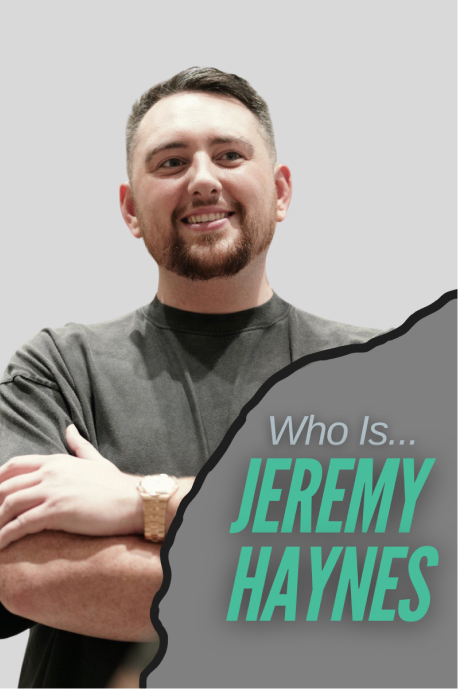
Jeremy Haynes is the founder of Megalodon Marketing. He is considered one of the top digital marketers and has the results to back it up. Jeremy has consistently demonstrated his expertise whether it be through his content advertising “propaganda” strategies that are originated by him, as well as his funnel and direct response marketing strategies. He’s trusted by the biggest names in the industries his agency works in and by over 4,000+ paid students that learn how to become better digital marketers and agency owners through his education products.

This site is not a part of the Facebook website or Facebook Inc.
This site is NOT /endorsed by Facebook in any way. FACEBOOK is a trademark of FACEBOOK, Inc.
We don’t believe in get-rich-quick programs or short cuts. We believe in hard work, adding value and serving others. And that’s what our programs and information we share are designed to help you do. As stated by law, we can not and do not make any guarantees about your own ability to get results or earn any money with our ideas, information, programs or strategies. We don’t know you and, besides, your results in life are up to you. Agreed? We’re here to help by giving you our greatest strategies to move you forward, faster. However, nothing on this page or any of our websites or emails is a promise or guarantee of future earnings. Any financial numbers referenced here, or on any of our sites or emails, are simply estimates or projections or past results, and should not be considered exact, actual or as a promise of potential earnings – all numbers are illustrative only.
Results may vary and testimonials are not claimed to represent typical results. All testimonials are real. These results are meant as a showcase of what the best, most motivated and driven clients have done and should not be taken as average or typical results.
You should perform your own due diligence and use your own best judgment prior to making any investment decision pertaining to your business. By virtue of visiting this site or interacting with any portion of this site, you agree that you’re fully responsible for the investments you make and any outcomes that may result.
Do you have questions? Please email [email protected]
Call or Text (305) 704-0094