
How to Scale a Trading Education Webinar Funnel With Meta Ads

I hope you enjoy reading this blog post. If you want my team to just do your marketing for you, click here.
Author: Jeremy Haynes | Published October 9, 2026
Earnings Disclaimer: You have a .1% probability of hitting million-dollar months according to the US Bureau of Labor Statistics. As stated by law, we cannot and do not make any guarantees about your own ability to get results or earn any money with our ideas, information, programs, or strategies. We don’t know you, and your results in life are up to you. We’re here to help by giving you our greatest strategies to move you forward, faster. However, nothing on this page or any of our websites or emails is a promise or guarantee of future earnings. Any financial numbers referenced here, or on any of our sites or emails, are simply estimates or projections or past results, and should not be considered exact, actual, or as a promise of potential earnings – all numbers are illustrative only.
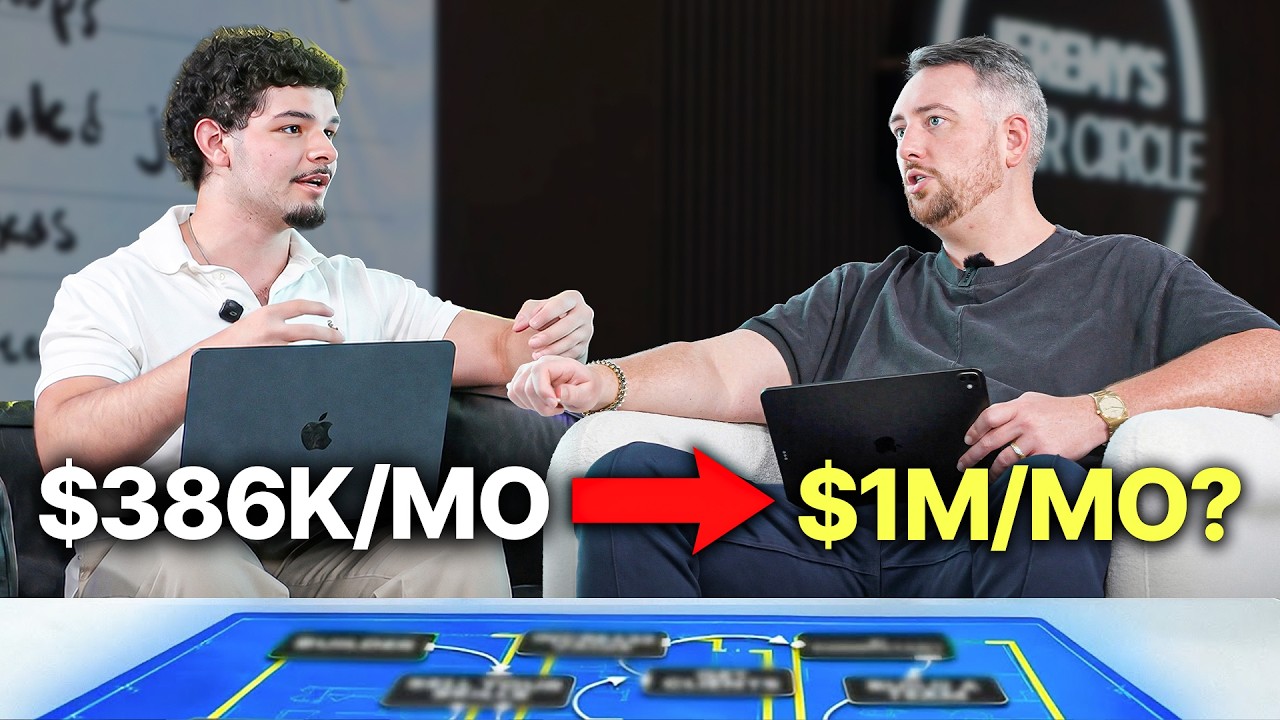
Scaling a trading education webinar funnel takes more than increasing the Meta ad budget. In this business breakdown, the operators already had a live webinar generating sales. The important decisions were how much additional demand the funnel could handle, which numbers they could trust, and when the sales team needed more capacity.
They had a webinar people were buying from. I wanted them to know how much more they could spend, how many calls that might create, and whether their closers could take those calls. We also looked at missed appointments, the ads getting most of the spend, and what customers might need after the initial program.
I’m looking at how they sell their trading education offer. That tells us nothing about what a student might earn from trading.
You can check out my Master Internet Marketing, my 7-week live comprehensive training if you are considering further support for your own business.
Results are not typical. Your results will vary and depend entirely on your individual capacity, business experience, expertise, and level of desire. There are no guarantees concerning the level of success you may experience. The testimonials and examples used are not intended to represent or guarantee that anyone will achieve the same or similar results. We don’t believe in get-rich-quick programs. We believe in hard work, adding value and serving others. As stated by law, we can not and do not make any guarantees about your own ability to get results or earn any money with our information, courses, programs, or strategies.
7 weeks. Real frameworks. Covering copywriting, funnels, paid ads, and conversion systems.
The Webinar Was Already Doing the Selling Work
They already had a webinar bringing in buyers. Before building another funnel, they needed to understand how much more demand this one could handle.
The operators described an education offer delivered through a fixed-term program, with an entry option and a higher-access offer. They said the webinar funnel was responsible for their revenue at the time of the discussion. Cold Meta traffic brought people to a recurring live event, and sales calls followed the presentation.
That’s why I told them to keep their focus there. People were already buying through this funnel. Your business might need a different approach, but these operators had something working that they had not finished scaling.
The existing process still had open questions. The operators were unsure about some of the blended booking numbers, and the sales team had available appointments. Launching another funnel would have added another set of numbers before they had a firm grip on the first.
If you need the broader explanation of the mechanism, my webinar funnel article covers that. This breakdown is about the next decisions for an operator whose webinar is already producing business.
Keep the distinction clear. Getting a funnel to produce an initial result and deciding how much more demand it can support are different problems. Advice that makes sense at one stage can distract you at another.
Audience Fit Mattered More Than the Faith Label
The faith-based positioning mattered because it influenced who the operators wanted to attract and how that audience behaved.
The business combined futures-trading education with Christian values. The operators described wanting people who connected with that combination, and they used organic content to communicate the values behind the offer. That gives the positioning a practical role beyond a headline.
They had also changed the language in their ads after encountering poor-fit leads. They kept an informal video style but made the intended audience clearer. The useful lesson is to look at who responds to your message and whether those people belong in the offer.
Getting more specific can help the right person recognize themselves in the ad. It can also narrow the audience. You still have to find out whether enough of those people want the offer as you increase spend.
That audience mattered when we talked about appointments, too. The operators said church commitments affected Sunday availability. That gives them a reason to review those time slots. Your audience may have a completely different schedule.
The audience’s values mattered to how the operators presented the offer and scheduled the sales process. They still needed to answer the larger scaling question. How much more demand could the current webinar and sales team handle?
Define Every Funnel Rate Before You Compare It
A percentage becomes useful when everyone knows which people it includes and which event or period it describes.
During the conversation, we worked through registration, attendance, retention, booking, call attendance, and closing. Some figures changed as we clarified the metric. That is an important part of the breakdown, because a plausible-looking number can still answer the wrong question.
For example, the operators described retention by comparing the peak live audience with the people remaining at the pitch. That is webinar attendance behavior. It does not describe how many paying members renewed or stayed in the program.
The booking discussion also involved different groups. People booking directly from the webinar were separate from people reached through outbound follow-up. A strong direct booking rate cannot stand in for the combined rate if the follow-up team is creating additional appointments.
Closing needed the same care. If you only count qualified people who heard the pitch, you’ll get a different close rate from counting everyone who showed up. Some of the counts and percentages they mentioned did not line up. Before using those numbers to plan the next increase, they needed to check the records.
For the event side, Zoom’s webinar reports show registrations, when attendees joined and left, and performance information. Go back to the event records when you need to check who attended and how long they stayed.
The basic standard is simple. A rate needs a defined group, a defined period, and records that support the calculation. Without those, increasing spend makes the uncertainty larger.
The Math on Screen Was a Scenario to Check
When I work backward from a return figure, I’m checking what would have to happen for that figure to make sense.
Here, I used their reported return and average collected sale to estimate how many bookings the funnel would need. That gave us a number to investigate. We still needed to compare it with the appointments actually in their calendar.
That distinction matters when you decide how much to spend next. If a booking level would explain the return, check whether that many appointments actually happened. Agreement that a number sounds plausible is not the same as checking the underlying records.
There was also a difference between the current month’s pace and a completed month’s collections. A projection can help with planning, but it should not become a claim that the final result already happened.
Keep the same discipline inside your business. A sales report, an ad platform report, and a forecast can serve different purposes. Google Analytics’ guidance on traffic-source scopes illustrates why reports can assign sources differently depending on the question being answered. Do not combine unlike reports as though they share one definition.
My Webinar Calculator can help you explore assumptions across the funnel. Treat its output as an estimate based on the inputs, not a promise about what the campaign will produce. An accurate calculation can still rest on an assumption that needs checking.
Missing Appointments Deserved a Closer Look
The gap between booked calls and attended calls was a concrete place to investigate before assuming the ads were the problem.
The operators reported that some of the people who booked did not show up. That creates a different issue from people refusing to book in the first place. They had shown enough interest to take the next step, but something happened before the appointment.
I asked about email delivery, what people find when they look up the business, and the days available on the calendar. We hadn’t established which of those was causing the missed calls. They were places to look before blaming the leads.
When you investigate a no-show problem, avoid settling on whichever explanation feels easiest. A lead may have lost interest, misunderstood the call, missed the message, or chosen an inconvenient appointment. Those possibilities call for different responses.
Google Postmaster Tools provides information about outgoing mail to personal Gmail accounts, including reputation, authentication, and delivery errors. It has volume and reporting limitations. It can support a delivery investigation without certifying that every reminder reached a prospect’s inbox.
For the content side of the follow-up, my discussion of value-dense emails explains why the communication before the appointment deserves attention. Useful information and delivery are separate concerns. A thoughtful message cannot help someone who never receives it.
A Lower Return Does Not Settle the Spending Decision
A decline in the return percentage is a reason to examine the economics, not a complete instruction to increase or decrease spend.
In the video, I explain how additional spend can reach people who are less likely to convert than the first concentrated group. The same message can perform differently as distribution expands. That is one possible explanation for changing efficiency, rather than proof that the funnel has stopped working.
The operators were focused on preserving a high return. I pushed them to consider the amount of business produced at different spending levels. A high percentage attached to limited volume can be less useful to the growth goal than a lower percentage attached to a larger, economically sound operation.
But that comparison needs more than ad revenue. You have to account for the costs of selling and delivering, collection timing, and the risk of the next increase. A reported return on ad spend is not the same as profit available to the owner.
You also can’t assume the return will stop falling at a number you like. If the next increase costs more than the business can justify, or creates demand you can’t serve, you need to address that before pushing further.
The useful decision is whether the additional demand remains worth acquiring and serving. Protecting a screenshot with a high ratio is not enough. Neither is treating a lower ratio as permission to spend without further checks.
Creative Ceilings and Ad Fatigue Need Different Responses
An ad deteriorating at its existing spend and a message struggling with additional spend can point to different issues.
We discussed both in the breakdown. If performance worsens while the conditions remain broadly similar, the business should examine what changed. If performance becomes less efficient as spending expands, one possibility is that the current message has limited room with its most responsive audience.
The operators had several creatives available, but only some received substantial distribution. Having more ads in the account did not mean they had several equally proven messages ready to absorb more budget.
I encouraged them to understand the messages that were working and keep developing useful alternatives. At the same time, I challenged the idea of staying in testing mode indefinitely when there was already a working acquisition process. More testing needs a purpose beyond keeping the team busy.
Know what you’re trying to learn from the next creative. Pay attention to what changes when you increase spend. If you treat every decline as ad fatigue, you can keep replacing ads without addressing the actual problem.
The number of creatives alone does not establish readiness to scale. You need evidence about their contribution, the prospects they attract, and how much demand the rest of the business can handle.
Match Ad Demand to the Sales Team’s Real Capacity
The scaling plan needs to connect expected bookings with appointments the sales team can actually take.
When I asked about capacity, the operators described available call slots and a plan to add closers. But some of the numbers were still estimates rather than a plan they could explain precisely in the room. That is a risk when spending decisions can change demand faster than hiring can add capacity.
An open calendar today does not establish how much room will remain after the next promotion. Nor does hiring a person establish that they can immediately take suitable calls at the standard you need. Recruiting, onboarding, and readiness all affect usable capacity.
The operators said they had been able to recruit quickly through their network. I questioned whether that speed would hold as they needed more people. An early hiring experience can be real without becoming a permanent assumption for every future round.
They also preferred bringing people on in small groups to maintain quality. The useful challenge was to connect that preference with expected demand. If the chosen pace of hiring cannot support the growth plan, something has to change. That does not justify abandoning screening or training.
Use the broader sales team scaling discussion for more context. In this case, the important connection was between the weekly webinar, the calls it could create, and the team available to handle them.
Recurring Revenue Needed an Ongoing Reason to Stay
The business had an opportunity to consider what customers might need after the initial program, rather than treating the first purchase as the end of the relationship.
We discussed the difference between a fixed-term purchase, installment payments, and a continuing offer. A customer paying an existing obligation over time does not automatically mean the business has a recurring service that customers choose to renew.
The operators needed to think about what additional support could genuinely justify a continuing relationship. That includes what happens during the initial program and what remains useful afterward. The price alone cannot answer that question.
I also questioned the role of the higher-access offer relative to the main offer. An option can influence the initial buying decision, or it can provide a materially different level of ongoing value. Be clear about which role it serves before deciding how to present it.
They still had to build and deliver that ongoing offer. Talking about recurring revenue doesn’t tell you whether people will stay. You learn that from customers choosing to renew because the next period is worth paying for.
Already making money? See what it takes to make a lot more.
Keep the Working Funnel and Tighten the Decisions
The main recommendation was to support the existing webinar with clearer measurement, purposeful creative work, and sales capacity that matched the intended demand.
The business did not need a new funnel simply because more growth was the goal. It needed to know which figures described observed activity, which were rough estimates, and which were scenarios being explored. Then the operators could make more informed decisions about spending, appointments, hiring, and ongoing customer value.
By the end of the conversation, they knew what they needed to go home and work on. We hadn’t seen what happened after those changes. Take the questions back to your own business and answer them with your own numbers before deciding how much to spend.
If you are considering further support, you can review my Inner Circle and evaluate whether it fits your situation.
Results are not typical. Your results will vary and depend entirely on your individual capacity, business experience, expertise, and level of desire. There are no guarantees concerning the level of success you may experience. The testimonials and examples used are not intended to represent or guarantee that anyone will achieve the same or similar results. We don’t believe in get-rich-quick programs. We believe in hard work, adding value and serving others. As stated by law, we can not and do not make any guarantees about your own ability to get results or earn any money with our information, courses, programs, or strategies.
Get my content first on Google
Add jeremyhaynes.com as a preferred source and Google shows my articles more prominently in your search results, including AI Overviews and AI Mode.


Jeremy Haynes
Owner and CEO of Megalodon Marketing
Jeremy Haynes is the founder of Megalodon Marketing. He is considered one of the top digital marketers and has the results to back it up.