I hope you enjoy reading this blog post. If you want my team to just do your marketing for you, click here.


I hope you enjoy reading this blog post. If you want my team to just do your marketing for you, click here.
Author: Jeremy Haynes | founder of Megalodon Marketing.
Earnings Disclaimer: You have a .1% probability of hitting million-dollar months according to the US Bureau of Labor Statistics. As stated by law, we can not and do not make any guarantees about your own ability to get results or earn any money with our ideas, information, programs, or strategies. We don’t know you, and besides, your results in life are up to you. We’re here to help by giving you our greatest strategies to move you forward, faster. However, nothing on this page or any of our websites or emails is a promise or guarantee of future earnings. Any financial numbers referenced here, or on any of our sites or emails, are simply estimates or projections or past results, and should not be considered exact, actual, or as a promise of potential earnings – all numbers are illustrative only.
More clients. More deliverables. More team stress. Same thin margins at month-end that make you wonder why you’re doing all this work.
I’ve rebuilt this model multiple times. Here’s the truth nobody wants to hear: traditional agency operations don’t hold up without breaking something. Usually it’s you.
The path forward isn’t adding clients to your roster. It’s rethinking your entire service delivery model, who you’re willing to work with, and what operational focus actually looks like day to day.
This isn’t about motivation. It’s about operational design.
If your agency has outgrown its current systems, my Inner Circle is the flagship program where we work through those bottlenecks together. Inside, the focus is on identifying what’s holding your operation back and mapping a path forward with more clarity.
Results are not typical. Your results will vary and depend entirely on your individual capacity, business experience, expertise, and level of desire. There are no guarantees concerning the level of success you may experience. The testimonials and examples used are not intended to represent or guarantee that anyone will achieve the same or similar results. We don’t believe in get-rich-quick programs. We believe in hard work, adding value and serving others. As stated by law, we can not and do not make any guarantees about your own ability to get results or earn any money with our information, courses, programs, or strategies.
Let’s talk about the cycle you’re probably stuck in.
You sign a client. Celebrate briefly. Then immediately start drowning in execution. Your team scrambles through deliverables, revisions, status updates, and endless Slack messages asking what the client “really wants.”
The logic seems obvious: more clients means more revenue. But here’s the operational reality. Every client adds complexity to your systems that compounds fast.
Each account needs onboarding flows, communication cadences, custom reporting dashboards, strategy adjustments, and revision cycles. Your team grows to handle volume. Overhead grows with it. You’re running faster to stay flat.
Meanwhile your deliverables are becoming commoditized. Content creation, social posting, basic campaign management. Clients see these as interchangeable. Which means they shop on price.
This creates the hamster wheel. You need more clients to hit revenue targets. You hire more people to service those clients. You need even more clients to cover payroll. The wheel spins faster. In my experience, the agencies that broke this cycle figured something out. Volume isn’t the answer. Operational focus is.
Here’s the shift: build systems that multiply impact without multiplying headcount.
This isn’t repositioning. This isn’t just raising rates. It’s redesigning what you deliver and how you deliver it at the operational level.
Think operationally for a second. Would you rather manage twenty accounts with constant communication and scope creep, or five accounts where you go deep on execution and systems? Completely different operational load.
Fewer clients means you can actually understand their business. Identify where the real friction is. Build systems that matter. Your team isn’t spread across dozens of fire drills. They’re focused on making a small roster successful through repeatable processes.
But making this shift requires specific operational upgrades. No theory here. Just execution frameworks.
First operational upgrade: automate everything that doesn’t require strategic thinking.
I’m not talking about setting up a few Zapier workflows and calling it done. I’m talking about designing your entire service model around automation-first principles.
Start by auditing every recurring task your team executes. Campaign setup. Targeting adjustments. Performance monitoring. Client reporting. Lead segmentation. Email workflows. These are all automation candidates.
The goal isn’t eliminating oversight. It’s eliminating manual execution of repetitive processes. A 2025 Agency AdOps Benchmark Report found that agencies are now targeting nearly double their client portfolios per strategist without expanding teams — and the ones pulling it off are doing it through operational automation, not hiring. (Source: PPC Land / Fluency)
Most agencies use platforms like HubSpot and Google Ads manually when they could be building workflows that run on their own. They’re paying for automation capabilities they never deploy.
Here’s how we approach it. Instead of having team members pull performance data and build reports weekly, design automated dashboards that update in real-time. Clients get visibility. Your team gets hours back for strategy work.
Same principle for campaign management. Set up rule-based automation that adjusts bids and budgets within parameters you define. You’re still providing oversight. You’re not doing mechanical work.
This serves two purposes. First, it reduces cost per client because tasks that used to require team hours now run automatically. Second, it reduces errors because automated processes execute the same steps every time.
But here’s where most agencies break automation. They try to automate existing messy processes. That doesn’t work.
You need to redesign workflows from scratch with automation in mind. Clean, logical processes that execute without constant human intervention. In my experience, the agencies that do automation well aren’t just implementing tools. They’re thinking systematically about how work flows through their operation and designing processes around that.
Second upgrade: shift what you deliver to clients.
Traditional agency services focused heavily on traffic and visibility through search rankings and social reach. That approach is becoming less effective as AI reshapes information discovery.
When someone asks ChatGPT a question, they often get answers without clicking through to websites. Your clients lose visibility even when their content ranks. According to research from Bain & Company, the majority of consumers now rely on zero-click results for a significant portion of their searches, which has reduced organic web traffic considerably across industries. (Source: Bain & Company)
This means agencies need to think beyond traffic metrics. In my experience, what matters now is what I call zero-visit visibility — getting your clients mentioned and cited by AI systems even when users never visit their site.
How does this work in practice? Create content structured for machine-readability and authority. AI systems pull from sources they consider credible and well-organized. Your content needs clear structure, proper schema markup, and authoritative positioning in your client’s niche.
But content strategy goes beyond articles. The process here involves building multi-format content systems. Video, images, written content, audio. Brand visibility across different discovery channels.
People find information differently now. Some search Google. Others use voice assistants. Some browse social. Others use visual search for products and places. Your clients need presence across channels, not just traditional search.
This is where visual and voice optimization becomes part of the framework. For retail, tourism, and real estate especially, visual search and AR experiences are driving discovery. Your clients need imagery optimized for visual search, structured data voice assistants can parse, and content formatted for AI citation.
The shift: you’re not just creating content to rank. You’re building content systems that maintain visibility regardless of how people search or which AI processes queries.
This requires different capabilities than traditional SEO. Schema markup, multi-format production, understanding how different AI systems evaluate and cite sources. This level of service delivery is more complex, which means it’s harder to commoditize. That gives you positioning room.
Third upgrade: client selection.
How we approach this is simple in concept, harder in practice. You need to become dramatically more selective about who you work with.
Old model was taking every client you could sign and figuring out service delivery later. New model is identifying clients who have budget, sophistication, and growth trajectory to justify your systems. Decline everyone else.
This feels risky when you’re used to saying yes to everything. But here’s what happens operationally. You work with clients who value expertise. Less price resistance. Fewer scope battles. Longer retention.
In my experience, agencies that focus on niche audiences deliver more differentiated value. Instead of being a generalist doing “digital marketing” for anyone, you become the go-to operation for a specific vertical or problem.
Maybe you focus on e-commerce brands in a specific stage of growth. Maybe B2B SaaS companies navigating product-led growth. Maybe you own local market for high-end real estate marketing.
The niche doesn’t matter as much as the focus. When you specialize, you understand unique challenges in that space. You’re not learning on the client’s dime. You’re applying proven frameworks.
This also simplifies your marketing. Instead of appealing to everyone, you speak directly to a specific audience with specific problems you know how to solve.
But client selection goes beyond choosing a niche. Evaluate potential clients on operational fit, not just revenue potential. Some clients are high-maintenance regardless of what you charge. Others trust your expertise and give you room to execute.
What this looks like in practice is building a roster of clients who are operationally compatible and aligned with how you work. Long-term partnerships, not transactional engagements. Structure twelve-month engagements with clear milestones instead of month-to-month retainers for deliverables.
Fourth upgrade: data systems.
The framework here covers helping clients build first-party and zero-party data collection systems. This isn’t just compliance work. It’s creating infrastructure for personalized experiences.
First-party data is information your clients collect directly from customers. Website behavior, purchase history, email engagement. Zero-party data is information customers intentionally share — preferences, interests, intentions.
Both are valuable for personalization. Both are compliant with privacy regulations when collected with proper consent. As Research World notes, the decline of third-party cookies and the rise of LLMs are making first-party data collection a foundational part of how businesses engage with and understand their customers. (Source: Research World)
Here’s why this matters operationally: data strategy and implementation is complex work that most businesses don’t know how to execute. This is a differentiated service offering.
Practically, this means helping clients implement consent management, build preference centers where customers share interests, structure data collection across touchpoints, and use that data to create personalized experiences.
What this looks like in practice is building infrastructure that creates stronger targeting and segmentation capabilities for your clients. Not just collecting data — organizing it into something usable.
This also creates operational stickiness. Once you’ve built a client’s data infrastructure and personalization systems, switching agencies becomes complicated. You’re embedded in their operations, not just executing campaigns.
Fifth upgrade: metrics.
If you’re measuring success by billable hours, you’re stuck in the old model.
The process here is measuring profitability per client. Not just revenue per client. These are different numbers.
A client might generate higher monthly revenue but require twice as much team time, constant revisions, and emergency requests. They’re less profitable than a lower-revenue client who trusts your expertise and gives you space to execute.
Track the actual cost to service each client. Team time, tool costs, overhead allocation. Compare that to revenue generated. This profitability metric tells you which relationships are building your agency and which are draining resources.
How we approach this is straightforward. Optimize your roster toward higher profitability, not just higher revenue. This might mean restructuring service delivery to reduce costs. Or in some cases, letting unprofitable clients go.
Beyond profitability metrics, measure outcomes that matter to clients. Traffic and impressions are vanity metrics. What matters is qualified leads, conversion rates, customer acquisition costs, lifetime value.
When you can demonstrate clear impact on business metrics, pricing conversations change. You sell outcomes instead of deliverables. Not “we’ll create X blog posts” but “we’ll build a content system designed around qualified lead generation.”
This positions you as a strategic partner rather than a vendor. Different relationship entirely.
Here’s the tactical question: how do you execute this transition if you’re currently running a traditional model?
You don’t flip everything overnight. This is gradual evolution with intentional steps.
Start by auditing your current client roster. Identify which clients are actually profitable, which align with where you want to go, and which hold you back. You don’t fire everyone immediately. You need clarity on direction first.
Next, choose your focus area. What niche or specialization makes sense based on existing expertise and market opportunity? This doesn’t have to be perfect. You can refine over time. But you need a direction.
Then build your automation foundation with existing clients. Identify the most time-consuming recurring tasks and systematically automate them. This creates capacity without new hires.
As you automate and create capacity, start evolving service delivery. Add higher-value services like AI visibility optimization, multi-format content systems, or data infrastructure work. Test these with current clients before packaging them for new business.
For new business, position yourself in your chosen niche. Package services around outcomes rather than deliverables. Structure pricing based on the value of the engagement, not hours worked.
Over time, the roster naturally shifts. Some existing clients won’t fit your new focus. That’s fine. As they churn, replace them with better-fit clients in your niche.
The traditional agency model runs on volume. More clients, more deliverables, more team members. It keeps you busy but rarely makes you operationally efficient.
The framework we use runs on focus. Fewer clients, higher-impact services, systematic delivery. It requires real operational changes: automation systems that multiply team impact, service offerings that address how visibility actually works now, discipline to be selective about clients, and confidence to price accordingly.
In my experience, running an agency with fewer, better-aligned clients who value expertise is a fundamentally different operation than grinding through endless deliverables for a bloated roster.
Start with one thing. Automate one major process. Add one higher-value service. Have one conversation about restructuring an engagement. Each step moves you toward a more focused operation.
Most business owners spend years figuring out what actually works through trial and error. My 7-week live comprehensive training compresses that learning curve, covering copywriting, funnels, ads, and more. If you’re ready to invest the time and effort, apply here.
Results are not typical. Your results will vary and depend entirely on your individual capacity, business experience, expertise, and level of desire. There are no guarantees concerning the level of success you may experience. The testimonials and examples used are not intended to represent or guarantee that anyone will achieve the same or similar results. We don’t believe in get-rich-quick programs. We believe in hard work, adding value and serving others. As stated by law, we can not and do not make any guarantees about your own ability to get results or earn any money with our information, courses, programs, or strategies.

Jeremy Haynes is the founder of Megalodon Marketing. He is considered one of the top digital marketers and has the results to back it up. Jeremy has consistently demonstrated his expertise whether it be through his content advertising “propaganda” strategies that are originated by him, as well as his funnel and direct response marketing strategies. He’s trusted by the biggest names in the industries his agency works in and by over 4,000+ paid students that learn how to become better digital marketers and agency owners through his education products.
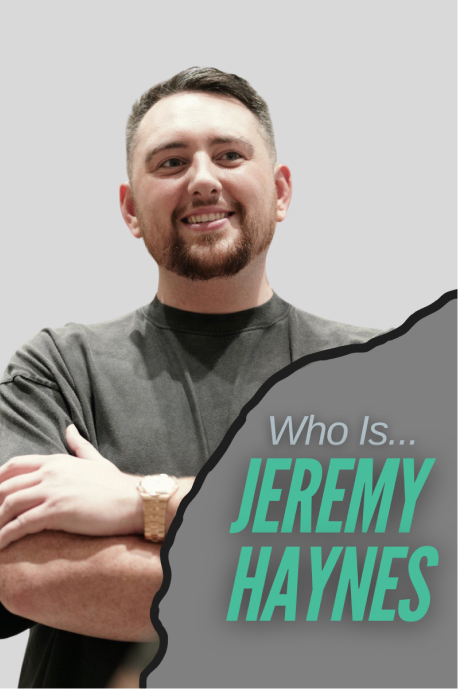
Jeremy Haynes is the founder of Megalodon Marketing. He is considered one of the top digital marketers and has the results to back it up. Jeremy has consistently demonstrated his expertise whether it be through his content advertising “propaganda” strategies that are originated by him, as well as his funnel and direct response marketing strategies. He’s trusted by the biggest names in the industries his agency works in and by over 4,000+ paid students that learn how to become better digital marketers and agency owners through his education products.

This site is not a part of the Facebook website or Facebook Inc.
This site is NOT /endorsed by Facebook in any way. FACEBOOK is a trademark of FACEBOOK, Inc.
We don’t believe in get-rich-quick programs or short cuts. We believe in hard work, adding value and serving others. And that’s what our programs and information we share are designed to help you do. As stated by law, we can not and do not make any guarantees about your own ability to get results or earn any money with our ideas, information, programs or strategies. We don’t know you and, besides, your results in life are up to you. Agreed? We’re here to help by giving you our greatest strategies to move you forward, faster. However, nothing on this page or any of our websites or emails is a promise or guarantee of future earnings. Any financial numbers referenced here, or on any of our sites or emails, are simply estimates or projections or past results, and should not be considered exact, actual or as a promise of potential earnings – all numbers are illustrative only.
Results may vary and testimonials are not claimed to represent typical results. All testimonials are real. These results are meant as a showcase of what the best, most motivated and driven clients have done and should not be taken as average or typical results.
You should perform your own due diligence and use your own best judgment prior to making any investment decision pertaining to your business. By virtue of visiting this site or interacting with any portion of this site, you agree that you’re fully responsible for the investments you make and any outcomes that may result.
Do you have questions? Please email [email protected]
Call or Text (305) 704-0094