I hope you enjoy reading this blog post. If you want my team to just do your marketing for you, click here.


I hope you enjoy reading this blog post. If you want my team to just do your marketing for you, click here.
Author: Jeremy Haynes | founder of Megalodon Marketing.
Earnings Disclaimer: You have a .1% probability of hitting million-dollar months according to the US Bureau of Labor Statistics. As stated by law, we can not and do not make any guarantees about your own ability to get results or earn any money with our ideas, information, programs, or strategies. We don’t know you, and besides, your results in life are up to you. We’re here to help by giving you our greatest strategies to move you forward, faster. However, nothing on this page or any of our websites or emails is a promise or guarantee of future earnings. Any financial numbers referenced here, or on any of our sites or emails, are simply estimates or projections or past results, and should not be considered exact, actual, or as a promise of potential earnings – all numbers are illustrative only.
Back in 2015, I was working my last marketing job ever when I discovered something that changed how I approached advertising. I was digging around in the Facebook Ads Manager, specifically in the audiences section, and I noticed you could retarget people based on incredibly specific video behaviors — not just website visits or page likes, but actual video view thresholds.
I saw you could segment audiences by 3 seconds, 10 seconds, 25%, 50%, 75%, even 95% of video completion. That’s when it hit me: this was essentially email marketing automation, but inside Facebook’s ecosystem. I could apply if this, then that logic to video content at scale.
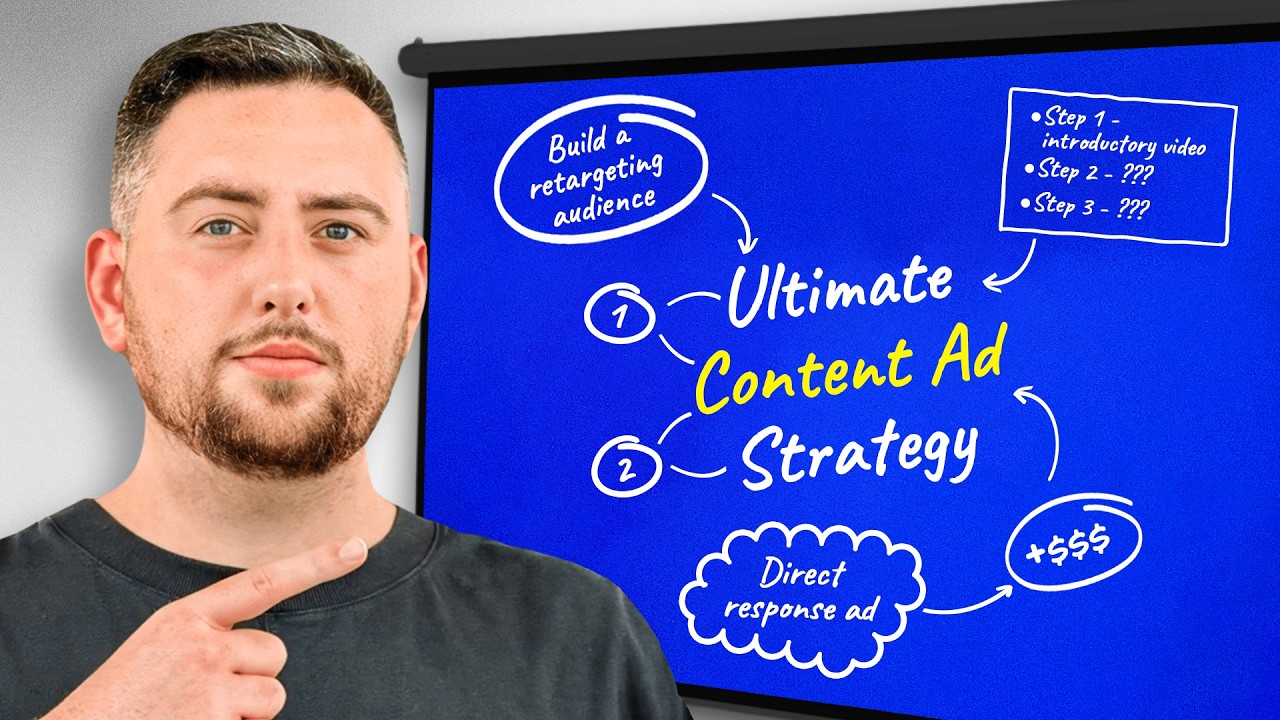
That realization became what I now call the Venus Fly Trap strategy. It’s a three-video sequence followed by direct response advertising, designed for specific use cases where standard direct response doesn’t cut it.
Let me be direct: the Venus Fly Trap is not appropriate for every business or niche. You’re intentionally adding friction to your advertising process. Each step will cause audience degradation.
This strategy works best when your ideal customer doesn’t yet identify as your customer. They don’t know they have the problem you solve. They’re not in-market for what you’re selling, even though they should be.
Here’s a real example. Suppose you’re running a wealth advisory firm targeting newly wealthy entrepreneurs who’ve built cash flow but haven’t transitioned to building true wealth. These people don’t know about overfunded whole life insurance policies, cost segregation studies, or how the tax code can be used as an incentive structure.
They’re rich, but they don’t yet understand they need estate planning, tax strategy, asset protection, and wealth management. They haven’t committed to becoming wealthy rather than merely being rich. That’s the scenario where this framework applies.
Compare that to roofing services. Homeowners already know when they need a new roof and can assess damage after a storm. You don’t need three educational videos before asking them to fill out a lead form — you can go straight to direct response.
The same goes for pizza, cars, apartments, or any product where consumers already identify as potential buyers. Adding the Venus Fly Trap in those scenarios just creates unnecessary friction. According to Meta’s own research on video advertising, the approach you take should match the awareness level of your audience.
If you’re looking to go deeper on content advertising strategies and the full framework behind what I teach, the 7-week live comprehensive training covers this in detail alongside everything else you need to build a proper agency operation.
Results are not typical. Your results will vary and depend entirely on your individual capacity, business experience, expertise, and level of desire. There are no guarantees concerning the level of success you may experience. The testimonials and examples used are not intended to represent or guarantee that anyone will achieve the same or similar results. We don’t believe in get-rich-quick programs. We believe in hard work, adding value and serving others. As stated by law, we can not and do not make any guarantees about your own ability to get results or earn any money with our information, courses, programs, or strategies.
The strategy is built on a specific sequence: three pieces of content, each with a distinct purpose, followed by your direct response ads.
Video One — Education. Introduce concepts, frameworks, or information your ideal customer needs to understand before they can identify as someone who needs your solution. This video creates awareness of a problem they didn’t know they had or reframes a situation.
Using the wealth advisor example, your first video might open with: “So you’re rich and you’re trying to get a lot richer. You want to become wealthy. I’m going to tell you how you could lower your tax bill, increase your net worth, generate passive income, buy real estate that lowers your tax bill, and make sure your family is set up for life through proper estate planning.”
Even if someone only watches the beginning, they now know you’re someone who could help with those problems. That’s the frame you’re establishing.
Video Two — Case Study / Proof. Now that they understand the concepts from video one, show real application. Demonstrate that you actually do this work.
This could sound like: “In this piece, I’m going to show you how we approached lowering someone’s tax burden, increased their annual cash flow, protected their assets from creditors, and set up their estate so beneficiaries avoid probate court.”
The first portion emphasizes the approach; the remainder breaks down details and methodology. Most people will watch the opening portion — that’s intentional. You’re planting specific information in their minds before they ever see your pitch.
Video Three — Trust & Objection Handling. This is another case study from a different angle, or a general expertise video where you establish authority, share credentials, discuss your process, or address common concerns.
By the time someone watches through your threshold on this third video, they’ve been educated on the problem, seen proof of your solution, and had objections addressed. Now they’re primed for direct response.
Technically, you create video view audiences in Facebook’s audience section and set specific view thresholds that determine when someone moves to the next stage.
My default approach is 25% video completion. Here’s why: the average person scrolls a significant amount of content per day on Facebook and Instagram. The average attention span per post is under 2 seconds according to research from the Technical University of Denmark on attention span trends.
If someone watches 25% of a 90-second reel, that’s roughly 22 seconds of attention — significantly more than the average attention span. That signals genuine interest, not just passive scrolling.
Adjust thresholds based on content length and your data. The longer the threshold, the fewer people pass through. A 3-second view gives large audience size but minimal qualification; a 75% view yields a small audience but high qualification.
Sequencing example:
Someone watches 25% of video one → they’re added to an audience that can see video two.
They watch 25% of video two → they’re added to an audience for video three.
They watch 25% of video three → they start seeing your direct response ads.
Also create exclusion audiences. Anyone who hits the 25% threshold on video one gets excluded from seeing video one again and only sees video two moving forward. Apply the same logic to each subsequent step.
Budget allocation should follow the natural degradation of your audience. Content advertising is exponentially cheaper than conversion-focused advertising. You can get someone to watch a significant portion of your video for a fraction of what a conversion event costs — cost-effective reach.
A common mistake is not spending enough at each stage to get sufficient volume to the next stage. Look at your numbers: if a large number of people watch your threshold on video one in three days, you should see comparable impressions on video two in the following days. If you don’t, increase your budget on video two.
Set up all four stages simultaneously. Platform usage varies: some people will flow through the entire sequence in hours, others in days or weeks. You want every stage ready to receive people as they qualify.
When optimizing campaigns, select engagement as your campaign objective, then choose video views at the ad set level. Optimize for “maximize through play,” which prioritizes the 15-second video view. Hootsuite’s guide on Facebook video ad optimization covers additional technical considerations.
After someone watches your threshold on video three, they enter your direct response sequence: offers, lead generation, call bookings, or sales.
In the past I set up separate retargeting campaigns for people who didn’t convert on the first direct response touch. You don’t need that anymore — Facebook’s algorithm now handles remarketing automatically within cold campaigns. If someone visits your landing page but doesn’t convert, the platform will show them your ads again because they’re deemed high-probability converters.
Target your direct response ads at everyone who watched 25% of video three, then let standard conversion optimization take over.
The name comes from the carnivorous plant. A Venus fly trap doesn’t close immediately when an insect lands on it. It waits. The plant secretes sweet nectar to attract bugs, but it only closes when the insect triggers tiny hairs by moving across them.
That’s exactly what this strategy does. When someone watches a portion of video one, they’re more engaged than cold traffic seeing direct response ads. But we don’t close yet. We wait. They move through video two, then video three. When they finally trigger the threshold on video three, that’s when we close with direct response.
The Venus Fly Trap works across multiple platforms. I’ve executed this approach on Facebook, Instagram, TikTok, and LinkedIn. Anywhere optimized for short-form video content can support this strategy. eMarketer’s research on video advertising trends shows video-based advertising continues to grow as platforms optimize for this format.
You can post videos directly to your profile as reels (optimized for cross-posting between Instagram and Facebook) or run them as dark posts that only exist in Ads Manager.
I’ve run this strategy with videos from 90-second reels up to 10–20 minute long-form content. The mechanics stay the same; adjust threshold percentages based on length.
The key is knowing when to use it and when to skip straight to direct response. That discernment comes from understanding your market, your offer, and how much pre-existing knowledge your audience has about what you’re selling.
If you’re going to implement this, make sure you’re applying it to the right scenario. Don’t add friction where it’s not needed. But when you have a sophisticated offer and a market that requires education, the Venus Fly Trap framework provides a structured approach to content advertising.
For operators who want to go deeper on this strategy and the full advertising framework I use, the 7-week live comprehensive training breaks down the complete system. If you’re already running a successful operation and want direct access to how I’m approaching these strategies in real time, the Inner Circle is where that happens.
Results are not typical. Your results will vary and depend entirely on your individual capacity, business experience, expertise, and level of desire. There are no guarantees concerning the level of success you may experience. The testimonials and examples used are not intended to represent or guarantee that anyone will achieve the same or similar results. We don’t believe in get-rich-quick programs. We believe in hard work, adding value and serving others. As stated by law, we can not and do not make any guarantees about your own ability to get results or earn any money with our information, courses, programs, or strategies.
Watch the video:

Jeremy Haynes is the founder of Megalodon Marketing. He is considered one of the top digital marketers and has the results to back it up. Jeremy has consistently demonstrated his expertise whether it be through his content advertising “propaganda” strategies that are originated by him, as well as his funnel and direct response marketing strategies. He’s trusted by the biggest names in the industries his agency works in and by over 4,000+ paid students that learn how to become better digital marketers and agency owners through his education products.

Jeremy Haynes is the founder of Megalodon Marketing. He is considered one of the top digital marketers and has the results to back it up. Jeremy has consistently demonstrated his expertise whether it be through his content advertising “propaganda” strategies that are originated by him, as well as his funnel and direct response marketing strategies. He’s trusted by the biggest names in the industries his agency works in and by over 4,000+ paid students that learn how to become better digital marketers and agency owners through his education products.


This site is not a part of the Facebook website or Facebook Inc.
This site is NOT /endorsed by Facebook in any way. FACEBOOK is a trademark of FACEBOOK, Inc.
We don’t believe in get-rich-quick programs or short cuts. We believe in hard work, adding value and serving others. And that’s what our programs and information we share are designed to help you do. As stated by law, we can not and do not make any guarantees about your own ability to get results or earn any money with our ideas, information, programs or strategies. We don’t know you and, besides, your results in life are up to you. Agreed? We’re here to help by giving you our greatest strategies to move you forward, faster. However, nothing on this page or any of our websites or emails is a promise or guarantee of future earnings. Any financial numbers referenced here, or on any of our sites or emails, are simply estimates or projections or past results, and should not be considered exact, actual or as a promise of potential earnings – all numbers are illustrative only.
Results may vary and testimonials are not claimed to represent typical results. All testimonials are real. These results are meant as a showcase of what the best, most motivated and driven clients have done and should not be taken as average or typical results.
You should perform your own due diligence and use your own best judgment prior to making any investment decision pertaining to your business. By virtue of visiting this site or interacting with any portion of this site, you agree that you’re fully responsible for the investments you make and any outcomes that may result.
Do you have questions? Please email [email protected]
Call or Text (305) 704-0094