
How to Follow Up With Inbound Leads Who Won’t Pick Up
I hope you enjoy reading this blog post. If you want my team to just do your marketing for you, click here.
Author: Jeremy Haynes | Published November 19, 2026
Earnings Disclaimer: You have a .1% probability of hitting million-dollar months according to the US Bureau of Labor Statistics. As stated by law, we cannot and do not make any guarantees about your own ability to get results or earn any money with our ideas, information, programs, or strategies. We don’t know you, and your results in life are up to you. We’re here to help by giving you our greatest strategies to move you forward, faster. However, nothing on this page or any of our websites or emails is a promise or guarantee of future earnings. Any financial numbers referenced here, or on any of our sites or emails, are simply estimates or projections or past results, and should not be considered exact, actual, or as a promise of potential earnings – all numbers are illustrative only.
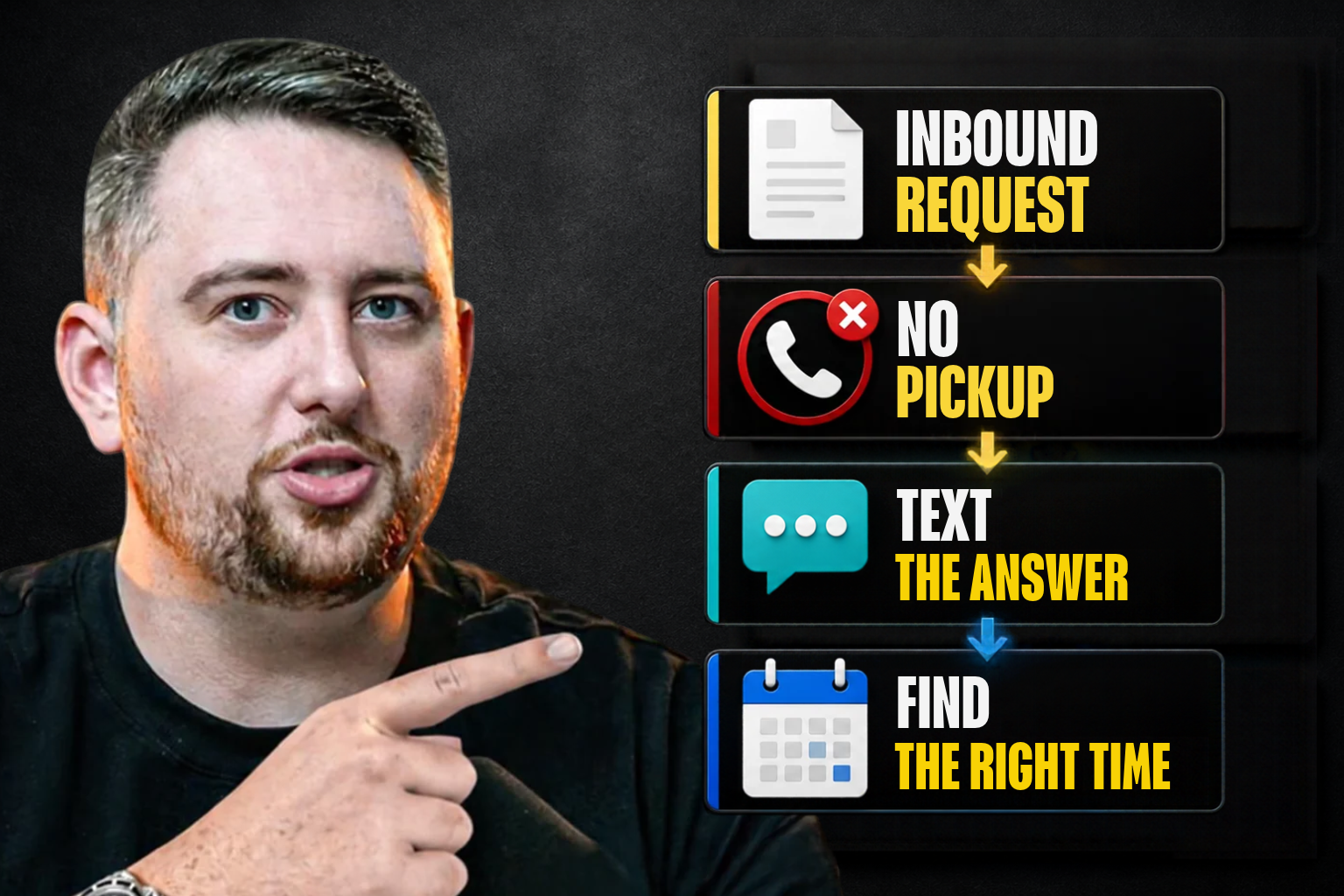
Someone asks about your offer, your rep calls, and the phone goes to voicemail. That can look like a dead lead until the person answers a text with a real question. Inbound lead follow-up should give the buyer a way to respond that fits the request they made. When you have permission to text, identify yourself, say why you’re reaching out, and give them room to reply, choose a later time, or ask for a call.
I’d fix that first exchange before building a longer sequence. If the team has recorded a callback attempt as a judgment about buyer fit, more reminders will only make that judgment harder to spot.
Already making money? See what it takes to make a lot more.
What a missed call tells you about the lead
A missed call tells you the conversation hasn’t started. The buyer could be in a meeting, could be screening the number, or could have changed their mind. Apple gives people ways to screen or silence calls from numbers they don’t know. Your rep doesn’t have to guess what was going on with that person’s phone to make a better next move.
Keep the activity and the decision separate. Record that the call went unanswered. Then look at what the person submitted. If they asked the business to help with a real problem and nothing in their application rules them out, leave the question of fit open. A team that already applies a lead qualification filter should still distinguish a documented mismatch from never having reached the buyer.
The first text should sound like a reply
Start with the request. A person who asked for a callback has given you a different reason to get in touch from somebody who downloaded a resource. The message should make it obvious who you are and what brought you into their inbox. If they asked a specific question, answer it or say what detail you need to give them a useful answer.
For a lead who requested a conversation and gave permission to text, I’d keep the message close to everyday speech. For example, Hi, this is [name] from [business]. I saw your request about [topic]. I can talk now or find a time later. If there’s something you want to ask first, you can reply here. That’s an example to adapt to your actual inquiry and approved messaging rules.
Check what the person agreed to before you send. Twilio, for instance, has its own requirements for consent, sender identification, and opting out. A phone number on a record by itself doesn’t tell the rep what messages that person agreed to receive. Make the approved next action easy to see so the team doesn’t have to guess.
The buyer’s reply tells you what happens next
If they have a question, answer it in the thread before sending a calendar link. If they ask for a call later, agree on a time and write it down. If they say they’re happy to keep talking by text, give them that option. Somebody asking what your service covers is already giving you a clearer signal than a missed call.
Assign the reply to someone who can take the next step. HubSpot lets teams set an owner on a contact record. Whatever tool you use, confirm that the assigned rep can see the original inquiry and the conversation history. Otherwise, the buyer gets a second introduction and the same question they just answered.
Pause any scheduled message that would contradict the live exchange. If someone asks to stop hearing from you, use your approved opt-out process and check that the sending tool will respect it. Silence has its own follow-up limit. It doesn’t turn a request for information into permission for an indefinite sequence.
A call makes sense when there’s a reason for it
Bring up a sales call when it would help the buyer resolve something a text won’t handle well. They might need to explain how their team works or talk through what the service would cover in their situation. Tell them what the conversation will cover. Ask them to choose the next step instead of calling halfway through a text exchange.
If someone agrees to a time, hand off the question they wanted answered, the promised purpose of the call, and anything the rep should avoid asking twice. That’s where good first contact meets the rest of your sales call funnel. The booked prospect can go into the normal appointment follow-up after that. Before booking, all you’re trying to do is make the next useful conversation easy.
7 weeks. Real frameworks. Covering copywriting, funnels, paid ads, and conversion systems.
Keep replies and qualified calls in different rows
A report can show more replies without showing more useful conversations. Separate the replies that asked a real question, the ones that agreed to a call, and the ones that were wrong numbers or opt-outs. Then check how many qualified people actually attended. You’ll see whether the new message helped you reach the right people or mainly gave your team a busier inbox.
In my Inner Circle, I’d want to see the actual conversation alongside the numbers. If replies are arriving but sitting unanswered, fix the handoff before rewriting the opening text. If buyers ask the same question and your rep answers it differently every time, start there.
Results are not typical. Your results will vary and depend entirely on your individual capacity, business experience, expertise, and level of desire. There are no guarantees concerning the level of success you may experience. The testimonials and examples used are not intended to represent or guarantee that anyone will achieve the same or similar results. We don’t believe in get-rich-quick programs. We believe in hard work, adding value and serving others. As stated by law, we can not and do not make any guarantees about your own ability to get results or earn any money with our information, courses, programs, or strategies.
Keep this part of the funnel simple enough that a rep can explain why they sent the next message. That connection between an ad, the request it creates, and the first sales conversation is what I care about in Master Internet Marketing, my 7-week live comprehensive training. When someone asks you a clear question, make it easy for your team to pick up the thread and help them decide what comes next.
Results are not typical. Your results will vary and depend entirely on your individual capacity, business experience, expertise, and level of desire. There are no guarantees concerning the level of success you may experience. The testimonials and examples used are not intended to represent or guarantee that anyone will achieve the same or similar results. We don’t believe in get-rich-quick programs. We believe in hard work, adding value and serving others. As stated by law, we can not and do not make any guarantees about your own ability to get results or earn any money with our information, courses, programs, or strategies.
Get my content first on Google
Add jeremyhaynes.com as a preferred source and Google shows my articles more prominently in your search results, including AI Overviews and AI Mode.


Jeremy Haynes
Owner and CEO of Megalodon Marketing
Jeremy Haynes is the founder of Megalodon Marketing. He is considered one of the top digital marketers and has the results to back it up.