The Complete Sales Training Course for Agency Operators
I hope you enjoy reading this blog post. If you want my team to just do your marketing for you, click here.
Author: Jeremy Haynes | Published April 8, 2026
Earnings Disclaimer: You have a .1% probability of hitting million-dollar months according to the US Bureau of Labor Statistics. As stated by law, we can not and do not make any guarantees about your own ability to get results or earn any money with our ideas, information, programs, or strategies. We don’t know you, and besides, your results in life are up to you. We’re here to help by giving you our greatest strategies to move you forward, faster. However, nothing on this page or any of our websites or emails is a promise or guarantee of future earnings. Any financial numbers referenced here, or on any of our sites or emails, are simply estimates or projections or past results, and should not be considered exact, actual, or as a promise of potential earnings – all numbers are illustrative only.
Modern salespeople have lost me more money than I care to admit. There’s a particular type of rep I’ve started calling a “fat cat closer” (someone who refuses to do anything except take layup deals) that arrive pre-scheduled on their calendar.
I’m a marketer. I’ve invested significant time and capital making salespeople’s jobs easier. Yet there’s an entitlement that persists where reps expect every deal to arrive gift-wrapped. They’ve completely lost touch with what being a real salesperson actually requires.
Why Entitled Sales Reps Cost You More Than You Realize
Weak sales skills cause massive financial loss. I’ve witnessed it repeatedly with different course creators and sales trainers who perpetuate this problem at scale.
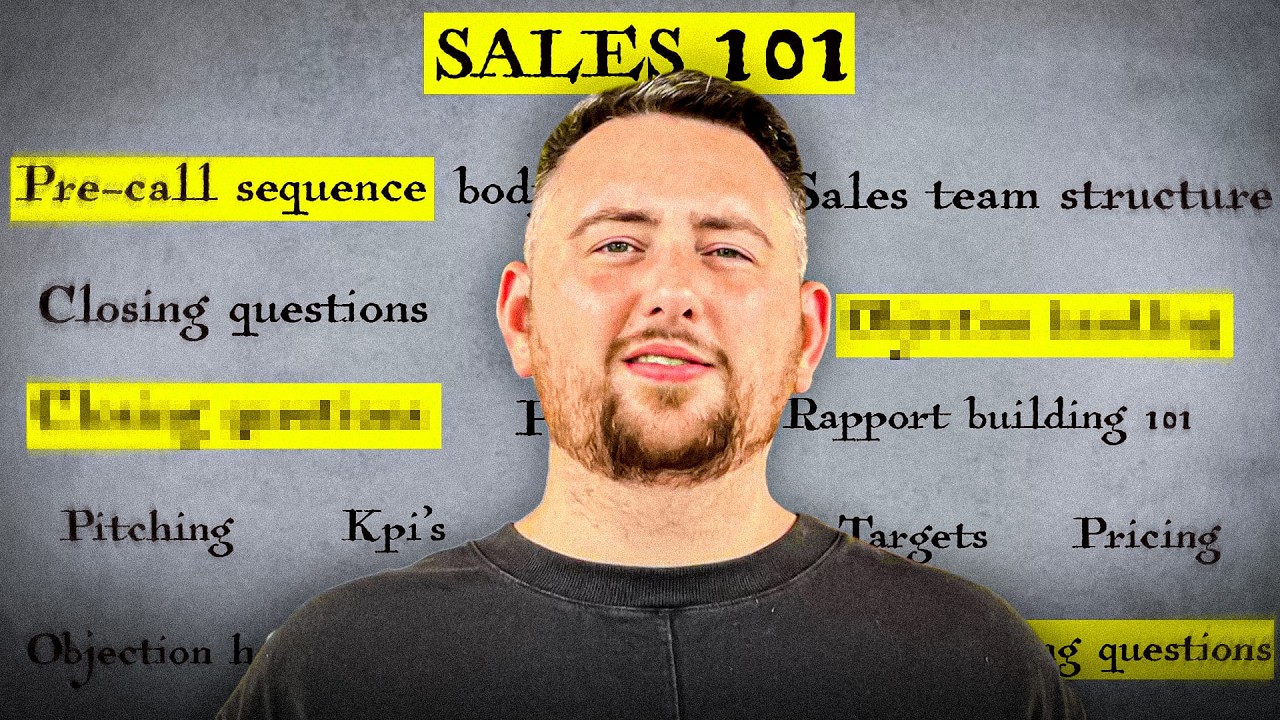
Incredible sales training still exists. What follows is some of it. Out of pure frustration with entitled reps, I assembled an entire sales training library from lessons I’ve gathered in businesses I’ve operated and consulted with.
This training is serious. I come off aggressive at times because I created it from a place of frustration. But that doesn’t mean I hate salespeople. I wouldn’t be where I am without them. This is meant to elevate the skills of your organization, your sales management, and the owners who oversee these teams.
There’s real strategy here. You’ll learn about specific roles like the “cleaner.” There are ways to structure teams, certain incentives we recommend, all woven throughout.
The majority of this content serves salespeople directly. If you’re in sales, you’ll extract tremendous value. There are tactics and specific lessons I strongly encourage you to take seriously.
This isn’t pick-and-choose content. Implement everything.
I’m known as a marketer because that’s the role I’ve chosen to play as an agency owner. But you can’t be a great marketer without being a great salesperson.
I’ve closed substantially large deals. My clients rely on us for sales tactics, sales skills, sales expectations, sales management principles, and sales team principles that can be deployed inside their organizations.
If you want to go deeper on sales frameworks and team structures, check out my Inner Circle where we cover this in detail.
How Modern Consumer Behavior Changed the Way Sales Teams Need to Operate
Average human retention sits around 10 to 30% according to research on learning retention. If you just read this and don’t immediately apply it, you’ll need to go through this entire master class multiple times to improve retention.
The process is simple: learn, do, learn, do, learn, do. Discuss it with your colleagues and sales team. Turn around and teach it. That’s how you actually retain information.
When we move away from the model of only dealing with leads who booked a call and watched a sales video, we shift to an updated model: people filling out forms. They’re willing to talk with you, they understand what the offer is, and you’ve got that data right in front of you.
Most regular people have Do Not Disturb constantly enabled. They don’t allow random numbers to call through. They’ve been spammed relentlessly over the past several years: political numbers, scammers, countless people who shouldn’t have their phone number.
iPhone now has a feature that silences unknown callers. If some random number calls you, your phone automatically silences that call. This shift in consumer behavior is well documented by Pew Research Center’s studies on phone habits.
When an inbound lead comes in from someone who filled out a form, I immediately contact that person. Yes, I’ll call them, but there’s a trick. If I send a message first that says “hey it’s Jeremy,” then call them, the phone will display the random number but it’ll also say “maybe Jeremy” below it.
If somebody doesn’t answer the phone or it rings through to voicemail the first time, I immediately call back. If I have Do Not Disturb enabled and somebody calls me once, it goes to voicemail. If somebody calls me twice, it will ring through.
Even if we get that second dial to go through and they don’t answer, we need to text people. We need to bias toward text-first communication.
I text with my name because that tricks iPhone to potentially let your call go through. We also text an open-ended question.
Example: “Hey Leo, it’s Jeremy. Saw you just filled out a form of ours online. Would love to chat with you if you are open in the next 5 minutes. If not, I have some time later today. Let me know if that works or shoot over whatever question you have.”
I’ve given them several options. This reduces my “no’s.” If I just say “do you have 5 minutes,” that’s 50/50. But when I give three options, I’ve reduced my no to a smaller chance and increased positive communication probability.
I completely understand if you’re not capable of reaching out within 5 minutes, but in my experience, if you text or call quickly (typically within 5 minutes) there’s a higher probability they’ll communicate with you.
Anytime you have availability to reach out fast, do it. There’s a substantially higher chance people will actually communicate with you.
How to Structure Your Sales Team with Setters, Closers, and Cleaners
Should you have a setter and a closer, or a team of only closers? It depends on your lead volume and the closer’s day-to-day activity.
If a closer already has substantial activity volume and we suddenly increase the amount of activity, it would far exceed what that person could handle. When activity compounds over weeks, it becomes mathematically impossible for your closer to follow up with everybody, reach out to new daily leads, and handle scheduled calls.
This is one of my favorite roles, the cleaner. The cleaner comes in and follows up with leads that are no longer being contacted. They take ownership of those leads and work them.
The cleaner role is typically a closing role. These leads aren’t going to be contacted by the first closer anyway, so the cleaner takes ownership. They train in this role, accumulate experience, and will close deals.
This role generates substantial income and it’s one of the most underutilized positions inside a sales organization. In my experience, getting a cleaner in your business right away means there’s significant opportunity on the table that’s currently being ignored.
Are the fees or profit share negotiable? No, they’re not. Are you ready to get started with us?
Being firm on these points works. You don’t really have to justify yourself. If you’ve executed the sales process correctly, you started with the price, you justified the value after, and then you moved to buying questions.
Stay firm. Don’t bend.
All these videos that have been on landing pages (mini webinars, full-time webinars, any other sales video), the vast majority of people who hit these pages don’t watch them. At most, it’s a small percentage of people who press play.
Does that mean these videos are dead? No. We just need to change how we use them. They’re no longer the entry point into the funnel, they’re at a lower point in the buying process.
When someone fills out a form and you’ve successfully talked to them, that’s when the sales video comes into play. Make sure you have several smaller videos, sales aids that answer commonly asked questions. These are typically 1-3 minute videos.
Pull out your iPhone (Androids produce poor quality for selfie video texts). When you get a lead or you’re trying to follow up, shoot a quick 10-30 second selfie video.
“Hey what’s going on, I saw that you filled out our form on Facebook. My name is Jeremy. I just wanted to put a face to the name. I got time in about 5 minutes if you’re available to talk. If you can’t talk now, I got time later tonight. You can also just shoot me over a text if you have a few questions. I just wanted to put a face to the name, introduce myself, and say that I’m very excited to help you out. All right, talk soon.”
Done. Less than 30 seconds. Don’t make excuses about this tip. It substantially increases the connection rate. People don’t like to let other people down. It’s much harder to ignore a real person than an automated text.
I run a marketing agency, and in my business over the last several years, we’ve only done outbound sales to cold leads who have no idea who we are. We’ve done so successfully because we understand how to provide value in every communication.
Rather than doing the annoying stuff most salespeople do (“hey just seeing if you got my last message,” “did you watch that video I sent”), we provide value every time we communicate.
We’ll grab articles from Facebook Newsroom, Instagram, Google AdWords, YouTube (platforms have these newsrooms where they announce algorithm changes). We’ll grab these articles and say “hey potential client, didn’t know if you saw this upcoming change on Facebook advertising algorithm. Here’s the link. Let me know if you need some help walking through it.”
The intention is to establish ourselves with expertise through low-pressure sales tactics. By simply staying in the mental view of a person, showing up in their life, they know who we are, they know what we’re there to discuss, they know what we sell.
How to Improve Your Sales Call Show Rates with Manual Follow Up
Whether you’re doing book call funnels, outbound dialing, or inbound lead forms scheduling follow-up calls, you need to know how to keep your show rate high.
Above-average sales organizations don’t just rely on marketing automation. They do manual follow-up, but they also sell the call when it’s being scheduled.
“I think it’s going to be valuable when you show up for this call at 9 a.m. tomorrow. Just real quick, I want to make sure we go through this. The reason we do this call is because…” Then explain yourself and sell the person on the fact that it’s worth their time showing up.
Get a verbal commitment. “Are you actually going to show up? Can I get your word?” People don’t like to let themselves down. If you get somebody to commit to something, a majority of people who commit will actually show up.
These tactics typically increase show rates in my experience. It’s really a combination of all of these that does it.
I always state the price first and then justify everything that comes with it after. If you leave price at the very end of whatever you’ve justified to the person, it becomes a cliffhanger.
If I state the price at the beginning (“I just want to be transparent with you at the beginning of this call, our offer is in a certain range. We typically encourage people to just have that amount liquid. If you don’t, we can get you approved for funding partners that we have. In fairness, I just want to make sure I say that so everything that follows this point of our conversation justifies why it makes sense to move forward with us.”),),
After I start with the price, the rest of the conversation that follows, I discuss a feature, another feature, another feature. I ask them questions. I gather the data and pain points. All of a sudden, the perceptual value of my offer is substantially higher.
It’s a powerful psychology principle. It works extremely well. I’d encourage you to try it because it’s very effective at selling higher ticket products.
Your personal life affects your professional life. There’s no doubt about it. Family issues, medical issues, maybe something happened with your pet, your kids, you broke up with somebody, all those things are going to affect your professional life.
You have to create some opportunity for your salespeople to come to you transparently and acknowledge when they’re having some type of issue in their personal life.
When you see salespeople struggling for a sustained period of time, it’s likely because of some personal issue. There’s a lot we can do for things that relate to money. Teaching people about environmental triggers and productivity habits matters.
Be transparent with your boss. Many people are understanding about “something’s going on in your personal life, why don’t you take a couple days off so you can recoup, deal with it, and then come back.”
It’s a significant waste of leads and money for the business to fill up a salesperson’s calendar with opportunities when they’re experiencing mental fatigue and personal life issues.
Close.com is a CRM built for salespeople. One caveat, don’t use the phone numbers built into Close.com. There’s a much higher probability it’ll go to spam inbox on iPhones.
Pipe Drive is another salesperson-based CRM. Those are really the only two I’d recommend that are built specifically for salespeople.
Slybroadcast.com can mass drop voicemails into people’s phones, which can be very helpful to get call backs. There are also softwares for spoofing phone numbers to look like local area codes.
We saw higher connection rates when dialing from the local area code of wherever that individual was located versus the normal connection rate. That made a substantial difference.
Don’t over-complicate the software side. I’ve seen huge sales teams operate out of Google Sheets.
When to Fire Sales Reps and How to Track Performance
At Grant Cardone’s office, every day you came in there was a giant set on the wall of graphs and statistics (each person’s sales revenue, outbound dials, connection rate). When statistics started to fall, that person would be brought in and asked why.
On Friday specifically, they would bring people in. If two weeks in a row the person’s statistics were declining, they would let the person know that if there were two more weeks of consecutive declining statistics, they would unfortunately have to be let go.
Up to four weeks was as long as they’d tolerate. On a month-to-month basis, the bottom percentage of the sales organization would get let go.
Remember, you can’t just guess who’s performing well and who isn’t. Track all their statistics to judge who is good and who is bad.
We’ve been going into Facebook groups and posting about job opportunities. Here are the groups I’ve had success in:
High Ticket Ninjas Closers Influencers and Lead Generation
High Ticket Closers – New Opportunities
High Ticket Sales Jobs for Inbound Closers and Appointment Setters
High Ticket Closer Jobs – Free Job Opportunities
High Ticket Inbound Closer Opportunities
The post reads: “Need closers for a high-ticket offer for a client with hundreds of qualified leads coming in weekly.”
I describe the lead volume, make sure they’re qualified, go over what the offer is, add qualifying criteria (in-house closers only, North America based), articulate the commission, and end with a clear call to action.
You’re going to get a wide range of comments. About half will be people overseas or novices who aren’t good fits. About a fourth will be very qualified people.
Move to messenger, ask for their experience and stats. Then get them on a formal interview via Zoom. Do two interviews, see how they show up twice, see if their behavior is different.
Go through scenarios with them. Ask about objections and how they’d overcome them. Do role-playing. Ask if they’re a fat cat closer or a real salesperson.
New hires need to tag along with senior closers for a week or two so they can see what goes on live. Then let the new hire lead while the senior person monitors and steps in when necessary.
Give them a base salary for the first 30-60 days with a very small commission so they have a livable wage while they go through training.
Before people walk in the door or start taking calls remotely, have them watch training videos. Most of the best organizations do a morning meeting, not a bunch of fluff, but real actionable data.
Then they role-play for 30-45 minutes before actually taking calls. Sales management walks around, listens in, and adds lessons when needed.
Greatness is not something people step into every day. Greatness is something developed consistently through holding people to higher standards, providing ongoing consistent training, and tracking everybody statistically.
Any great sports organization reviews game footage. Most business owners and sales management make excuses (“I don’t have time to watch call recordings.”).
Top organizations have someone cutting up clips in real time, dropping them into folders labeled “need to review” and individual player folders. They review after the game, send it to all players so they can individually review what they need to improve on.
You should have some time to sit down and review footage. Maybe somebody did an incredible job overcoming objections, what powerful content to share amongst the organization.
Don’t tolerate the weak excuse of “I don’t have time.” If you’re trying to operate at greatness, you have to watch yourself and review your team’s footage. Harvard Business Review has written extensively about the importance of feedback loops in high-performing teams.
How to Run a Sales Call from Opening to Close
When grading applications, lead quality is largely based on financial capability. A D-lead means they don’t have the financial capability (no money in account, no income, no credit available).
But we get on the phone and start asking questions. “Do you have a 401k? Are you in the stock market? Do you have a financial advisor? Do you work with a wealth management company?”
All of a sudden (“oh yeah, I got money in the stock market.”), you could send one email and get all that money right now.
We also focus on credit. We have training on how to get a 0% credit card for 12 months.
I’m never going to do anything that’s going to take the cheese off someone’s macaroni or shut off your hot water. The point is not to take advantage, but you’ve got to know how to find money with people that are willing to pay it if they knew how to find it.
When you jump on a call, start with high social status. Don’t prize your customer. People with money don’t want to talk to people on a lower level, they like to reach up or be on the same level.
“Hey Tom, I’m really happy we were both able to take some time out of our day to take a look at this. I know the one thing we both have in common is neither of us have enough time. To make best use of your time and my time, I want to give you the price of our product upfront so you can justify it as we go. Fair enough?”
Then: “I want to let you know, completely dependent upon what you’d value, you could expect to invest in a certain range. Not saying you will, not saying you should, but if you were going to make an investment today, what would be the one, two, maybe three things you would absolutely need to see here today in order to justify an investment like that?”
That’s gold. You’re getting to the point, increasing your social status, putting yourself on a short time limit, getting to price quickly, and instead of guessing what somebody needs to see, you’re asking them.
Statistics show top closers spend less than 40% of the conversation talking. Average closers spend about 58% talking. Worst sales reps talk excessively. They just word vomit about how excited they are.
Watch your time speaking. Grab your iPhone, go to the timer, watch it hit 30-40 seconds, then pop in a question. “What do you like about that?” Simple question to do a little pingpong with your buyer.
There are six emotions that drive purchasing behavior according to consumer psychology research:
Confidence. Does your product give them confidence? I’ve built a business on sales training because I give people what to do next. When people know what to do next, they have confidence.
Creative. Apple built a trillion-dollar business on this. Do your products help people express themselves or do things they couldn’t do without it?
Relief. Probably the most powerful one. People make all sorts of decisions because they’ve got a pain point they want to fix. Many people will do things to avoid pain.
Competent. Does your product help people do things they otherwise can’t do or get results they otherwise can’t get?
Savvy. Walmart built a huge business on this. You feel good that you’re getting a deal.
Accepted. People want to be accepted. This is why you might buy certain shoes for your kid so they can feel accepted if all the other kids wear them.
Think about what you really sell and what’s the main emotion people probably experience, then what are the supporting emotions you can pull on.
Every feature has its own advantage. Every advantage has its own benefit. The benefit is the intangible feeling or thing somebody gets because they’re able to do or have something.
Horrible salespeople just show off features. Good salespeople know FAB: Feature, Advantage, Benefit. What I recommend:
Take a feature (“we have these quarterly live events.”). The advantage is “which means you can meet, mastermind, network with other people and meet the team yourself.” The benefit is “the opportunity to really connect, establish real relationships with people that can help you grow, get better.”
Then ask the emotional gap question: “What are you currently doing to help ensure you have the opportunity to continue to meet, network, mastermind and establish relationships with people maybe more successful than you so you can continue to grow and get better?”
More often than not, they’ll say nothing. You just created a gap between what they currently have and what you just explained.
Then finish with the inarguable yes question: “You would agree that if you were able to meet in person with a bunch of other successful like-minded individuals, you would probably feel more confident, more competent, and in turn grow your skills, right?”
Every single person will say yes. That’s a powerful technique.
After you’ve gone through your pitch, show them exactly what to expect when they decide to do business with you. People don’t know what they don’t know, and they’re not going to ask what they don’t know how to ask.
Make a slide or document showing the next steps. My closing ratios improved dramatically just by showing people what happens after they sign up.
“How soon do you want to get started?”
If you’ve done everything right and you’re talking to a qualified buyer, they’ll say “yesterday.”
Of course, that’s when you’ll hear objections. That’s when it gets combative. But if you’ve done your job and shown them everything they needed to see, you can overcome those objections.
When morale drops, there is absolutely no possibility a sales team will perform well. The essential responsibility of whoever leads the sales team is to keep morale high.
You have to constantly acknowledge the momentum you’ve created and the positive actions and results. If you recognize morale is low, you need to get that morale up.
I’ll come into my room with the crazy sound system, crank it up, play Thunderstruck or throw some music on. It’s hard to maintain low morale when the environment around you is pushing your morale higher.
If your morale is low, sales will not occur. You will waste substantial money for the organization. Your number one priority besides making money and closing deals, keep the morale high.
If you made it this far, congratulations. You’re probably one of the literal handful of people that started this and made it all the way to the end.
Share this with somebody who you think would find value in it. I hope it lived up to everything I said it could be. More important than anything else, I hope you pulled tremendous value that you’re going to turn around and use inside your sales teams.
If you want to go deeper on building and managing sales teams inside an agency, the Inner Circle is where we work through this stuff in real time with other operators.
Results are not typical. Your results will vary and depend entirely on your individual capacity, business experience, expertise, and level of desire. There are no guarantees concerning the level of success you may experience. The testimonials and examples used are not intended to represent or guarantee that anyone will achieve the same or similar results. We don’t believe in get-rich-quick programs. We believe in hard work, adding value and serving others. As stated by law, we can not and do not make any guarantees about your own ability to get results or earn any money with our information, courses, programs, or strategies.
Go out there and make some money.
Get my content first on Google
Add jeremyhaynes.com as a preferred source and Google shows my articles more prominently in your search results, including AI Overviews and AI Mode.


Jeremy Haynes
Owner and CEO of Megalodon Marketing
Jeremy Haynes is the founder of Megalodon Marketing. He is considered one of the top digital marketers and has the results to back it up.