How to Turn High Content Views Into Actual High Ticket Sales

I hope you enjoy reading this blog post. If you want my team to just do your marketing for you, click here.
Author: Jeremy Haynes | Published June 2, 2026
Earnings Disclaimer: You have a .1% probability of hitting million-dollar months according to the US Bureau of Labor Statistics. As stated by law, we cannot and do not make any guarantees about your own ability to get results or earn any money with our ideas, information, programs, or strategies. We don’t know you, and your results in life are up to you. We’re here to help by giving you our greatest strategies to move you forward, faster. However, nothing on this page or any of our websites or emails is a promise or guarantee of future earnings. Any financial numbers referenced here, or on any of our sites or emails, are simply estimates or projections or past results, and should not be considered exact, actual, or as a promise of potential earnings – all numbers are illustrative only.
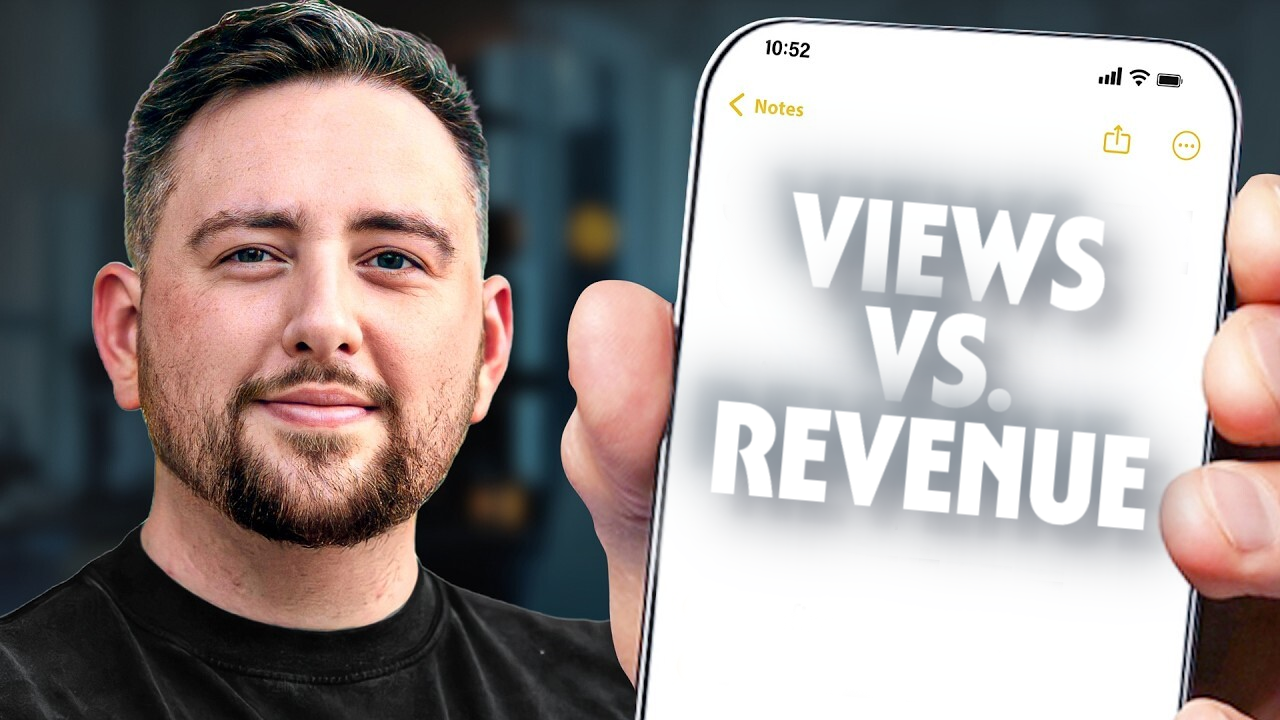
I’m going to be straight with you. If you’re celebrating a million views while your bank account stays flat, we need to talk.
Views mean nothing if they’re not converting into revenue. Most people creating content right now are stuck chasing vanity metrics while wondering why their high-ticket offer isn’t selling.
I’ve worked with businesses that get 5,000 views per piece of content. And I’ve seen creators with millions of views who can’t sell anything. The difference isn’t luck. It’s infrastructure and strategy.
This is how to turn those views into revenue. Not theory. Not motivation. Just the systems.
Through Master Internet Marketing, our 7-week live comprehensive training, we cover these exact content-to-revenue frameworks in depth.
Results are not typical. Your results will vary and depend entirely on your individual capacity, business experience, expertise, and level of desire. There are no guarantees concerning the level of success you may experience. The testimonials and examples used are not intended to represent or guarantee that anyone will achieve the same or similar results. We don’t believe in get-rich-quick programs. We believe in hard work, adding value and serving others. As stated by law, we cannot and do not make any guarantees about your own ability to get results or earn any money with our information, courses, programs, or strategies.
Already making money? See what it takes to make a lot more.
Why Getting Millions of Views Doesn’t Mean You’re Making Money
Most people don’t understand this about content. When you go viral, when you get those big view counts, you’re usually attracting spectators. Not buyers.
Spectators consume content for entertainment. They’ll watch, they’ll like, they might even comment. But they were never going to buy from you because they don’t have the problem you solve, they don’t have the budget, or they’re just scrolling for dopamine hits.
HubSpot’s research on buyer behavior shows only about 2 to 4 percent of website visitors are actually ready to buy at any given time. And when you’re talking about cold traffic from social media, that percentage drops even lower.
This is what I call empty virality: content that entertains but doesn’t pre-qualify anyone or move them toward a buying decision. You feel good about the numbers, but your calendar stays empty and your revenue stays flat.
Most creators are optimizing for the wrong thing. They’re optimizing for reach when they should be optimizing for resonance with the right people.
How People Who Buy Expensive Services Actually Consume Your Content
High-ticket buyers don’t impulse buy. If someone’s about to spend thousands with you, they’re not making that decision off one piece of content.
Their decision journey is longer and trust-dependent. They’re evaluating your authority, your specificity, your proof, and how you mitigate risk before they ever reach out.
Research from Gartner shows that B2B buyers consume multiple pieces of content before they make contact. High-ticket buyers do the same. They’re auditing your thinking, watching how you break down problems, and looking at your frameworks and depth.
They’re not watching for entertainment. They’re watching to see if you actually know what you’re talking about and if you can help them solve a real problem.
This changes everything about how you should be creating content. If you’re just trying to get views, you’re speaking to the wrong person. You need to be speaking to that small percentage of your audience that has the problem, the budget, and the urgency to solve it.
Creating Content That Actually Moves People Toward Buying From You
Most creators are stuck making only one type of content: awareness content (stuff that introduces them and gets views).
But awareness content alone doesn’t generate revenue. You need a content architecture that moves people through a journey.
The framework is: Awareness, Authority, Activation, Acquisition.
Awareness content gets views and introduces you.
Authority content demonstrates depth and shows your proprietary methodology.
Activation content moves people to take a micro-commitment like DMing you or booking a call.
Acquisition content handles objections and filters for the right buyers.
Most people are producing almost entirely awareness content and occasional calls to action. Then they wonder why nothing converts. You need to flip that ratio.
In my experience, a mix like 60% authority and value content, 25% proof and case studies, and 15% direct activation content with clear calls to action works well.
Your content needs to create what I call a problem awareness gap. The viewer realizes they have a bigger problem than they thought and that solving it themselves is harder than it looks. That’s when they’re ready to have a conversation about your offer.
What to Teach For Free and What to Save For Your Paid Offer
There has to be an intentional bridge between your free content and your paid offer. You can’t just post value and hope people figure it out.
The model that works is this: Teach the what and why, sell the how and implementation. Here’s how to structure the paid offer so the gap between free and paid feels obvious.
In your free content, explain what the problem is and why it matters. Give frameworks and insights. But the actual implementation (the done-for-you service, hands-on coaching, proprietary systems) is what they pay for.
When you structure content this way, you’re not holding back value. You’re giving real insights while making it clear there’s a gap between understanding something and executing it at a high level.
Your calls to action need to be contextual, not just “link in bio.” They should feel like the logical next step based on what you just taught. For example: “If you want help implementing this in your business, this is how to work with me.” That feels natural and converts.
How to Separate Casual Viewers From Actual Buyers in Your Audience
Not all viewers are equal. Once you understand this, your entire content strategy shifts.
There are three types of people watching your content:
Spectators, will never buy and just want entertainment.
Students, want free information and might buy something low-ticket eventually.
Prospects, have the problem, the budget, and the urgency.
If you’re running a high-ticket business, you must optimize for prospects, even if it means slightly fewer total views.
The rule I follow is: if a small percentage of your audience is a potential high-ticket buyer, design your content strategy to surface and convert that segment, not to maximize engagement from everyone else.
This is why consultants with 5,000 views per video can do well. Their content is laser-targeted to ideal-client pain points. They’re not trying to go viral; they’re trying to start conversations with qualified buyers.
When you do that, the math changes. You don’t need a million views. You need the right 5,000 people seeing your content and a system to convert them.
Using Paid Ads to Turn Organic Views Into Sales Conversations
Organic views are just the top of the funnel. Where conversion compounds is in retargeting.
Take everyone who watched most of a specific video, build a custom audience, then serve them case study ads, testimonial ads, and direct “book a call” ads. The four-step retargeting system turns warm viewers into booked calls.
According to research on retargeting effectiveness, retargeted visitors show significantly higher conversion rates. Applied to high-ticket offers, the impact multiplies.
This is how you turn organic content into a paid acquisition machine: content warms people up, retargeting moves them to action, and your cost per acquisition stays reasonable because you only spend on people who already engaged.
You can do the same with email and DM sequences triggered by specific content engagement. Someone watches a video about a specific pain point? They get a sequence designed to move them toward a call.
This is infrastructure. Infrastructure separates businesses that make content from businesses that make revenue from content.
Why Case Studies and Testimonials Convert Better Than Value Content
High-ticket conversion relies heavily on what I call proof density: case studies, testimonials, results screenshots, client transformations.
Proof content often gets fewer views than value content but converts at a higher rate. When someone evaluates a significant financial decision, they need to see you’ve done this before and delivered real results.
Proof should appear in the middle and bottom of your funnel, not sprinkled randomly. Place it strategically where people are evaluating whether to take the next step.
Effective formats include video testimonials, before-and-after breakdowns, and behind-the-scenes content showing how you helped a client win. These don’t need to be polished. They need to be real.
The Sales Infrastructure You Need Behind Every Piece of Content
This is where most people fall apart. They create great content but have no sales infrastructure behind it.
Views without infrastructure equal wasted traffic.
You need:
A landing page or application funnel
A booking system
A sales process
A follow-up sequence via email, SMS, or DMs
A CRM to track everything and attribute revenue to specific pieces of content
Every piece of content should have a mapped pathway to a sales conversation. Here’s how to monetize every step between content and the sales call.If someone watches your video or reads your content and wants to work with you, what happens next? If the answer isn’t crystal clear and frictionless, you’re losing deals.
The businesses I work with that do this well have what I call a content-to-call pipeline. Content creates interest, the funnel qualifies, the booking system gets them on the phone, the sales process closes them, and the follow-up sequence catches everyone who didn’t book immediately.
It’s a system. Systems generate predictable revenue.
In my Inner Circle, we map out these entire pipelines with operators who need this infrastructure built correctly.
Results are not typical. Your results will vary and depend entirely on your individual capacity, business experience, expertise, and level of desire. There are no guarantees concerning the level of success you may experience. The testimonials and examples used are not intended to represent or guarantee that anyone will achieve the same or similar results. We don’t believe in get-rich-quick programs. We believe in hard work, adding value and serving others. As stated by law, we cannot and do not make any guarantees about your own ability to get results or earn any money with our information, courses, programs, or strategies.
Which Platforms Actually Generate High Ticket Sales and Which Just Get Views
Different platforms serve different purposes in your content-to-revenue pipeline:
YouTube: Best for high-ticket nurture. Long-form content builds deeper trust faster. A 20-minute video signals higher intent.
Instagram Reels and TikTok: High view potential but lower buyer intent per view. Best used as top-of-funnel to feed people into deeper content or DM funnels.
LinkedIn: Lower views but higher buyer intent per view, especially for B2B high-ticket. Decision-makers are often active here.
Podcasts: Extremely strong for trust-building. Podcast listeners convert at higher rates because of the time invested and intimacy of the format.
You don’t need to be on every platform. Be on the platforms where your high-ticket buyers are actively consuming content and making decisions.
How to Track Which Content Actually Leads to Sales
If you can’t track it, you can’t optimize it.
On every application form, ask an open-text “How did you hear about us?” Not a dropdown. Let people tell you in their own words.
Use UTM parameters on all links from content so you can see what’s driving traffic and conversions.
Track both first-touch and last-touch attribution. Content often plays a role even when the final click comes from an ad or referral.
The businesses that scale content-driven revenue know which pieces generate calls, which platforms drive the highest-quality leads, and their view-to-lead and lead-to-close ratios. Because they know the numbers, they can double down on what works and cut what doesn’t.
The Actual Numbers You Need to Hit Your Revenue Goals With Content
Here’s the framework for calculating what you need:
Decide your monthly revenue target.
Divide by your average deal size to get required closes.
Use your close rate on qualified calls to determine how many calls you need.
Use your booking rate to determine how many leads you need.
Use your view-to-lead conversion rate to determine how many views you need.
Those are the real numbers. Not millions of views. Not going viral. Consistent, targeted content that attracts the right people and a system that converts them.
When you dial in messaging and targeting, those percentages improve. Fewer, more targeted views often outperform viral content because viral content attracts everyone, while targeted content attracts buyers.
7 weeks. Real frameworks. Covering copywriting, funnels, paid ads, and conversion systems.
What Actually Matters More Than Having the Perfect Strategy
This isn’t complicated, but it requires execution.
You need content that speaks to your ideal high-ticket buyer’s specific pain points, a mix of authority, proof, and activation content, clear calls to action that feel like the natural next step, infrastructure that captures interest and converts it into calls, and tracking so you can optimize.
Most people know what to do. They don’t do it consistently or systematically.
The businesses that win treat content as a primary acquisition channel, not a side activity. They publish consistently, optimize based on data, and build systems around it. They generate real revenue, not just views.
If you’re serious about turning your content into a high-ticket revenue machine, you now have the playbook. The question is whether you’ll actually execute on it.
Views don’t pay the bills. Systems do.
We cover the complete content-to-revenue infrastructure in Master Internet Marketing, our 7-week live comprehensive training where we build these systems with you.
Results are not typical. Your results will vary and depend entirely on your individual capacity, business experience, expertise, and level of desire. There are no guarantees concerning the level of success you may experience. The testimonials and examples used are not intended to represent or guarantee that anyone will achieve the same or similar results. We don’t believe in get-rich-quick programs. We believe in hard work, adding value and serving others. As stated by law, we cannot and do not make any guarantees about your own ability to get results or earn any money with our information, courses, programs, or strategies.
Get my content first on Google
Add jeremyhaynes.com as a preferred source and Google shows my articles more prominently in your search results, including AI Overviews and AI Mode.


Jeremy Haynes
Owner and CEO of Megalodon Marketing
Jeremy Haynes is the founder of Megalodon Marketing. He is considered one of the top digital marketers and has the results to back it up.