I hope you enjoy reading this blog post. If you want my team to just do your marketing for you, click here.


I hope you enjoy reading this blog post. If you want my team to just do your marketing for you, click here.
Author: Jeremy Haynes | founder of Megalodon Marketing.
Earnings Disclaimer: You have a .1% probability of hitting million-dollar months according to the US Bureau of Labor Statistics. As stated by law, we can not and do not make any guarantees about your own ability to get results or earn any money with our ideas, information, programs, or strategies. We don’t know you, and besides, your results in life are up to you. We’re here to help by giving you our greatest strategies to move you forward, faster. However, nothing on this page or any of our websites or emails is a promise or guarantee of future earnings. Any financial numbers referenced here, or on any of our sites or emails, are simply estimates or projections or past results, and should not be considered exact, actual, or as a promise of potential earnings – all numbers are illustrative only.
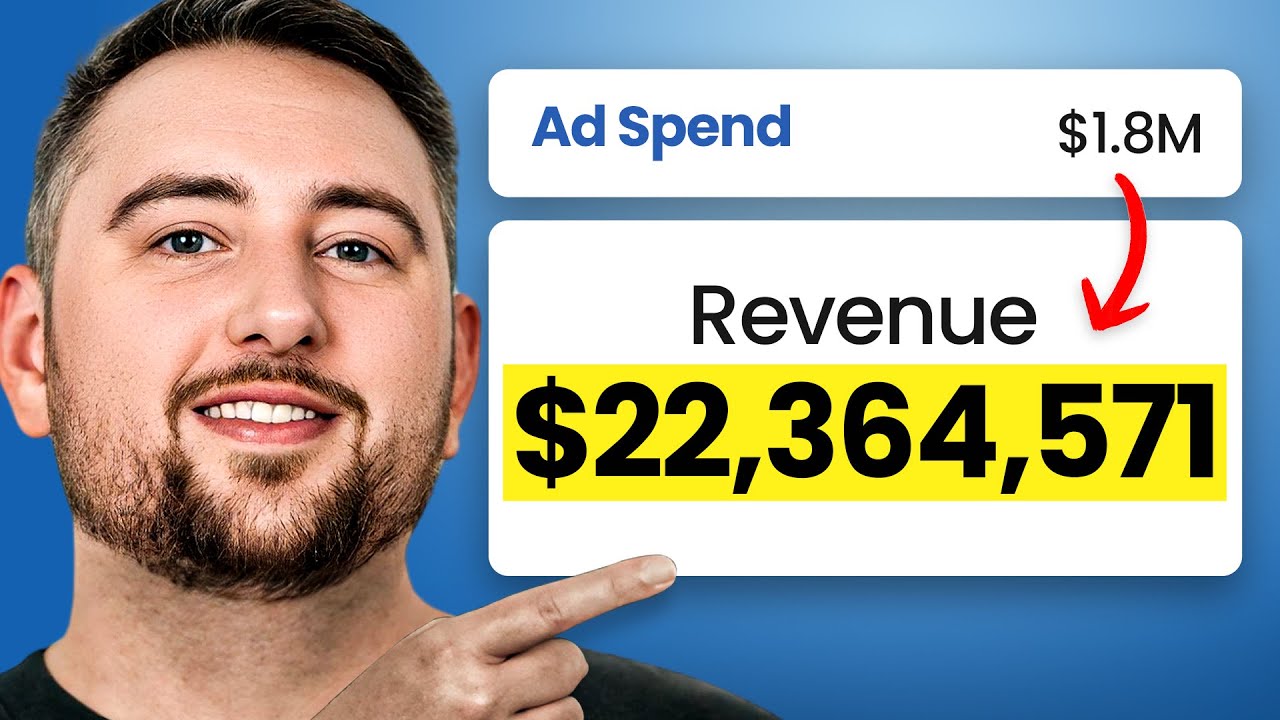
Jeremy Haynes spent roughly $1.8 million on advertising for a client over 19 months and generated just shy of $22 million in total revenue. The business then sold a majority stake to private equity for approximately $40 million. The offer? A $7,500 addiction recovery program with backend upsells ranging from $10,000 to $250,000. The funnel? Dead simple. A headline, a VSSL, and an application form. No testimonials. No about section. Nothing fancy. Just direct response that printed money at 10:1 to 20:1 return on ad spend for months on end.
Haynes met the founder at a Garrett J. White mastermind in Dana Point, California. At the time, the business was doing roughly $120,000 per month. The founder showed Haynes his funnel. Headline, VSSL, application on Typeform. That’s it.
Haynes’ first reaction? “Dude, no shit you’re only making 120K a month. Look at your funnel.”
But the numbers told a different story. The founder had spent just under $20,000 and generated $120,000. When someone’s printing money like that, you don’t argue. You scale.
“I don’t want to be right. I just want to make money,” Haynes explained.
The founder wasn’t holding back. He was hiring closers. He wanted to spend more. He had cash reserves and was ready to take risk. Haynes typically doesn’t take clients at that revenue level. His agency model requires roughly $50,000 in ad spend the first 30 days plus $15,000 to $20,000 in agency fees plus rev share. That’s nearly $70,000 upfront.
But the offer was solid. It helped people overcome addiction. Mission-driven businesses perform better. Haynes agreed to take it on.
Haynes started running ads to the original funnel. No content marketing strategies. Just straight direct response. Cost per call stayed consistent. Return on ad spend ranged from 10:1 to 20:1.
They scaled to about $600,000 per month before testing variations. The plan? Create a V2 funnel with testimonials added below the VSSL and application. Run a split test. Shut off the loser. Scale the winner.
But Haynes made a mistake. He forgot to shut off one of the tests. It ran for three full weeks. When he finally checked, both funnels were neck and neck. If V1 had a $130 cost per qualified call, V2 was maybe $10 higher. Essentially the same performance.
The result? Higher call volume without sacrificing efficiency.
“I think we should do this intentionally from this point forward,” Haynes told the team.
They called it horizontal funnel scaling. V3 kept the original funnel structure but swapped the VSSL. V4 and V5 introduced new variations. Eventually they ran seven different funnel versions simultaneously across multiple ad accounts and backup business managers.
Each funnel performed within $10 to $15 of each other on cost per call. But the aggregate volume pushed them past million dollar months consistently.
The founder contacted Haynes multiple times per day. Every morning he’d report whether calendars were loaded. He’d share qualified versus unqualified ratios. He’d monitor cost per call throughout the day and proactively ask if ad fatigue was setting in.
When holidays approached, he’d film contextual content to keep people engaged. He ran daily sales training with the team. He gave a shit about every detail.
“This was my high touch deal to date,” Haynes noted.
Most clients at similar revenue levels had weekly calls and occasional Slack messages. This guy was relentless. At first it felt annoying. But Haynes grew to appreciate it.
Most clients are up your ass out of fear. They’re afraid to spend money. This client was up Haynes’ ass out of accountability. He wanted to improve every single day, multiple times per day.
The business didn’t have a single down month during the nearly two years Haynes worked on it. The founder understood something most don’t. Even when things are going right, confirmation that you should keep going is valuable. And when things are going wrong, fixing it immediately is the only option.
“This guy was dialed the fuck in,” Haynes said.
The frontend offer was $7,500. One-time cost. No recurring component. The sales team hated selling payment plans and always pushed for full payment.
But the backend? Loaded with upsells. A $10,000 offer. A $25,000 offer. A $50,000 offer. And a big dog package at $250,000.
Each tier offered varying degrees of additional coaching. The founder also ran masterminds and in-person events ranging from $10,000 to $50,000 depending on the event.
He had a completely different business already doing a million dollars per month. So when clients got their shit together overcoming addiction on the frontend, they’d scale up their lives on the backend through business coaching and mentorship.
That backend revenue sustained the aggressive ROAS on the frontend. Even in months where cost per call inflated and frontend ROAS dropped to 5:1 or 8:1, the backend made the unit economics work.
Most businesses obsess over one or the other. Frontend transactional revenue or backend upsells. This founder understood both mattered equally.
The founder sold a majority stake to private equity for roughly $40 million. He stayed on as the face but lost operational control.
Private equity came in with ideas. They thought they could do better. They gutted the staff. They kept the founder but used him more as a marketing asset than an operator.
Within a year, they drove the business from over $2 million per month down to mid couple hundred thousand. Cost per qualified call went from $200 to $300 range all the way up to $700 to $800.
They didn’t know what they were doing. Eventually they lost confidence and wanted out.
Here’s where it gets wild. They sold the equity back to the founder for tens of thousands of dollars. The same equity they’d purchased for $40 million.
“It was pretty fucking close to the Dave Portnoy story,” Haynes explained, referencing Portnoy buying Barstool Sports back for a dollar after selling it for $100 million.
The founder called Haynes about a year and a half after the exit. He wanted to scale again. But Haynes was maxed out on clients. So he put him in the Inner Circle instead.
Now the founder hires marketers Haynes consults and trains from the outside. He’s rebuilding what private equity destroyed.
From $120,000 per month to over $2 million. From a $40 million exit to buying it back for pocket change. From seven funnel variations running simultaneously to private equity running one poorly. The lessons are clear. Horizontal funnel scaling works when you accidentally discover it then systematically execute it. Obsessive daily accountability beats quarterly strategy sessions. Backend revenue justifies frontend customer acquisition costs that look insane on paper. And private equity doesn’t always know better than the founder who built the machine in the first place.

Jeremy Haynes is the founder of Megalodon Marketing. He is considered one of the top digital marketers and has the results to back it up. Jeremy has consistently demonstrated his expertise whether it be through his content advertising “propaganda” strategies that are originated by him, as well as his funnel and direct response marketing strategies. He’s trusted by the biggest names in the industries his agency works in and by over 4,000+ paid students that learn how to become better digital marketers and agency owners through his education products.

Jeremy Haynes is the founder of Megalodon Marketing. He is considered one of the top digital marketers and has the results to back it up. Jeremy has consistently demonstrated his expertise whether it be through his content advertising “propaganda” strategies that are originated by him, as well as his funnel and direct response marketing strategies. He’s trusted by the biggest names in the industries his agency works in and by over 4,000+ paid students that learn how to become better digital marketers and agency owners through his education products.



This site is not a part of the Facebook website or Facebook Inc.
This site is NOT /endorsed by Facebook in any way. FACEBOOK is a trademark of FACEBOOK, Inc.
We don’t believe in get-rich-quick programs or short cuts. We believe in hard work, adding value and serving others. And that’s what our programs and information we share are designed to help you do. As stated by law, we can not and do not make any guarantees about your own ability to get results or earn any money with our ideas, information, programs or strategies. We don’t know you and, besides, your results in life are up to you. Agreed? We’re here to help by giving you our greatest strategies to move you forward, faster. However, nothing on this page or any of our websites or emails is a promise or guarantee of future earnings. Any financial numbers referenced here, or on any of our sites or emails, are simply estimates or projections or past results, and should not be considered exact, actual or as a promise of potential earnings – all numbers are illustrative only.
Results may vary and testimonials are not claimed to represent typical results. All testimonials are real. These results are meant as a showcase of what the best, most motivated and driven clients have done and should not be taken as average or typical results.
You should perform your own due diligence and use your own best judgment prior to making any investment decision pertaining to your business. By virtue of visiting this site or interacting with any portion of this site, you agree that you’re fully responsible for the investments you make and any outcomes that may result.
Do you have questions? Please email [email protected]
Call or Text (305) 704-0094