
How to Find Pocket Opportunities That Add Six Figures Monthly to Your Business

I hope you enjoy reading this blog post. If you want my team to just do your marketing for you, click here.
Author: Jeremy Haynes | Published April 28, 2026
Earnings Disclaimer: You have a .1% probability of hitting million-dollar months according to the US Bureau of Labor Statistics. As stated by law, we cannot and do not make any guarantees about your own ability to get results or earn any money with our ideas, information, programs, or strategies. We don’t know you, and besides, your results in life are up to you. We’re here to help by giving you our greatest strategies to move you forward, faster. However, nothing on this page or any of our websites or emails is a promise or guarantee of future earnings. Any financial numbers referenced here, or on any of our sites or emails, are simply estimates or projections or past results, and should not be considered exact, actual, or as a promise of potential earnings – all numbers are illustrative only.
A recent call with one of my Inner Circle members revealed something I’ve been seeing repeatedly across businesses at every level.
They’re missing what I call “pocket opportunities.”
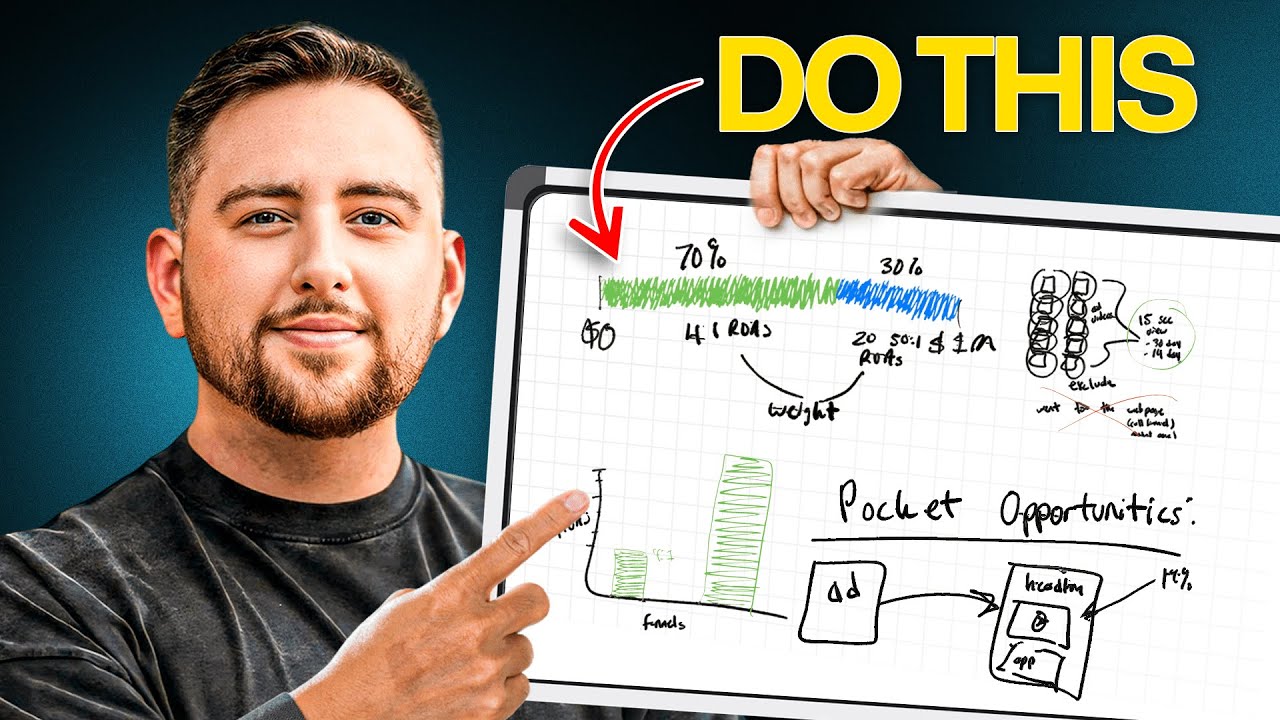
These aren’t your main revenue drivers. They’re not the funnel doing the heavy lifting. But when you stack them correctly, these contextual retargeting plays exist as separate revenue streams in your business. They operate on different logic than your primary funnel.
What follows is exactly what these opportunities are and how to implement them systematically.
Results are not typical. Your results will vary and depend entirely on your individual capacity, business experience, expertise, and level of desire. There are no guarantees concerning the level of success you may experience. The testimonials and examples used are not intended to represent or guarantee that anyone will achieve the same or similar results. We don’t believe in get-rich-quick programs. We believe in hard work, adding value and serving others. As stated by law, we cannot and do not make any guarantees about your own ability to get results or earn any money with our information, courses, programs, or strategies.
Already making money? See what it takes to make a lot more.
What Contextual Retargeting Actually Means for Your Ad Strategy
Pocket opportunities run on if-this-then-that thinking applied to your marketing.
Earlier today, I reviewed a funnel from one of our 7-week live comprehensive training participants. He was running traffic from ads to a VSL page, standard setup with headline, video, and application form below. His total play rate sat at 19%. That meant 81% of people who clicked through from his ad to the page didn’t press play on the video.
Results are not typical. Your results will vary and depend entirely on your individual capacity, business experience, expertise, and level of desire. There are no guarantees concerning the level of success you may experience. The testimonials and examples used are not intended to represent or guarantee that anyone will achieve the same or similar results. We don’t believe in get-rich-quick programs. We believe in hard work, adding value and serving others. As stated by law, we cannot and do not make any guarantees about your own ability to get results or earn any money with our information, courses, programs, or strategies.
Before jumping to conclusions about whether that’s good or bad, his funnel was actually running. We were simply looking for the easiest metric to improve. Could we test thumbnails? Sure. But getting from 20% to 40% play rate with thumbnail changes alone requires extensive testing.
This is where the pocket opportunity emerged.
You’ve got 81% of targeted traffic that Facebook or Instagram or your chosen platform believed was probable to engage. The platform showed them your ad for a reason. These aren’t random people. They simply didn’t want to watch the video. Maybe they didn’t have time. Maybe they saw the length and bounced. Whatever the reason, they didn’t press play.
Instead of forcing them to watch something they already decided they didn’t want to watch, we created a different path for them.
According to compiled video ad performance research, completion rates and engagement vary sharply by video length and format, which is why creating alternative pathways matters for conversion optimization.
How to Build a Long-Form Alternative for Video Non-Watchers
In this operator’s case, we had about 500 people in this bucket of non-watchers. That number grows every single day he spends money on ads.
We created a contextual remarketing campaign with a small daily budget. Same ad creative that was already working, but instead of sending people to the VSL page, we sent them to a long-form sales page.
We broke out what each of his VSL slides would have communicated into sections on a scrollable page. His video ran about 16 minutes, so we ended up with roughly 16 to 20 sections on the page (same information, different format).
The beauty of this approach is that it matches how these specific people want to consume information. They showed interest. They clicked. They just didn’t want to sit through a video.
The budget mechanics work elegantly: as that audience of non-watchers grows, the budget scales proportionally. If you’re increasing your main VSL funnel budget during daily scaling, you follow that same logic with this pocket opportunity. If you scale down on the main funnel, you scale down here too.
It’s a proportional play that stays contextual to your main traffic flow.
Why Revenue Composition Matters More Than Single Funnel Performance
Consider what a business actually looks like from a revenue breakdown perspective.
In most instances, you’ll have one main funnel responsible for the majority of your revenue. If you’re running calls, it’s probably a call funnel. If you’re doing webinars, it’s a webinar funnel. For e-commerce, it’s your main breadwinner product.
That main driver typically accounts for a significant portion of your revenue. It might be running at a certain return, which is solid when you can maintain it at scale.
Most people miss this: pocket opportunities can make up a meaningful portion of your monthly revenue when you actually take advantage of them. And because these are highly targeted, contextual plays with lower daily spend, your performance on them can be substantially different.
When you blend these together using weighted metrics, your overall business performance lifts. You might end up with an overall blended return that’s higher than your main funnel alone when you combine that main funnel with these high-performing pocket plays.
That’s the difference between businesses stuck at one level and businesses breaking through to the next.
Where Ad-Based Pocket Opportunities Exist in Your Current Traffic
The most basic version is what we already covered: people who clicked to your page but failed to convert. Create an audience of people who hit your VSL page and exclude anyone who made it to the thank-you page or scheduling confirmation. That’s your pocket.
But you can go a step above that. Look at people who watched your ad video but never even clicked through to your page.
The setup:
- Take your 10 different ad videos and create one audience of people who watched at least 15 seconds. I specifically say 15 seconds because average video view rate is about 1.8 seconds per post, so 15 seconds shows actual engagement. Set this on a rolling 30-day window, or 14 days if you’re running higher spend and filling the bucket faster.
- Exclude people who went to your web page. What you’re left with is an audience of people who watched 15 seconds of your ad but your hook failed to get them to click through. This is basket one.
- Then create basket two. Take that audience and show them a completely different set of videos with different hooks. If your first set was talking head videos, maybe basket two is case study videos. If you’re in e-commerce and your first set was hero product shots, maybe basket two is unboxing videos or user-generated content.
You’re rotating these people through different messaging for a small daily budget. This specific pocket opportunity might be slightly larger than your other pockets because you’ll always get more people who view things than people who click on things. But the principle is the same: it’s wide enough to create a contextual scenario to capture people the platform already identified as probable to engage.
Research on intent-based retargeting segmentation shows that campaigns segmented by specific user behavior significantly outperform broad, one-size-fits-all retargeting approaches.
How to Build an Email Marketing Matrix Based on Application Data
The amount of data sitting unused in most businesses’ CRMs is staggering.
I created what I call the Email Matrix SOP for businesses I work with because I kept seeing the same lazy approach repeatedly. People would collect valuable data through their application process and then dump everyone into one generic email autoresponder.
A real example: I worked with a company in Santa Monica that managed money for high-net-worth individuals. Their minimum was a million dollars in assets, and their application went all the way up to $100 million plus.
The options were: $1M, $3–5M, $5–10M, $10–25M, $25–50M, $50–75M, $75–100M, and $100M+.
Most businesses take all those leads and funnel them into one giant email autoresponder. Same messages for everyone. It’s the laziest possible approach.
Think about it. The person with a million dollars has completely different needs than the person with $100 million. The trust required to transfer $100 million in assets is massive. They want to see proof you’ve done this before with people at their level. Their risk tolerance is different. The timeline to close is different. The case studies they need are different.
In this company’s case, a significant portion of their leads came through at the $5–10M level. Each bracket should have had its own independent sequence communicating to that person’s specific needs, objections, and desires.
That’s just application data. You can do this with engagement data too.
Why Segmentation Beyond Basic Engagement Creates More Contextual Conversations
Most email marketers only segment based on who’s engaged recently and who hasn’t. And they usually only do this because most CRMs force you to in order to protect their sending IPs.
You’ll have your highly engaged segment getting more emails, and your re-engagement sequence trying to warm people back up. That’s basic. Most businesses aren’t even doing that.
But there’s so much more available to you.
- Did they book a call?
- Did they fill out an application but not book?
- Did they book and then open a lot of emails afterward?
- Did they book and go silent?
- How did they interact with your sales team?
- Did they show up to the call?
- What specific objections did the sales team note in the CRM?
Each of these creates a segmentation opportunity. Each one is a chance for a contextual conversation that increases your probability to convert.
According to Campaign Monitor’s research on email segmentation, marketers who use segmented campaigns note different engagement patterns compared to non-segmented sends.
How Pocket Opportunities Stack Up as Proportional Budget Plays
Your main funnel might be running on the majority of your revenue. Your pocket opportunities are running on a smaller portion. Now, you can’t spend as much on each individual pocket opportunity, but when you stack multiple ones together, they add up.
The key is that these aren’t one-offs. You’re building a system of contextual responses based on behavior. As your main funnel scales, these scale proportionally. As you collect more data, you create more segments. As you run more ad creative, you create more retargeting buckets.
It compounds.
7 weeks. Real frameworks. Covering copywriting, funnels, paid ads, and conversion systems.
Where to Start Implementing Pocket Opportunities in Your Business Today
If you’re looking at your business right now trying to figure out where to start, consider this approach.
- Audit your existing traffic and conversion data. Look at your main funnel and identify the biggest drop-off points. Those are your first pocket opportunities.
- Look at your application or form data. What information are you collecting that you’re not using for segmentation? Every field on your form should map to a potential email sequence or retargeting audience.
- Review your ad account. What audiences exist right now that you could be remarketing to with different creative or different landing pages? Video viewers who didn’t click. Page visitors who didn’t convert. People who started applications but didn’t finish.
- Talk to your sales team. What patterns are they seeing in objections? What types of leads show up versus no-show? What information do leads ask for repeatedly? Each of these is a signal for a contextual communication opportunity.
The businesses I’ve worked with that successfully implement this approach don’t do it all at once. They start with one or two high-probability pockets and build from there. But they’re systematic about it. They track performance. They scale what works.
And over time, these pocket opportunities become a significant revenue driver that most of their competition completely ignores.
This systematic thinking separates businesses at different levels. It’s not about finding one magic funnel. It’s about building a comprehensive system that captures value at every possible touchpoint.
The data already exists in your business. The opportunities are already there. Most people just aren’t looking for them or don’t know how to structure them properly.
That’s where working with someone who has built these systems repeatedly makes a difference. In my Inner Circle, we go deep on this. Four times a year, we do in-person masterminds in Miami. Twice a month, we do one-on-one calls. Four times a month, we run group strategy sessions where you can bring your specific situations and get direct feedback.
Results are not typical. Your results will vary and depend entirely on your individual capacity, business experience, expertise, and level of desire. There are no guarantees concerning the level of success you may experience. The testimonials and examples used are not intended to represent or guarantee that anyone will achieve the same or similar results. We don’t believe in get-rich-quick programs. We believe in hard work, adding value and serving others. As stated by law, we cannot and do not make any guarantees about your own ability to get results or earn any money with our information, courses, programs, or strategies.
The group is capped because we want quality people who are going to be there for the long term, not just show up for a mastermind and disappear. We’ve got members at different levels working their way up.
If you are serious about building these systems in your business, check out the Inner Circle here. We also have our 7-week live comprehensive training covering topics like this in even more detail, plus our Megalodon Marketing done-for-you agency services if that’s more your speed.
But whether you work with us or not, start looking at your business through this lens. Where are the pockets? Where is the data you’re not using? Where are the audiences you’re not talking to contextually?
That is where your next opportunity is hiding.
Results are not typical. Your results will vary and depend entirely on your individual capacity, business experience, expertise, and level of desire. There are no guarantees concerning the level of success you may experience. The testimonials and examples used are not intended to represent or guarantee that anyone will achieve the same or similar results. We don’t believe in get-rich-quick programs. We believe in hard work, adding value and serving others. As stated by law, we cannot and do not make any guarantees about your own ability to get results or earn any money with our information, courses, programs, or strategies.
Get my content first on Google
Add jeremyhaynes.com as a preferred source and Google shows my articles more prominently in your search results, including AI Overviews and AI Mode.


Jeremy Haynes
Owner and CEO of Megalodon Marketing
Jeremy Haynes is the founder of Megalodon Marketing. He is considered one of the top digital marketers and has the results to back it up.

