I hope you enjoy reading this blog post. If you want my team to just do your marketing for you, click here.

I hope you enjoy reading this blog post. If you want my team to just do your marketing for you, click here.
Author: Jeremy Haynes | founder of Megalodon Marketing.
Earnings Disclaimer: You have a 0.1% probability of hitting million-dollar months according to the US Bureau of Labor Statistics. As stated by law, we cannot and do not make any guarantees about your own ability to get results or earn any money with our ideas, information, programs, or strategies. We don’t know you, and your results in life are up to you. We’re here to help by giving you our greatest strategies to move you forward, faster. However, nothing on this page or any of our websites or emails is a promise or guarantee of future earnings. Any financial numbers referenced here, or on any of our sites or emails, are simply estimates or projections or past results, and should not be considered exact, actual, or as a promise of potential earnings – all numbers are illustrative only.
Results are not typical. Your results will vary and depend entirely on your individual capacity, business experience, expertise, and level of desire. There are no guarantees concerning the level of success you may experience. The testimonials and examples used are not intended to represent or guarantee that anyone will achieve the same or similar results. We don’t believe in get-rich-quick programs. We believe in hard work, adding value, and serving others. As stated by law, we cannot and do not make any guarantees about your own ability to get results or earn any money with our information, courses, programs, or strategies.
If you want to go deeper on paid traffic systems and pixel strategy, the 7-week live comprehensive training covers this in detail alongside other core agency infrastructure.
Most people running paid ads have no idea why their campaigns suddenly stop working. One week you’re getting solid leads; the next week it’s garbage traffic that doesn’t convert. The problem isn’t always your offer and it’s not always the market. Often, it’s that you’re not conditioning your pixel properly.
Pixel conditioning is one of those things that separates operators who approach scaling methodically from people who just burn cash hoping Facebook figures it out. If you’re not intentionally training your pixel to find the right people, you’re leaving everything to chance.
Let me walk you through exactly how this works and how to set it up so you’re approaching lead generation with a system instead of guesswork.
Your Facebook pixel doesn’t magically know who your ideal customer is. It learns based on the data you feed it. Every action someone takes on your site gets tracked and fed back into the algorithm so it can find more people like that.
Here’s where most people go wrong: they optimize for the wrong conversion events or they don’t give the pixel enough quality data to work with. You can end up training the algorithm to find people who click but don’t buy, or people who opt in but never show up.
The key is being extremely intentional about what actions you’re optimizing for. If you optimize for link clicks, you’ll get clickers. If you optimize for leads, you’ll get email addresses. But if you optimize for actual revenue events, qualified actions, and high-intent behaviors, the outcome changes entirely.
According to Meta’s documentation on conversion optimization, the algorithm needs consistent signal data to learn effectively. This is foundational to understanding why pixel conditioning matters.
Before you can condition anything, you need your tracking infrastructure dialed in. This means having your Facebook pixel installed correctly and firing on the right events — not just page views, but actual conversion events that matter to your business.
Standard events you should have firing include:
ViewContent
AddToCart
InitiateCheckout
Purchase (if you’re selling products)
For lead generation, you want:
Lead
CompleteRegistration
Any custom events tied to high-value actions (e.g., booking a call or attending a webinar)
Most people stop at the basic setup. They install the pixel, maybe set up a Purchase event, and call it good. That’s not enough data for the algorithm to work with, especially if you’re not getting many conversions yet. You need to layer in additional signals that indicate buying intent even before someone purchases.
This is where custom conversions and event parameters come in. You can set up events that fire when someone spends a certain amount of time on a sales page, scrolls to a specific depth, or watches a percentage of your VSL. These micro-conversions give the pixel more data points to optimize around while it’s learning.
Think of pixel conditioning like building a ladder of increasingly qualified actions:
Bottom: awareness-level actions (page views, video views)
Middle: engagement actions (lead magnet downloads, webinar registrations)
Top: revenue events (purchases, booked calls)
The mistake most people make is jumping straight to optimizing for the top of the ladder when they don’t have enough conversion volume. If you’re only getting a few purchases per week, Facebook doesn’t have enough data to optimize effectively. Facebook recommends at least 50 conversion events per week per ad set for the algorithm to exit the learning phase.
Start by optimizing for a conversion event that happens more frequently but still indicates quality. Examples:
For a high-ticket offer: optimize for people who watch a significant portion of your VSL or spend meaningful time on your sales page.
For a lead-gen funnel: optimize for people who not only opt in but also complete the next step (e.g., answering a quiz or watching a training).
As you get more data and more conversion volume, move up the ladder. Start optimizing for events that are closer to revenue. The pixel will get better at finding people who don’t just engage, but take the actions you care about.
Value optimization is one of the most underutilized features in Facebook ads. Instead of just telling Facebook to find people who convert, tell it to find people who convert at higher values. This matters for businesses with variable order values or different service tiers.
When you pass purchase value back to Facebook through your pixel, the algorithm can optimize for higher-value customers. It learns the difference between someone who buys your entry-level product and someone who buys your premium package. Over time, it gets better at finding high-value buyers.
This only works if you’re passing the value parameter correctly. A common mistake is using a static value for every conversion. You need to dynamically pass the actual purchase amount so Facebook knows what each customer is worth.
For lead generation, you can assign values to different lead-quality tiers based on your own business data. Someone who books a qualified call might have a different value to your business than someone who just downloads a lead magnet. When you pass these values back, Facebook optimizes for the leads that matter most to your operation.
WordStream’s research on Facebook ad optimization provides useful context on how different industries approach conversion optimization and value tracking.
Your pixel collects data on everyone who visits your site, but not all visitors are created equal. Someone who lands on your homepage and bounces in five seconds is not the same as someone who reads your entire sales page and watches your demo video.
You can create custom audiences based on specific behaviors and use those to inform your targeting and optimization. Examples of high-intent audiences:
People who visited your pricing page but didn’t buy
People who added to cart but didn’t complete purchase
People who watched most of your webinar
These audiences are great seeds for lookalikes. The more specific you get with audience segmentation, the better your pixel conditioning becomes. Instead of telling Facebook to find people like everyone who’s ever visited your site, tell it to find people like your most engaged, highest-intent visitors.
In my experience, once I have a few hundred people who’ve taken a specific high-value action, I’ll create a lookalike from that seed audience. The approach changes because the pixel is modeling after people who actually did the thing I want more people to do.
Pixel conditioning is not sexy and it’s not a quick hack. It’s infrastructure work that most people skip because they want immediate results. But if you’re serious about building a systematic paid traffic operation, this is non-negotiable.
Set up your tracking correctly.
Optimize for the right conversion events.
Feed the pixel quality data consistently.
Refine based on what’s actually driving the actions you care about.
Do that and you’ll have a system that approaches lead generation methodically instead of burning cash on traffic that doesn’t convert.
If you want to work through pixel strategy and paid traffic systems with other serious operators, the Inner Circle is where we go deep on this kind of infrastructure.
Results are not typical. Your results will vary and depend entirely on your individual capacity, business experience, expertise, and level of desire. There are no guarantees concerning the level of success you may experience. The testimonials and examples used are not intended to represent or guarantee that anyone will achieve the same or similar results. We don’t believe in get-rich-quick programs. We believe in hard work, adding value, and serving others. As stated by law, we cannot and do not make any guarantees about your own ability to get results or earn any money with our information, courses, programs, or strategies.
Watch the video:
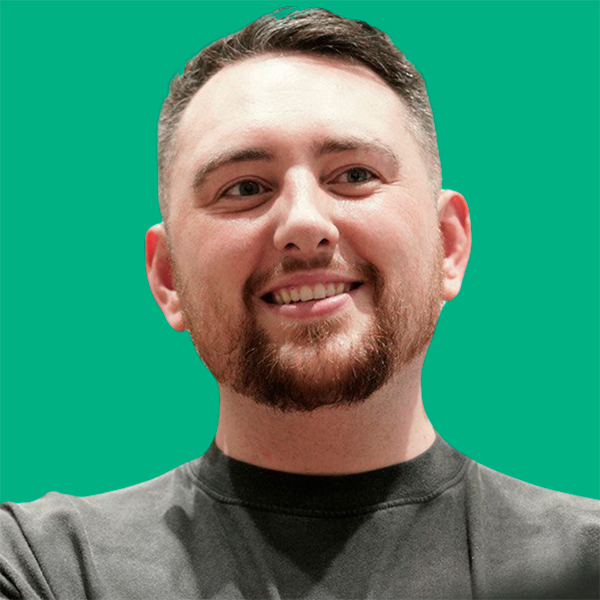
Jeremy Haynes is the founder of Megalodon Marketing. He is considered one of the top digital marketers and has the results to back it up. Jeremy has consistently demonstrated his expertise whether it be through his content advertising “propaganda” strategies that are originated by him, as well as his funnel and direct response marketing strategies. He’s trusted by the biggest names in the industries his agency works in and by over 4,000+ paid students that learn how to become better digital marketers and agency owners through his education products.

Jeremy Haynes is the founder of Megalodon Marketing. He is considered one of the top digital marketers and has the results to back it up. Jeremy has consistently demonstrated his expertise whether it be through his content advertising “propaganda” strategies that are originated by him, as well as his funnel and direct response marketing strategies. He’s trusted by the biggest names in the industries his agency works in and by over 4,000+ paid students that learn how to become better digital marketers and agency owners through his education products.

This site is not a part of the Facebook website or Facebook Inc.
This site is NOT /endorsed by Facebook in any way. FACEBOOK is a trademark of FACEBOOK, Inc.
We don’t believe in get-rich-quick programs or short cuts. We believe in hard work, adding value and serving others. And that’s what our programs and information we share are designed to help you do. As stated by law, we can not and do not make any guarantees about your own ability to get results or earn any money with our ideas, information, programs or strategies. We don’t know you and, besides, your results in life are up to you. Agreed? We’re here to help by giving you our greatest strategies to move you forward, faster. However, nothing on this page or any of our websites or emails is a promise or guarantee of future earnings. Any financial numbers referenced here, or on any of our sites or emails, are simply estimates or projections or past results, and should not be considered exact, actual or as a promise of potential earnings – all numbers are illustrative only.
Results may vary and testimonials are not claimed to represent typical results. All testimonials are real. These results are meant as a showcase of what the best, most motivated and driven clients have done and should not be taken as average or typical results.
You should perform your own due diligence and use your own best judgment prior to making any investment decision pertaining to your business. By virtue of visiting this site or interacting with any portion of this site, you agree that you’re fully responsible for the investments you make and any outcomes that may result.
Do you have questions? Please email [email protected]
Call or Text (305) 704-0094