How to Build Company Culture That Actually Supports Aggressive Growth

I hope you enjoy reading this blog post. If you want my team to just do your marketing for you, click here.
Author: Jeremy Haynes | Published April 17, 2026
Earnings Disclaimer: You have a .1% probability of hitting million-dollar months according to the US Bureau of Labor Statistics. As stated by law, we can not and do not make any guarantees about your own ability to get results or earn any money with our ideas, information, programs, or strategies. We don’t know you, and besides, your results in life are up to you. We’re here to help by giving you our greatest strategies to move you forward, faster. However, nothing on this page or any of our websites or emails is a promise or guarantee of future earnings. Any financial numbers referenced here, or on any of our sites or emails, are simply estimates or projections or past results, and should not be considered exact, actual, or as a promise of potential earnings – all numbers are illustrative only.
Running an agency while sensing something fundamentally broken in how your team operates usually means you’re right. This isn’t about the fluffy culture concepts that sound compelling in business books but offer zero practical application. This concerns the operational frameworks that separate lean businesses from those built to handle serious scale.
Most content on company culture delivers broad generalities without implementation paths. These are specific lessons from high-performance environments: the belief systems you need to inherit to build something capable of real growth.
For deeper exploration of operational systems that support this growth, Master Internet Marketing is my 7-week live comprehensive training where we dissect these frameworks in detail.
Results are not typical. Your results will vary and depend entirely on your individual capacity, business experience, expertise, and level of desire. There are no guarantees concerning the level of success you may experience. The testimonials and examples used are not intended to represent or guarantee that anyone will achieve the same or similar results. We don’t believe in get-rich-quick programs. We believe in hard work, adding value and serving others. As stated by law, we can not and do not make any guarantees about your own ability to get results or earn any money with our information, courses, programs, or strategies.
Already making money? See what it takes to make a lot more.
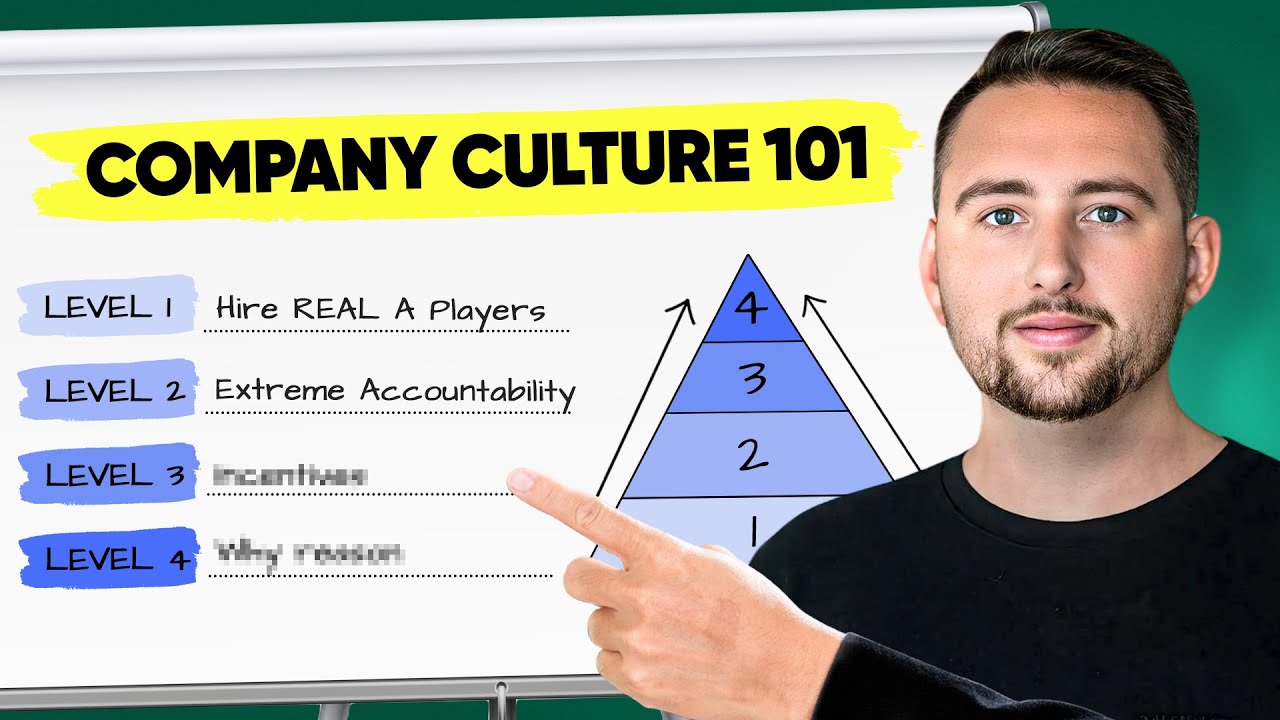
What Makes an A Player Different from Everyone Else on Your Team
Most people avoid this reality: with the wrong people, you don’t stand a chance at building something durable. You might string together a solid month or two, but maintenance becomes impossible.
A players operate fundamentally differently from B and C players. They’re driven by accomplishment, obsessed with performance, and are perfectionists who still bias toward action. They’re exceptionally aggressive with speed and urgency. What matters most: they judge themselves almost entirely on the level of accomplishments they produce.
I worked in a team once where they bought out one member and granted him stock. This person operated like he was on a quadruple dose of the highest-quality focus medication. Talking to someone operating at that level instantly forces elevation. It compels you to become the greatest possible version of yourself, then grow beyond that baseline.
These are people you brag about working with. They brag about working with you. You trust them completely within their positions. Provide targets and objectives, and they execute exceptionally well with minimal involvement beyond supplying what they need.
A players don’t work random jobs. They select companies and positions with strong growth potential. They pursue forward movement, progress, growth opportunities, and accountability. They want to work alongside other people they’d consider some of the best on Earth. Harvard Business Review’s guidance on receiving criticism explains how to use direct feedback as a tool for growth instead of treating it as a threat.
And yes, you’re going to pay them well. That’s the biggest obstacle keeping people stuck: they’re scared to pay. They think because they reached their current level paying modest salaries, they can replicate that approach to reach the next tier. That’s not how progression works.
A players are smart. They’re some of the smartest people on Earth choosing to work for your organization rather than outcompeting you in their own business. They understand what they’re contributing and need incentivization accordingly.
How to Spot Fake A Players Before They Destroy Your Data
One client remained stuck for three years. When I audited his business, I discovered he’d hired someone he believed was one of the best advertisers available. The guy charged a premium monthly fee and positioned himself as an expert.
When I examined the ad account, it ranked among the worst setups I’d seen in 11 years: one video creative, no headlines, no body copy, the pixel optimized for the wrong event entirely, zero proper data training, and no best practices on targeting. Broad targeting with no messaging strategy meant the ads reached the wrong people.
The client was getting terrible cost per qualified call on a good day. His team was literally dialing unqualified prospects because the targeting was so poor.
But the worst part: this fake A player had created fake data and fake lessons. The client believed things like “you shouldn’t launch ads at night” and “your offer just attracts broke people.” These weren’t real insights based on proper testing and data. They were excuses covering up incompetence.
When you don’t have real A players, you get fake data. Fake data leads to fake lessons. Fake lessons lead to fake conclusions. And fake conclusions keep you stagnant.
Real A players have reputations. When you mention hiring them, other people in your industry acknowledge their accomplishments. When they join your team, B and C players get exposed instantly, and other A players confirm it was a phenomenal hire.
Why Radical Accountability Makes A Players Thrive and B Players Quit
This will sound intense to B and C players, but A players thrive on this: radical accountability.
I once worked for a well-known organization where every department shared statistics and KPIs in morning meetings. Sales shared their numbers. Marketing shared ad stats, email stats, social media performance. Copywriters shared split test results, open rates, click-through rates. Every single department, including accounting, shared their metrics.
If your statistic was down, you had a line graph printed and posted on the wall. Every person had a specific statistic or KPI they directly influenced and took complete ownership of. When something went wrong, management knew exactly who to address.
They’d ask a series of questions: Are you missing anything? Do you need training? Is there something we’re not providing that would help you with this statistic?
If you said you were good and had everything you needed, they’d ask for your plan to turn it around. If the statistic was down two weeks in a row, the conversation shifted: “As an organization, we can’t tolerate this statistic being down. We need to get it to this level, otherwise we need to find someone who will. You understand that, right?”
That level of accountability might seem like high pressure. B and C players would quit immediately. But A players thrive in it. They rarely let statistics slide because they know the ramifications. They know measurable results determine how their work is judged. According to Gallup’s workplace research, employees who have clear expectations and regular feedback are significantly more engaged than those without.
This accountability inspires performance. It pushes the business forward. It’s done in a graceful way that brings out peak performance in everyone, making people appreciate the structure rather than resent it.
How to Know Your Real Numbers Instead of the Fake Ones Your Team Feeds You
Businesses that stay stuck typically have no idea what their statistics should actually be. Without A players, they can’t trust what people in various positions tell them the benchmarks should be.
B and C players manipulate data to make things easier for themselves. If your real cost per qualified call could be much lower, they’ll inflate what’s “normal.” That way, when they hit a mediocre number, you think they’re doing great work.
A players do the opposite. They’ll tell you their current metrics and where they think they can improve. They’ll build a financial model showing the maximum cost per qualified call you can tolerate based on all other statistics in the funnel while maintaining desired profit margins.
In high-performance company cultures, the executive’s job isn’t necessarily to dictate what every statistic should be. It’s to communicate the minimum return on ad spend expected. The A player then models out what all other stats need to be to meet and exceed that minimum.
With proper incentive structures aligned to performance tiers, you create natural, successful influences on those statistics without micromanagement.
A players work in reality. They’ll give you counter-perspective when you push them toward unrealistic targets. If you’re raising capital and demand an improbable cost per qualified call, they’ll tell you straight up that while it’s technically possible, it’s extremely improbable. They’ll show you what’s more probable and demonstrate how you’d still be exceptionally profitable and able to scale aggressively.
7 weeks. Real frameworks. Covering copywriting, funnels, paid ads, and conversion systems.
How to Align Incentives So Your Best People Actually Stay
Incentives are critical in high-performance company cultures. If you want to build something substantial, you need to understand that the people who contribute to that want to get paid accordingly.
But most people miss this: incentives aren’t always just money.
There’s a personality assessment called Culture Index that I consider one of the most accurate personality tests. With proper training on it, you learn what different personality types are genuinely motivated by.
Some people are motivated by accomplishment itself.
Some have altruistic desires to make substantial positive impacts.
Some want to work in high-level environments that constantly push them to become better versions of themselves while getting well paid.
Some are pure money-driven individuals.
Most are combinations of these things.
Nowadays, freedom is also a massive incentive. Post-pandemic, many serious A players want the ability to work remotely, travel, or maintain specific routines without being tied to a physical office. Gallup’s research on workplace flexibility shows this has become a primary factor in talent retention.
Some people are driven by legacy. In Miami, where I live, there are people building architecturally beautiful bridges and massive developments. They’re not getting exceptionally well paid, but they’re building something that will be part of the skyline for generations. That type of person doesn’t do it for money. They do it for impact and legacy.
The “why” is the incentive. That’s the main driver of why top players in your organization and why you personally will push to scale. People don’t progress for random reasons. They have distinctly clear individual whys and company whys.
Individual whys are personal motivations. Company whys need to be pushed through consistent communication until your people inherit them as their own beliefs.
Look at SpaceX. They attract some of the greatest people on Earth. Yes, there are individual reasons like stock options in one of the most highly valued private companies. But the company why is massive: they want humans to become a multiplanetary species.
Employees at SpaceX have inherited a belief system that extends beyond building rockets that self-land or advancing technology at a rapid pace. They’re accomplishing things deemed impossible just years ago because they’re on a mission that’s bigger than any individual accomplishment.
When they land a rocket, it’s a significant achievement. But to them, it’s a small stepping stone in the grand journey. When they land people on Mars and set up a civilization, they’ll be energized and immediately think, “cool, baby step number one on Mars accomplished, let’s keep moving forward.”
That’s because they have a grand vision. Companies selling products without a meaningful mission don’t have grand visions. What they’re currently doing feels big to them. They lack company whys. They lack alignment with individual incentives.
So they spin their tires. They don’t accomplish much because there’s nothing they’re chasing.
High-performance company culture goes much deeper than ping pong tables or casual Fridays. It requires A players with proven track records and radical accountability where everyone owns specific metrics and gets transparent feedback. It requires knowing your real numbers and working in probability. Individual incentives also need to align with the company mission in a way that pulls everyone forward.
Businesses I’ve worked with that implement these frameworks see dramatic shifts. Not because of tactics or funnels, but because the entire organization starts operating at a different level. Speed increases. Urgency becomes standard. Communication improves.
If you’re stuck, examine your company culture closely. Not the surface-level stuff, but these operational realities.
For agency operators who want to implement these frameworks with direct guidance, Inner Circle is my private, application-gated mastermind where we work through these exact systems.
Results are not typical. Your results will vary and depend entirely on your individual capacity, business experience, expertise, and level of desire. There are no guarantees concerning the level of success you may experience. The testimonials and examples used are not intended to represent or guarantee that anyone will achieve the same or similar results. We don’t believe in get-rich-quick programs. We believe in hard work, adding value and serving others. As stated by law, we can not and do not make any guarantees about your own ability to get results or earn any money with our information, courses, programs, or strategies.
Get my content first on Google
Add jeremyhaynes.com as a preferred source and Google shows my articles more prominently in your search results, including AI Overviews and AI Mode.


Jeremy Haynes
Owner and CEO of Megalodon Marketing
Jeremy Haynes is the founder of Megalodon Marketing. He is considered one of the top digital marketers and has the results to back it up.