How to Build an Enterprise Client Qualification System That Works

I hope you enjoy reading this blog post. If you want my team to just do your marketing for you, click here.
Author: Jeremy Haynes | Published April 2, 2026
Earnings Disclaimer: You have a .1% probability of hitting million-dollar months according to the US Bureau of Labor Statistics. As stated by law, we can not and do not make any guarantees about your own ability to get results or earn any money with our ideas, information, programs, or strategies. We don’t know you, and besides, your results in life are up to you. We’re here to help by giving you our greatest strategies to move you forward, faster. However, nothing on this page or any of our websites or emails is a promise or guarantee of future earnings. Any financial numbers referenced here, or on any of our sites or emails, are simply estimates or projections or past results, and should not be considered exact, actual, or as a promise of potential earnings – all numbers are illustrative only.
They spray and pray. They take every discovery call. They convince themselves that more volume equals more revenue.
It doesn’t.
When you’re selling to enterprise clients or industry giants, the game changes completely. You need ruthless qualification frameworks that filter out time-wasters before they ever get on your calendar.
I’m going to walk you through exactly how to build a filtering system that only lets qualified, high-value prospects through. This isn’t about being polite or keeping your pipeline inflated with garbage leads. This is about protecting your time and focusing on deals that actually matter.
If you want to go deeper on enterprise positioning and client acquisition frameworks, my 7-week live comprehensive training covers exactly how we approach this.
Why Your Prospect Filtering Process Keeps Letting Bad Fits Through
I see this constantly.
Someone decides they want to go upmarket. They want those big enterprise deals. So they update their website, maybe raise their prices, and start reaching out to bigger companies.
But they keep the same qualification process they used for small businesses.
That’s the mistake.
Enterprise deals require completely different filtering criteria. You’re not just looking at budget anymore. You’re evaluating buying committees, procurement processes, integration requirements, legal hurdles, and whether this company can actually implement what you’re selling.
Most businesses don’t want to disqualify prospects because they’re afraid of shrinking their pipeline. So they waste months in a sales cycle only to discover the prospect doesn’t have the technical infrastructure to use their solution. Or there’s no real urgency. Or the champion they’ve been talking to has zero influence over the buying decision.
According to Gartner’s research on B2B buying behavior, the average enterprise buying group now includes six to ten decision makers, each armed with four or five pieces of independently gathered information. That’s not selling. That’s hoping, unless you have a framework to navigate it.
How to Build an ICP Scorecard with Data Points That Actually Matter
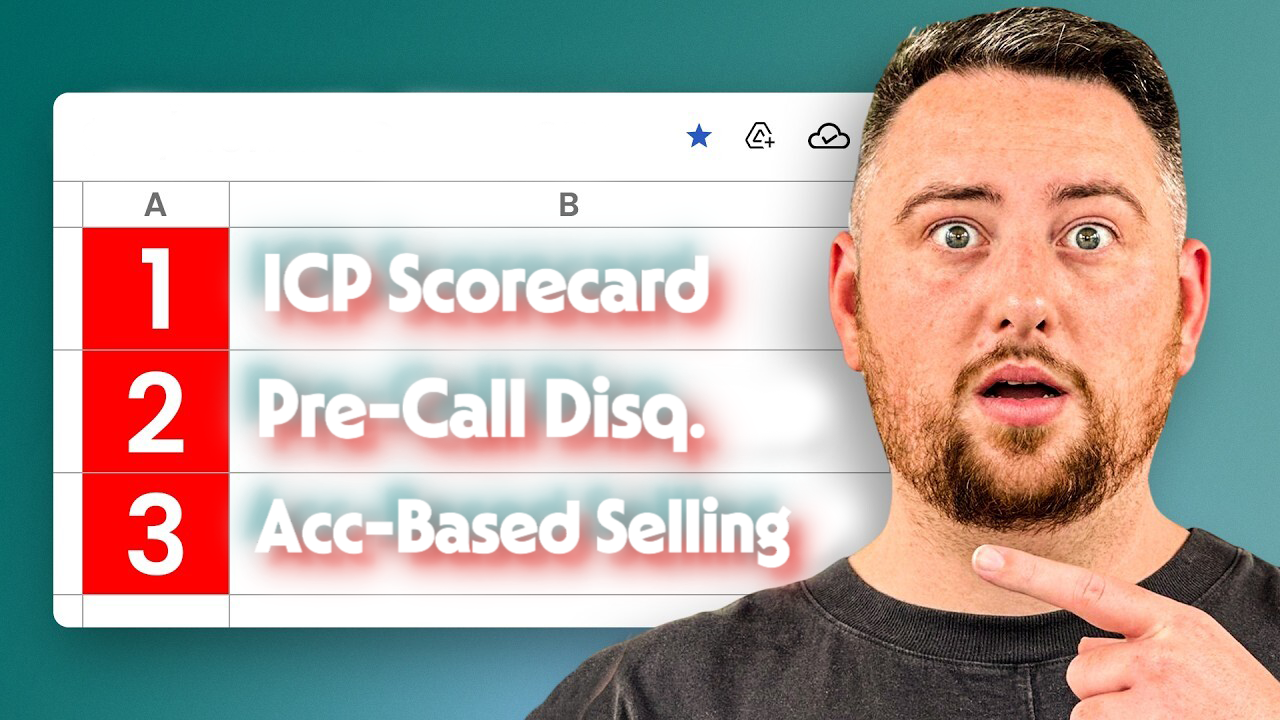
You need a scorecard with at least 20 data points that actually matter.
Start with the obvious: annual recurring revenue thresholds and employee count, depending on your solution.
But that’s just the surface.
You need to know their tech stack. What tools are they currently using? What integrations will they need? If your solution requires a specific infrastructure and they don’t have it, that’s a red flag.
Look at intent signals. Did they just close a funding round? Are they hiring aggressively in departments that would use your solution? Did they just acquire another company and need to consolidate systems?
These signals tell you whether they’re actually in buying mode or just collecting information for some future project that may never happen. Forrester’s research on B2B intent data shows that intent signals are becoming critical for identifying accounts that are actually ready to buy versus those just browsing.
Then add negative indicators. These are automatic disqualifiers.
If they don’t have the urgency, cut them loose.
If the person you’re talking to isn’t anywhere near the decision-making process, that’s a problem.
If they’re currently locked into a long-term contract with a competitor, you’re probably wasting your time unless there’s a compelling reason for them to break it.
The scorecard isn’t about being perfect. It’s about creating a consistent framework so you’re not making emotional decisions about who deserves your time.
How to Disqualify Prospects Before They Ever Get on Your Calendar
Most salespeople do qualification backwards.
They get someone on a discovery call, spend 45 minutes learning about their business, and only then start figuring out if there’s actually a fit.
That’s inefficient.
In my experience, you should be disqualifying the majority of prospects before they ever get on your calendar. Use pre-call questionnaires. Make people fill out detailed forms about their current situation, what they’ve tried, what their timeline looks like, who else is involved in the decision.
If they won’t fill out a form, they’re not serious enough for an enterprise deal.
During that first conversation, you’re not selling. You’re assessing three things: fit, value, and urgency.
Fit means they have the problem you solve, the infrastructure to implement your solution, and the organizational maturity to actually use it. A lot of companies think they’re ready for enterprise solutions when they’re really not.
Value means the economic impact of solving their problem is substantial relative to what you’re charging. If the math doesn’t work, move on.
Urgency means they need this solved in the near term, not in 18 months. Enterprise sales cycles are already long enough. If there’s no urgency, you’re just educating them for some future vendor.
How Account-Based Selling Works When You’re Going After Industry Giants
When you’re going after industry giants, you can’t play a volume game.
You’re not sending hundreds of cold emails hoping for a small response rate. You’re identifying a focused list of target accounts and going deep on each one.
This is account-based selling. You pick the companies first, then identify the personas within those companies.
Spend two hours researching one account. Understand their business model, recent news, leadership changes, competitive pressures, technology initiatives. Know more about their business than most of their employees do.
Then map out the buying committee. In enterprise deals, you’re never selling to one person. You’ve got economic buyers, technical buyers, end users, legal, procurement, and sometimes consultants or advisors.
You need to know who all these people are before you start outreach. Use LinkedIn Sales Navigator. Check their CRM footprint. Look at who’s engaging with content in that space.
Once you’ve mapped the account, you’re building relationships with multiple stakeholders simultaneously. You’re not just pitching the VP of Sales. You’re also talking to the Director of Operations who’ll actually implement this, and the CFO who’ll need to approve the budget.
This takes longer. But it’s how enterprise deals actually close. Harvard Business Review’s analysis of complex B2B sales confirms that winning deals increasingly requires engaging multiple stakeholders with tailored value propositions.
Why Multi-Channel Persistent Engagement Matters for Enterprise Deals
Enterprise deals require multiple touches before you get a meaningful response.
Most salespeople give up too early.
You need a structured outreach sequence that spans multiple channels over weeks or months:
LinkedIn connection requests with personalized notes.
Email sequences that provide value, not pitches.
Phone calls at strategic times.
Video messages for pattern interrupts.
For prospects that go dark, you don’t just mark them as dead. You set up regular check-ins. A quick email: “Hey, saw your company just announced X. Curious if that changes your timeline on Y.”
I’ve seen deals close well over a year after first contact because someone stayed persistent without being annoying. The key is providing value in every touch. Share relevant research. Introduce them to someone in your network who can help with an unrelated problem. Comment thoughtfully on their LinkedIn posts.
You’re building a relationship, not running a campaign.
When you finally do get that meeting, you’ve already established credibility. You’re not a random vendor. You’re someone who understands their business and has been adding value for months.
How to Be Honest About What You Have Today Versus What’s on the Roadmap
Most people get this wrong about enterprise sales.
They think they need a perfect solution before they can sell to big companies. They wait until every feature is built, every integration is ready, every edge case is handled.
That’s not how it works.
The companies I’ve worked with that successfully sell to enterprise clients are honest about what they have today versus what’s on the roadmap. They communicate clearly about current capabilities and what’s coming.
But here’s the critical part: they have the ability to adapt quickly.
I’ve seen engineering teams build features rapidly because a major prospect needed it to close. That feature then became a core part of the product for everyone else.
You’re not lying about capabilities. You’re being transparent about current state while demonstrating your ability to close gaps rapidly.
This requires a different kind of product development process. You need tight feedback loops between sales and engineering. You need the ability to prioritize enterprise needs without abandoning your core product vision.
When you’re honest about gaps, you actually build more trust. Enterprise buyers are sophisticated. They know no solution is perfect. What they want to know is whether you’re a partner who’ll work with them to solve problems, or a vendor who’ll disappear after the contract is signed.
Enterprise sales come with obstacles you don’t face in SMB deals.
Long sales cycles are standard. Several months is normal, sometimes longer. You need the cash flow and pipeline management to sustain that.
RFPs and procurement processes are designed to be painful. They’re not trying to find the best solution; they’re trying to minimize risk and check compliance boxes. You either learn to navigate these processes or you partner with someone who can.
Legal reviews take forever. Security questionnaires are exhausting. Integration requirements are complex. Every enterprise has different standards for SLAs, support response times, data handling, and contractual terms.
You can’t wing this stuff.
Build templates for everything: RFP response frameworks, security documentation, and standard contract terms you’re willing to accept, and hard lines you won’t cross. MSAs that have already been vetted by your legal team.
The more you can standardize, the faster you can move when opportunities arise.
Also, understand that enterprise deals often require executive involvement. Your CEO or founder might need to meet with their CEO. That’s normal. Build that into your process instead of treating it like an exception.
How to Track the Right Metrics for Enterprise Sales
You can’t manage what you don’t measure.
For enterprise sales, your metrics look different than SMB. You’re not tracking volume of leads. You’re tracking quality of accounts in pipeline.
Customer acquisition cost (CAC) to lifetime value (LTV) ratio matters. If you’re spending more to acquire a customer than they’re worth over their lifetime, your model needs work.
Payback period matters at enterprise scale. You want to recover acquisition costs within a reasonable timeframe. Longer payback periods strain cash flow and make growth harder to fund.
Conversion rates from meeting to close should reflect proper qualification. If you’re closing a very high percentage of deals, you might not be aiming high enough. If you’re closing a very low percentage, your qualification is probably too loose.
Track time in each stage of the pipeline. Where are deals getting stuck? Is it technical diligence? Legal review? Procurement? Once you identify bottlenecks, you can build solutions.
Also measure the human cost. How many hours is your team spending on deals that don’t close? That’s opportunity cost. Every hour spent on a bad-fit prospect is an hour not spent on a giant that could actually buy.
A Practical Qualification Framework You Can Implement This Week
You can implement this practical framework immediately.
Create a qualification checklist with these categories:
Company Fit: Revenue threshold met? Employee count in range? Industry match? Geographic requirements satisfied?
Technical Fit: Required infrastructure present? Integration capabilities confirmed? Security and compliance standards aligned?
Economic Fit: Problem cost quantified? Budget allocated? ROI clear and compelling?
Organizational Fit: Champion identified? Buying committee mapped? Decision process understood? Timeline defined?
Intent Signals: Active buying mode? Competitive evaluation happening? Urgency drivers present?
Negative Indicators: Long-term contracts with competitors? No allocated budget? Champion lacks influence? Implementation capacity questionable?
Score each category. Set minimum thresholds. If a prospect doesn’t hit your threshold, they don’t get a discovery call. Simple as that.
Review this scorecard weekly with your team. Adjust criteria based on what you’re learning from closed deals and lost opportunities.
The goal isn’t perfection. The goal is consistency and continuous improvement.
Going after industry giants isn’t for everyone.
It requires patience most businesses don’t have. It requires capital reserves to survive long sales cycles. It requires organizational maturity to deliver on enterprise expectations.
But if you have the fundamentals in place, and you’re willing to be ruthless about qualification, the economics work differently than chasing small deals.
One enterprise client can represent significant value compared to many SMB clients, often with different support overhead and churn dynamics.
The businesses that succeed at enterprise don’t try to boil the ocean. They pick a tight ICP, build deep expertise in that vertical, and become the obvious choice for a specific type of company with a specific problem.
They don’t chase every opportunity. They filter brutally and focus intensely on the accounts that matter.
That’s the difference between hoping for enterprise deals and systematically closing them.
Build your scorecard. Define your non-negotiables. Protect your time like it’s your most valuable asset, because it is.
Then go execute.
If you want to work through these frameworks with direct feedback and a room of operators who are implementing the same approaches, the Inner Circle is where we go deep on enterprise positioning, qualification systems, and closing larger deals.
Results are not typical. Your results will vary and depend entirely on your individual capacity, business experience, expertise, and level of desire. There are no guarantees concerning the level of success you may experience. The testimonials and examples used are not intended to represent or guarantee that anyone will achieve the same or similar results. We don’t believe in get-rich-quick programs. We believe in hard work, adding value and serving others. As stated by law, we can not and do not make any guarantees about your own ability to get results or earn any money with our information, courses, programs, or strategies.
Get my content first on Google
Add jeremyhaynes.com as a preferred source and Google shows my articles more prominently in your search results, including AI Overviews and AI Mode.


Jeremy Haynes
Owner and CEO of Megalodon Marketing
Jeremy Haynes is the founder of Megalodon Marketing. He is considered one of the top digital marketers and has the results to back it up.