I hope you enjoy reading this blog post. If you want my team to just do your marketing for you, click here.

I hope you enjoy reading this blog post. If you want my team to just do your marketing for you, click here.
Author: Jeremy Haynes | founder of Megalodon Marketing.

Earnings Disclaimer: You have a .1% probability of hitting million-dollar months according to the US Bureau of Labor Statistics. As stated by law, we can not and do not make any guarantees about your own ability to get results or earn any money with our ideas, information, programs, or strategies. We don’t know you, and besides, your results in life are up to you. We’re here to help by giving you our greatest strategies to move you forward, faster. However, nothing on this page or any of our websites or emails is a promise or guarantee of future earnings. Any financial numbers referenced here, or on any of our sites or emails, are simply estimates or projections or past results, and should not be considered exact, actual, or as a promise of potential earnings – all numbers are illustrative only.
Jeremy Haynes took an info business from $300,000 per month to $2.5 million per month in eight months. It stayed at that level for just shy of two years. Then it collapsed. All the key players quit. Revenue dropped back to $500,000 to $600,000 per month. The founder bought 40 random businesses, hired 200 B and C-players overnight, and convinced himself the main offer would die even though it was still printing millions. This is the story of what to do and what not to do when scaling past seven figures monthly.
Haynes landed the client in 2018 or 2019 with a custom video pitch. He printed off a photo of the founder and held it up during the pitch. This was before AI made everything easy. The client was doing $300,000 per month in the info space.
The niche? Massive. One of those verticals where customers already have opinions and beliefs about what you’re selling. Stocks, real estate, sales. Industries where huge quantities of people participate. In-market demographics are massive. Needs-convinced demographics are even bigger.
The client already had an in-house advertiser. Haynes came in as a consultant to teach advertising strategies. Within two weeks, they went from $300,000 to $600,000 per month. Just basic best practices Haynes religiously follows.
The impact was immediate. The client called Haynes directly. “How much is your highest client paying you right now?”
At the time, Haynes was transitioning to rev share relationships. His goal was $100,000 per month per deal. He shared his pricing model. Fee plus 10% net rev share.
The client made an offer. “I’m going to pay you $25,000 a month and the 10% net rev share. I want you to pay the most attention to me. I want you to prioritize our relationship.”
Haynes agreed immediately. Within two weeks, they transitioned from consulting to hands-on. And the real work began.
The advertising strategy was dead simple. Direct response ads optimized toward a free digital book. No free-plus-shipping model to liquidate ad spend. Just an opt-in funnel. Leads came in cheap. $2 to $7 depending on the market.
From the book, two things happened. A 12-day email sequence. And retargeting ads. Both pushed people to an automated webinar made to look live.
Here’s the wild part. 70% of revenue came from the email sequence. Specifically between days 10 and 12. That’s when people got funneled to the webinar. The other 30% came from retargeting ads. But 100% of revenue was attributed back to the webinar.
The split between paid and organic? 95% paid at first. 5% organic. Over time that shifted to 60% paid, 40% organic as the founder’s presence exploded.
The webinar sold to the general public. A $2,500 offer. Payment plans available. Majority paid in full. Haynes thinks it was in the 80s but won’t quote exact numbers because he doesn’t remember precisely.
“We would essentially front cash for about two weeks,” Haynes explained.
That’s how long it took for the email sequence to convert. Scary. But it worked. And when something’s working, you gas it.
When Haynes first came in as a consultant, the in-house advertiser wasn’t gassing the funnel. It was already profitable. But they weren’t scaling. Haynes immediately implemented tactics to press it up.
Most businesses fail at scaling because they’re scared. They hit ROI positive and stop. Or ROAS fluctuates and they pull spend back instead of realizing ROAS is a dynamic number that fluctuates as you climb the ladder of scale.
You might go from 10:1 ROAS to 3:1 and work your way back up to 7:1. But you scale the entire time and make more money as you grow.
That’s what Haynes did. They scaled from in-market demographics to needs-convinced demographics. Eventually they hit mass market. At the peak, they were spending upwards of $700,000 per month on ads.
The niche was massive enough to support cold traffic immediately. There was such a big in-market demographic that even cold audiences had people who needed this. Haynes can’t give too many details because it would reveal the client’s identity. But he will say this.
A big sales strategy that’s common now wasn’t common back then. This founder came in and aggressively taught people how to do sales differently. It was extremely well-received. He taught it well. He got people phenomenal results. And the machine just perpetuated itself.
The client started to deeply believe info products only have life for maybe a year. Haynes completely disagreed. He had data from client accounts that proved it was untrue.
“Beliefs cause wars. Beliefs drive almost all human behavior,” Haynes noted.
The client was so attached to that singular belief, he created another product. Diversified attention. Limited revenue. If they’d kept all attention on the main offer and just ideated funnel variations, they would have crushed it.
Low ticket to high ticket. Marketing the webinar on the front end. Call funnels. All kinds of ideas could have been executed. But ideas weren’t getting taken action on. They just died.
The team originally had 12 A-players. Every single one of them was someone you’d brag about working with. Fast. Efficient. Results-driven. They didn’t need a large team even at $2.5 million per month.
Then the second offer launched. It shit the bed. Terrible. Not well-received. Very few people bought it. It didn’t align with the personal brand or what the founder was known for. It was random.
They rode it out for a couple months. The main offer still printed $2 million to $2.5 million every month. But the damage was done. The belief that the main offer would die infected everything.
A third offer launched. It didn’t completely flop. It had legs. But it couldn’t be maximized because of the bureaucracy that was about to explode.
The founder went out and bought 40 different businesses with the cash he’d accumulated. The businesses were random. Not strategic. He didn’t just buy real estate to depreciate taxes or equities or interest in businesses. He bought the businesses fully. Had to take them over. Had to run operations.
He became self-convinced that he was the main driver of the business’s growth. Not the collective effort of the 12 A-players and himself. Just him.
He hired over 200 staff at once to run these 40 businesses. But they were also somehow working on the info business. The 12 A-players who’d never needed support staff before suddenly had insane complexity in their lives.
Worse? The 200 people were B and C-players. Subpar. Looking for a paycheck. They didn’t like to be judged on results. They didn’t like to be pushed or held accountable. That creates a political environment.
A-players judge themselves solely on results, momentum, and speed. Suddenly they’re clashing with people actively trying to go as slow as possible. Casual people who don’t judge themselves on outcomes. People who value work-life balance over winning.
An HR department got developed. Dozens and dozens of complaints rolled in. A-players against B and C-players. Like Navy SEALs going against a platoon of hundreds of regular soldiers. Completely different training. Completely different operations. Completely different expectations.
One by one, the A-players quit. When one of the 12 would leave, four or five B or C-players would get thrown into that department to replace them. One A-player can do the job of four to five B or C-players.
It caused even more friction. The operation went from driving an F1 car to driving a 1980s piece of shit hoopty. The speed difference was dramatic. The mechanics changed entirely.
Haynes got pulled into HR once for calling out someone for slowing everything down. He was told he was being egotistical for holding someone accountable. He tried to integrate. Tried to reform. Maybe he was wrong. Maybe this was the next evolution.
He wasn’t wrong. They were down to six of the original 12. Then five. Then four. Then three. Revenue started dropping. Things moved so slow it became traumatizing.
Haynes transitioned from advertiser to consultant. Trained his replacement. Then got pushed out completely.
Out of the $700,000 monthly ad spend at peak, Haynes ripped $200,000 on content distribution. A lot of advertisers with no idea what they’re doing rip on content. They think it doesn’t make a difference because it’s not direct response.
Haynes thinks the opposite. Content is extremely cheap to distribute. And at scale, it’s critical. This was a mass market account. Nurses. Uber drivers. College students who’d drop out to learn what the founder was teaching.
Mass market content distribution actively sold people and handed them beliefs to think with. Beliefs that made them higher probability customers. Content does the heavy lifting.
The industry ad expert at Facebook told Haynes something insane. Out of the total quantity of impressions available on the platform for personal development, they were one-third of every possible impression being served to people.
On a monthly basis, they were hitting just shy or just over 100 million impressions. They took the founder to a literal household name with $200,000 per month in content.
It fed the organic presence like nothing else. They took him to a couple million subscribers on YouTube. A couple million followers here. A couple million followers there. Just splashing millions of followers across every channel.
Haynes remembered being in Texas at a Keith Cunningham event called Keys to the Vault. The hotel where the event was held was literally across the street from where they were staying. Half a block walk.
Three people stopped them in the hotel. Two people stopped them in the street. One person stopped them at the other hotel. This guy wasn’t even from Texas. Didn’t look like he was from Texas. But everyone recognized him.
That’s the level of awareness $200,000 per month on content creates. President-level awareness. Extreme recognition.
From $300,000 to $2.5 million per month in eight months with a dead simple funnel.
Free book opt-in. 12-day email sequence. Retargeting ads. Automated webinar. 70% of revenue from days 10 to 12 of the sequence. Scaling to $700,000 monthly ad spend by moving from in-market to needs-convinced to mass market.
Then the collapse. Beliefs that the main offer would die. Launching random secondary and tertiary offers. Buying 40 businesses. Hiring 200 B and C-players overnight. All 12 A-players quitting. Revenue dropping back to $500,000 to $600,000 per month.
The lesson? Press the gas when something’s working. Don’t diversify attention when you’re printing millions. Don’t let beliefs about product lifespan sabotage reality. And never, ever mix A-players with B and C-players.
They operate at completely different speeds with completely different values. One group judges themselves on results. The other group just wants a paycheck. When they clash, the A-players leave. And when the A-players leave, the business collapses. Every single time.
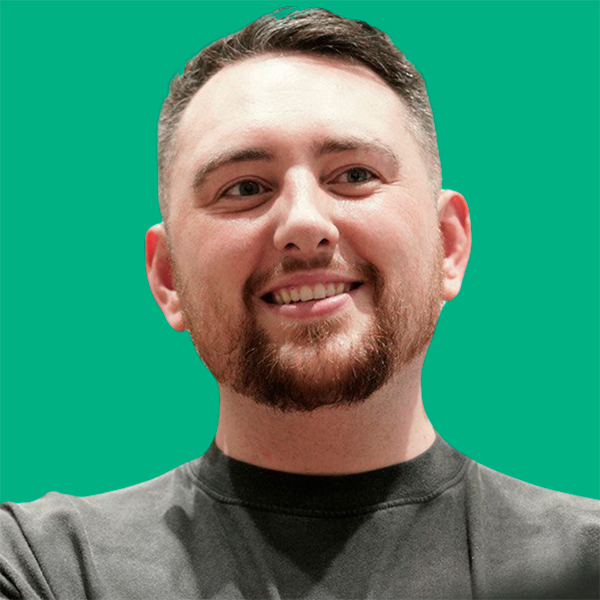
Jeremy Haynes is the founder of Megalodon Marketing. He is considered one of the top digital marketers and has the results to back it up. Jeremy has consistently demonstrated his expertise whether it be through his content advertising “propaganda” strategies that are originated by him, as well as his funnel and direct response marketing strategies. He’s trusted by the biggest names in the industries his agency works in and by over 4,000+ paid students that learn how to become better digital marketers and agency owners through his education products.
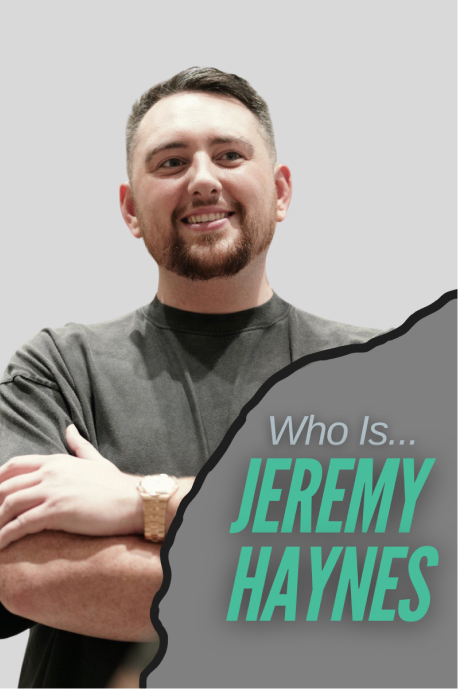
Jeremy Haynes is the founder of Megalodon Marketing. He is considered one of the top digital marketers and has the results to back it up. Jeremy has consistently demonstrated his expertise whether it be through his content advertising “propaganda” strategies that are originated by him, as well as his funnel and direct response marketing strategies. He’s trusted by the biggest names in the industries his agency works in and by over 4,000+ paid students that learn how to become better digital marketers and agency owners through his education products.


This site is not a part of the Facebook website or Facebook Inc.
This site is NOT /endorsed by Facebook in any way. FACEBOOK is a trademark of FACEBOOK, Inc.
We don’t believe in get-rich-quick programs or short cuts. We believe in hard work, adding value and serving others. And that’s what our programs and information we share are designed to help you do. As stated by law, we can not and do not make any guarantees about your own ability to get results or earn any money with our ideas, information, programs or strategies. We don’t know you and, besides, your results in life are up to you. Agreed? We’re here to help by giving you our greatest strategies to move you forward, faster. However, nothing on this page or any of our websites or emails is a promise or guarantee of future earnings. Any financial numbers referenced here, or on any of our sites or emails, are simply estimates or projections or past results, and should not be considered exact, actual or as a promise of potential earnings – all numbers are illustrative only.
Results may vary and testimonials are not claimed to represent typical results. All testimonials are real. These results are meant as a showcase of what the best, most motivated and driven clients have done and should not be taken as average or typical results.
You should perform your own due diligence and use your own best judgment prior to making any investment decision pertaining to your business. By virtue of visiting this site or interacting with any portion of this site, you agree that you’re fully responsible for the investments you make and any outcomes that may result.
Do you have questions? Please email [email protected]
Call or Text (305) 704-0094