I hope you enjoy reading this blog post. If you want my team to just do your marketing for you, click here.

I hope you enjoy reading this blog post. If you want my team to just do your marketing for you, click here.
Author: Jeremy Haynes | founder of Megalodon Marketing.
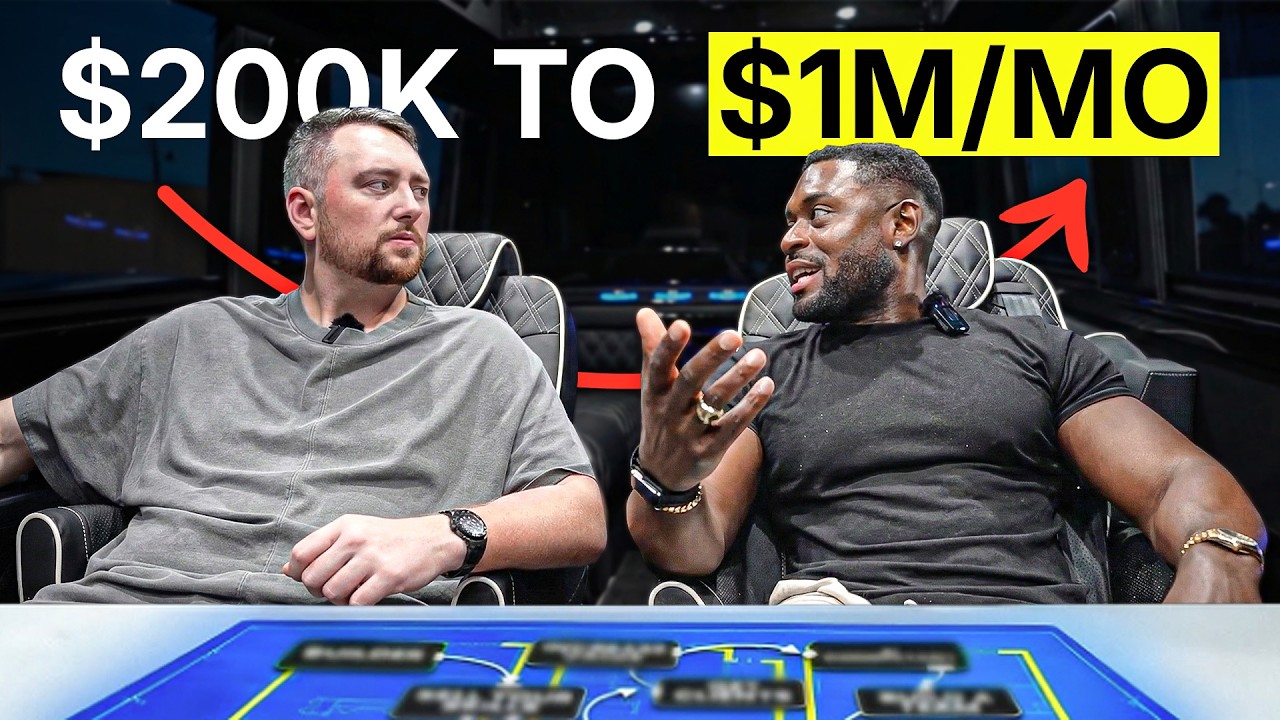
Jeremy Haynes discusses how one coaching client broke through a revenue plateau by fixing his sales call show rates, restructuring his ad strategy, and hammering leads with content between booking and showing up.
Jeremy Haynes doesn’t sugarcoat the consulting game. In a recent breakdown, he walked through exactly how one of his clients went from $200,000 per month to over $1 million per month in revenue by solving one deceptively simple problem: getting more people to actually show up to their booked sales calls. The difference wasn’t a new funnel or a fancy webinar. It was ruthless focus on show rate, ad congruency, and relentless follow-up.
Haynes started with the most overlooked metric in high-ticket sales: show rate. Most consultants obsess over close rates or cost per lead, but if people aren’t showing up, none of that matters.
His client was booking calls consistently but hemorrhaging money because only half the people who booked actually showed. Haynes pointed out that improving show rate from 50% to 70% doesn’t just mean more calls. It means more revenue per ad dollar, better sales team morale, and faster scale.
“Show rate is the first domino,” Haynes explained. “Fix that, and everything else gets easier.”
The first move was tearing apart the ad strategy. Haynes walked through his preferred structure: start with video ads that pre-qualify and build trust, then retarget with image ads that drive the booking.
Video ads do the heavy lifting. They let prospects see you, hear your voice, and decide if they vibe with your approach before they ever click.
Image ads are cheaper and faster for retargeting warm traffic.
Haynes also stressed congruency. If your ad promises a strategy session and your landing page talks about a discovery call, you’ve already lost trust. “Your ad, your page, your confirmation email — it all has to say the same thing,” he said.
Congruency isn’t just a copywriting nicety. It’s a conversion multiplier. Haynes broke down how his client’s ads were talking about solving a specific problem, but the landing page was generic and vague.
The fix was simple: mirror the language. If the ad says “book a 30-minute growth audit,” the headline on the page should say the exact same thing. No creativity. No cleverness. Just consistency.
Haynes noted that most people overthink this. “You don’t need a new offer. You need your offer to sound the same everywhere.”
This is where Haynes gets tactical. He’s not a fan of opt-in pages before call bookings unless you’re in a market where people are extremely skeptical or price-sensitive.
For most high-ticket coaches and consultants, the opt-in is just another step that kills momentum. Haynes prefers going straight from ad to calendar, especially if the ad has done its job of filtering out tire kickers.
But there’s a caveat. If your market is cold or you’re selling something unfamiliar, an opt-in page with a short video can warm people up and improve show rates. “Test it,” Haynes said. “But don’t assume you need it.”
The application form itself is a tool, not just a data collector. Haynes walked through how his client redesigned the questions to do two things: filter out bad fits and increase psychological commitment.
Instead of asking “What’s your biggest challenge?” they asked “What have you already tried to solve this problem?” That question forces reflection and separates serious buyers from people just browsing.
Haynes also recommended adding a question about budget or investment range. It’s not about disqualifying people. It’s about setting expectations and making sure the person on the other end knows this is a business conversation.
“Every question should either filter or commit,” Haynes explained. “If it’s not doing one of those, cut it.”
Most people treat the confirmation page like a receipt. Haynes treats it like a sales page. After someone books, they’re in a high-intent state. That’s the moment to reinforce the value of showing up.
His client’s confirmation page included a short video from the founder explaining what to expect on the call, what to prepare, and why this conversation could be a turning point. It also linked to a case study and a testimonial.
The result? Show rates jumped. People who watched the video were 20% more likely to show up than those who didn’t.
“Don’t waste the confirmation page,” Haynes said. “It’s your first chance to build rapport before the call.”
Here’s where the client made the biggest leap. Between booking and the call, they implemented what Haynes calls the “hammer them” strategy: a sequence of emails, SMS messages, and even a piece of direct mail for high-value leads.
The emails weren’t reminders. They were value bombs. Each one included a tip, a case study, or a short video that reinforced why the call mattered. The SMS messages were conversational and personal, not automated garbage.
Haynes pointed out that most people are afraid to follow up too much. But in his experience, the opposite is true. “If someone books a call and then ghosts, it’s not because you followed up too much. It’s because you didn’t give them a reason to care.”
Even after optimizing ads, pages, applications, and follow-up, some clients still struggle with show rates. Haynes walked through the less obvious culprits: time zone confusion, calendar link issues, and sales team energy.
One fix that worked for this client was switching from Calendly to a more robust scheduling tool that sent automatic SMS reminders and allowed for easier rescheduling. Another was training the sales team to send personalized voice notes to every lead within an hour of booking.
Haynes also mentioned that sometimes the offer itself is the problem. If people aren’t showing up, it might be because they don’t believe the call will be worth their time. “You can’t optimize your way out of a weak offer,” he said.
The client’s jump from $200,000 to over $1 million per month wasn’t the result of one hack. It was the compounding effect of fixing show rates, tightening message congruency, and relentlessly following up with leads. Haynes made it clear that most consultants are sitting on a goldmine of booked calls that never convert — not because their offer is weak, but because their process is leaky. Plug the leaks, and the revenue follows.
Jeremy Haynes is a marketing strategist and the founder of Megalodon Marketing, a consultancy that helps coaches, consultants, and high-ticket service providers scale their revenue through optimized ad strategies, sales processes, and conversion systems. Known for his no-fluff approach and tactical breakdowns, Haynes works with clients doing multiple six and seven figures who are ready to scale predictably without burning cash on broken funnels.
Jeremy Haynes is the founder of Megalodon Marketing. He is considered one of the top digital marketers and has the results to back it up. Jeremy has consistently demonstrated his expertise whether it be through his content advertising “propaganda” strategies that are originated by him, as well as his funnel and direct response marketing strategies. He’s trusted by the biggest names in the industries his agency works in and by over 4,000+ paid students that learn how to become better digital marketers and agency owners through his education products.
Jeremy Haynes is the founder of Megalodon Marketing. He is considered one of the top digital marketers and has the results to back it up. Jeremy has consistently demonstrated his expertise whether it be through his content advertising “propaganda” strategies that are originated by him, as well as his funnel and direct response marketing strategies. He’s trusted by the biggest names in the industries his agency works in and by over 4,000+ paid students that learn how to become better digital marketers and agency owners through his education products.
This site is not a part of the Facebook website or Facebook Inc.
This site is NOT /endorsed by Facebook in any way. FACEBOOK is a trademark of FACEBOOK, Inc.
We don’t believe in get-rich-quick programs or short cuts. We believe in hard work, adding value and serving others. And that’s what our programs and information we share are designed to help you do. As stated by law, we can not and do not make any guarantees about your own ability to get results or earn any money with our ideas, information, programs or strategies. We don’t know you and, besides, your results in life are up to you. Agreed? We’re here to help by giving you our greatest strategies to move you forward, faster. However, nothing on this page or any of our websites or emails is a promise or guarantee of future earnings. Any financial numbers referenced here, or on any of our sites or emails, are simply estimates or projections or past results, and should not be considered exact, actual or as a promise of potential earnings – all numbers are illustrative only.
Results may vary and testimonials are not claimed to represent typical results. All testimonials are real. These results are meant as a showcase of what the best, most motivated and driven clients have done and should not be taken as average or typical results.
You should perform your own due diligence and use your own best judgment prior to making any investment decision pertaining to your business. By virtue of visiting this site or interacting with any portion of this site, you agree that you’re fully responsible for the investments you make and any outcomes that may result.
Do you have questions? Please email [email protected]
Call or Text (305) 704-0094