I hope you enjoy reading this blog post. If you want my team to just do your marketing for you, click here.


I hope you enjoy reading this blog post. If you want my team to just do your marketing for you, click here.
Author: Jeremy Haynes | founder of Megalodon Marketing.
Earnings Disclaimer: You have a .1% probability of hitting million-dollar months according to the US Bureau of Labor Statistics. As stated by law, we can not and do not make any guarantees about your own ability to get results or earn any money with our ideas, information, programs, or strategies. We don’t know you, and besides, your results in life are up to you. We’re here to help by giving you our greatest strategies to move you forward, faster. However, nothing on this page or any of our websites or emails is a promise or guarantee of future earnings. Any financial numbers referenced here, or on any of our sites or emails, are simply estimates or projections or past results, and should not be considered exact, actual, or as a promise of potential earnings – all numbers are illustrative only.
Look, I’ve seen it a thousand times. You’re running a business that’s actually making money, but behind the scenes it’s held together with duct tape and prayer.
You’re manually tracking campaigns in three different spreadsheets. Your team is constantly putting out fires. Someone’s always staying late to fix something that broke because there wasn’t a real system in place.
And the worst part? You know you should be growing, but you can’t because you’re already at capacity. Adding more revenue would literally break everything.
That’s not a growth problem. That’s an operating cadence problem.
The businesses I’ve worked with that actually grow without burning out their teams all have one thing in common: they moved from reactive chaos to dialed-in operating rhythms. Not complicated. Not fancy. Just repeatable systems that work whether you’re at your current revenue or multiples of it.
If you want to go deeper on building these operational systems, my 7-week live comprehensive training covers the full framework for agency operators.
Results are not typical. Your results will vary and depend entirely on your individual capacity, business experience, expertise, and level of desire. There are no guarantees concerning the level of success you may experience. The testimonials and examples used are not intended to represent or guarantee that anyone will achieve the same or similar results. We don’t believe in get-rich-quick programs. We believe in hard work, adding value and serving others. As stated by law, we can not and do not make any guarantees about your own ability to get results or earn any money with our information, courses, programs, or strategies.
Let me show you exactly how that transition happens.
Here’s what duct tape operations actually look like in real businesses.
Your marketing team is chasing every new trend because there’s no filter system. Someone reads about a new platform, and suddenly everyone’s scrambling to figure out TikTok or Threads or whatever just launched.
You’ve got silos everywhere. Sales doesn’t know what marketing promised. Fulfillment is guessing at capacity. Everyone’s working hard, but nothing connects.
The process for launching anything new is basically someone figuring it out from scratch every single time. No templates. No playbooks. Just reinventing the wheel because no one documented what worked last time.
And when something breaks? Everyone drops everything to fix it. That’s your whole day gone.
This isn’t sustainable, and it definitely doesn’t work as you try to grow. The businesses that try to grow on duct tape either plateau hard or burn through team members like crazy.
According to McKinsey’s research on organizational health, companies with structured decision-making processes and clear meeting cadences consistently outperform those operating reactively.
The fix isn’t working harder. It’s building an actual operating cadence that handles growth without adding chaos.
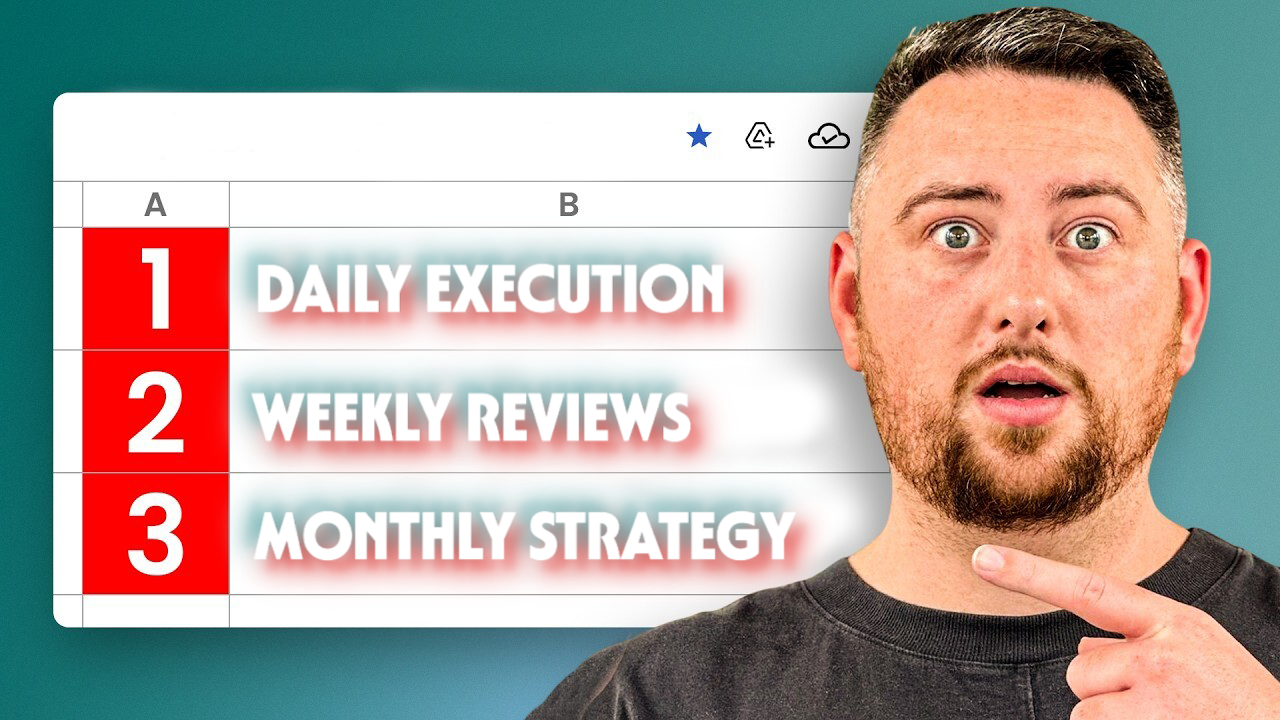
A dialed-in operating cadence has three layers: daily execution, weekly optimization, and monthly strategy.
Daily is where your team executes on what’s already decided. Content goes out. Campaigns run. Customer touchpoints happen. No one’s making big decisions here; they’re just running the plays.
This is where AI integration makes a difference in how we approach operations. You’re not using AI to replace strategy, you’re using it to handle routine tasks: content variations, basic targeting adjustments, performance monitoring.
Your team becomes product managers for these systems instead of manually doing everything. That’s how you grow output without growing headcount proportionally.
Weekly is your optimization layer. You’re looking at what happened, what worked, and what didn’t. You’re making tactical adjustments based on real data, not gut feelings.
This is a specific meeting with a specific agenda: performance review first, then planning for the next week. You’re documenting decisions so there’s actually a record of why you did what you did.
The businesses that skip this weekly rhythm end up repeating the same mistakes because no one’s actually reviewing results in a structured way.
Monthly is strategy. You’re looking at bigger trends, evaluating whether your overall approach is working, and making larger pivots if needed.
This is where you audit whether your cadence itself is working: Are daily operations smooth? Are weekly reviews catching issues early? Are you actually moving toward quarterly goals?
Most businesses either do all strategy and no execution, or all execution and no strategy. The cadence keeps both in balance.
Let me be clear about how AI fits into a real operating cadence.
You’re not handing everything over to AI and hoping it works. You’re using AI for specific, repeatable tasks that free up your team for higher-value work.
In my experience, businesses that do this right categorize every task as either routine or creative. Routine gets automated. Creative stays human.
Routine: generating content variations for different platforms, adjusting targeting based on performance data, creating initial campaign structures, monitoring metrics for anomalies. AI handles those tasks. Your team reviews and approves, but they’re not doing it manually from scratch.
Creative: strategy, messaging positioning, brand voice, relationship building, complex problem solving. That stays with humans who understand your business.
The framework I’ve seen work is simple: AI proposes, humans dispose. The AI generates options; your team picks what fits your brand and strategy.
This typically looks like:
Daily AI-generated reports that your team reviews quickly instead of spending an hour pulling data.
Weekly AI-suggested optimizations that your team evaluates and implements.
Monthly trend analyses that inform your strategic planning.
According to Gartner’s research on marketing automation, organizations using AI for campaign management are shifting their teams from execution to oversight roles, fundamentally changing how marketing departments operate.
Your marketing team shifts from being executors to being managers of systems. That’s a completely different workload, and it’s way more sustainable.
Here’s what actually stops businesses from growing: friction in the customer journey.
You’ve got potential buyers who want what you’re selling, but there are too many steps between interested and purchased. Every extra click, every platform switch, every unnecessary form field is losing you potential revenue.
The businesses I’ve worked with that grow smoothly are obsessed with removing this friction.
Social commerce is a perfect example. Instead of making someone see your product on Instagram, remember it, go to your website, find the product again, then buy — you let them buy right there in the post.
Platforms like Instagram and TikTok now have native shopping features. When someone’s already in buying mode, scrolling and engaged, that’s when you want the buy button.
Retail media networks work the same way. Walmart, Amazon, these platforms let you advertise to people who are literally already shopping.
Harvard Business Review’s research on customer friction shows that reducing customer effort is often more impactful than trying to exceed expectations. The businesses that focus on removing obstacles tend to see better retention and conversion.
That’s not because the ads are better. It’s because the friction is lower.
In your operating cadence, this means building distribution channels where your customers already are, in buying mode — not trying to pull them to where you want them to be.
Your weekly optimization should include reviewing these touchpoints: Where are people dropping off? Where’s the friction? How do we remove one more step?
The goal isn’t more traffic. It’s more conversion from the traffic you already have.
Let’s talk about what actually causes burnout in growing businesses.
It’s not hard work. People will work hard on things that matter. Burnout comes from working hard on things that don’t matter, constantly context-switching, or feeling like nothing ever gets finished.
The operating cadence fixes this by creating clear boundaries around what happens when.
Daily execution time is protected. Your team isn’t getting pulled into strategy meetings during execution time. They’re not constantly switching between doing work and talking about work.
Weekly reviews have a hard stop. You’re not endlessly debating what to do; you’re making decisions based on data and moving forward.
Monthly strategy is scheduled in advance. No one’s scrambling to figure out next quarter’s plan at the last minute.
This structure means people can actually finish things. They can go deep on execution without interruption. They can plan their work because they know when different types of work happen.
The businesses I’ve worked with that implement this see immediate changes in team capacity. Not because people are working more hours, but because the hours they work are actually productive.
Another key piece is shifting from generalists to specialists. When you’re small, everyone does everything. As you grow, that becomes the bottleneck.
Your operating cadence should identify which specialized roles actually move the needle. For most businesses, that’s things like conversion optimization, content systems, and customer journey mapping.
You’re not hiring more people to do more of the same. You’re hiring specialists to systematize specific functions.
According to Deloitte’s research on workforce trends, organizations that invest in specialized skill development and clear role definition tend to see better employee engagement and retention than those with ambiguous, generalist structures.
Here’s how you know if your operating cadence is working:
Task completion rate. Are things that get scheduled actually getting done? If your weekly plan consistently has a significant portion of tasks rolling over to next week, your cadence is broken.
Decision velocity. How long does it take to make and implement decisions? In a good cadence, small decisions happen daily, medium decisions weekly, large decisions monthly. If everything requires three meetings and two weeks, you’re too slow.
Team capacity utilization. This isn’t about working people harder; it’s about whether people are working on high-value activities. If your best people are spending most of their time on routine tasks, your AI integration isn’t working.
Customer friction metrics. Time from awareness to purchase, drop-off rates at each stage, support tickets about confusion or difficulty. These tell you if your systems are actually removing friction or adding it.
Revenue per team member. As your cadence improves, this should trend upward. Not because people work more, but because systems multiply their output.
These aren’t vanity metrics. These are operational health metrics that tell you if your business can actually grow.
In my experience, businesses that track these monthly can spot problems early. The ones that don’t track them end up in crisis mode, wondering why growth stalled.
Your monthly strategy session should include reviewing these metrics and adjusting your cadence accordingly. This is how you continuously improve instead of just running the same broken system faster.
Look, building an operating cadence isn’t complicated, but it requires commitment.
You can’t implement this halfway. You can’t have a cadence for marketing but chaos everywhere else. You can’t do the daily execution part but skip the weekly reviews.
The businesses that make this work treat their operating cadence like infrastructure. It’s not optional. It’s not something you do when you have time. It’s how the business runs.
Start with one area. Pick your biggest bottleneck, usually marketing or fulfillment, and build a real cadence there: daily execution, weekly optimization, monthly strategy.
Document everything. Not complicated documentation, just simple playbooks that capture what works. When someone figures out a better way to do something, that becomes the new standard process.
Use AI where it makes sense, but don’t expect it to fix broken processes. AI multiplies what you’re already doing. If your process is chaos, AI just gives you faster chaos.
Focus on removing friction from your customer journey. Every week, identify one friction point and eliminate it. Over a quarter, that adds up to meaningfully better conversion.
Protect your team’s capacity by respecting the cadence boundaries. Execution time is for executing. Review time is for reviewing. Don’t let them bleed together.
And measure what matters. Track the operational health metrics that tell you if your cadence is actually working.
The businesses I’ve worked with that do this consistently are the ones that grow without the drama. They’re not constantly in crisis mode. They’re not burning through team members. They’re just executing systematically and growing predictably.
That’s what moving from duct tape to dialed-in actually looks like. It’s not sexy, but it works.
If you want to work through implementing these systems with direct feedback, the Inner Circle is where I work with agency operators on exactly this kind of operational infrastructure.
Results are not typical. Your results will vary and depend entirely on your individual capacity, business experience, expertise, and level of desire. There are no guarantees concerning the level of success you may experience. The testimonials and examples used are not intended to represent or guarantee that anyone will achieve the same or similar results. We don’t believe in get-rich-quick programs. We believe in hard work, adding value and serving others. As stated by law, we can not and do not make any guarantees about your own ability to get results or earn any money with our information, courses, programs, or strategies.

Jeremy Haynes is the founder of Megalodon Marketing. He is considered one of the top digital marketers and has the results to back it up. Jeremy has consistently demonstrated his expertise whether it be through his content advertising “propaganda” strategies that are originated by him, as well as his funnel and direct response marketing strategies. He’s trusted by the biggest names in the industries his agency works in and by over 4,000+ paid students that learn how to become better digital marketers and agency owners through his education products.

Jeremy Haynes is the founder of Megalodon Marketing. He is considered one of the top digital marketers and has the results to back it up. Jeremy has consistently demonstrated his expertise whether it be through his content advertising “propaganda” strategies that are originated by him, as well as his funnel and direct response marketing strategies. He’s trusted by the biggest names in the industries his agency works in and by over 4,000+ paid students that learn how to become better digital marketers and agency owners through his education products.

This site is not a part of the Facebook website or Facebook Inc.
This site is NOT /endorsed by Facebook in any way. FACEBOOK is a trademark of FACEBOOK, Inc.
We don’t believe in get-rich-quick programs or short cuts. We believe in hard work, adding value and serving others. And that’s what our programs and information we share are designed to help you do. As stated by law, we can not and do not make any guarantees about your own ability to get results or earn any money with our ideas, information, programs or strategies. We don’t know you and, besides, your results in life are up to you. Agreed? We’re here to help by giving you our greatest strategies to move you forward, faster. However, nothing on this page or any of our websites or emails is a promise or guarantee of future earnings. Any financial numbers referenced here, or on any of our sites or emails, are simply estimates or projections or past results, and should not be considered exact, actual or as a promise of potential earnings – all numbers are illustrative only.
Results may vary and testimonials are not claimed to represent typical results. All testimonials are real. These results are meant as a showcase of what the best, most motivated and driven clients have done and should not be taken as average or typical results.
You should perform your own due diligence and use your own best judgment prior to making any investment decision pertaining to your business. By virtue of visiting this site or interacting with any portion of this site, you agree that you’re fully responsible for the investments you make and any outcomes that may result.
Do you have questions? Please email [email protected]
Call or Text (305) 704-0094