I hope you enjoy reading this blog post. If you want my team to just do your marketing for you, click here.


I hope you enjoy reading this blog post. If you want my team to just do your marketing for you, click here.
Author: Jeremy Haynes | founder of Megalodon Marketing.

Earnings Disclaimer: You have a .1% probability of hitting million-dollar months according to the US Bureau of Labor Statistics. As stated by law, we can not and do not make any guarantees about your own ability to get results or earn any money with our ideas, information, programs, or strategies. We don’t know you, and besides, your results in life are up to you. We’re here to help by giving you our greatest strategies to move you forward, faster. However, nothing on this page or any of our websites or emails is a promise or guarantee of future earnings. Any financial numbers referenced here, or on any of our sites or emails, are simply estimates or projections or past results, and should not be considered exact, actual, or as a promise of potential earnings – all numbers are illustrative only.
Your ads are invisible.
Not because they’re not running. Not because you’re not spending money. But because they look like every other ad, people scroll past without a second thought.
You’ve got the targeting dialed in. Your offer is solid. Your landing page converts when people actually get there. But nobody’s clicking because your creative blends into the feed like camouflage.
Here’s the brutal truth: You can have the perfect funnel, the best product, and an unlimited budget, but if your ad creative doesn’t stop the scroll, none of it matters.
Most people approach ad creative backwards. They make what they think looks “professional” or what follows best practices from three years ago. Then they wonder why their cost per click keeps climbing and their campaigns barely break even.
I’m going to show you the exact creative system I use and trust – the one that consistently produces ads people can’t ignore. Not gimmicks. Not tricks. A systematic approach to creating scroll-stopping creative that actually converts.
If your business is already generating $100k+ per month, My Inner Circle is where you break through to the next level. Inside, I’ll help you identify and solve the bottlenecks holding you back so you can scale faster and with more clarity.
Now, let’s break it down.
Before we get into what works, let’s talk about why most ads fail.
Walk through any social feed right now. What do you see? Polished product shots. Stock photos with text overlays. Generic “professional” looking ads that scream “this is an advertisement.”
Your brain is trained to ignore these. You’ve developed banner blindness on steroids.
The ads that fail have three things in common:
They look like ads. Clean, polished, perfectly branded. Your subconscious recognizes the pattern instantly and scrolls past.
They’re about the advertiser, not the viewer. “We’re excited to announce…” “Our revolutionary product…” Nobody cares about you until you make it about them.
They don’t interrupt the pattern. They fit seamlessly into what people expect to see, which means they’re completely forgettable.
The ads that work do the opposite. They look native to the platform. They’re immediately relevant to the viewer. They break the pattern enough to make people stop.
That’s what we’re building.
The first rule of scroll-stopping creative: You need a pattern interrupt within the first half-second.
People aren’t reading your ad. They’re scrolling. Their thumb is moving. You have a fraction of a second to make them stop.
Here’s what creates a pattern interrupt:
Unexpected visuals. Not stock photos. Not perfect product shots. Something that looks different from every other ad in the feed.
Text hooks that create curiosity. Not “Buy now and save 20%.” Questions, bold statements, or observations that make people think “wait, what?”
Movement that feels native. If it’s video, it should feel like user-generated content, not a commercial.
Faces with real expressions. Not models staring at the camera. Real people with genuine emotions that create immediate connection.
The pattern interrupt isn’t a trick. It’s earning attention in an environment where attention is the scarcest resource.
Here’s where most people go wrong: They create one ad, test it, and if it doesn’t work they conclude “ads don’t work for us.”
Wrong approach entirely.
The creative system I trust is built on systematic hook testing. You’re not creating one ad. You’re creating multiple variations testing different angles.
Here’s the framework:
Start by directly stating the problem your audience experiences.
“Still manually tracking leads in spreadsheets?”
“Tired of posting on social media with zero results?”
“Working 60-hour weeks but revenue isn’t growing?”
These work because they immediately identify who the ad is for. The right people stop and think “yes, that’s me.”
Say something that challenges conventional wisdom in your space.
“Stop posting daily on social media. It’s killing your business.”
“Most marketing advice is wrong. Here’s what actually works.”
“You don’t need more leads. You need better leads.”
Contrarian hooks create curiosity because they go against what people expect to hear.
Lead with a specific, credible result.
“How we helped a consultant go from $10K to $50K months in 90 days”
“The client acquisition system that booked us 23 sales calls last week”
“Why 47 agencies switched to this proposal template”
Specificity sells. Vague promises don’t.
Ask a question that your ideal customer can’t help but answer in their head.
“What if your business could run without you?”
“Are you leaving money on the table with your current pricing?”
“What’s the real reason your launches keep falling flat?”
Good questions create mental engagement even if people don’t physically respond.
Make a strong statement that demands attention.
“This is the only marketing strategy you need”
“I can tell you exactly why your funnel isn’t converting”
“Most businesses are one system away from doubling revenue”
Bold claims work if you can back them up. Don’t use this approach unless you can deliver.
Once you’ve got your hook, you need to choose the right format.
Different formats work better on different platforms and for different audiences. Here’s what consistently performs:
This is the highest-performing format right now across almost every platform. Data shows that UGC-based ads receive 4 times higher click-through rates and cost 50% less per click than traditional ads, with user-generated content outperforming branded content by generating 28% higher engagement rates on social media.
It looks like content someone would organically post. Shot on a phone. Casual setting. Natural lighting. Real person talking to camera.
Not polished. Not scripted. Authentic.
Why it works: It doesn’t look like an ad. People’s defenses are down. They engage with it like they would with content from someone they follow.
How to create it:
Show the transformation your product or service creates.
This could be literal (physical transformation, business results, life change) or metaphorical (emotional state, daily experience, work situation).
The key is making the contrast dramatic and visual.
Before: Struggling, frustrated, stuck, chaotic After: Successful, confident, free, organized
People buy transformations, not products. Show them what life looks like on the other side.
Share a quick tip, insight, or strategy that provides immediate value.
“Here’s the exact email template that booked us 15 clients last month”
“The one pricing mistake that’s killing your margins”
“Three questions I ask every prospect that close deals”
Educational content builds trust and positions you as an expert. When people get value from your ad, they’re much more likely to click through and buy.
Don’t just say “our clients love us.” Show it.
Screenshots of results. Video testimonials. Before/after dashboards. Client messages thanking you.
Stack them. Show 5-10 examples rapid-fire in a single ad.
The volume creates credibility. One testimonial is nice. Ten testimonials in 30 seconds is overwhelming proof. Studies show that adding reviews to product pages can lift conversions by up to 136%, while featuring visual UGC can increase time spent on-site by 90% through the power of social proof at scale.
Tell a quick, engaging story that illustrates your point.
“Last week, a client told me they almost gave up on their business…”
“I made a $50K mistake three years ago that taught me…”
“Here’s what happened when we tested this strategy with 47 companies…”
Stories are memorable. They create emotional connection. They make your message stick.
Your visual stops the scroll. Your copy makes them click.
Here’s the framework for ad copy that converts:
Line 1: The Hook (5-10 words)
This appears before “see more” on most platforms. It needs to create enough curiosity that people expand the post.
Not: “Introducing our new course” Try: “This changed everything for my business.”
Lines 2-4: The Context (2-3 sentences)
Expand on the hook. Build relevance. Make it about them, not you.
“I was stuck at $10K months for two years. Working crazy hours, burning out, couldn’t break through. Then I figured out what was actually holding me back.”
Lines 5-8: The Value Proposition (2-3 sentences)
What are you offering? What transformation does it create? Why should they care?
“I built a system that took me from $10K to $50K months in 6 months. Now I’m sharing the exact framework with other coaches who are stuck at that same ceiling.”
Line 9: The Call-to-Action (1 sentence)
What should they do next? Be specific and clear.
“Click below to get the free breakdown of the system.”
Keep it tight. Most people won’t read past the first few lines anyway. Make every word count.
Here’s how to systematically test creative until you find winners:
Week 1: Hook Testing
Create 5-10 different ads with different hooks but the same core message and offer.
Same format, same copy structure, different opening hooks.
Run them all with small budgets. See which hooks generate the lowest cost per click and highest CTR.
Week 2: Format Testing
Take your winning hook and test it across different formats.
UGC-style video. Static image with text. Carousel. Story format.
Same hook, different presentations.
See which format performs best for your audience.
Week 3: Offer Testing
Take your winning hook and format, test different offers or CTAs.
Free resource. Book a call. Case study. Product demo.
Same creative, different next steps.
Week 4: Refinement
Now you know: which hooks work, which formats perform, which offers convert.
Create new variations combining your winning elements. Scale the winners.
This systematic approach eliminates guesswork. You’re not hoping something works. You’re testing until you find what works.
What works on Facebook doesn’t always work on LinkedIn. What crushes on Instagram might flop on YouTube.
Here’s how to adjust for each platform:
Don’t try to run the same ad everywhere. Adapt to the platform and audience.
Even your best ads decay over time.
As the same audience sees your ad repeatedly, performance drops. Ad fatigue sets in. Your scroll-stopping creative becomes just another ad people ignore.
Here’s the refresh system:
Monitor Frequency
When your ad frequency hits 3+ (meaning the average person has seen it 3 times), it’s time to refresh or pause.
High frequency = declining performance = wasted budget.
Refresh Every 2-3 Weeks
Even if performance hasn’t declined yet, proactively create new creative variations.
Keep the same offer and core message. Change the visuals, the hook, the format.
Archive, Don’t Delete
When you pause creative, archive it instead of deleting. You can return to winning creative after a break and it often performs well again.
Seasonal Updates
Refresh creative to align with seasons, events, or current trends.
“New year” angles in January. “Q4 push” in October. References to current events or trending topics.
The creative refresh cycle keeps your ads feeling fresh and performance high.
Don’t get distracted by vanity metrics. Here’s what you should actually track:
Cost Per Click (CPC)
How much are you paying to get someone to your landing page? Lower is better, but context matters.
A $5 CPC might be amazing if you’re selling a $10K product. It might be terrible if you’re selling a $50 product.
Click-Through Rate (CTR)
What percentage of people who see your ad actually click?
Industry benchmarks vary, but generally:
Low CTR means your creative isn’t compelling enough.
Hook Rate (Video Ads)
What percentage of people watch past the first 3 seconds?
This tells you if your pattern interrupt is working.
50%+ hook rate is strong. Below 30% means your hook needs work.
Cost Per Action
Ultimately, what matters is cost per lead, cost per sale, cost per booking – whatever your goal is.
You can have amazing CTR and high engagement but if people aren’t converting after clicking, your offer or landing page needs work.
Return on Ad Spend (ROAS)
For every dollar you spend on ads, how much are you making?
3:1 is baseline profitable for most businesses. 5:1+ is strong. 10:1+ is exceptional.
Track these metrics for every campaign. They tell you exactly what’s working and what needs to change.
Here’s a system that’s saved me countless hours and thousands of dollars:
Build a creative vault – an organized library of all your best-performing creative elements.
What to save:
Winning hooks (both copy and visual), High-performing formats, Successful video scripts Testimonials and social proof, Visual assets that work (backgrounds, text styles, colors) Successful CTAs
How to organize it:
By performance (winners, testing, retired) By platform (Facebook, LinkedIn, etc.) By offer (lead magnet, sales call, product) By hook type (problem, contrarian, outcome, etc.)
When you need to create new ads, you’re not starting from scratch. You’re remixing proven elements in new combinations.
This dramatically speeds up creative production while improving performance because you’re building on what already works.
Let me save you from the mistakes I see constantly:
Mistake 1: Making It About You
Nobody cares about your company anniversary, your new office, or how excited you are. They care about their problems and whether you can solve them.
Mistake 2: Too Much Text on Images
If your image has a paragraph of text, people won’t read it. Keep text minimal and high-impact.
Mistake 3: Weak CTAs
“Learn more” is lazy. Be specific. “Get the free template” or “Book your strategy call” or “See the case study.”
Mistake 4: Overproduction
Overly polished, professional-looking ads often underperform because they look like ads. Raw and authentic beats polished and perfect.
Mistake 5: Testing Everything at Once
If you change the hook, format, copy, and offer all at the same time, you don’t know what’s working. Test one variable at a time.
Mistake 6: Giving Up Too Soon
If your first ad doesn’t work, that doesn’t mean ads don’t work. It means that specific creative didn’t work. Keep testing.
Mistake 7: Not Looking at Competitor Ads
Check out what ads your competitors are running (use Facebook Ad Library). If they’ve been running the same ad for months, it’s probably working.
Once you find creative that converts profitably, here’s how to scale it:
Create Variations
Don’t just increase budget on one ad. Create 5-10 variations of your winning creative with slight differences.
Different hooks saying the same thing. Different backgrounds or settings. Different CTAs.
This gives the algorithm more options and prevents ad fatigue.
Expand to New Audiences
Test your winning creative with similar but different audience segments.
If it works for “business coaches,” test it with “consultants” or “agency owners.”
Adapt to New Platforms
If it’s crushing on Facebook, adapt it for LinkedIn, YouTube, Instagram.
Don’t just copy-paste. Adjust for the platform’s norms and audience.
A/B Test Continuously
Even after you find winners, keep testing. Try to beat your best.
New hooks. New formats. New angles.
The moment you stop testing is the moment your performance plateaus.
Stop running ads that people ignore.
Start building a creative system that consistently produces scroll-stopping ads.
This week:
Write 10 different hooks for your offer using the five hook types I outlined.
Choose 2-3 formats you’ll test first.
Create 5-10 ad variations combining your hooks and formats.
Launch them with small test budgets. Track CPC, CTR, and conversions.
Within 30 days, you’ll have data showing exactly what creative works for your audience.
Double down on winners. Kill the losers. Keep testing.
That’s the system. It’s not sexy. It’s not a secret hack. It’s systematic creative testing that compounds over time.
The ads people can’t ignore aren’t accidents. They’re the result of a system that tests, learns, and optimizes continuously.
Build your system. Trust the process. Watch your ad performance transform.
Most business owners waste years figuring out what actually works. In my Master Internet Marketing program, I compress that learning curve into 7 weeks, covering copywriting, funnels, ads, and more. If you’re ready to invest $5k and get serious about your skills, apply here.
Now go make something creative that actually works.

Jeremy Haynes is the founder of Megalodon Marketing. He is considered one of the top digital marketers and has the results to back it up. Jeremy has consistently demonstrated his expertise whether it be through his content advertising “propaganda” strategies that are originated by him, as well as his funnel and direct response marketing strategies. He’s trusted by the biggest names in the industries his agency works in and by over 4,000+ paid students that learn how to become better digital marketers and agency owners through his education products.
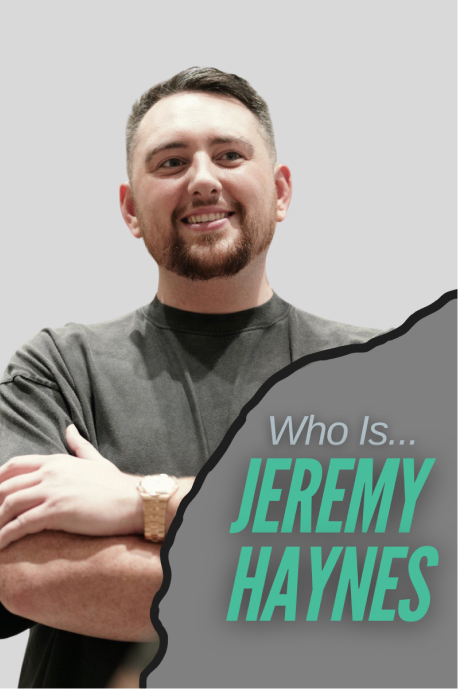
Jeremy Haynes is the founder of Megalodon Marketing. He is considered one of the top digital marketers and has the results to back it up. Jeremy has consistently demonstrated his expertise whether it be through his content advertising “propaganda” strategies that are originated by him, as well as his funnel and direct response marketing strategies. He’s trusted by the biggest names in the industries his agency works in and by over 4,000+ paid students that learn how to become better digital marketers and agency owners through his education products.
This site is not a part of the Facebook website or Facebook Inc.
This site is NOT /endorsed by Facebook in any way. FACEBOOK is a trademark of FACEBOOK, Inc.
We don’t believe in get-rich-quick programs or short cuts. We believe in hard work, adding value and serving others. And that’s what our programs and information we share are designed to help you do. As stated by law, we can not and do not make any guarantees about your own ability to get results or earn any money with our ideas, information, programs or strategies. We don’t know you and, besides, your results in life are up to you. Agreed? We’re here to help by giving you our greatest strategies to move you forward, faster. However, nothing on this page or any of our websites or emails is a promise or guarantee of future earnings. Any financial numbers referenced here, or on any of our sites or emails, are simply estimates or projections or past results, and should not be considered exact, actual or as a promise of potential earnings – all numbers are illustrative only.
Results may vary and testimonials are not claimed to represent typical results. All testimonials are real. These results are meant as a showcase of what the best, most motivated and driven clients have done and should not be taken as average or typical results.
You should perform your own due diligence and use your own best judgment prior to making any investment decision pertaining to your business. By virtue of visiting this site or interacting with any portion of this site, you agree that you’re fully responsible for the investments you make and any outcomes that may result.
Do you have questions? Please email [email protected]
Call or Text (305) 704-0094