Complete 60 Day Promotion Timeline for Challenge Funnel Events

I hope you enjoy reading this blog post. If you want my team to just do your marketing for you, click here.
Author: Jeremy Haynes | Published October 9, 2025

Earnings Disclaimer: You have a .1% probability of hitting million-dollar months according to the US Bureau of Labor Statistics. As stated by law, we can not and do not make any guarantees about your own ability to get results or earn any money with our ideas, information, programs, or strategies. We don’t know you, and besides, your results in life are up to you. We’re here to help by giving you our greatest strategies to move you forward, faster. However, nothing on this page or any of our websites or emails is a promise or guarantee of future earnings. Any financial numbers referenced here, or on any of our sites or emails, are simply estimates or projections or past results, and should not be considered exact, actual, or as a promise of potential earnings – all numbers are illustrative only.
I call them challenge funnels. Some people call them three-day virtual events. Whichever one you call them, they make a ton of money at one time.
Challenge funnels and three-day virtual events, to be fair, are actually a little bit different. Challenge funnels usually have some kind of outcome that you’re trying to help people produce.
3-day virtual events are essentially that – you don’t really care about trying to get them involved in the game. You don’t really care about some kind of outcome-based thing in the event. You’re just essentially doing a virtual event instead of an in-person event.
So in that regard, they are a little different. But again, in either scenario, they are a lump sum funnel.
Therefore, I’m dedicating an entire series here on my channel to this topic. We already have one blog on this that goes through some of the best practices of having your own challenge funnel or 3-day virtual event with a client that spent $292,000, was 1.9x profitable going into it, and generated about 3.4 million in cash off of the upsell in the event totaling about $4 million.
Same client and a handful of new clients are also doing their challenges. So I’m going to have more case study blogs to break down for you about what they did, how they did it, and what worked, what didn’t work.
So you can learn some lessons.
If your business is already generating $100k+ per month, My Inner Circle is where you break through to the next level. Inside, I’ll help you identify and solve the bottlenecks holding you back so you can scale faster and with more clarity.
But for now, I’m going to pass down some of the specific things that I’ve been talking to these people about that I’ve been paid to consult them on. That way, you can learn some of those insights, too.
Challenge Funnel Promotion Guide Overview and Structure
In this particular guide, I’m going to go through the promotional cycle of these virtual events.
You need about 60 days and there’s a very specific plan of action that you want to follow and I’m going to make sure you understand that.
We’re going to go through the best practices, some of the statistics and KPIs that you’d otherwise expect. We’re going to go through all the assets that you need to make sure you produce as well going into the promotional cycle.
This is going to be valuable content and of course it all relates to our topic – hitting million-dollar months or tacking on that next million a month.
When you do this right, you can make a ton of money at one time.
Earnings Disclaimer and Success Rate Statistics
But let me be clear. We have no idea who you are and whether you have any probability to make any money at all because again this is a blog post.
So again, there’s no income claims. There is no earning potential. We know nothing about you.
And we have no idea what your specific probability is of doing anything.
But here’s what we do know. To hit $10 million a year, according to the US Bureau of Labor Statistics, they claim only 0.1% of people on Earth will ever hit that number.
So therefore, there’s an even smaller probability you hit a million a month, let alone a couple million a month.
So anyway, without further ado, here’s what you need to know.
Why 60 Days Is Optimal for Challenge Funnel Promotion
The promotional cycle of these virtual events – I say it’s 60 days. 60 days is typically the sweet spot.
When you want it to be big, you need to understand this.
When you want a big sum of money at one time, you got to have a large quantity of people that sign up to it.
And I do my paid challenges with all my clients with a paid price point ranging from as low as like $37 to $47 all the way up to a low couple hundred give or take where we’re at within that 60-day promotional cycle.
And time and time again, we get people to go into the event profitable and therefore everything that they upsell during the event is all the more profit that they accumulate, which is the best case scenario.
We have two consulting deals right now that a random agency I’ve met through these two consulting deals has had couple hundred per sale losses getting buyers going into it, which obviously limits the total amount of money towards ad spend that you’re going to be able to justify risking.
When you get to the point where you follow some of the best practices that I’ll lay out, not just in this guide, but in this whole challenge virtual event series, you’re going to have a good time.
Per usual, let me just disclose – I don’t dump everything that I know for free. I’m trying to incentivize you to go out there and be able to get enough of a result with what I teach to make some money and then pay me so I can put you onto the real game.
Anyway, back to my point. 60 days – that’s more than enough to mess up a few times, have a few mishaps, have a few things that you need to fix.
Let me give you an example of what I mean.
Facebook Ad Spend Requirements and Meta Algorithm Basics
We typically risk a good couple hundred thousand in ad spend.
And as a result of doing so, it’s a lot of creative that we need. So couple hundred thousand in ad spend – we therefore need a ton of creatives.
With Andromeda – and for all those who don’t know what Andromeda is, if you’re going to promote this on Facebook and Instagram, you’re going to need to know what Andromeda is.
Meta has a two-part algorithm prior to an ad even being distributed into the news feed and that whole part of the algorithm. It’s called their retrieval and ranking system. Understanding digital advertising algorithms is critical for optimizing campaign performance.
The retrieval system is Andromeda. The ranking system is a system known as Meta Lattice.
We have a whole blog on this website dedicated to Meta Andromeda. And of course, in all our paid programs, we have a tremendous amount of training on that topic and as well as Metal Lattice.
Anyway, with Meta Andromeda, if you’re familiar and on game with what we typically encourage, we like to say that an ad set nowadays needs 25 to 30 unique through and through well diversified from a messaging perspective ad creatives in there, which ideally can be a combination of videos and images.
And as a result of that, you’re going to need to go film a lot of videos, as you can imagine, especially at higher dollars of ad spend risk.
The more spend that you typically put out, the more creatives that you’re typically going to need is a good rule of thumb.
How Many Video Ads You Need for Challenge Funnel Promotion
So anyway, let’s just say at the absolute bare minimum, how many are you realistically going to need to project here to go into this promotional cycle?
At a minimum, you’re going to need about 25 to 30 unique videos.
Unique videos that can turn into a good couple hundred with B-roll combinations, clipping out different parts of the ad, and mixing them together with some of the other parts of the ads.
But at a minimum, you want 25 to 30 unique through and through video creatives that can be used here because again, that can turn into a whole lot more.
But that in itself is technically what Andromeda requires.
So anyway, back to my point – once you actually get to the point where you have all those ads filmed, obviously you’re going to want to write a bunch of ad copy as well.
Typically, we launch every single unique ad with five body copy variations and five headlines.
It’s not dynamic creative in terms of it being literally marked as dynamic on the ad set level or flexible ads on the ad level.
The moral of the story is I’m just simply saying we want to because they give us the ability to do this – load up each ad with the same five pieces of body copy and five headlines.
Gives us a whole lot of individual ad combinations that can be distributed.
Essential Sales Page Elements for Challenge Funnel Conversions
Now, once we get all that stuff created, we obviously need a nice sales page.
Our sales page because we’re going to do a paid event – we have a great template and a whole set in our challenge funnel SOP doc that we give out to all of our Inner Circle members and to our Master Internet Marketing students and of course our consulting clients and agency clients.
But to be clear, without me sitting here showing you all these landing pages and sales pages, you obviously are going to need a good sales page.
That’s going to be typically a long form page. You’re going to have the agenda laid out on there, the potential co-speakers.
Obviously, you’re going to have some testimonials and like the whole theme of the virtual event or the whole challenge. You’re going to have some FAQs, and you’re going to have a schedule of the pricing on that page.
That’s one of the most important things that correlates to this 60-day window.
There’s a very specific time frame of when you’re going to promote what in terms of pricing.
And if I map that out for you here, this far end being the day that the event actually starts and this being when the promotional cycle starts.
Setting Early Bird Ticket Prices for First Four Weeks
At the very beginning, you’re going to have what’s called early bird pricing.
Early bird pricing is your cheapest pricing that you’re typically going to have. Early bird can typically range from about $47. You can even go as low as $37 if you wanted to, but I like $47.
And you’re going to recognize why as we continue to go on throughout this promotional cycle. The higher the AOV I can have, the better off I’m going to be because ideally I’m profitable going into the challenge.
So again, $37 to $47. And this is your general pricing. That means like the standard ticket, that’s what they get.
Your VIP on the other hand can range from like $97 to a $150 price point, somewhere in that range.
And that VIP is going to come with a handful of other things that you can make up that distinctively make it more valuable than whatever the general pricing is.
Now, you’re going to ride this out for a total of about four weeks.
And that first four weeks, this is what’s very interesting about our 60-day promotional cycles from what we’ve seen time and time again.
So as time goes on and as our total like tickets sold are accumulated against time, we’ve time and time again – this is what we’ve seen from other people – they’ll typically get a very low quantity of tickets sold at the beginning and they’ll get like all the tickets sold in the days leading into the actual event start date.
We have not seen that.
We actually kind of see the exact opposite. We typically see a fair bit of tickets selling at the beginning in a very random amount and then as we get closer to the event, it just kind of ticks up a little bit.
But we get a lot of tickets sold at the very beginning from this 60-day promotional strategy that I’m providing to you.
And when it comes to ad spend, again, we’re typically profiting going into the event. And we just accumulate a little bit more profit with that delta of pricing going up as we get closer to the event start date.
So again, we’re a little less profitable and the profitability fluctuates relative to where our AOV is at and relative to where our cost per ticket sold is at.
So anyway, back to my point. First four weeks is typically what we call the early bird pricing.
Extended Early Bird Pricing Strategy Weeks Five Through Seven
Now the following three weeks in this total of an 8-week promotional cycle, we typically have what we call extended early bird pricing.
If there are any holidays, like as an example, we have a client right now that we’re actively promoting a 3-day virtual event for. They had early bird. They then had a Labor Day sale because Labor Day just happened to be in the middle of our early bird ending and our extended early bird starting.
So we took advantage of that holiday sale.
The holiday sale is just essentially whatever the pricing is relative to where you’re at in that 60-day promotional cycle. So if you have a holiday that’s in the first four weeks where you’re doing early bird, you’re still technically at early bird pricing for the holiday sale.
It’s the same pricing – to theme it different to have some context and a higher probability to not be dealing with holiday inflation when it comes to ad spend.
If you know better, you’ve seen it all year. Holidays that are rather insignificant have been causing dramatic inflation to your cost per result.
So therefore, in order to counter that, we can have a holiday sale. It works really well.
So anyway, we then have what’s called our extended early bird.
The extended early bird is just a little bit higher cost. Usually we go up to about $87 to a $97 price for our general pricing.
Our VIP usually goes up to that $150 to $200 range at this point. We’re trying to punish the people that are buying at a later date.
Now, to be clear, are you going to see in that regard a drop in total buyers as a result of increasing price temporarily? Yes.
Forever? No.
Usually during the first few days of the transition from early bird to extended early bird, you see a little bit of a drop. And then it starts to pick up again because again, there’s just that small wave of people that were just seeing it at the previous price and then you open up a whole new audience.
Now, I’m going to give you one pro tip that to be honest with you, I’m kind of surprised I’m going to sit here and share, but I feel generous right now.
The extended early bird when you initially make that transition from a lower price to a slightly higher price – that’s where it makes a lot of sense to open up some new audiences on the ad channel that you’re targeting on.
So as an example, for the initial early bird, I’m typically going to do our warm audiences only. And I’m going to still have some cold audiences set up relative to how large my warm audience is, give or take the client account we’re working on.
But when it comes to the extended early bird, no matter what, I’m opening up the total budgets or I’m opening up those ad sets with the new targeting options worked into it completely when I transition to the extended early bird.
That way, I’m getting it in front of new people that haven’t had the anchor bias to the previous price, which dramatically reduces the overall drop I’m going to see.
It doesn’t make it as severe. There’s still a little drop, but again, it’s not nearly as severe as what it otherwise could be.
And that’s what continues to carry this trend here up and to the right.
So long story short, when you see this trend start to trend up, well, we’re getting closer to the event. We’re officially four weeks out when we transition to the extended early bird.
So there’s a natural scarcity, a natural fear of missing out that occurs when we make that transition.
Final Week Standard Pricing Strategy Before Event Launch
So anyway, long story short, in the final week – so when we’re officially one week out – this is what we call the punisher window.
The punisher window is essentially just standard pricing.
So whatever your actual prices should have been, like you should have been doing that thing where you slash it out. So like if you’re doing the, let’s say, the regular early bird, and your normal pricing is going to go up to $97 when you transition to the extended early bird, you would have that $97 for what extended early bird’s going to be crossed out.
You’d have the early bird price.
Once that happens and you’re officially transitioned to your actual extended early bird price, which now might be $97, your regular price might be $147. And again, during the extended early bird, that’s going to be shown but crossed out.
And what this does, just to be clear, is for all the people that saw it during the early bird window and then all the people that saw it again during the extended early bird window, you are demonstrating that you’re not full of it when you do this.
Show them the actual price that you’re about to raise it up to and make sure that you actually raise the price up to that level.
It builds a lot of trust and it lets people know that you’re not full of it.
So anyway, when you get to the point of doing your Punisher pricing, this is usually in the range of about $150.
We usually do about $147 for the general and then usually for our VIP, we generally crank it up to about a $250 range. Generally, it’s like $200-$250 somewhere in there.
And that’s how this thing ends.
Therefore, we get technically a lower quantity of people that’ll purchase towards the tail end, but we’re charging more money. So our overall AOV goes up, which allows us to spend more money, which still allows us to accumulate more people.
You understand?
It’s like you don’t want to have the belief during the promotional cycle that you’re selling to the same demographic the entire time.
You want to look at it like, okay, as long as I stay ROI positive going into the actual event, like on the event tickets sold, I have a dramatically high probability just to continue pushing as much ad dollars as I can towards this thing.
Reinvesting Ticket Revenue to Scale Ad Spend Aggressively
And that’s generally what we encourage clients to do.
Like as an example for the video that we have on my youtube where our client was a 1.9 ROI going into it just off literal ticket sales alone – the mistake that they made was they only spent $292,000.
Now this is an organization where although yes, in almost every deal that we do, we typically contribute like literally everything that they do in terms of the ideation and like they followed to the tea what we say – not on this deal.
This deal there’s a lot of cooks in the kitchen. So there’s a lot of influence from all kinds of people in the decision-making process, including people that they’ve paid like multiple six figures to that are going to help them host the event that have seen this at a very large scale.
And again, these are like credible people that are lending perspective too.
So anyway, moral of the story is I don’t always get to do exactly what I would normally do in every other deal where we have a lot more influence and control.
Regardless though, in this specific deal, the one thing that was extremely obvious – they should have kicked up this ad spend dramatically. There should have been a whole lot more ad spend.
The issue was they didn’t believe that these were the right people that were buying it because they’re so used to selling directly at 10K as their minimum price.
So this was a new thing for them. This is a new concept. They didn’t simply put have a lot of certainty and confidence.
This same client is currently promoting another 3-day virtual event right now. And I’ve been spending upwards of 50K every day for this entire cycle of time.
Like I’ve gotten the opportunity to kick it up higher than that on specific days where our cost per purchase is reduced.
You understand? Like they’re not holding back in any way, shape, or form.
When I eventually drop that case study on this channel, you guys will see it firsthand for what that total spend became, what it turned into in terms of total dollars and with a handful of other clients that we’ve done the same thing with at this point.
Using Cost Cap Bidding to Scale Challenge Funnel Ad Spend
Anyway, here’s my point. The goal is to be ROI positive. And all of the ROI that I get immediately, like all of it, to be clear, should be justified getting thrown right back into ad spend.
Because the point of the challenge funnel, the point of the 3-day virtual event is not to like put these dollars that come from this back into your pocket.
These are your gambling dollars.
Like your goal should be – spend whatever initial ad spend you’re willing to put towards this whole thing, get that money back in real time, and literally every dollar that you get back from it, you throw right back into the total ad spend pile.
That way, it’s a cyclic process of accumulation, growth, and scale that occurs.
You want to build significant momentum.
Like on this recent set of consulting deals, they’re using the same agency, and there’s two specific guys that I was able to talk to within this agency on these calls, and they did the same thing in both deals.
Like in both deals, they had lost money going into it, so they weren’t ROI positive, but they’ve done multiple challenges with these clients.
And with that specific client that they’ve done multiple challenges with, every single time, no matter what, they’ve been ROI positive by about 4x on the total amount spent versus the total amount returned.
Like they’ll spend upwards of, let’s say, half a million dollars and they’ll make back like $2 to $2.5 million.
In that example, they already have a proven concept. They already know that this works. Therefore, they can justify even though they’re losing money on the front end to spend even more money.
But they haven’t. Nobody’s came in and just pushed them and said, “Spend more money.” And no one’s told the client, “Hey man, you should be comfortable fronting even more cash even though you’re losing money on the front end.”
And then again, they bring somebody in like me to help them get to the point where they can be profitable on the ticket sales, which ideally we can work them to the point where they will be.
So anyway, here’s my point. You should have a goal during the promotion cycle where like you have a certain budget applied towards this whole thing.
And when that budget starts to return profitable dollars, you just immediately tell whoever’s spending the money – hey, anything up to this, this is our current AOV, spend as much as you possibly can and just monitor it at different times of the day.
And this is where obviously you got to have a lot of confidence in your advertisers. You got to have a lot of confidence in your agency that you’re working with to actually be able to push up significantly fast because again, they only have 60 days to do so.
The issue is with, as an example, with that agency that I looked at when we were doing the consulting deal for that company that has a challenge funnel coming up – they scaled in like a very insignificant way.
They’d scale like a couple thousand bucks, or like at most the biggest attempt to scale up was like a couple grand.
You got to understand like we’ve scaled that challenge funnel I articulated to you where we’re spending 50K a day from like 10K a day to 25K a day to 50K a day to 75K a day.
And we’re doing that through cost cap bidding within the ad account. That allows us to dramatically increase the level of scale that we’re able to accomplish.
There’s a video dedicated on my channel, by the way, to three different ways to scale. If you want to go check that out, you’re more than welcome to.
Gives you some great ways you can go about doing it. From the slow and steady method to the surfing method that Mr. Tim Burd has taught and that we taught inside of that video and in addition to that, the cost per X strategy that I teach.
Plenty of great tactics to scale. If you’re interested in that topic, go check out that video on my channel after this.
Increasing Average Order Value with VIP Tickets and Upsells
So anyway, back to my point. To get your AOV as high as you possibly can, you’re going to need a handful of things.
When it comes to AOV best practices – your average order value is obviously going to be made up of a few things.
It’s going to be the ticket sales. And here, you want to make sure you look at the percentage breakdown of regular, like your general pricing versus the VIP pricing.
You can have, just to be clear on this specific KPI, upwards of 30 to 50% of people taking your VIP. Research on event marketing shows that tiered pricing strategies can significantly increase average order value.
In addition to the ticket itself, you can have those little one-click upsells and the one-click upsells – let me just be clear on what I’m saying because this can be interpreted in a few different ways.
On the very first checkout page that they see and that the person goes to to buy, right below the little order form, I’m talking about the little check boxes to add a product right there on the checkout page.
I’m not talking about the one-click upsells that come after that. We’re about to talk about that now.
So you can juice the AOV by having a higher skewed ratio of VIP comparatively to general. It’s never probable to be a majority, but hey, with a good enough offer in the VIP, you can definitely pull it off.
Don’t let the limitations I’m projecting onto the stat prevent you from potentially having that statistic play out in your favor.
Just from the averages we’ve seen, we haven’t ever seen VIP overtake the total quantity of general admission tickets when it comes to the percentage of who buys what.
Again, those little check boxes, man – if you can get a good 5 to 10% of people to check that little box and add whatever it is to that initial order price, and you peg those at like 10 bucks to maybe $30, that is the sweet spot on those where it’s really easy to just add a little bit extra to your total AOV, so it weighs up a little higher.
Then you have the actual one-click order pages that follow the checkout page. You should ideally have two of these.
So just to be clear, you have the main sales page, you have the checkout page, you have those little order bumps on the page, and then from there, you got the upsells – you’d have upsell one, you’d have upsell two.
And then usually after that, you’d have a call funnel rather than just a confirmation page at the very end where you’d have your call funnel, like your VSL, your application, your scheduler.
That way you can try to close some of these people before the event even starts, which is going to help you become more profitable as you go into the event.
Remember, the higher the AOV, the more money that you’re probable to be able to spend and the bigger the overall event’s going to be and the bigger the lump sum‘s going to be that comes out the other side of doing this thing.
These matter the most when you’re going through the promotional cycle.
Using Multiple Marketing Channels and Affiliate Partnerships
And need I not say you want to be pushing on all fronts. You want to be pushing on the paid side. You want to be pushing on the organic side.
You don’t just want to be one channel centric. If you can get affiliates involved, all the better. Multi-channel marketing campaigns show significantly higher conversion rates than single-channel approaches.
The more people that you get to sign up to this event and you execute the following steps of doing the actual challenge, we’ll have a whole set of blogs in this series dedicated to show rates of challenge funnels.
We’ll have a whole blog dedicated in this particular series on what you should actually cover in the challenges. And we’ll also have best practices of the pitch.
And I just want to be clear, although yes, this is going to be a tremendous series, I’m holding back a tremendous amount of information that I could otherwise give you if you were in a program like our Inner Circle offer or one of our consulting clients that we teach how to do these things, too.
We also talk about this kind of stuff inside of our Master Internet Marketing program. All of which there’s links for if you want to join a group.
By the way, we do our Inner Circle masterminds right here where I’m sitting in good old Miami, Florida. And then we transition over to the penthouse on Sunday all day on our 2,500 square foot balcony overlooking the city with 270-degree views to hang out, eat great food, talk to one another about getting richer.
It’s a mastermind group where we do masterminds four times a year. Weekly group calls on whatever topics relate to getting richer, making more money, and you can request what those topics are.
We do twice a month one-on-one calls in that group. We have a very active group chat. You get unlimited access to Jeremy AI in that specific offer which you can write, text, talk, you could do Zoom calls with it.
Most people talk to it though via writing. That’s the most efficient and effective way.
And it’s not some weak AI. It’s literally trained on every single thing that I’ve ever documented. Client calls, one-on-one calls, those things you’d never even see. They’re only trained in Jeremy AI.
In addition to that, every single thing I’ve ever written, documented, SOPs – by the way, that’s the other thing. You get 33 different SOPs and counting. They grow rather frequently. We upload a few of those a month.
And an extensive training library. That’s just what comes with the Inner Circle. That’s a group for rich people trying to get a whole lot richer.
And then of course we have the Master Internet Marketing program. Just as phenomenal, but built for everybody. A great program that you can preview week one of the 7-week class for.
Well, that’s all I’ve got for you in this particular one. If you’re reading this at the time before the subsequent content is uploaded, just keep your eye on the channel. Press that little notification button.
That way you see the subsequent content in the series. And of course, give or take the time that you’re reading this, some of that other content might already be published. So go check it out.
And at the very least, if you’re not interested in this anymore, I got a bunch of other content on helping you get richer.
Most business owners waste years figuring out what actually works. In my Master Internet Marketing program, I compress that learning curve into 7 weeks, covering copywriting, funnels, ads, and more. If you’re ready to invest $5k and get serious about your skills, apply here.
Thanks so much for being here.
Watch the video:
Get my content first on Google
Add jeremyhaynes.com as a preferred source and Google shows my articles more prominently in your search results, including AI Overviews and AI Mode.

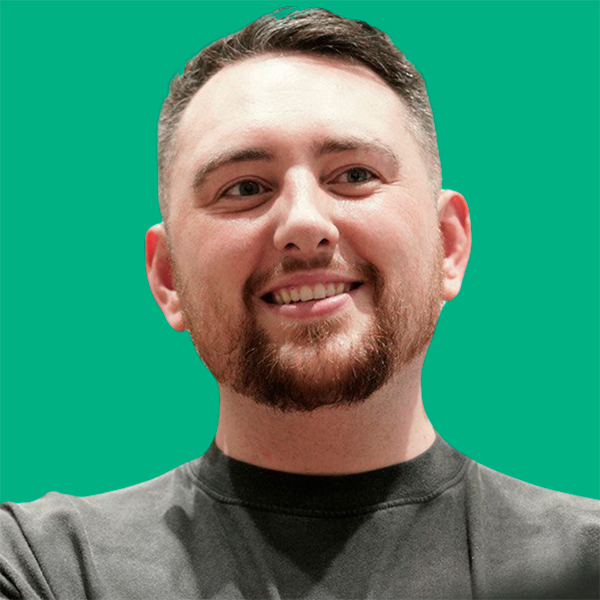
Jeremy Haynes
Owner and CEO of Megalodon Marketing
Jeremy Haynes is the founder of Megalodon Marketing. He is considered one of the top digital marketers and has the results to back it up.