
How to Tell if More Ad Spend Will Reach Buyers Ready to Act

I hope you enjoy reading this blog post. If you want my team to just do your marketing for you, click here.
Author: Jeremy Haynes | Published November 13, 2026
Earnings Disclaimer: You have a .1% probability of hitting million-dollar months according to the US Bureau of Labor Statistics. As stated by law, we cannot and do not make any guarantees about your own ability to get results or earn any money with our ideas, information, programs, or strategies. We don’t know you, and your results in life are up to you. We’re here to help by giving you our greatest strategies to move you forward, faster. However, nothing on this page or any of our websites or emails is a promise or guarantee of future earnings. Any financial numbers referenced here, or on any of our sites or emails, are simply estimates or projections or past results, and should not be considered exact, actual, or as a promise of potential earnings – all numbers are illustrative only.
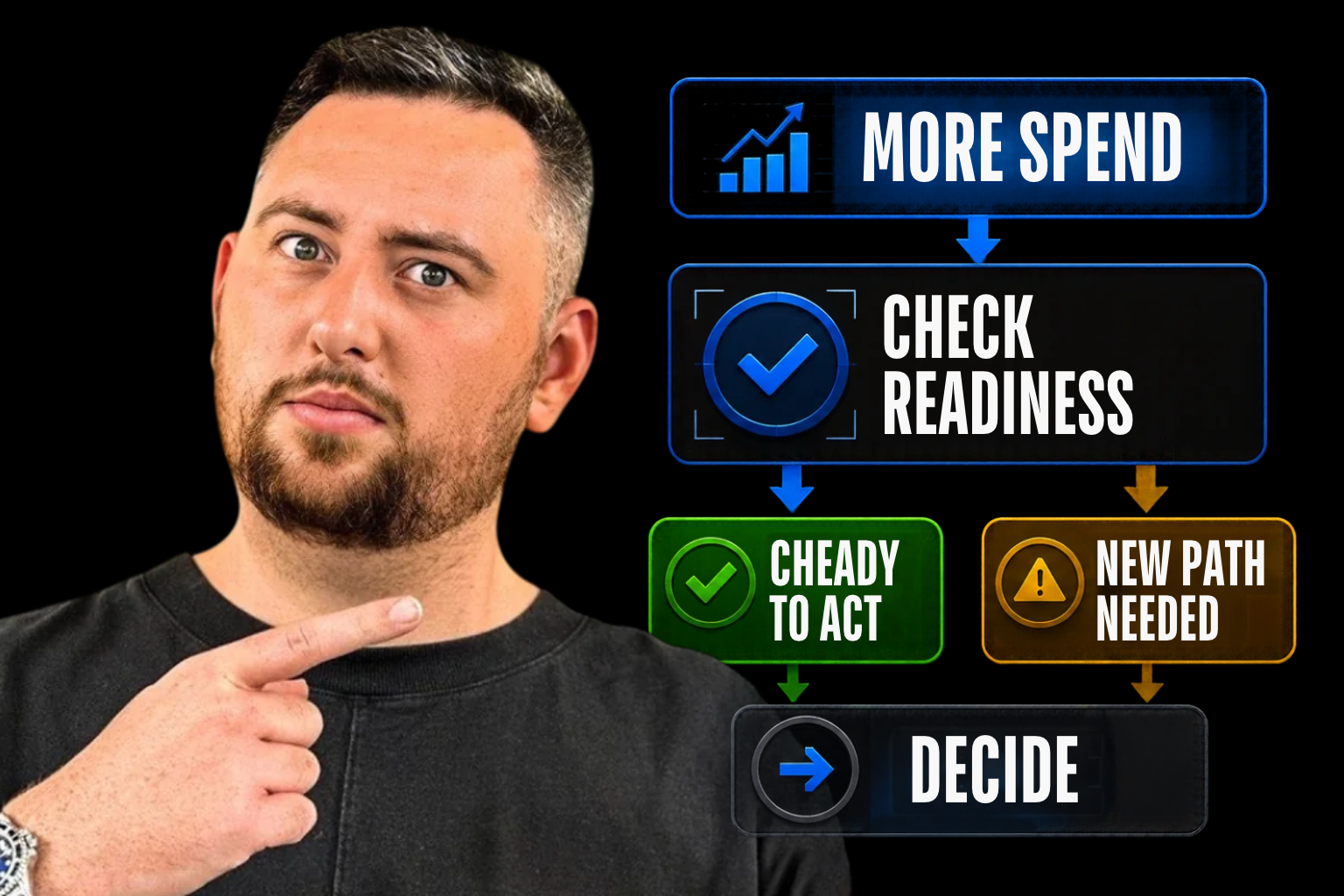
Before I increase ad spend, I want to know who the extra budget is supposed to reach. Your current campaign might be good at finding people who already want the offer. The same ad can ask too much of somebody who hasn’t decided the problem is worth solving. A big market estimate won’t tell you what those buyers need to hear.
Already making money? See what it takes to make a lot more.
Who the Next Dollar Has to Reach
Start with the buyers your business can actually help. Set aside people you can’t serve, even if they fit the industry or location in your audience settings. Now look at who is already considering a purchase and who would need to understand the problem before they consider one. That’s the useful difference when you have to decide where the next bit of spend goes.
Say you sell a service that fixes a company’s sales follow-up. A team actively looking for help after losing deals might respond to a direct invitation to talk. A team that thinks the problem is lead volume needs a different conversation first. Both might be a fit, but you can’t plan on them buying on the same timeline.
Look at what recent buyers said before their calls. Did they arrive asking who could solve the problem, or did someone have to show them why it mattered? If that information is missing, read the applications and talk to the people taking the calls. It gives you a better starting point than deciding everyone in the industry is ready.
What Reach and Search Volume Can Actually Tell You
Use channel estimates to understand how you might get in front of people. Google’s Keyword Planner separates historical search metrics from forecasts. Its forecasts take account of conditions like budget and bids. Neither gives you a list of buyers who can take your offer.
If search is already working, check why you’re missing eligible impressions. Google’s impression share report distinguishes impressions lost to budget from impressions lost to Ad Rank. That can help you ask a better question about the existing campaign. It still says nothing about how many other qualified buyers are out there or whether you’ll get them at the same cost.
On paid social, I want to know who the ad is talking to and who actually shows up in sales records. If you’re looking at more than one source, give each ad channel a specific job. Adding a search estimate to a social audience estimate can count some of the same people twice and still leave you with no idea who’s ready to buy.
When the Next Buyers Need a Different Sales Path
If the campaign is still finding more qualified people who already want the offer, you have a reason to test more spend on the existing path. If the next group needs convincing, give them a reason to pay attention before asking them to book. That might be a piece of content that shows them where the problem starts or a presentation that helps them see what changes.
This is where buyer readiness changes the scaling decision. A campaign can still have plenty of people it could reach and run out of people who respond to the same pitch. If the buyer is right and the buying reason is too narrow, test a different buying reason inside the niche before assuming you need to change who you sell to.
Think through what the new path asks of the sales team. Can somebody follow up with buyers who need longer to decide? Are there slots available if more people book? I want those answers before putting more money behind the campaign.
In my Inner Circle, operators can compare how they’ve handled that handoff. The interesting part is who has time to do the work once the ads start reaching more people.
Results are not typical. Your results will vary and depend entirely on your individual capacity, business experience, expertise, and level of desire. There are no guarantees concerning the level of success you may experience. The testimonials and examples used are not intended to represent or guarantee that anyone will achieve the same or similar results. We don’t believe in get-rich-quick programs. We believe in hard work, adding value and serving others. As stated by law, we can not and do not make any guarantees about your own ability to get results or earn any money with our information, courses, programs, or strategies.
7 weeks. Real frameworks. Covering copywriting, funnels, paid ads, and conversion systems.
What I’d Need to See Before Spending More
Say what the next increase is meant to prove. You might be trying to buy more of the same qualified demand. You might be trying to reach a different group within the market. Keep the working campaign visible while you test that second idea, so a change in the account total doesn’t hide what’s happening in either group.
Give buyers time to reach the stage you’re measuring. Compare the added spend with qualified opportunities and sales from the people that spend reached. If you only have a before-and-after comparison, don’t call every extra sale incremental. Google’s Conversion Lift documentation explains how a control group helps distinguish added sales from sales the platform simply credited to an ad.
Decide what would justify another increase while you still have the option to hold. If the same kind of buyer keeps coming through at a cost the business can handle, you’ve got a reason to keep testing. If the extra spend buys attention but the right people never reach sales, change what you’re asking that audience to do or keep the money where it was working.
That’s how I’d connect market size to a spending decision. It fits the work behind Master Internet Marketing, my 7-week live comprehensive training. Forget trying to count every potential buyer. Know who you’re trying to reach next and how you’ll tell if you reached them.
Results are not typical. Your results will vary and depend entirely on your individual capacity, business experience, expertise, and level of desire. There are no guarantees concerning the level of success you may experience. The testimonials and examples used are not intended to represent or guarantee that anyone will achieve the same or similar results. We don’t believe in get-rich-quick programs. We believe in hard work, adding value and serving others. As stated by law, we can not and do not make any guarantees about your own ability to get results or earn any money with our information, courses, programs, or strategies.
Get my content first on Google
Add jeremyhaynes.com as a preferred source and Google shows my articles more prominently in your search results, including AI Overviews and AI Mode.


Jeremy Haynes
Owner and CEO of Megalodon Marketing
Jeremy Haynes is the founder of Megalodon Marketing. He is considered one of the top digital marketers and has the results to back it up.