Challenge Funnel Sales Page Structure and Layout Best Practices
I hope you enjoy reading this blog post. If you want my team to just do your marketing for you, click here.
Author: Jeremy Haynes | Published October 14, 2025

Earnings Disclaimer: You have a .1% probability of hitting million-dollar months according to the US Bureau of Labor Statistics. As stated by law, we can not and do not make any guarantees about your own ability to get results or earn any money with our ideas, information, programs, or strategies. We don’t know you, and besides, your results in life are up to you. We’re here to help by giving you our greatest strategies to move you forward, faster. However, nothing on this page or any of our websites or emails is a promise or guarantee of future earnings. Any financial numbers referenced here, or on any of our sites or emails, are simply estimates or projections or past results, and should not be considered exact, actual, or as a promise of potential earnings – all numbers are illustrative only.
Welcome back to the Challenge Funnel 3-day virtual event series. In this one, we’re going to be going through the sales page best practices.
I want to be fair, we’re also going to pepper into this piece the webinar promotion strategy to a virtual event because you can do both long form sales pages and you could do a webinar promotion strategy.
And technically, you can get away with doing both. Just depends on your type of buying demographic and which one might make the most sense for you.
In this guide, we’re going to go through step by step what specifically each page should have on it. What subsequent steps including order form pages, upsell pages, confirmation steps, even call funnel steps should be included within this process that you are about to endure.
If you’re new here, all we do is talk about hitting million-dollar months or tacking on that next million a month.
We don’t make any income claims, though. We have no idea who you are and whether you have any probability to go out there and make income. We don’t know if you can flip 5K into 5K.
So long story short, we’re not implying you’re going to go out there and hit million-dollar months or make any money for that matter because again, we have no idea who you are.
There’s no earning potential reading this. I’m just putting you on game.
If your business is already generating $100k+ per month, My Inner Circle is where you break through to the next level. Inside, I’ll help you identify and solve the bottlenecks holding you back so you can scale faster and with more clarity.
Per usual, it’s a pleasure to have you here. I got another banger for you. Without further ado, let’s dive in.
Long Form Sales Page vs Webinar Promotion Strategy
So the sales pages, right? There’s two things for this. You got the long form sales page and then you have the webinar promotion strategy.
And both of these can technically work. Sometimes one works better than the other. Sometimes they’re neck and neck and other times it doesn’t even make sense to do one or the other.
And we’re going to go through what these pages should look like if you choose to endure either one.
Let’s start with long form sales pages.
Complete Challenge Funnel Flow from Sales Page to Confirmation
So as described in terms of the funnel flow, let’s go through that first.
It starts off with a sales page. And again, we’ll go through what should be on the actual page in terms of sections here shortly.
Sometimes you got the actual two-step order form. Sometimes you just have buttons that click over to the actual order form page.
And usually what you do from there is you have the actual order form itself. In some instances, depending on what you’ve got, you can do a little bump sell on the order page too. And again, we’ll talk about that here shortly.
From there, you have in most instances two one-time offers. And you’ll typically have two upsells. Simply put, you’ll have OTO1 and you’ll have OTO2.
And then generally from there, most people mess this up by either just having a sales page and order form and then going to a confirmation page.
But the pros, they’ll have those order forms with the bump sells. They’ll have the two, not one but two, sometimes even more than that, one-click upsells.
And then from there, they’ll have a confirmation page slash call funnel. And right here, they’ll embed their VSL and their actual application and scheduler.
Now, this specific flow, the reason you do this is you’re typically trying to maximize your average order value.
If you’re trying to get as many people as you possibly can to buy your upsells and to obviously buy the VIP package rather than the general ticket.
And in addition to that, even go as far as booking a call to buy the main thing you’re going to try to sell them in the virtual event prior to the virtual event even starting.
This is the pro strategy to the long form sales page approach.
Essential Elements Every Challenge Funnel Sales Page Needs
Now, just to be clear, when it comes to the actual pages, there’s typically a few things that you want to make sure that you have, and we’ll go through those here together.
Long form sales pages aren’t anything new. If you’ve been in the internet marketing space for a long time now, you’re likely already going to fully understand and be more than capable and aware of all of what should be on this page.
But regardless, we’ll go through it here together.
So typically, it starts off with a headline. The headline at the top typically is followed by a sub headline.
These are typically claims.
And this is typically and not an income claim. Need I say for all you non-compliant people watching this thinking you’re going to get away with that.
You don’t want to put some kind of blatant headline here that’s going to be an income claim. You want to try to steer clear of income claims in general. It’s a great best practice.
Ideally, what you put here is some type of outcome that somebody wants. Or the theme of whatever the whole topic is of the actual event itself.
Now, contrary to popular belief, you don’t just immediately throw some kind of big VSL right here. You can, but it’s not a VSL application funnel, and that’s not really the focal point that we want people to have.
Typically, what you do straight away, kind of like an old-fashioned book funnel, is you can have a two-step order form right here, where you literally have step one and step two embedded right here at the very top of the page.
And then this bottom section here, this is where you can have that little check box for whatever the bump sell is going to be.
So you can do it this way.
In addition to that, you can choose a little different approach depending on what you want to do here.
So usually we have a little character photo over here. It’s just kind of like a supporting photo. And then over here on this side, we generally have a little more text.
We have some paragraph text that’s below it or bullet point style text. And then usually we have a CTA button.
This is generally how it starts.
All the better, by the way, if you can get one of those photos that shows a bunch of people on Zoom in a grid in the background.
Those Zoom photos, especially when it’s a virtual event – if you’ve got something with you in front of a big screen, makes you look all the better in terms of being a super professional at virtual events.
If you don’t, just keep in mind, you live in a day and age where you can just Photoshop stuff. And that’s a good pro tip for the style of this specific image.
Helps a lot with the promotion strategy of this whole thing, just to immediately set the tone for what level you’re operating at here.
Pricing Display Strategy and Countdown Timer Best Practices
So anyway, once you get that handled, whether you put the two-step order form right there or whether you follow more of this flow, typically what you do from there is you progress down the page is you have a little section that outlines the pricing.
Now, the pricing can have two things. It can have the actual pricing boxes and it can also have a timer.
There’s typically, if you’ve read in this series that we’ve had so far on virtual events and challenge funnels, a strategy when it comes to the promotion cycle of this whole thing.
And if you haven’t read that piece, go check it out after this.
But with the promotion cycle, usually you have the early bird and then you have extended early bird. Sometimes in there you also have a little bit of a holiday sale.
Then you usually have your regular pricing for like one week leading up to it. And then you have last-minute the FOMO pricing which is essentially the “get lost” price.
It’s a lot higher than the rest because you want to punish those people for buying late.
Now with this typically what you do is let’s use the example you’re in the early bird phase.
You’ll have these here like grayed out. You know how something on the internet can look fully colored, pop a little bit, little drop shadow around this tile here, and the other three subsequent tiles that represent what the pricing is going to be and when it’s going to be that price – they’re grayed out.
That way, the person who’s sitting there reading it can easily understand that those aren’t real yet.
Just to be clear, by the way, super pro tip – this can be a clickable button if you want it to be that leads them over to that two-step order form page or the order form page entirely.
Now obviously once you get done with whatever step you were previously at, that box then becomes grayed out and the next little tile becomes the one that is real, clickable, and what represents.
Now typically when you have that pricing box there and again you lay out the timer.
The timer allows them to see how much time is left not until the challenge starts but until the pricing ends for that specific current price point. Research on urgency marketing shows that scarcity tactics can increase conversion rates when implemented ethically.
Huge pro tip because if you do the timer for the actual challenge, that’s typically the farthest, longest timer that you can put onto the page and it doesn’t add as much scarcity or fear of missing out.
It doesn’t really drive as much action comparatively. So keep that in mind.
Creating Outcome-Focused Agenda Sections That Convert
Now, after that, you typically go through the outcome section.
And the outcomes are usually visualized a little differently depending on how you do it. Like some people have images and some text and they lay it out like this.
Some people just lay out – really depends on your style of design, I guess, at this point.
But long story short, you essentially have the outcomes and then you have what’s called the agenda section.
So if you follow our approach with how we typically encourage you to do these things, you’re going to have three full days of content that you are going to promote.
Now, on those days, you typically have bullet points and then what comes with it.
And these really important you understand this – this is where you’re promoting what is talked about and when.
These titles matter a lot.
So these titles should all be outcome-based as well. They should all be like, okay, we’re covering this and this is what specifically the outcome is of us covering that thing.
So therefore, you don’t want to cover all the technical stuff you’re going to be talking about. You just want to talk about the outcome.
This section we’re getting you this outcome. This section we’re helping you with this outcome. This section we’re helping you with this outcome – you get what I mean.
So again, the agenda section very important, very critical section.
How to Present Guest Speakers on Challenge Sales Pages
Usually from there depending on how you actually execute your challenge, some of you are going to have other speakers and you’re going to have other talking heads.
And so from there this is where you typically introduce the other people that are going to be talking amongst with you and you want to obviously build some credibility for these people.
So you have their headshot, you have their bio and need I not say the most obvious thing which is obviously you want to have speakers that people likely know.
And if they have no idea who they are or whether they do know who they are, justify the bio not as some random stuff that the person sends to you to put there.
Don’t be lazy.
You want to put the bio as what specifically that person is going to teach and talk about as it relates to the challenge funnel or virtual event topic.
So many times when we help clients or we consult with people on launching these funnel strategies, they just ask the person, “Hey, send us over a bio, send us over a headshot.” And they just roll with that and they put it here.
You don’t want to do that.
Now, typically once you go through the speakers, you’ll typically have another, we just call it like a generic CTA box.
Strategic Placement of Call to Action and Pricing Tables
This generic CTA box typically has like a block of text with it that’s like either just a big headline and a button.
And this is usually just another call to action like, “Hey, you know, take action. Hey, it’s time.”
Just to be extremely clear, every single section that I’ve sat here and talked about so far has buying buttons paired with it.
This generic CTA box is more so a literal headline and a CTA button just a little further down the page.
Now, from here, again, you usually reiterate some kind of what’s called a pricing table.
And so the pricing table, this is typically where you showcase what comes with the actual ticket.
Now, for this section in particular, when you look at it, you typically have two main boxes here. You have the general admission ticket, and then you have the VIP ticket.
Now, these two prices depending on whatever you’re charging at a given time – you’re showcasing this is what comes with general, this is what comes with VIP. You know, this is the extra stuff that comes with VIP. This is why you’d want to buy it.
Bam. You lay those out there and you be technical with people about what comes with it.
Using FAQ Sections to Address Buyer Objections
Now, just to be clear, from there, you’re going to reiterate the same thing. You’re going to do that generic CTA box again – headline, button.
This is by the way best to do with objections.
So when you start to get into this bottom section of the page, you want to start working in objection handling in a different way because you got to think about it like this.
If the person’s still not sold by the time they reach here, there’s probably some very specific stuff that we haven’t spoken to them about yet that we’re going to want to cover.
These could be simple things like do they get access to the recordings or not? And there’s a lot of different things that we could technically add as entire sections.
If you feel the need to do that, do that.
If not, and how most people will end their page is with an FAQ section.
Now, that FAQ section is usually just a big old list of a question and an answer. And when you click on these little boxes, they’re like drop-down boxes.
So it’s like just a list of questions. And when they click on it, it expands a little bit and it shows them an answer there.
You typically end the page with a final CTA section. And again, this is usually just another headline with a button. And that’s it.
Usually, that’s the flow and the look of these long form pages.
That’s generally how you’re going to outline these whole things. And you’re typically going to have a good time.
Optimizing Order Form Pages for Maximum Conversions
Now, once you get to the point where you go and get this finished, you obviously have a few other pages that you subsequently need to build out.
You got to build an order form page.
The order form pages can be a little simpler too. They typically just have either a two-step order form, like step one, fill out your personal information. Step two, give us the additional information that we need like credit card information, sometimes address stuff.
The fewer fields, the better off you are. Name, email, phone on step one. And then whatever you need to actually collect the credit card information on step two on order form page. Research shows that reducing form fields can increase conversion rates by up to 120%.
You want to have an order bump. By the way, I just want to point out if you’re wondering, “Hey Jeremy, why don’t you just showcase an actual challenge page that we can model from from one of these clients that you have?”
I only do that for people who pay me. You’re here for free, you know.
Anyway, long story short, the order form pages themselves – two-step order form, little order bump on it, some good old trust badges on that order form page.
Typically you have something that maybe testimonials as an example. If you’ve done these a few times, or just testimonials attesting to you as the speaker, that’s what you want to put onto that order form page too.
Anything that simply put just helps people say, “I’m in.”
Live Chat and Setter Support to Increase Ticket Sales
You also, super pro tip here – can’t even believe I’m giving you this one for free.
If you have setters that can man the chat function, throw one of those little chat bubbles in the bottom right corner of either the sales page or and/or the order form page, but 100% the order form page.
Have a support email there. Have a support phone number there and have the chat bubble on the order form page.
You would be impressed to know the amount of people that wanted to buy that didn’t buy because they had some kind of tech issue on your page or maybe they had one very specific question that your setter could have sold somebody into.
Now, just to be clear, another thing that I can’t believe I’m giving you for free – incentivizing the setters to actually do that.
You can pay them like tens of dollars to actually just say, “Hey, I sold a ticket.”
Essentially, whatever your cost per purchase is, you just double it and pay that to the setter too, because that person probably wouldn’t have bought if it wasn’t for the setter converting them.
Or you can give a very small percentage of a pool.
Let’s say out of the total amount of revenue that comes from ticket sales, you give a very small pool to the setters per day that man those chats.
Something to consider.
One Time Offer Page Structure and Video Script
So anyway, on your upsell pages, your OTO1, your OTO2, those one-click offers, all you got to do, really simple to understand this one.
Typically, it’s a headline, a VSL, some supporting text, another button, and then a little tiny link below that that says something like, “No thanks, I don’t want this.”
Your VSL that’s on the OTO page – those upsell pages, that’s typically what matters the most.
They should be super simple, like, “Hey, congratulations. You just bought that thing. Really excited to help you out. I’ve got this that can complement it. Let me explain how it compliments it. If you’re interested, press the button below. It only costs this much. Really excited to help you out. Talk soon.”
So you’re complimenting and saying out loud, “Hey, you just successfully made that purchase. Thank you so much. Check out this. Maybe it makes sense.”
And if you pick the right thing, like we talked about inside of my KPIs and expectations piece in this series, you’re going to have a good time and you’re going to have a high take rate.
It’s the same thing on the second OTO page.
Combining Confirmation Pages with Call Funnel for Pre Event Sales
Now, the one step in this whole funnel that I want to make really clear to you is the very last step, which is the confirmation step that can also act as a call funnel.
Top of the page has very strong text that just says, “Congratulations, you’ve officially secured your ticket. Check out this video below for further instruction.”
You film a custom video there that’s like, “Hey, thank you so much. You’re officially in.” Whether you got any of that other stuff that we presented to you or not, those were all one-time offers. So hopefully you got them.
If you didn’t, sorry. If you did get them, you know, here’s how you access all your stuff. You know, it’s kind of like a “here’s how you get access to all this” and the expectations.
What you want to do in addition to that is treat this page as an opportunity right below that section to post the receipt.
And then right below that, you pretty much just copy and paste your VSL that you have in your standard call funnel. Headline, VSL, application.
The application ideally is embedded with a scheduler. Once they schedule their call, take them to a standard call confirmation step following the best practices that we lay out for you in our call confirmation pages.
We want you to make sure you have things like urgency videos, breakout videos, testimonials, videos that demonstrate how bad they could get if the deal goes wrong and all those things.
Check out the rest of my content when it comes to confirmation page best practices and my back-end selling systems for tips specifically on that.
But again, I can’t stress it enough. You can get calls immediately from the people who buy the challenge and you can rapidly ascend them before the actual virtual event starts to get some people to buy the main thing that you’re going to pitch in the challenge in the first place.
This specific flow, when you combine it with some of the expectations that I’ve talked about in the KPI expectations piece in this whole series, you’re going to have a good time.
You can typically be very profitable going in and working with a flow like this on a page.
Obviously, if your page conversion rates are bad, you want to make sure that you run some CRO tests.
Split Testing and Conversion Rate Optimization for Sales Pages
Conversion rate optimization is your best friend and being willing to split test these things to drive down your overall cost per purchase and drive up your overall conversion rate on these pages. A/B testing landing pages can improve conversion rates significantly across industries.
So if you follow the best practices of long form sales pages, you’re typically going to have a good time.
Using Webinars to Promote Challenge Funnel Ticket Sales
The other very important thing to consider is the webinar strategy.
So if you choose to do the webinar strategy, it’s a very different approach.
The webinar promotion strategy for an actual virtual event and challenge funnel I think personally is like super silly.
But I will be very fair in saying I don’t want to be right. I just want to make money. It’s a golden rule that I follow.
And I have seen different businesses that we’ve worked with in the Inner Circle specifically that have failed to convert people through long form sales pages and they’ve only converted people through webinars.
And in that approach, you typically have a drastically higher cost per purchase because there’s many more steps of friction in the process.
You don’t just have to be a major personal brand or a major brand to pull off a successful, profitable cost per purchase on a long form sales page. You have to have a dialed-in sales page.
Now, the specific instances that I’m thinking of inside my Jeremy’s Inner Circle offer for these members that only got webinar promotion to work for them, they come into the Inner Circle and they tell me they have these agencies that don’t really do that good.
That to be fair to them encourage the webinar promotion strategy over the long form sales page strategy.
And so they’ve likely just gotten better at that comparatively to strengthening their skill sets with long form sales pages.
So anyway, I think it has more so an indication of who they’ve chosen to work with is the point I’m trying to emphasize with that.
More so than it wouldn’t work for anybody and only one or the other sometimes works.
But regardless, now obviously on the webinar page, your KPI is going to be your opt-in rate, and that’s something that’s very important to consider.
Advantages and Disadvantages of Webinar Promotion Strategy
It’s a huge point of friction within that process. The lower it is, the higher cost per opt-in.
You then have your show rate that you have to consider to the actual webinar. You then have the actual webinar itself that occurs. And here you have your overall conversion rate.
And typically, and believe it or not, you typically have the same exact steps from here.
So you take people over to an order form page. Usually in the webinar itself, one of the big value components of doing it through a webinar rather than to a long form sales page is you’re going to get a higher take rate for VIP because you’re sitting there and you’re selling to people in real time on a webinar.
So you can justify the VIP a little more than you would through a long form sales page.
So typically a benefit of the webinar promotion strategy, you get a higher quantity of people to do VIP.
You can still do the same thing here and you can have a little bump sale. Again, you can typically do the same exact thing and you can have your one-click offers.
And even better than that, you can actually tell people about those offers. And even better than that, again, you can follow every subsequent step that follows with the call funnel steps with the confirmation page factored in.
So all this leads you to most instances a higher quantity of VIPs, a higher cost per purchase, but for some people, it’s the really only way to actually get their challenge funnel tickets to sell.
Selecting Between Sales Page and Webinar Promotion Methods
Most of the time, it’s when you have a really bad long form sales page, a really bad team that you’ve hired that’s just doing a terrible job at CRO actions and building good sales pages.
But hey, whatever. You got what you got, you know?
So whichever one you choose to go with, this is typically the best approach to the actual sales page strategy, whether it’s the long form page or the actual webinar page when it comes to the best practices of both.
Challenge Funnel Training Resources and Implementation Support
Execute these successfully. You’re going to have a good time.
And of course, if you want to have actual examples of this, you’re going to want to get access to my challenge SOP and all of our consulting that we do inside of programs like my Jeremy’s Inner Circle offer.
We also give out the SOP and talk extensively about challenge funnels inside of week one of our Master Internet Marketing class.
Both of which there’s links for below.
At the very least, whether you are here and just trying to consume value for free, go check out the other pieces in this specific series on these 3-day virtual events, challenge funnels, and all the other content on my site.
This isn’t theory. It’s the exact playbook my team has used to build multi-million-dollar businesses. With Master Internet Marketing, you get lifetime access to live cohorts, dozens of SOPs, and an 80+ question certification exam to prove you know your stuff.
Go out there and get rich.
Watch the video:
Get my content first on Google
Add jeremyhaynes.com as a preferred source and Google shows my articles more prominently in your search results, including AI Overviews and AI Mode.

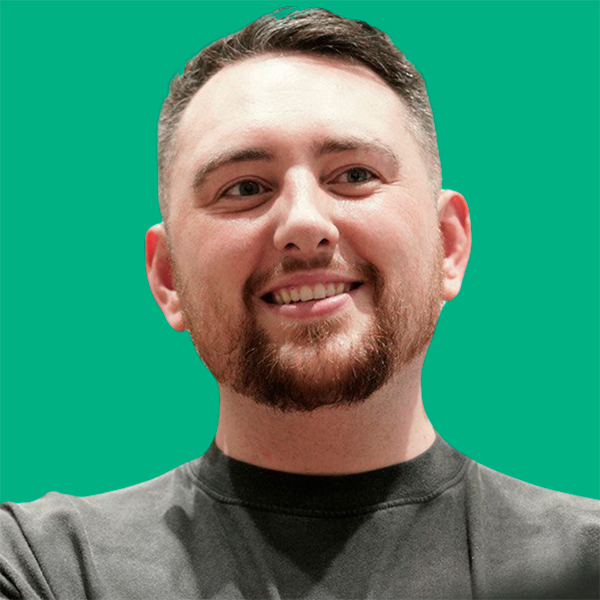
Jeremy Haynes
Owner and CEO of Megalodon Marketing
Jeremy Haynes is the founder of Megalodon Marketing. He is considered one of the top digital marketers and has the results to back it up.