
How to Build an Offer Ecosystem That Moves Customers From Entry Level to Premium

I hope you enjoy reading this blog post. If you want my team to just do your marketing for you, click here.
Author: Jeremy Haynes | Published February 13, 2026
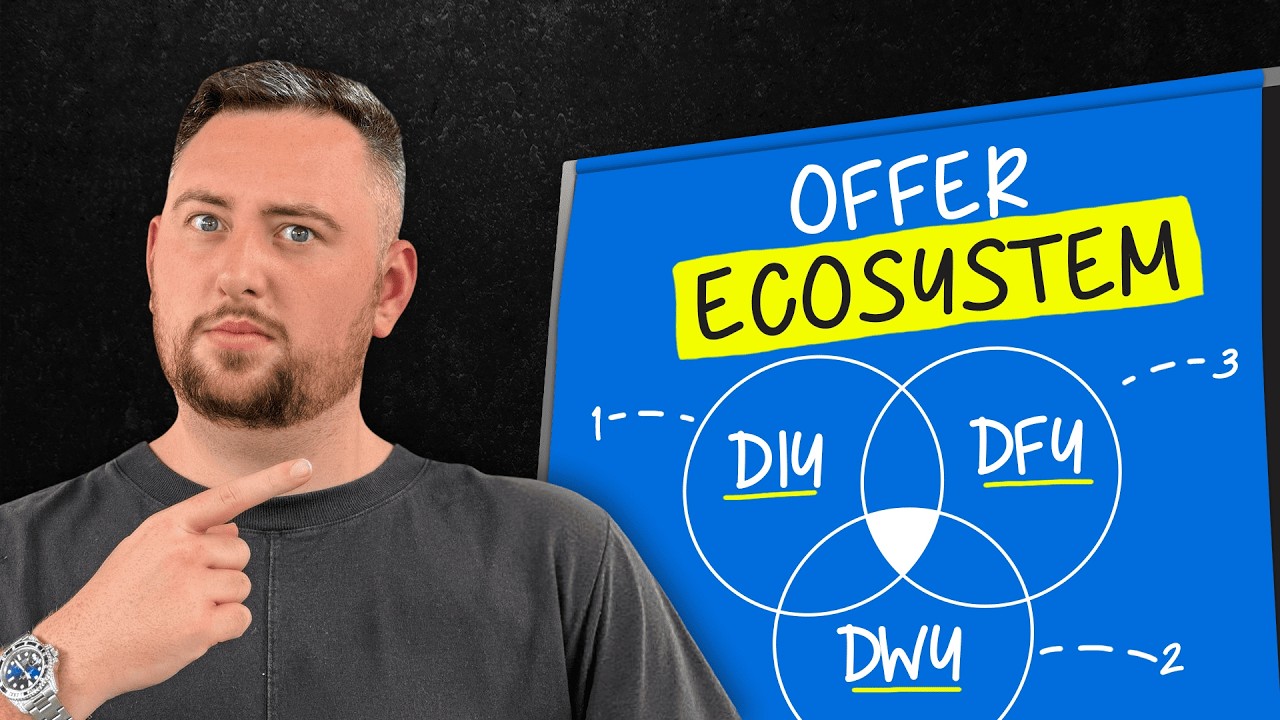
Most people think success in business is about having one great offer. And that’s part of it. But here’s what most operators miss. The difference between a business that stays flat and one that compounds over time isn’t just about the quality of a single offer. It’s about having a structured ecosystem of offers working together.
I’ve been doing this for a while now. Every business I’ve worked with or studied that operates at a high level has multiple offers. Not just one. Multiple. And they all serve different purposes in the customer journey.
Think about it this way. When someone first discovers you, they’re not ready to commit to your premium service. They don’t know you yet. They don’t trust you yet. And honestly, you probably don’t want them as a high-ticket client right away either because you haven’t qualified them yet.
That’s where the offer ecosystem comes in. Today I’m breaking down how this framework works, why it matters, and how you can start building your own.
Why One Offer Isn’t Enough to Build a Sustainable Business
Most people get this wrong. They create one offer and try to force everyone into it. But your audience is at different stages of awareness, different budget levels, and different commitment levels.
Some people are just discovering their problem exists. Others know they have a problem but don’t know the solution. Some are comparing solutions. And a small percentage are ready to buy right now.
If you only have one offer, you’re missing the people who aren’t at that exact stage yet. More importantly, you’re missing relationships.
What I call an offer ecosystem is a series of offers at different price points that move people through a journey. From stranger to customer to repeat buyer to premium client. As Thinkific outlines in their research on value ladders, offering multiple products allows for natural segmentation of customers based on their trust level and readiness to commit, so there’s something to offer at every stage of the customer journey. (Source: Thinkific)
And this isn’t about being manipulative or pressuring people into buying more. It’s the opposite. It’s about meeting people where they are and giving them the right solution at the right time.
How Entry Level Offers Turn Strangers Into Customers
Let’s start at the bottom of the ecosystem. Your entry-level offers.
These are your low-ticket products. Could be a digital product. Could be a book. Could be a low-cost membership. The specific price point doesn’t matter as much as the purpose.
The purpose of an entry-level offer is to turn a stranger into a customer. That’s it. You’re not trying to build your entire business here. You’re trying to start a relationship.
And here’s why this matters. The psychological barrier between someone who has never bought from you and someone who has is significant. According to HubSpot’s customer acquisition research, customer acquisition costs have increased substantially across industries, which makes that first conversion from prospect to customer one of the most expensive and important moments in the entire relationship. (Source: HubSpot)
Once someone buys something from you (even something small) they’ve crossed a line. They’ve said yes. They’ve entered your world. They’re now a customer instead of a prospect.
So your entry-level offer should be designed to get people in the door. Make it a no-brainer. Make it so valuable that the decision is easy. Price it low enough that the risk feels minimal.
But here’s the key. It still needs to deliver real value. Because this is your first impression. This is where you prove that your methodology is worth paying attention to. If your entry-level offer is weak, people won’t move up your ecosystem. They’ll just disappear.
Why the Mid-Tier Offer Is Where Most Businesses Drop the Ball
So someone bought your entry-level offer. They engaged with it. They found it useful. Now what?
This is where most businesses stall out. They don’t have a next step. So the customer just drifts away.
That’s where your mid-tier offers come in. These sit between your low-ticket entry point and your premium services. Could be a more comprehensive program. Could be a group coaching container. Could be a done-with-you service.
In my experience, the mid-tier is the overlooked part of most businesses. It’s priced high enough that the revenue is meaningful. But it’s accessible enough that you can get volume.
And here’s what makes the mid-tier important beyond revenue. This is where you really build the relationship. Your entry-level offer got them in the door. Your mid-tier offer is where they experience your methodology, engage with your process, and decide whether your approach is right for them.
I see a lot of operators skip straight from a low-ticket product to a premium program. Some people will make that jump. But there’s a large segment of your audience who needs that middle step.
The mid-tier also serves as a qualifier. You get to see who actually implements. Who engages. Who’s coachable. Who’s a good fit for your process and your style.
When someone comes through your mid-tier program and does the work, they’re a natural candidate for your premium offers. And the conversation at that point is completely different because they already know you, trust your methodology, and have experienced your framework firsthand.
How to Structure Premium Offers That Attract the Right Clients
Now let’s talk about the top of the ecosystem. Your premium, high-ticket offers.
This is where the operational structure matters most. Could be one-on-one consulting. Could be done-for-you services through a team like Megalodon Marketing. Could be a high-level mastermind.
Here’s what people don’t understand about premium offers. They’re not just about charging a higher price. They’re about delivering a different level of access, attention, and implementation support.
Your entry-level offer might teach someone a framework. Your mid-tier offer might help them implement it. But your premium offer is where you’re working with them directly to apply that framework to their specific situation.
And because you’ve already taken them through your entry and mid-tier offers, the trust already exists. They’ve engaged with your process. They know your style. They know the methodology.
So the conversation isn’t about convincing them you’re credible. The conversation is about whether they’re ready for that level of commitment and focus.
This is also where you can afford to be selective. You don’t need hundreds of premium clients. You need the right ones. People who are committed, coachable, and ready to do the work.
And because you’ve built this ecosystem, you have a flow of qualified people for your premium offers. People who have already demonstrated they’re a good fit by engaging through your other programs.
How Every Offer in Your Ecosystem Feeds the Others
Here’s where the ecosystem really shows its structure. When the full system is in place, everything feeds everything else.
Your content marketing and lead generation feeds people into your entry-level offers. Your entry-level offers feed people into your mid-tier programs. Your mid-tier programs feed people into your premium services.
But it’s not just a one-way street. Your premium clients often recommend your entry-level offers to their team members or contacts. They stay in your mid-tier community even while working with you at the premium level. The ecosystem is circular, not linear.
And here’s the part that most people miss. This ecosystem also gives you operational stability.
If you only have high-ticket offers, you’re constantly hunting for new clients. And if you have a slow month, revenue takes a hit. But when you have an ecosystem, you have multiple programs at different commitment levels.
Some months you might sign fewer premium clients but see a surge in mid-tier enrollments. Other months your entry-level offer might gain traction and bring in a wave of new customers who will move through the ecosystem over time. Research from Invesp on acquisition vs. retention shows that existing customers are significantly more likely to try new products and spend more per transaction compared to first-time buyers, which is exactly what an offer ecosystem is designed to facilitate. (Source: Invesp)
In my experience, the businesses that build real stability aren’t dependent on any single offer or price point. They have infrastructure across the full customer journey.
How to Map Out and Build Your First Offer Ecosystem
So how do you actually build this for your business?
Start by mapping out the customer journey. What does someone need to learn or experience first? What comes next? What’s the full scope of what you can deliver?
Then create offers that match each stage of that journey. Don’t try to build everything at once. Start with one offer at each level. Get those working. Then expand and add options.
Make sure each offer naturally leads to the next one. Your entry-level offer should introduce the methodology you go deeper on in your mid-tier program. Your mid-tier program should cover concepts that you apply directly in your premium services.
This is the same structure we cover inside Inner Circle, my private, application-gated mastermind. We map out the full offer ecosystem and build each tier so they connect.
Results are not typical. Your results will vary and depend entirely on your individual capacity, business experience, expertise, and level of desire. There are no guarantees concerning the level of success you may experience. The testimonials and examples used are not intended to represent or guarantee that anyone will achieve the same or similar results. We don’t believe in get-rich-quick programs. We believe in hard work, adding value and serving others. As stated by law, we can not and do not make any guarantees about your own ability to get results or earn any money with our information, courses, programs, or strategies.
Each offer serves a purpose. Each one delivers value at its level. And together, they create a business that’s structurally more sound than any single offer could be on its own.
Common Mistakes That Break Your Offer Ecosystem Before It Works
Let me walk through the mistakes I see operators make when they’re building their offer ecosystem.
First, making the gaps between offers too wide. If you jump from a low-ticket product to a premium program with nothing in between, you lose people. They need stepping stones.
Second, not delivering enough value at each level. Every offer needs to stand on its own. Your entry-level offer can’t just be a teaser for your premium service. It needs to deliver real, usable value.
Third, trying to build everything at once. Start simple. Get one offer working at each level. Then expand. I see people trying to launch five offers at the same time and they all end up underdeveloped.
Fourth, not having a clear path between offers. People shouldn’t have to guess what comes next. At the end of each program, there should be a natural next step that you present to them.
And fifth, focusing only on premium services. That’s where the highest revenue per client comes from. But if you don’t have entry and mid-tier offers feeding into it, keeping the pipeline full becomes an ongoing operational challenge.
Why an Offer Ecosystem Makes Your Entire Business More Valuable Long Term
Here’s what I want you to understand. Building an offer ecosystem isn’t a quick fix. It’s a long-term framework for building a real business.
But once it’s in place, the whole operation runs differently. Marketing becomes more efficient because you have offers for people at every stage. Sales conversations shift because people are already customers. Delivery improves because you’re working with qualified, engaged people.
And the business itself becomes structurally more sound. If you ever want to bring on partners or plan for any kind of transition, a business with multiple programs and a clear customer journey is a fundamentally different asset than a business dependent on one offer.
In my experience, some of the most interesting moments in this work are watching someone enter at the entry level and then engage through each tier of the ecosystem. Watching them apply the framework at each stage. That’s what the offer ecosystem is designed to facilitate.
How to Audit Your Current Offers and Fill in the Gaps This Week
So what should you do with this information?
First, audit what you currently have. Do you have offers at multiple commitment levels? If not, where are the gaps?
Second, map out your ideal customer journey. What’s the logical progression someone should go through to get the most value from what you offer?
Third, start filling in the gaps. If you only have premium services, create an entry-level offer. If you only have low-ticket products, think about what a mid-tier or premium offer could look like.
Fourth, make sure each offer naturally leads to the next one. Build in the transitions. Make the path clear.
Fifth, be patient. This takes time to build. But every piece you add makes the whole system stronger.
If you want a structured walkthrough of how to build this offer ecosystem from scratch (including the copywriting, the funnels, and the ad systems that drive people into it) that’s the focus of the 7-week live comprehensive training. Apply here.
And if you’re past the DIY stage and want direct support building your ecosystem alongside other operators, Inner Circle is where that work happens.
Results are not typical. Your results will vary and depend entirely on your individual capacity, business experience, expertise, and level of desire. There are no guarantees concerning the level of success you may experience. The testimonials and examples used are not intended to represent or guarantee that anyone will achieve the same or similar results. We don’t believe in get-rich-quick programs. We believe in hard work, adding value and serving others. As stated by law, we can not and do not make any guarantees about your own ability to get results or earn any money with our information, courses, programs, or strategies.
Watch the video:
Get my content first on Google
Add jeremyhaynes.com as a preferred source and Google shows my articles more prominently in your search results, including AI Overviews and AI Mode.


Jeremy Haynes
Owner and CEO of Megalodon Marketing
Jeremy Haynes is the founder of Megalodon Marketing. He is considered one of the top digital marketers and has the results to back it up.