Scaling to Million-Dollar Months Is Pure Gambling and Here’s How You Win

I hope you enjoy reading this blog post. If you want my team to just do your marketing for you, click here.
Author: Jeremy Haynes | Published November 26, 2025
Earnings Disclaimer: You have a .1% probability of hitting million-dollar months according to the US Bureau of Labor Statistics. As stated by law, we can not and do not make any guarantees about your own ability to get results or earn any money with our ideas, information, programs, or strategies. We don’t know you, and besides, your results in life are up to you. We’re here to help by giving you our greatest strategies to move you forward, faster. However, nothing on this page or any of our websites or emails is a promise or guarantee of future earnings. Any financial numbers referenced here, or on any of our sites or emails, are simply estimates or projections or past results, and should not be considered exact, actual, or as a promise of potential earnings – all numbers are illustrative only.
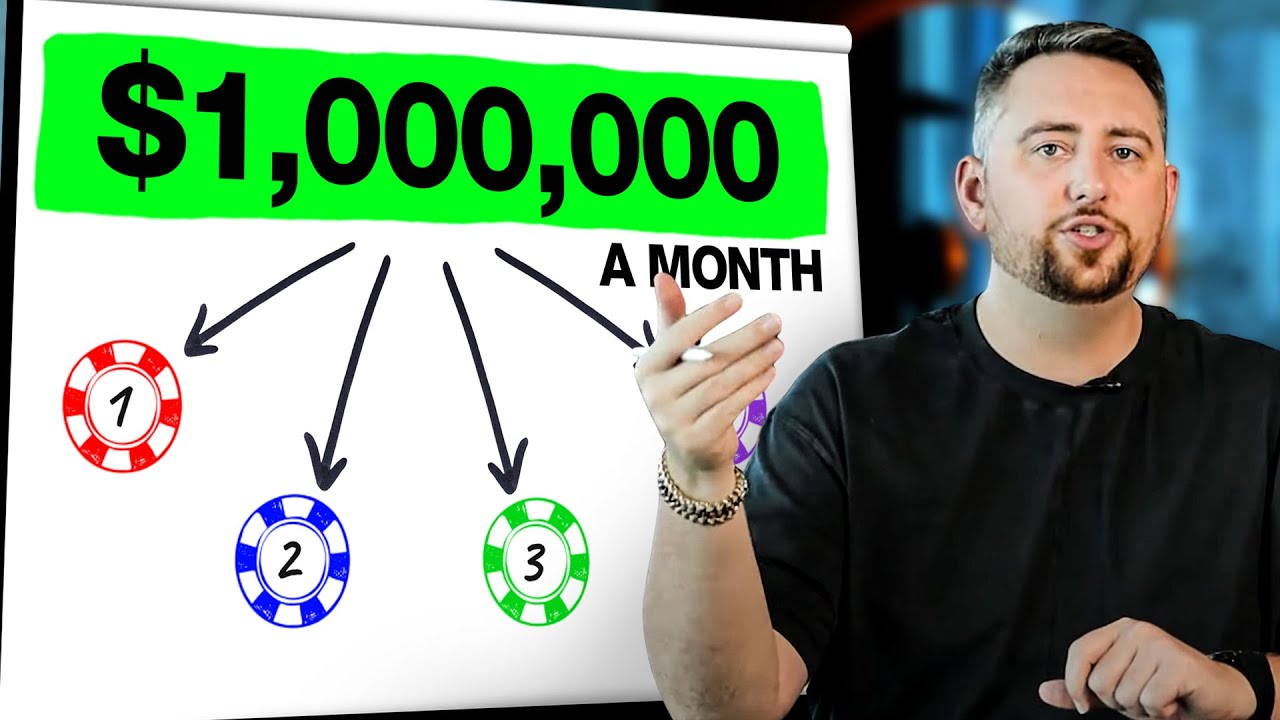
Here’s how to scale up aggressively, aka how to gamble aggressively.
I’m Jeremy Haynes. All I talk about is hitting million-dollar months. That’s all we do here.
If you’re new here, welcome in. Got an absolute game-changer for you here today. This is going to be a great introduction if you’re new. If you’re already part of our community, welcome back.
This is a critical lesson. This is a foundational lesson.
This is a way that you have to frame advertising and scaling in general because it is gambling. It is. It’s no better, no different, no more sophisticated than gambling.
There are sustainable strategies that are slow and steady and incremental and consistent for the growth that they can implement and continue to provide to you.
And then there’s the lump sum plays, the big thick fat lump sums of cash that we can get thrown our way added into our accounts as we grow that enable us to use more house money for some of the more consistent sustainable things and for future large bets.
This way of thinking has tremendously benefited both myself and my clients throughout the years as an advertiser.
This could be considered some of the chronicles of aggressive advertising. This will not be a boring piece. Quite the contrary, you will get tremendous value if you’re an advertiser here and you’ve been stuck at a level or just rather unsatisfied with your current growth.
Again, you should only be reading this if you’re at a couple of hundred grand a month already, a minimum of 100k a month. You could even be already at your million-dollar months, trying to tack on the next million a month.
Again, this mindset will benefit you, your advertising staff, tremendously.
Members of My Inner Circle are already scaling to $1M+ and beyond. This isn’t for beginners. It’s only for operators already at $100k+ per month who want proven strategies, speed, and focus. If that’s you, apply here.
Why This Advertising Strategy Has No Income Claims or Guarantees
Welcome. Let’s get started.
A quick disclaimer – I don’t make any income claims here. Everything I’m going to talk about is hypothetical and is something that you can take as a lesson and do whatever you’d like with it.
But again, there’s no guarantee, no implications that you will make anything as a result of reading this or any content for that matter.
Thank you for being here.
Why You Need a Complete Advertising Mindset Shift to Scale Aggressively
All right, without further ado, let’s jump into it.
When I first started advertising and I first started my marketing agency back in the day, even when I just first started marketing in general at jobs, I didn’t think of it this way.
And I think that limited the growth and the performance of accounts that we were on a lot because ultimately when you take yourself out of your current perspective for how you go about doing things, you can add a tremendous amount of value to what you do and you can really speed up your progress and your results by shifting your perspective on how you look at things.
That’s what this is going to do for you here today.
How to Think in Bets and Probabilities to Make Better Advertising Decisions
So when I say that advertising is gambling, what we’re going to first do is just look at how gamblers are.
Most gamblers, they start off by thinking in bets.
And I just want to give a shout out. I don’t remember the author, but there is a great book literally called Thinking in Bets. And that book introduces – it’s like a great doorway into this logic and this way of thinking and this way of life.
Thinking in bets is really just thinking in probabilities and outcomes. It is a combination of both of these things.
We have the opportunity when we look at a gambler and assess like how did they look at things? How do they look at their money-making opportunities?
First of all, they look at the games that are available for them to play.
For us as advertisers, we would look at the funnels that we would want to play with and the strategies for our acquisition that we would want to use – like paid advertising, organic, a specific paid channel, etc. A specific strategy to drive traffic to a specific funnel.
So when we look at gamblers, they have all kinds of games to play. And the games range in probabilities and outcomes in terms of what’s more favorable to them and what’s less favorable to them.
And sometimes it really all comes down to the skill of the person that is placing the bets.
As an example, there’s this extremely heavily tattooed man that you may have seen on social media that constantly articulates that Baccarat is the best game to play and that it has the highest statistical probability to play into your favor.
There’s some people, as shocking as it may sound, that think that roulette or craps or blackjack are some of the better, more statistically favorable probability in your favor kind of weighted in your direction games to play.
But why are there subtle differences, right? Why is there no just static here’s the probabilities?
Well, first of all, to a degree there is, but at the same time, the skill of the individual player can influence being more in their favor or more against them just based on again skills.
Why Your Skill Level Determines Which Funnels and Strategies Actually Work
It’s the same thing in our world when it comes to marketing.
The skill of the marketer you work with, the skill of the sales team. If I want to do webinars, but I have a terrible presenter that’s awful at it and is terrible at front-facing speaking and talking to many people and doing like group closing, I’m not going to do webinars.
I’m not going to do challenge funnels. I might not even do paid events.
One of my buddies who lives up the road, big $20 million house, like I think like 20 cars at this point, does a couple million bucks a month. Been a longtime client of ours and just a friend at this point, too.
He has incredible self-awareness insight into like what conversion mechanisms and funnels are best for him.
We had a client that did $19 million at an event that said, “Hey, I want you to hit up your friend, see if he’s down to do an event. I think it would crush if we did a joint event together.”
I hit up that guy who’s got all the cars and the $20 million house and a couple million a month. I’m like, “Hey, man. One of my clients who does, you know, he just did 19 million dollars at an event. He wants to do an event with you. And I’m not saying you’re going to make $19 million, but like I mean dude. Like seems like a pretty good play. That’s a huge lump sum opportunity.”
Almost everybody out there would say absolutely like tell your client I’m all in.
Why You Need to Know Your Game and Stick to What You’re Actually Good At
However, this guy doesn’t identify as an events guy. Like he’s never done an in-person event. He’s never in any way, shape, or form sold something at an in-person event.
He does webinars. He consistently sells people through organic all the time. He sells people through DM strategies. He even spends upwards of half a million dollars a month on paid ads pushing people to the webinar, too.
But when it comes to in-person events, he just doesn’t identify that that’s one of his skills.
So you know what he ends up saying? He ends up saying, “I mean, I’ll talk to the guy. Sure, but I don’t really think I’m that interested, but you know, again, I don’t want to deny the opportunity. Let me at least chat with the guy.”
He gets on the phone. They end up essentially concluding to like, “No, I’m not going to do it.”
Why? Because the guy looked at his skills. It’s like the guy just simply put looked at what he was good at and looked at what he didn’t think he was good at and just said, “No, that’s not my game.”
That’s what gamblers do all the time.
There’s a great guy I’ve met him I think once behind the stage at one of like my first client ever. His name’s Lee Heiby. I met a guy named I think he calls himself Vegas Matt if I’m not mistaken.
And Vegas Matt makes infinite gambling content.
If you’ve seen this guy, if you look him up and you’ve ever been targeted by his stuff, you’ll know what I’m talking about right away.
Vegas Matt has all this content where like he does all kinds of stuff. His original game that he loved to play was slots and like all I’ve ever heard about slots is that it’s a terrible low statistical probability in your favor game.
Like why would you play slots?
And he loves it. Like that’s his favorite thing to do.
For the longest duration of time, like that was all his content really was – was him just going up to slots and surprisingly getting a lot of jackpots and like a lot of consistency.
I don’t know his numbers. I’m not going to sit here and say Vegas Matt gets like this much money out of each bet that he makes on average, but like at the end of the day, he loved it. And he claimed that he was making money doing it.
And here’s the crazy part. Eventually, again, like when you just look at statistical probabilities, like you’d think, all right, if slots are actually against you, this guy would eventually crumble and lose all his money to Vegas.
And that’s just not the case. He’s still standing today.
Meanwhile, how many people have you seen when you’ve gone to the unfortunate hole of Las Vegas that just sit there and are playing slots – some old person that, you know, I’ve seen people lose themselves in the chairs of slot machines from how little they want to get up from how close they think they are to a jackpot after working the machine.
Like those guys are getting destroyed.
Why does a guy like Vegas Matt make money playing slots and why do the people who sit there lose money?
Think about that. Again, skill. Skill of the player. That’s all it comes down to.
So just like my buddy I was telling you about that said no to the guy that did $19 million at a single event. It’s like he knows his game.
And some people are better at certain games than others.
It’s the same thing in our world when it comes to funnels. Some people are awesome, like the literal best at in-person events. Some people are awesome at challenge funnels. Some people are awesome at webinars.
Some people crank million-dollar months from DM strategies, from low ticket to high ticket ascension, from call funnels.
Like one of the perfect examples of this is I have clients like literally right now that do several million dollars a month. Some of which do just a million dollars a month that make literally all of it through call funnels.
Somebody books a call, talks to their sales team, closes.
Some of the best sales people and sales managers that I know struggle with call funnels and they hate them and they only like closing through webinars or they only like closing through in-person events or they only like closing through challenge funnels and they just can’t crack call funnels.
But meanwhile, that doesn’t mean they don’t work. That doesn’t make any sense to conclude to that.
You see what I mean? I can’t conclude that slots don’t work when there’s guys like Vegas Matt out here doing well with the slot machines.
You see what I’m saying?
You’ve got to figure out skill-wise. Even though yes, there’s a sheet you can look up online about probabilities of table games and slots and like all the computer games that you can go bet on. There’s statistical probabilities when it comes like sports betting. And very specific sports obviously have different probabilities.
But again, why are some people good at it and why do a majority of people lose?
It can’t just be because they’re getting the only statistical probabilities that do play out well in their favor. It’s like, no, it’s the skill of the player.
And listen to this. It’s also knowing when to push the chips in.
How to Know When to Go All In and Push Maximum Budget on Ads
This is the other big thing that a lot of people get wrong when they’re scaling up in advertising.
They don’t know when to push the chips in.
You have to know when to go all in.
Critical part of the game – when to go all in. You’ve got to know when to push the chips in the middle of the table and say, “I’m ready to play. Big bet. Big bet time.”
I had a client. I did a whole piece on this. This is a challenge funnel breakdown of a client that did about $4 million off a challenge.
They did $3.4 million out of that $4 million off of $10K upselling the challenge itself. They did about $600K of that $4 million off of ticket sales on the front end. They were 1.9x profitable on the front end.
As the advertiser that was controlling that for getting people to buy – we had I want to say just a little bit above 7,000 people that purchased that.
Here’s the thing. I as the advertiser because we were 1.9x profitable on the front end was desperately pushing the business to just let me spend literally infinite dollars.
Like don’t give me a budget. Literally let me spend infinite dollars on getting as many people as humanly possible into that challenge because we were 1.9x profitable on the front end.
I had a person that was managing me on that deal that was very fearful and was holding back on wanting to spend more.
Why? It was a fear-based decision.
This person was concluding based on very minimal feedback coming through like customer support tickets that these were potentially not people who were going to buy the upsell.
Now, really think about this. Obviously, from the outside, having no skin in the game, not risking your own dollars, not risking somebody else’s dollars, you could probably sit here and think to yourself like why would you not spend infinite dollars on that? Why would you act out of fear, right?
But that person who was managing me, they had different data they were operating with.
I only had the advertising statistic data. I only had the fact that we were 1.9x profitable on the front end and there was no end in sight. It wasn’t like I was spending more money and diminishing my ROAS. Quite the opposite. We were doing great.
Here’s the thing though, again, just the difference in data can make or break a bet.
Why Interpreting Data Without Emotion Determines When You Scale Advertising
I want you to remember this.
Emotions – where do they come from? It’s like they come from interpreted data.
So it’s like you can see one thing completely differently than how somebody else sees it based on how you interpreted what’s in front of you or based on the subtle difference in data that comes through your senses.
So that person who managed me, they saw data that I didn’t see and I saw data that they didn’t see or that they saw in addition to the other data they were exposed to that prevented them from just straight up giving me permission. Spend infinite dollars.
Keep in mind when are the conditions right to go all in on a bet?
In that scenario, when you’re going into something where you normally make all the money in the upsell of the challenge funnel in that example, it makes total sense to spend as much money as humanly possible when you’re profitable on the front end because you obviously know all the upsells you’re going to get are just free and clear profit.
That’s how I looked at it.
But again, my point being this is very simple to understand in real time. Sometimes you can have a convoluted perspective.
So you’ve got to have, and this is really important when it comes to gambling, you’ve got to have a plan.
You’ve got to have a set way of thinking that regardless of the new data that comes along that just emotionally spikes you, you can still process through the plan that you’ve already created ahead of time.
Generally, this comes down to variables.
So if I go into a funnel, and this could be any funnel, this could be a call funnel, this could be a webinar, this could be a challenge funnel, this could be low ticket to high ticket, an in-person event, this could be lead forms, this could be DM strategy, it doesn’t matter – I have to financially model the statistics.
I have to be mindful of what’s called a leading indicator.
If I’m playing poker, if I’m looking at people playing poker, and I see some random person at the table just push all their chips in – that person had a leading indicator.
There was something that man or woman had as a signal that acted as the trigger to go all in.
If it was a rational decision with a high probability outcome and the person is skilled at the game that they’re playing, there’s some type of indication before the hand finishes that makes that person go all in.
That’s where most people miss out on the lumps. That’s where most people miss out on those thick amounts of cash coming to them because when the conditions are right in gambling, in advertising, they don’t go all in because they don’t know what to look for.
That can really hurt you. It can hold back a tremendous amount of revenue.
How to Use Google Trends as a Signal for When to Go All In on Advertising
One thing that I love to do is I like to go on Google Trends.
And Google Trends is one of my favorite things to look at. Research demonstrates that Google Trends has been successfully applied across fields. Most gamblers, they start off by thinking in bets. like finance to analyze stock market trends, macroeconomics to forecast unemployment rates, and marketing to study consumer behavior patterns.
I had just recently pulled up a chart when I was on a call with an Inner Circle member, which you can find a link for. It’s where we do our mastermind here in Miami, our one-on-one calls, our group calls. It’s for people that are rich trying to get a lot richer.
People go in there to try to master paid advertising. People go in there to master scaling. People go in there to master sales, to learn all these new paid acquisition models, to learn organic strategies, and to be a part of something that presses you from a culture perspective to get a lot richer than you are.
So when I was on one of these one-on-one calls with one of the members, we had gone to Google Trends and they were asking me, they were like, “Hey, do you think that this offer makes sense?”
And I was like, “Well, dude, let’s go find out if it plays into a macro trend currently.”
So we pull up Google Trends and we type in a few different things to look at.
Like one of the clients that we work with, they help people cut out alcohol. Another client we work with, they sell hyperbaric chambers. Another client we work with, they sell red light panels. Another client we work with, they sell things related to AI.
We typed in all these different search terms. We typed in quit alcohol, cold plunge instead of hyperbaric chamber, red light.
And you look at these and on a chart in terms of how it looked, it’s like the quit alcohol one was going up and to the right, which is what you want to see. And ideally, you change the time frame to a five-year time frame.
The five-year time frame makes a big difference because that shows you the bigger picture. So as long as your trend is going up and to the right, that’s a good sign.
Then, we added cold plunges, and cold plunges were a little bit greater in comparison to quitting alcohol.
And then we added red light panels. And red light panels really dwarfed everything else. Like it was significant in terms of how much greater it truly was.
And then here’s the crazy part, right? We get to the point where we add AI, like just AI, just not artificial intelligence, just AI, two letters, and the chart totally changed.
The chart grew so much and it showed AI like having the most dominant search trend. It dwarfed the other ones. Like it made these other ones look so small in comparison.
Like the quitting alcohol one looked like it didn’t even get off the bottom axis. The cold plunges one looked like it barely even got off the ground. And like same thing with the red light ones comparatively to AI.
Now here’s my point is like we have, you know, in this case two different quitting alcohol clients over the years. Both current and an older one that we’ve helped get to million-dollar months.
We’ve had red light panel companies that have gotten million-dollar months. We had cold plunge companies and the hyperbaric chamber company that are well on their way to million-dollar months, but just just shy, not enough yet to where I can claim that we’ve got them there.
And in addition to that, we’ve had some people that have just recently gotten a million-dollar months that are selling something related to like AI. They’ve just like tied what they do into artificial intelligence in general.
And when you look at the macro trend, it’s a perfect indication as to why these businesses just get lifted to these higher levels of revenue.
Why Real Time Trends Tell You Exactly When to Push All Your Chips In
Now, when you get back to the point at hand, which is knowing when to go all in on a bet, that is a perfect signal.
When I go to Google Trends and I look at search interest over time and I see that the trend is currently just on a massive spike – you know, just recently here in the United States, we had a new I think it’s called the Secretary of Health or something like that. It was RFK.
And long story short, this guy gets appointed to this position and he was seen on a private jet supplementing this thing called methylene blue.
And when you remove this AI chart here and you just picture us typing in methylene blue, it’s like Methylene Blue is like nothing and then randomly it just had this big spike.
And it’s like if you had a Methylene Blue company as an example and you saw this huge uptick of search volume and traffic and like interest as an indication that it’s time to go all in as a leading indicator that it’s time to push every chip you’ve got into the middle of the table – like that’d be a perfect example.
This little spike right here would be the perfect example of when it’s time to go all in.
How to Know When to Pull Chips Off the Table and Reduce Ad Spend
And vice versa, by the way, if I saw just a huge drop in traffic and interest and I saw a lot of added friction – you know, like in gambling, sometimes what’ll happen is the pit boss will come over to the table game you’re playing if you’re just doing really well at the casino and they’ll ask you, they’ll sometimes do subtle things like offer you tickets to a show, offer you a free dinner somewhere, tell you that your reservation’s coming up in 10 minutes, and they’ll try to get you off the table in a very polite way.
Other times they’re much more direct about it.
Now, when those things happen, you don’t really have a choice. Like, that’s your sign. You’ve milked them for all they’ve got that night. You’re out of there. You’re done.
In advertising and in business in general, here’s what happens to us.
Our ad costs will all of a sudden skyrocket. Interest drops. The niche has regulation. The quantity of competitors is just monumental out of nowhere. The sophistication of the consumer goes through the roof.
These are all indication that you potentially need to take some chips off the table.
If I have a business that sells something high ticket that’s non ecom and we go into Q4, right? Industry data shows that Meta’s CPM rates during the weeks of Black Friday and Cyber Monday can spike up to 138% higher than annual averages, making timing crucial for high-ticket advertising strategies.
We know there’s very specific time frames in Q4 that hurt us and our ad costs.
Are those the times where you put more chips on the table or less chips on the table?
You see, are those the times that you increase the bet or you decrease the bet?
Why Self-Awareness of Your Skills Determines Your Ability to Scale Smart
Here’s the point I’m trying to make to you guys. I hope you understand where I’m going.
Your ability to think in bets. Your ability to think in probability outcomes, your ability to be self-aware of the skill that you have or that you lack for specific niches, conversion mechanisms, just offers, the things that you do best and the things that you struggle at being top of mind, dictating what you do and don’t do.
And on top of that, knowing when to literally just push all the chips in the middle of the table.
These are not just foundational ways to think. These are mandatory ways to think when you’re gambling. These are mandatory ways to go about advertising.
Because what they’ll do is they will dramatically increase the odds that million-dollar months are possible.
1% of all businesses on Earth achieve $10 million on an annual run rate, let alone the even smaller statistical quantity of people that hit $12 million a year – million dollar months – and beyond that.
According to the U.S. Census Bureau, only 0.1% of businesses reach $10 million or more in annual revenue, highlighting just how rare this achievement truly is.
What’s the differences?
Here’s the other thing, and I’ll close out with this.
The difference between those small, consistent little wins that rack up to a good amount of cash. Your old reliables, right? They might not be the highest ROAS things you do. They might not produce the most cash, but they produce when they produce.
Then you got the lumps. The lump sums are the big risks.
The lump sums are like, do you go all in on that event? Do you go all in on the webinar? Do you go all in on the challenge funnel?
You don’t just simply put – do you know the difference? That’s the whole point of pushing all the chips in the middle of the table on when a bet is a lump sum bet versus when a bet is more of those consistent little wins.
How the Chunk Method Works to Hit Million-Dollar Months With Multiple Small Wins
And this ultimately comes to find balance, right?
Some gamblers when you go out there and you look at just gambling strategy in general, and you look at people just doing traditional gambling, there’s people who have the old reliables.
One that I recently saw was a sports betting strategy. There’s apparently this website called Polymarket. And on Polymarket, they have I guess sports betting now and also just all kinds of things outside of sports bets that are like things that have low probabilities to occur that you can gamble on.
And there’s a guy who just recently was found and they audited every bet that he did. Apparently like on Polymarket it’s like public and you can look up the bets that people are making. I don’t know if you could link it to the person but like you can simply put see the bets that people are making.
There was this guy that he was gambling on all kinds of stuff like both sports things and just like random events like oh is Trump going to do this like super crazy non-realistic thing? And if you bet no the odds were really really in your favor.
Like as an example, you might bet a million dollars and make back $1,100,000 or like $1,050,000, right?
So you’re essentially betting a million dollars to have the possibility of making $50K or $100K.
Is that worth it?
Well, this guy’s strategy was to bet no on really low probability things to occur. Lot like events, sports, gambling – there’s all kinds of things that just again from a probability perspective were such a low statistical probability to occur that even if one of those things that had like 98% probabilities to not occur actually occurred, he still wouldn’t get wiped out.
All his chips wouldn’t get wiped out off the table because of how many of the small bets the guy was making.
That’s the thing you have to understand about small bets.
With lump sum plays, you can just make one monster bet that can be a high-risk play, still be statistically probable to play out in your favor based on all the variables we’ve talked about.
But think about this. With the small bets, those tiny bets, you have to do a whole lot of tiny bets to get to the point where you make million-dollar months possible.
That’s kind of the combination that we find. We call that the chunk method.
If you look on my site or if you just search chunk method, you’ll see the content that I talked about on this where it’s like some businesses they have million-dollar months just from a call funnel. Some businesses have million-dollar months just from webinars.
There’s some businesses who have in-person events where they go on tours and they make million-dollar months.
But then there’s these chunk method people who will play a few different games and they’ll just have small little wins that overall accumulate to the point where they make million-dollar months possible.
That’s the thing. That’s the thing about advertising. And that’s the thing about million-dollar months.
It is gambling.
Why Thinking in Bets Dramatically Increases Your Probability of Hitting Million-Dollar Months
And when you think about it and you think in bets, you have a dramatically higher probability to get outcomes to play more into your favor.
When you’re self-aware of your skills, you play into what you’re good at. You stay away from what you’re bad at.
When you think in lump sums and you think in the small bets and you try to get a lot more wins on the small bets, you really try to maximize them. But you also understand you’re risking more.
It’s also about chip conservation. I’ve got to keep my chips to keep gambling, right? I can’t get wiped out of the game. If I get wiped out of the game, I can’t gamble anymore.
So I also got to make sure from a risk mitigation perspective, when you look at any good gambler, that’s top of mind for these folks.
They’re constantly considering how can I avoid getting wiped out. So they’re trying to bet what they’ve got to accumulate more while avoiding getting wiped out.
This is one of the most beneficial ways that as soon as I really started thinking like this and like it clicked for me and I started implementing it into what I do and I also get my clients to think like this – I can’t really put it to words.
The speed of hitting far bigger numbers just seemed to happen a lot faster than it ever did before when I started inheriting this kind of mindset.
And I would encourage trying to think with it too.
Let me know if you benefit from this. I’d appreciate your thoughts. Would love some feedback.
And of course, go check out some of my other content. They all help in giving you perspective on what the million-dollar month earners are doing.
Again, no income claims, but top lessons on what to do and what not to do, all available.
Keep following along if you’re not already. And thank you so much for reading.
What I can teach you isn’t theory. It’s the exact playbook my team has used to build multi-million-dollar businesses. With Master Internet Marketing, you get lifetime access to live cohorts, dozens of SOPs, and an 80+ question certification exam to prove you know your stuff.
Go get rich.
Watch the video:
Get my content first on Google
Add jeremyhaynes.com as a preferred source and Google shows my articles more prominently in your search results, including AI Overviews and AI Mode.


Jeremy Haynes
Owner and CEO of Megalodon Marketing
Jeremy Haynes is the founder of Megalodon Marketing. He is considered one of the top digital marketers and has the results to back it up.